Written By | Staff Writer
West Nile's first coffee conference opens 11 November with big targets, 36 extension workers for 64,342 households, and a long history of unmet promises.
Uganda Agriculture
Zombo District, tucked into the highlands of West Nile on the border with the Democratic Republic of Congo, has an unusual ambition for a place that currently exports almost no coffee: it wants to turn itself into a serious arabica producer, and it has chosen a trade show to start the push. From 11 to 13 November, the district will host its first Agricultural Trade and Market Show and Coffee Conference at the Kyambogo University Paidha Campus grounds in Paidha Town Council.
The numbers officials have attached to the event are striking, and they deserve a careful look. According to figures from the Ministry of Agriculture quoted by The Independent, Zombo exported 5.6 metric tonnes of parchment coffee in 2026. The district's average yield is put at 0.1 kilogramme per tree, and the target is 3 kilogrammes. Nile Post reports a separate goal of about 61 tonnes of coffee production and exports annually within five years. Put together, the plan implies an eleven-fold rise in volume and a thirty-fold rise in per-tree yield.
A district with few advisers
The constraint that stands out in the planning documents is human rather than botanical. Nile Post reports that Zombo has 36 agricultural extension workers serving more than 64,342 farming households, or about one worker for every 1,787 households. At that ratio, individual visits to farms are impossible; even one visit per household per year would be a heavy load. Raising yields from 0.1 to 3 kilogrammes per tree requires changes in spacing, pruning, mulching, shade management, pest control, and harvesting and drying practices, and these are hard to teach through a three-day show alone.
Dr Walter Kumakech, the district production officer, said the show is meant to create direct market linkages between farmers and buyers, processors and investors, and that the district plans to distribute seedlings and other inputs with an emphasis on climate-smart methods. Patrick Aneniu, the district agricultural officer, framed it as a chance to share agricultural knowledge. Charles Etoma, the ministry's regional agricultural officer for Arua, said the ministry would give technical support. The chief administrative officer, Robert Abenaitwe, urged farmers to adopt modern practices "above traditional mentality".
Not a new crop
Coffee is not new to Zombo, and that matters for judging the plan. A Daily Monitor special report on the Parish Development Model (undated, from the model's early rollout) described coffee in Nebbi and Zombo as a long-standing cash crop that expanded in the early 1960s through the Okoro Coffee Growers Cooperative Union, with good prices until middlemen entered the market in the 1990s. Farmers interviewed there reported selling at Shs7,000 to Shs8,000 a kilogramme and expecting around Shs10,000. They complained of pests and diseases, theft of beans, poor storage and roads, price swings, a shortage of tools such as pruning scissors and tarpaulins, and unfulfilled promises of union loans. An agricultural officer in Paidha said soils were exhausted and urged soil testing.
Those testimonies are several years old and should not be mistaken for today's conditions, but the problems they describe match the ones the district now says it wants to solve. A yield of 0.1 kilogramme per tree suggests trees that are old, neglected, or poorly managed, which is the same story Nile Post reported from Kasese earlier in October, where yields below one kilogramme per tree and ageing stands were common. The figure also raises a question of definition: whether it reflects all planted trees, including immature ones, or only productive ones. The reports do not say.
What the show can and cannot do
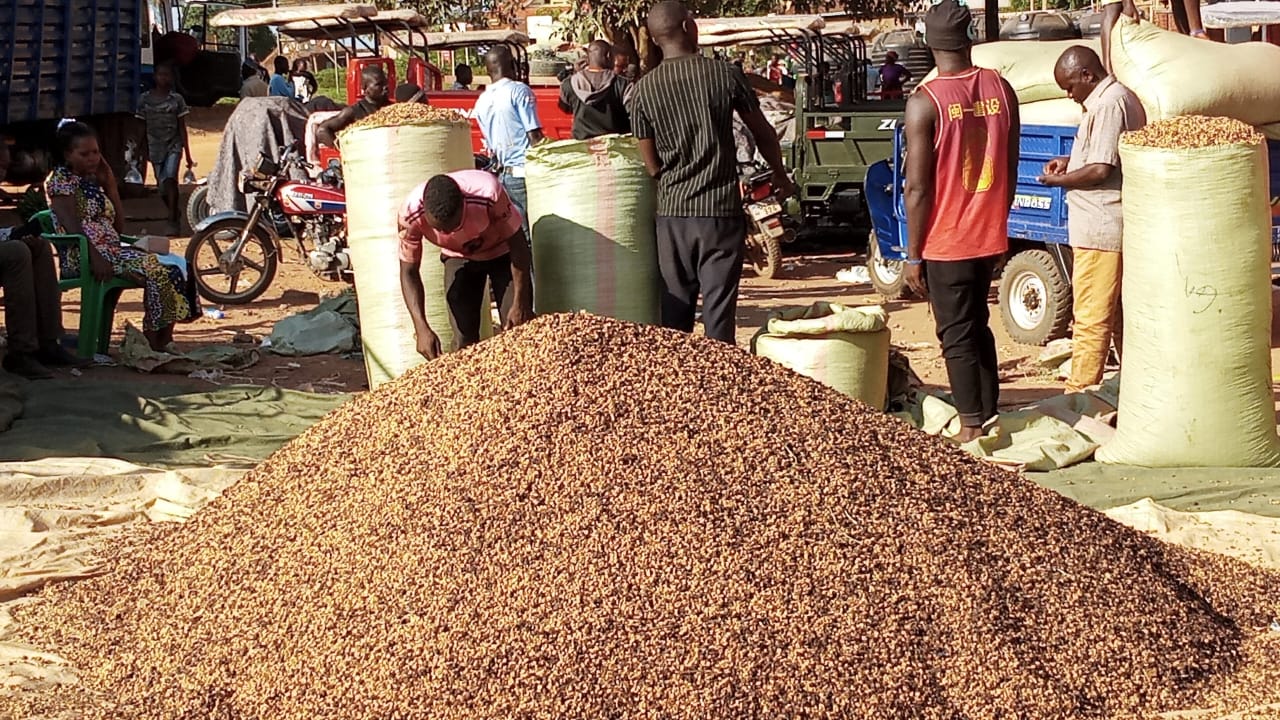
Trade shows have a role. They put farmers in front of buyers, input suppliers and financiers, which is hard to arrange otherwise in a remote district. Nile Post reports that organisers plan to bring together cooperatives, financial institutions, processors and buyers to discuss value addition, bargaining power and access to finance, and that many Zombo smallholders still sell individually, limiting their bargaining power. Collective selling is one of the few levers that can quickly raise what farmers earn without raising yields, because buyers will pay more for consistent lots of graded, well-dried parchment than for scattered handfuls.
The Zombo LCV chairperson, James Oruna Oyulu, said the leadership wants the event to become annual and intends to budget for it, starting at the upcoming budget conference. That is encouraging because a one-off show rarely changes anything. The test will be whether the budget line appears and whether it is spent on the unglamorous items, such as nurseries, extension transport and drying facilities, rather than on the event itself.
What a show cannot do is supply seedlings that take three to four years to bear, fix a 1,787-to-one extension ratio, or guarantee prices. Coffee is a long investment, and the plan is to deliver the targeted output within five years. A farmer who plants this season will likely wait until at least 2029 for a meaningful harvest, and will need cash and food crops in the meantime. The theme of the show, climate-resilient agriculture for agro-industrialisation, covers cassava, bananas, Irish potatoes, honey, dairy and aquaculture alongside coffee, which suggests that officials understand the need to keep household incomes diversified.
The border and the market
Zombo's position is both an asset and a risk. Nile Post notes the district sees potential for cross-border trade through Goli and Padea. At the same time, Isaac Wurochi, the assistant resident district commissioner, urged residents to stay vigilant about Ebola, citing active cases in neighbouring DRC. In October, other Ugandan reporting described how the outbreak and border controls had disrupted trade and livestock markets elsewhere along the DRC corridor, so a health scare at the border could undercut the marketing ambitions the show is meant to advance. Wurochi also said his office is monitoring Parish Development Model and Emyooga funds, a reminder that local credit is a likely source of finance for new coffee plots and that its recovery record matters.
Currency and costs also shape returns. The shilling weakened sharply in October 2026 and fuel and fertiliser costs rose, as covered in earlier reporting. A weaker shilling raises the shilling price of exported coffee, which helps growers in principle, but higher transport and input costs eat into margins in a remote district with poor roads. Any farmer deciding whether to plant now will be weighing those factors.
What to watch
Four things will indicate whether Zombo's push is substantive. The first is the guest of honour's announcement: the minister is expected to attend, and any commitment of seedlings, extension staff or machinery would be a concrete outcome. The second is whether the district clarifies the coffee numbers, including the 5.6 tonnes and the yield baseline. The third is whether buyers sign purchase agreements or quality premiums with farmer groups, which would turn the show into a market rather than a display. The fourth is the budget conference that Oyulu mentioned.
For the wider economy, Zombo is a small player: 5.6 tonnes is a rounding error beside national exports measured in millions of bags. Its significance lies in what it represents, which is the attempt by districts outside the traditional coffee belt to join a value chain that the government has made central to its agro-industrialisation plans. If Zombo can show that a combination of better husbandry, collective marketing and sustained local budgeting lifts yields, the model could be copied in neighbouring Nebbi and beyond. If it cannot, it will join the list of well-attended shows that left few lasting changes.
A caveat on the evidence: the key figures come from pre-event publicity by district officials, relayed by The Independent and Nile Post, and have not been independently verified. This story will be worth revisiting after the show to see what was actually agreed.