Written By |
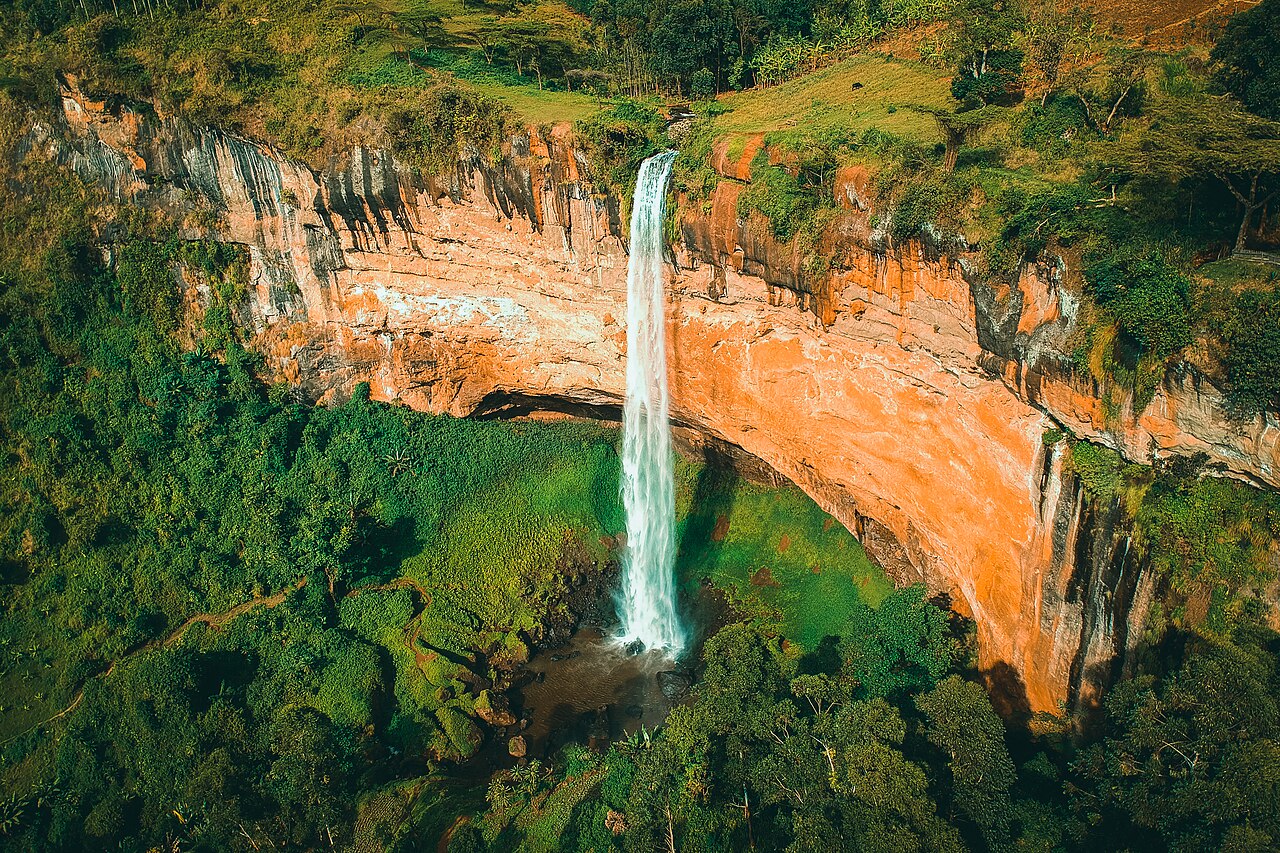
Sipi Falls, on the edge of Mount Elgon, is three cascades, a coffee-scented hillside and a hike that rewards patience
Before the sun clears the rim of the escarpment, the Sipi River is already working. It slides out of the forested folds of Mount Elgon, gathers itself at a lip of dark rock, and drops roughly a hundred metres into a green bowl, throwing up a mist that smells of wet stone and, faintly, of roasting coffee from the farms above. On a clear morning a rainbow hangs in the spray, and the people who live along the ridge walk past it with sacks and hoes, as they have every day of their lives.
This is Sipi Falls, in eastern Uganda's Kapchorwa District, and it is not so much one waterfall as a staircase of three. The main fall, the tallest and most photographed, is about 100 metres. Upstream sits a second drop of roughly 85 metres, and a smaller one near 75 metres hides a cave behind its curtain of water. The village of Sipi lies at around 1,775 metres above sea level on the northern flank of Mount Elgon, an extinct volcano shared with Kenya, and the cool air at that height is a welcome change from the heat of the plains below.
The land and its people
Elgon is old, wide and generous. Its volcanic soils feed some of the finest Arabica coffee in the country, and the slopes around Sipi are stitched with small plots of it, tended by Sabiny and Bagisu families whose cultures are woven into the landscape. Sipi is as much a living farming community as a scenic attraction, and the best way to understand it is to walk through it. Visitors who join a coffee tour follow the whole chain on foot, from picking and drying the cherries to hulling, roasting over a charcoal fire and pounding the beans by hand before a cup is poured.
The region is also a birdwatcher's quiet secret. Around 274 bird species have been recorded in the wider area, and mountain biking trails, village walks and cultural visits fill out days that might otherwise be spent on the falls alone. A day trip to the Nyero rock paintings, with ochre art estimated at around 1250 CE, adds a deeper chapter to the story of who has lived in this corner of Uganda.
Walking the three falls
The classic Sipi experience is the hike that links all three cascades. Guides lead the route of roughly seven to eight kilometres, which takes about three hours at an easy pace. The trail threads through banana groves, maize and coffee gardens, crosses small streams and climbs rocky steps, with each fall presenting a different face: the cave-backed lower drop, the broad middle cascade and the great plunge of the main fall seen from below, where the spray soaks you whether you like it or not. Some of the paths are unmarked and cross private land, so a local guide is worth hiring both for the route and for the stories he or she tells along it. Wear shoes with real grip, because the rocks are slick.
For those who want more adrenaline, abseiling beside the main fall is offered by local operators, along with trout fishing in the river, which requires a guide. Many visitors prefer a gentler rhythm: coffee on a lodge terrace, a view across the plains toward Teso and, on clear days, glimpses of far-off Lake Kyoga, with the thunder of the falls as background.
Planning your visit
Sipi is roughly a half-day from Kampala. By road, the drive to the village takes around four to five hours by private vehicle, passing through Jinja and Mbale, while public transport usually means a chain of minibuses and can take eight to ten hours in all, with a final hop from Mbale taking about an hour. The last stretch has recently improved: the Uganda Tourism Board commissioned a 2.6-kilometre gravel access road to the falls on 30 April 2025, built with Kapchorwa District and Kapchorwa Town Council, to make the approach easier and to link the area with Mount Elgon National Park.
The drier months, roughly June to August and December to March, offer the firmest trails and clearest views, though the falls run strongest after the rains, and a light shower rarely spoils the walk. Accommodation ranges from dormitory beds and campsites, with budget travellers reporting dorm beds at around US$12, to lodges perched directly on the escarpment. Local entry charges to the falls are modest and usually collected through lodges or community groups, and prices change, so confirm costs when booking. Travellers combining Sipi with a climb of Mount Elgon, a multi-day trek starting from Budadiri on the Ugandan side, should arrange permits through the Uganda Wildlife Authority. Carry cash in small notes, a rain jacket and sun protection, and bring a little patience: the hills here keep their own time.
This Week in Ugandan Tourism
16–18 October 2026 — Tourism leaders call for domestic travel and better access. At the Uganda Marketers Society's Ignite event in Kampala, Uganda Tourism Board CEO Juliana Kagwa said the country is "at ground zero" in building its tourism brand and argued that marketing means little without access, including domestic air links and stronger hospitality skills. Official figures cited at the event put 2025 international arrivals at about 1.64 million, up 19.7 percent.
October 2026 — EU announces a €50 million conservation and tourism package. Reported as confirmed at the Uganda–EU Partnership Dialogue in Kampala, the funding targets park management, wildlife protection and eco-tourism infrastructure, including gorilla habitat in Bwindi and Mgahinga. The same report says tourism receipts rose 25.6 percent year on year in the first half of 2026, with 739,815 arrivals, up 3.7 percent.
8 October 2026 — Uganda and Mozambique operators sign a "bush-and-beach" pact. The Association of Uganda Tour Operators and Mozambique's AVITUM signed an MoU in Maputo to package gorilla treks with Indian Ocean coastal safaris. There are still no direct Entebbe–Maputo flights, so travellers must connect through hubs such as Nairobi or Johannesburg.
From 1 March 2026 — Gorilla and chimpanzee permits must be paid in full at booking. The Uganda Wildlife Authority ended the seven-day payment hold, so reservations can no longer be held while travellers decide. Operators are also preparing for a revised tiered tariff that takes effect on 1 January 2027, which sets gorilla tracking at US$800 for foreign non-residents under published trade summaries; confirm figures with UWA.
30 April 2025 (still shaping access) — New road to Sipi Falls. The 2.6-kilometre gravel road opened by the Uganda Tourism Board remains the most tangible recent change for eastern Uganda's visitors, and local operators point to it as a reason the falls are drawing a wider mix of travellers.
Sources: Monitor (17 Oct 2026); Business Times Uganda (18 Oct 2026); Nomad Lawyer (13 and 16 Oct 2026); Uganda Wildlife Tours; Responsible Tourism Company; Safari Junkie; Where the Road Forks. Fees, dates and tariffs reflect trade reports at time of writing and should be confirmed with official sources before travel.



