Written By |
The Mountains of the Moon: Where Uganda Touches the Ice
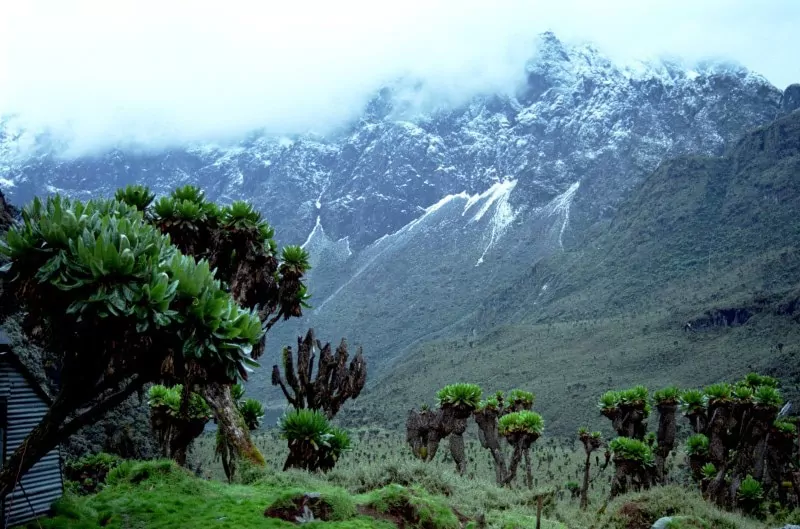
Somewhere above 4,000 metres, the Rwenzori forest gives up. The moss-draped trees fall away, and in their place stand giant lobelias and groundsels, plants that look borrowed from another planet, rising out of bog and cloud. Beyond them, on a clear morning, are the glaciers of an equatorial range: ice, a few degrees from the line of zero latitude, glittering above one of the greenest countries in Africa.
This is Rwenzori Mountains National Park, the place the ancient Greeks may have had in mind when they wrote of the "Mountains of the Moon." It sits in western Uganda along the border with the Democratic Republic of Congo, covering about 996 square kilometres of a range roughly 120 kilometres long and 65 kilometres wide. It is not a volcano, like Kilimanjaro or Mount Kenya. The Rwenzoris were thrust upward by tectonic forces, which is why they read as a jagged, glacier-cut wall rather than a single graceful cone.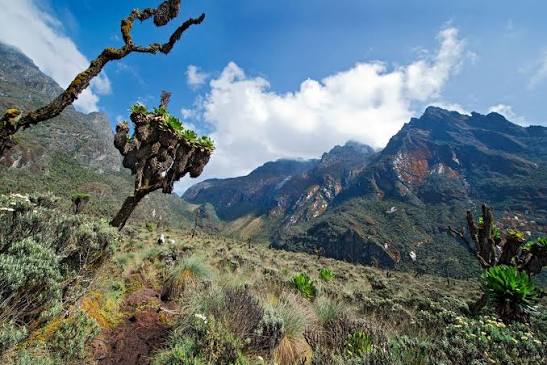
A Park Built for the Patient
The park's crown is Margherita Peak on Mount Stanley, at 5,109 metres the third-highest summit in Africa. Reaching it is a technical undertaking: the Uganda Wildlife Authority describes a summit climb of nine to twelve days, best suited to experienced mountaineers. Those who go speak of the same sequence: the humid lower forest, the bamboo zone, the heath and moorland where everything is draped in moss, and finally rock, snow and ice.
Not every visitor needs a rope and crampons. Shorter, non-technical treks reach lower peaks and alpine lakes without a full summit attempt, and they are the way most travellers meet the mountains. Guided nature walks and cultural experiences in neighbouring Bakonzo villages offer a gentler route in, with homestead visits, music and dance, and home-cooked meals that show how communities have lived at the foot of these slopes for generations.
The wildlife is quieter than on a savannah safari, but it is remarkable. The park is home to more than 70 mammal species and 217 bird species, including 19 Albertine Rift endemics, birds found nowhere else on Earth. Add the otherworldly high-altitude flora, from tree heathers to everlasting flowers, and it is easy to see why the park was gazetted in 1991 and inscribed as a UNESCO World Heritage Site in 1994. It was designated a Ramsar Wetland of International Importance in 2008.
Planning Your Visit
The mountains make their own weather, and rain is possible in any month, but trekkers generally favour the drier stretches, typically December to February and June to August. Confirm conditions with your operator before you commit, because trail surfaces on the higher sections can turn punishing in the wet. Plan on arriving in the Kasese area well ahead of your trek, where operators and the park's guiding services arrange guides, porters and equipment.
Fees need checking before you book. The Uganda Wildlife Authority's park page lists figures that include UGX 15,000 for East African visitors, but the abbreviations on the foreign-visitor rates are not explained there, and independent trackers of the current tariff note that the published schedule ran to June 2026 and that UWA may change charges without notice. Treat any number you read as provisional and confirm directly with UWA or a licensed operator. For comparison, the last confirmed UWA tariff lists gorilla tracking at US$800 for foreign non-residents, though lower low-season rates have been reported but not verified.
Pack as if for four seasons: waterproof layers, sturdy broken-in boots, gaiters for the mud, warm clothing for the nights, and a head for altitude. Acclimatisation is built into good itineraries for a reason. Go slowly, drink plenty of water, and listen to your guide.
This Week in Ugandan Tourism
Domestic travel and destination branding dominated the conversation this week. On 17 October, the Daily Monitor reported that Uganda Tourism Board CEO Juliana Kagwa told a gathering of marketers and tourism leaders that the country is at "ground zero" in building its tourism brand, and that the best product on earth has limited value if visitors cannot reach it. She called for better domestic air connectivity, hospitality investment and skills. The same report put tourism receipts at US$1.7 billion in the 2025/26 financial year and noted that international arrivals rose 19.7% in 2025 to about 1.64 million.
On 18 October, Business Times Uganda covered the Uganda Marketers Society "Ignite" event in Kampala, where speakers urged Ugandans to become ambassadors by visiting local attractions and sharing their stories. Kagwa stressed that the country's image depends as much on how everyday people treat visitors as on formal campaigns.
Earlier in the autumn, the Uganda Tourism Board reported on 1 October that Uganda hosted the first African Dragon Boat Racing Competition on Lake Victoria at Kawuku in Wakiso. On 30 September it met the German Import Promotion Desk to grow its European market, and on 28 September it promoted intra-African travel at a tourism roadshow in Zanzibar. Looking back, the board noted on 28 August that the World Health Organization recognised Uganda as having stopped transmission of the Bundibugyo Ebola outbreak, and on 26 August the country launched Race the Nile, an 800-kilometre self-supported gravel race through West Nile.
Why the Rwenzoris Matter
The access question raised by the tourism board this week is felt keenly in the Rwenzoris. This is a destination that rewards effort and punishes impatience, and it asks for time, a decent budget and a willingness to be uncomfortable. In return it offers something Uganda's famous gorilla forests and savannah parks cannot: the sight of ice on the equator, and the quiet knowledge that you have walked from rainforest to glacier in a few days. For travellers looking for Uganda beyond the headline wildlife, it may be the most memorable corner of the country.



