Written By | Torch Media Africa
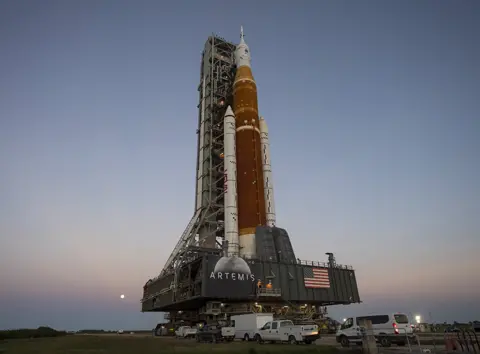
Artemis III won't touch the Moon — but it will juggle rockets from NASA, SpaceX and Blue Origin in orbit in a rehearsal that could decide who carries astronauts to the lunar surface.
TECH & SCIENCE DAILY
Three of the most powerful rockets on Earth. Two rival billionaire-built moon landers. Four astronauts strapped into a capsule, flying a choreography that has never been attempted. And a space race with China that NASA's own boss admits is closer than it should be.
That is the blueprint for Artemis III, the mission NASA laid out in detail at a Kennedy Space Center press conference last week. It will not land on the Moon. It will not even leave Earth orbit. But if it works, it clears the path for the first astronauts to walk on the lunar surface since Apollo 17 in 1972. If it fails, the schedule, the budget and America's lead over China could all take a hit.
Here is what NASA is planning, who is flying, and why the next big step back to the Moon is a test flight that looks more like a stunt show.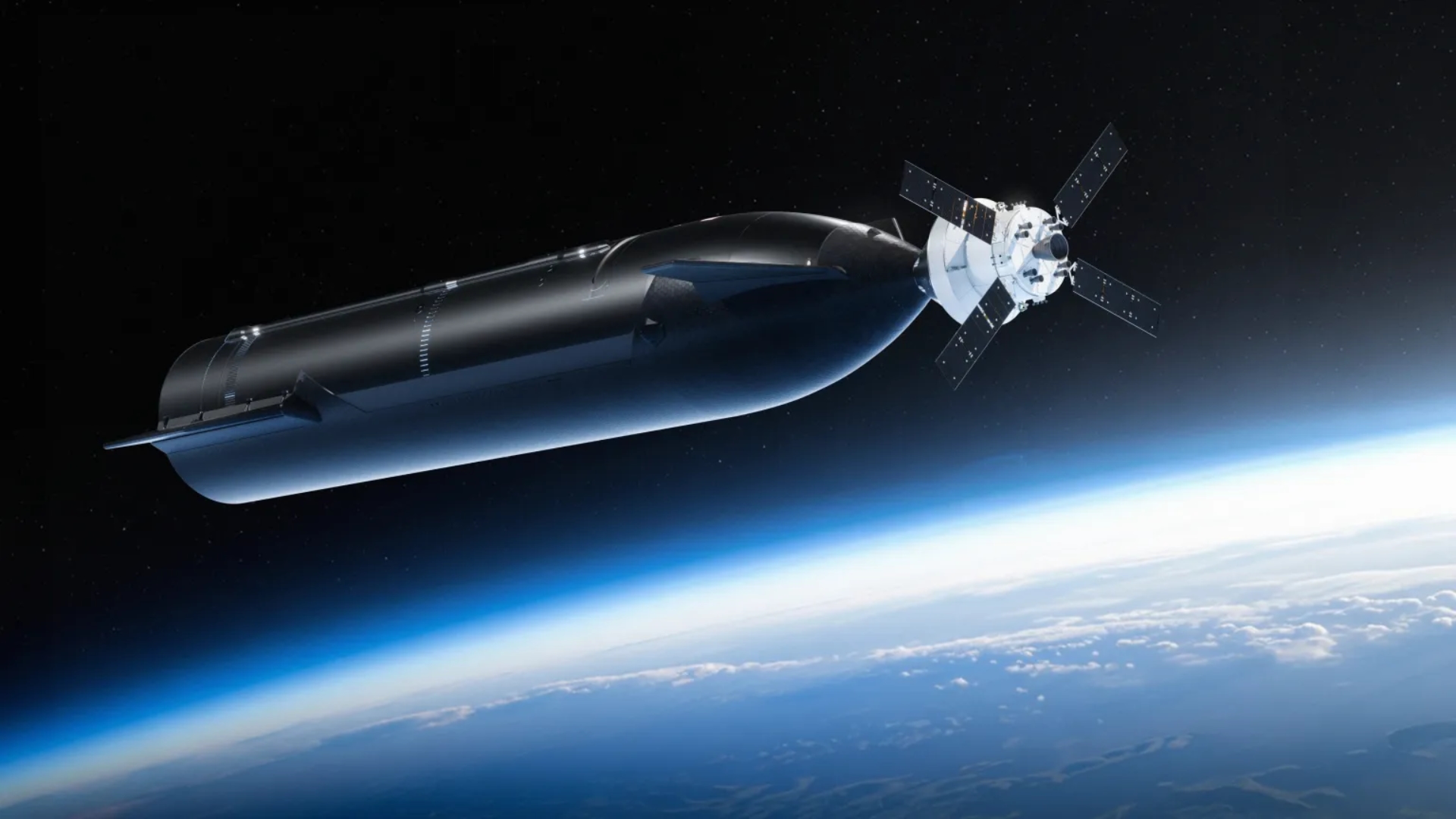
Not a landing — a dress rehearsal
For years the plan was simple to say and hard to do: Artemis III would put astronauts back on the Moon. After NASA's overhaul of the program, the landing slipped to Artemis IV in 2028, and Artemis III became something else: a crewed test of the landers in low Earth orbit, in the spirit of Apollo 9, the last time astronauts tried out a lunar lander in Earth orbit, 57 years ago.
The reason is practical. Neither new lander has yet flown to the Moon, and NASA wants to see how its Orion crew capsule actually behaves when it meets them, with humans on board, before betting lives on a lunar descent. Orion, the deep-space capsule NASA built for Artemis, will be asked to dock with two very different vehicles in a single mission. NASA says the separate docking approaches will demonstrate how Orion interfaces with two very different commercial lander architectures.
The three-rocket launch campaign
The sequence reads like a space-age relay race. The launches will all take place from Florida within roughly two weeks.
First up is Blue Origin's New Glenn, which will lift a test version of the Blue Moon Mark 2 lander into low Earth orbit, around 273 miles up. Next comes NASA's Space Launch System, the giant rocket that will send Orion and its four-person crew into a highly elliptical orbit. Orion then maneuvers to roughly 345 miles up, a higher perch NASA chose to manage thermal conditions, because the capsule was designed for deep space rather than hanging around near Earth. Finally, SpaceX's Starship, in its Version 3 form that first flew in May, launches carrying a docking adapter.
Per NASA's concept of operations, the early days are about checking out Orion. On about flight day three, Orion docks with Blue Moon. The crew floats into the lander and puts it through its paces, testing life support and atmospheric pressure, running emergency scenarios and practicing dual-vehicle control. Then they return to Orion and undock.
Around flight day six, Starship launches. On about flight day eight, it meets Orion at around 237 miles up for a docking that lasts roughly two hours. The astronauts will not enter Starship, which, in this test, lacks a life support system and is effectively a boilerplate vehicle there to gather data on docking forces. The mission then continues for six to nine more days. The nominal length is 14 days, extendable to 17, ending with a parachute splashdown in the ocean.
Meet the crew
Four astronauts will do the flying. NASA's Randy Bresnik, Frank Rubio and Andre Douglas will be joined by ESA's Luca Parmitano, a veteran of the International Space Station. Parmitano's presence underlines Europe's role in Artemis, and it comes as ESA's director general has outlined a ten-year, 10 billion euro plan for an independent European crewed spaceflight capability.
The crew will also put new gear through its paces: the Orion Crew Survival System suits, built for deep-space missions. These were not evaluated on Artemis II, so Artemis III will be their first real-world test, along with health assessments and experiments before the trip home.
A tale of two landers
The real drama is the lander competition. NASA has not decided between Blue Origin's Blue Moon and SpaceX's Starship for Artemis IV. NASA Administrator Jared Isaacman said the agency is keeping both options open to help both partners prepare. The performance of each on Artemis III will help decide which lander NASA picks for that first landing attempt.
The two approaches could hardly be more different. With Blue Origin, Orion would meet Blue Moon in lunar orbit. With SpaceX, Starship would likely dock with Orion in Earth orbit and push it toward the Moon. Then there is size. At 165 feet, Starship dwarfs the Apollo lunar module, which stood just 23 feet tall. Critics have raised concerns that such a tall vehicle could tip over on the lunar surface, a worry NASA will have to resolve before it is certified to carry crew.
Both landers must complete an uncrewed landing on the Moon and lift off again before they can be certified to carry astronauts. That means the orbital rehearsal is only the first hurdle in a long obstacle course.
The shadow of an explosion
Nothing about this plan is risk-free, and the biggest headline risk is Blue Origin's launch pad. A New Glenn exploded during an engine hotfire test in May 2026, damaging pad infrastructure. Before that, the rocket had launched three times between January 2025 and April 2026. Blue Origin is rebuilding Launch Complex 36 and aims to have it usable again by the end of 2026, with more than 100 NASA team members supporting its return to flight.
SpaceX has its own question marks. The company has launched 14 Starships since 2023 and first reached Earth orbit only in September 2026. For a vehicle that must be ready to rendezvous with a crewed capsule within about a year, that is a short flight history.
Add the sheer complexity of coordinating three launches, three vehicles and four humans within a couple of weeks, and it is easy to see why NASA's own officials admit that things could go wrong.
Behind schedule, and counting
No launch date has been set. NASA is targeting summer 2027, and the best-case scenario would leave two moon landing opportunities for Artemis IV in 2028. But an internal memo from Isaacman reportedly said Artemis III is about 90 days behind schedule, and NASA officials identified supply chain problems with the landers as among the biggest challenges.
The gap between Artemis III and Artemis IV is at most 18 months, leaving little room for slips if the end-of-2028 landing target is to hold. Officials remain publicly confident. 'We're moving with real speed and purpose right now,' Isaacman said. Another NASA official, Parsons, captured the scale of the undertaking: 'We're launching three of the most powerful rockets in the world.' Both expressed confidence the lander supply problems can be resolved.
The China factor
Behind all the engineering sits geopolitics. Isaacman has described the new space race with China as closer than it needed to be, pointing to years of shifting NASA funding and priorities. China has been pursuing its own crewed lunar program, and Washington is keenly aware that the first nation to return people to the surface in the 2020s will earn bragging rights and a head start on lunar resources and bases.
That helps explain Isaacman's refusal to blink on the choice of lander. 'We have no intention of surrendering a viable path to the surface before the data and schedule compels us to do so,' he said. In plain English: NASA is keeping two horses in the race for as long as it can, even though that makes the schedule more complicated.
The expert view: why test two landers at once?
Space policy watchers have long noted that the Apollo program flew its Earth-orbit lander test on Apollo 9 precisely because docking, life support and crew transfer are the sort of unglamorous details that can sink a mission. Artemis III is that lesson re-learned with modern hardware. It lets engineers find the mundane problems, a docking mechanism that does not quite line up, an atmosphere that is slow to stabilize, software that glitches under emergency conditions, while the crew is a few hundred miles from home rather than a quarter of a million.
The decision to test two competing landers on one flight is unusual, and it carries a cost in complexity. But it also offers NASA a rare apples-to-apples comparison, flown by the same crew in the same capsule, and a hedge against one provider falling behind. If Blue Origin's pad is still limping in 2027, or if Starship needs more development time, NASA will see exactly where things stand before it has to choose.
What this means for you
If you are a space fan, expect a busy and nerve-racking 2027. Watching three giant rockets lift off from Florida in under a fortnight, and seeing a capsule dock with a lander the size of a small building, will be one of the great spectacles of the decade. For residents of Florida's Space Coast, it could mean packed beaches, hotels and viewing sites.
If you are a taxpayer, the bigger message is value for money. Artemis is a multi-billion-dollar enterprise, and a successful rehearsal is the cheapest way to find expensive mistakes. NASA's willingness to test publicly, and to admit delays, is a sign that it prefers to find problems now.
And if you are simply curious whether humans will walk on the Moon again, the answer is: probably, but not before 2028, and only if a long list of things goes right between now and then. Every slip, every test and every launch pad rebuild is a step on that road.
The bottom line
Artemis III is not the Moon landing the world has been waiting for. It is something more modest and, in its way, more important: the moment the whole system is tested together. Rockets from three different organizations, two competing landers, one capsule and four people in space suits that have never been used on a mission.
If it goes smoothly, 2028 suddenly looks achievable, and NASA gets to choose its landing ship with real data. If it does not, the Artemis timeline will stretch again, and the space race with China will get tighter still.
Either way, the countdown to the next giant leap has a new date on it, even if NASA has not yet announced one.



