KINSHASA
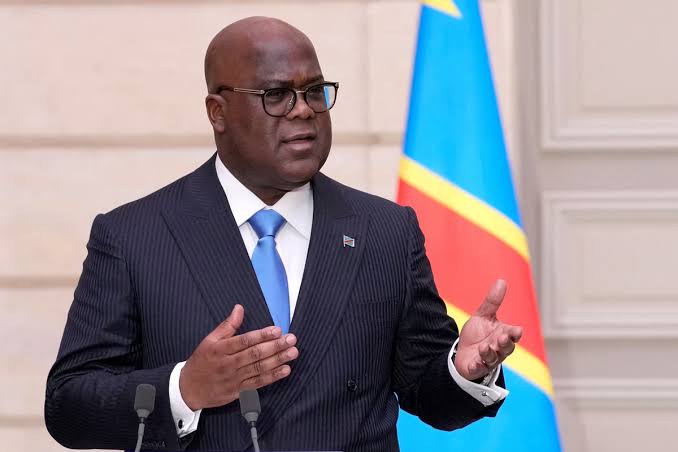
President Félix Tshisekedi's three-month "National Dialogue," announced from Kinshasa on Aug. 28 as a vehicle for reconciling a country fractured by war in its east, is beginning this week with the participation of almost no one the president needs to reconcile with. The main opposition coalition rejected the process before it opened. The rebels holding North and South Kivu have been formally excluded. The camp of former President Joseph Kabila, sentenced to death in absentia, was never invited. What remains is a nationwide consultation exercise whose most plausible destination is a referendum on the two-term limit that currently obliges Tshisekedi to leave office in 2028.
The dialogue is scheduled to begin with consultations across all 26 of Congo's provinces before moving to national talks in Kinshasa. The president did not specify dates or conditions in his Aug. 28 address. His opponents have already named their own date: Sept. 15, when the Article 64 coalition will hold the day of protests it originally scheduled for Aug. 15.
The Bill, the Court and the Second Reading
The constitutional question has been advancing on a parallel legislative track all year, and it has cleared every gate so far.
Congo's National Assembly approved a bill relaxing the conditions for organising referendums on June 9. The Senate followed on June 15 by 89 votes in favour and none against, with 20 senators not taking part. On July 29, the Constitutional Court ruled that the proposed legislation complies with the constitution, though the judges raised concerns about provisions that would have allowed the president to call a referendum on any question deemed of "fundamental" importance. In early August, Tshisekedi referred the bill back to parliament for a second reading rather than signing it — a step his critics read less as hesitation than as tidying, removing the clause the court had flagged so that what finally reaches his desk is unimpeachable.
The 2006 constitution limits presidents to two terms. Tshisekedi was elected in 2019 and re-elected in 2023. On the current text he cannot stand again. A referendum that alters or removes the limit is the only lawful route to a third mandate, and the referendum law is the instrument that makes such a vote easier to call.
The president has been testing this ground for months. In May he floated publicly the idea that "the people" might want him to serve again. In June he suggested the 2028 general elections could be delayed because of the continuing conflict in the east — an argument with an obvious precedent: after failing to secure constitutional change of his own, Kabila settled for a two-year postponement of the 2016 polls. Reporting by Africa Confidential indicates that provincial assembly deputies in several provinces have been receiving funds to encourage them to call for another mandate for Tshisekedi. None of the preparatory work required to hold the 2028 elections on schedule has been done.
Who Walked Out, and Why
The Article 64 coalition — named for the constitutional article affirming the duty of every Congolese to thwart anyone seizing power by force — declared on Aug. 28 that it "categorically opposes and strongly rejects the so-called public consultations initiated by Félix Tshisekedi in place of an inclusive national dialogue," describing the offer as a "continuation of [Tshisekedi's] manoeuvres" to secure a third term. The coalition brings together Martin Fayulu, Moïse Katumbi, Jean-Marc Kabund, Augustin Matata Ponyo and Delly Sesanga — a bloc with little in common beyond the conviction that the term limit must hold.
Sesanga, president of the ENVOL party, put the coalition's position plainly in remarks published Aug. 25. "We have a struggle, and the struggle we have today is to prevent any change to the constitution, to stop a third term for Mr. Tshisekedi, to say that, whether he likes it or not, in 2028 he will no longer have a mandate at the head of our country and he must step down, and we must organise elections to choose new leaders for the country," he said.
Sesanga also framed the second objection, which concerns who is allowed in the room. "Inclusivity is the condition for peace and the reunification of the country," he said, arguing that any credible process must include the AFC-M23 alliance, Kabila, AFC-M23 coordinator Corneille Nangaa and other Congolese figures unable to return home for political reasons. His reasoning was strategic rather than sentimental: "Today, whether on the side of the AFC-M23 or on the side of the government, the prospect of a military victory is out of reach for either of them."
Tshisekedi closed that door on Aug. 27. He ruled out allowing the Rwanda-backed M23 group to join the talks, saying the peace accord signed in Washington in December was the "appropriate framework" for dealing with the organisation. That accord has not ended the fighting. A separate framework agreement signed in Doha in November 2025 produced, after five days of talks in Switzerland from Aug. 17 to Aug. 21 involving the United States, Qatar, Togo, Switzerland and the African Union Commission, a roadmap setting out sequenced steps and timelines for negotiations, along with a standardised method for reporting ceasefire violations. M23 continues to control large areas of North and South Kivu.
The exclusion of Kabila is not a matter of preference. The former president was sentenced to death in absentia a year ago for complicity with the armed group. In April 2026 the US Treasury's Office of Foreign Assets Control sanctioned him over his role in supporting M23 and the Congo River Alliance. Kabila has called the sanctions "unjustified and politically motivated," and in August filed suit in a Washington court seeking removal from the blacklist, arguing the designation rested on unsubstantiated allegations.
The Church, the Street and a Brussels Courtroom
The dialogue does have one intended audience beyond the opposition. Tshisekedi met Cardinal Fridolin Ambongo Besungu of the Kinshasa Archdiocese on July 17 and promised talks to promote national unity. Congo's Catholic Church has historically been the most consequential non-state actor in the country's constitutional disputes, and its acquiescence — or its opposition — will shape how a referendum campaign is received in the provinces where consultations are due to begin.
The street is the other variable, and the precedent is not encouraging for either side. Authorities suppressed a July rally in Kinshasa against the constitutional amendment. Several opposition supporters were injured in the clashes, and the United Nations said at least one person was killed. The A64 coalition confirmed on Aug. 28 that its rescheduled day of protests will go ahead on Sept. 15.
Running alongside all of this is a governance story with a foreign venue. On Sept. 4, a Brussels court ordered 14 people linked to the Belgian firm Semlex's passport contract with the Congolese government to stand trial, closing a nine-year investigation into the company's payment arrangements. Civil claimants, including the Fédération internationale pour les droits humains and the Ligue des droits humains, allege that US$60 million was diverted from Congolese passport fees. The case is a test of Belgium's enforcement of foreign-bribery law. It is also a reminder, arriving in the same week as the dialogue, that the contracts underpinning Congolese state administration have been litigated more thoroughly in Brussels than in Kinshasa.
Analysis: The Logic of a Managed Conversation
A national dialogue that excludes the armed party to the war, the former head of state, and the entire organised opposition cannot reconcile anything. That is not a flaw in the design; it is a clue to the purpose. What such a process can produce is a chorus — provincial consultations generating resolutions calling on the president to remain, which then function as popular authorisation for a referendum the president would otherwise have to demand for himself.
The advantage of this route, from Tshisekedi's perspective, is that it substitutes a manageable procedure for an unmanageable confrontation. Getting delegates in 26 provinces to ask him to stand again is a logistical problem with a budget attached. Facing down demonstrators in Kinshasa, Lubumbashi and Goma is not.
The risks are three. The first is the Catholic Church, which can turn a managed conversation into a contested one overnight and has done so before. The second is the war: the dialogue's central rhetorical justification is national reconciliation, and a process that expressly excludes the group holding two provinces invites the retort that it is not about peace at all. The third is timing. Tshisekedi's second term does not end until 2028, which means the constitutional manoeuvre must survive two more years of scrutiny, an eastern conflict that no one expects to be resolved militarily, and an economy in Africa's largest copper producer that investors are already reading nervously.
Watch three markers. Whether the referendum bill returns from its second reading in a form the president signs, and how quickly. Whether the Sept. 15 protests draw crowds comparable to July's, and how the security forces respond. And whether Cardinal Ambongo, having accepted the July meeting, lends the dialogue his presence — or withholds it.
Published By | News Editor