Written By | News Agencies
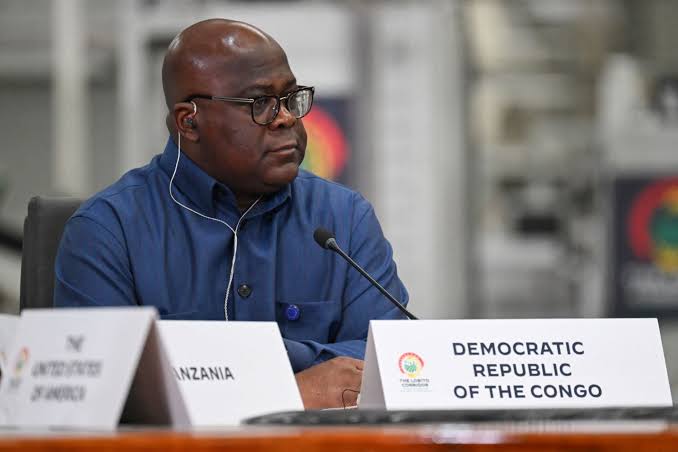
President Félix Tshisekedi is pursuing a constitutional overhaul that critics say is designed to keep him in power past the end of his final term in 2028
KINSHASA
President Félix Tshisekedi is pursuing a constitutional overhaul that critics say is designed to keep him in power past the end of his final term in 2028, advancing the plan even as security forces clash with opposition demonstrators in the capital and the country's east remains gripped by war.
A confidential planning document, first reported by regional outlets in early August, lays out a proposal for a "National Conference on Refounding the State for the Salvation of the Nation" that would rewrite the Democratic Republic of Congo's constitution, restructure the judiciary, security services and territorial administration, and usher in what the document calls a "Fourth Republic." Under one of its central provisions, Tshisekedi would remain in office through a transitional period until a new president is elected under the resulting constitutional order — a mechanism that would reset presidential term limits and clear the way for him to seek another mandate after 2028, when his current term is constitutionally required to end.
The document's emergence follows months of legislative maneuvering that has already alarmed opposition parties, civil society groups and the Catholic Church. It also lands at a moment when Tshisekedi's government has drawn closer to Washington, whose recent sanctions on a political rival have reinforced his standing at home even as it fuels criticism that the United States is trading democratic principle for access to Congo's mineral wealth.
From Referendum Bill to 'Fourth Republic'
The roadmap toward a potential third term began taking concrete shape this year. On June 9, the National Assembly approved a bill that would allow Tshisekedi to initiate constitutional change through a referendum. The Senate followed on June 15, adopting the measure with all 89 senators present voting in favor and 20 abstaining or absent, according to reporting compiled by the Institute for Security Studies (ISS). If enacted, the legislation would allow a referendum on a new constitution under which Tshisekedi's two previous terms would not count toward the two-term limit set out in Article 70 of the 2006 constitution — the same limit that Article 220 explicitly bars from being revised.
Congo's Constitutional Court cleared a related hurdle on July 28, approving elements of the referendum framework, including a provision permitting the president to convene a constituent assembly followed by a referendum in the event of a "major dysfunction" of state institutions. Court president Dieudonné Kamuleta Badibanga said the proposed law conformed to the constitution, though judges expressed reservations about a separate clause that would let the president call a referendum on any matter deemed of "fundamental" importance.
The confidential document — shared, according to reporting from Kigali-based KT Press, with Angolan President João Lourenço, who until recently served as African Union mediator in the Congo-Rwanda conflict — goes further than the referendum bill alone. It describes the Congolese state as one that "remains to be built" more than six decades after independence in 1960, arguing that the political framework established by the 2002 Sun City Inter-Congolese Dialogue no longer answers the country's security and governance challenges and has allowed foreign interests to penetrate state institutions. It calls for what it terms a "patriotic consensus" to rebuild the state from the ground up.
The proposed National Conference would convene roughly 200 participants drawn from government institutions, the ruling coalition, opposition parties, civil society, traditional leaders, religious organizations and academia to examine governance, security, justice, elections, political parties, decentralization and public administration. Its recommendations — a new constitution, a restructured electoral system, judicial reform, reorganized territorial administration and an overhauled security sector — would culminate in the Fourth Republic. Tshisekedi would preside over the dialogue whose findings would be forwarded to him, even though he is among the process's central protagonists.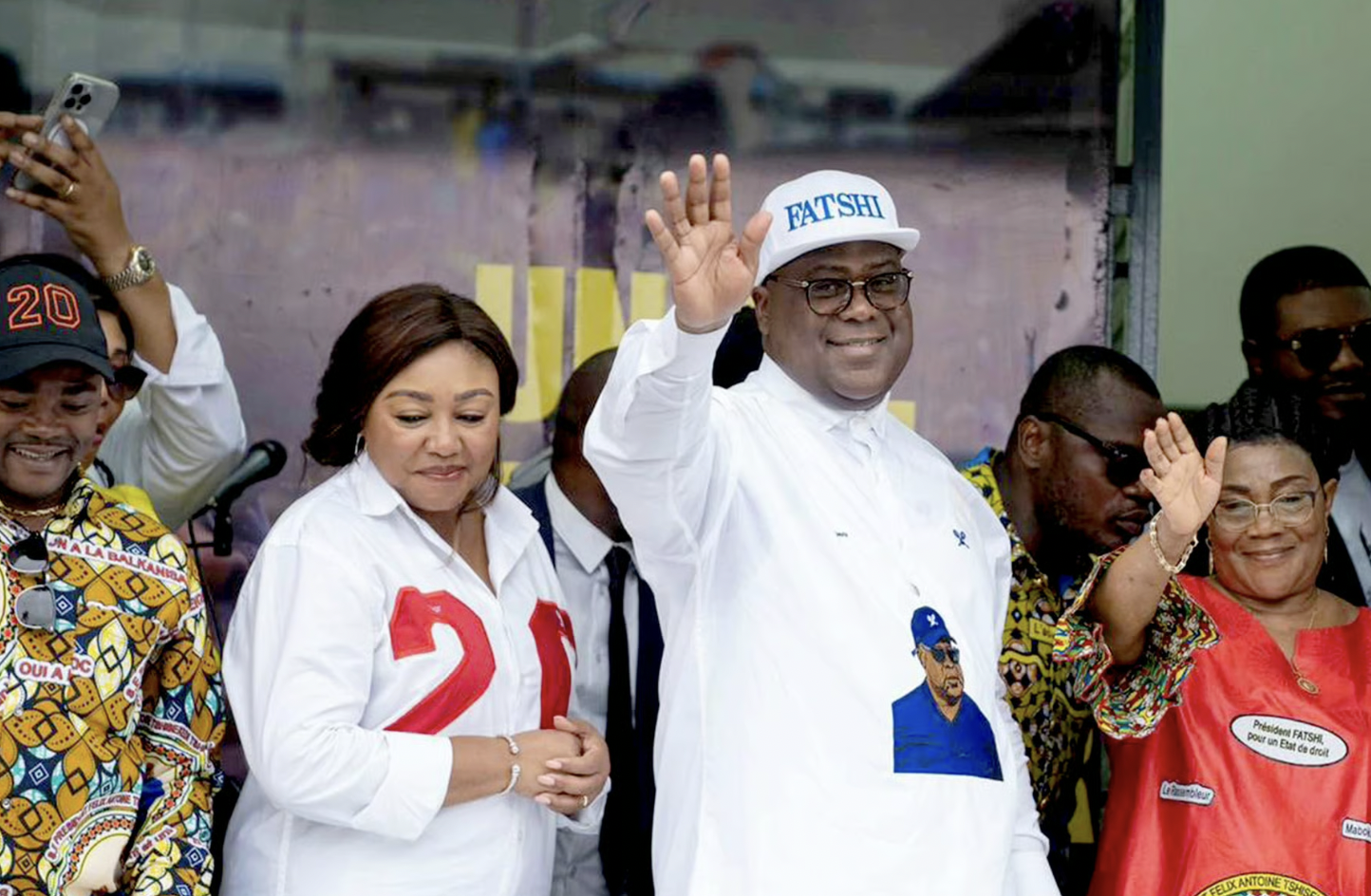
Opposition Cries 'Constitutional Coup'
Opposition parties have united under a banner they call Coalition Article 64, invoking the constitutional article that entrenches term-limit protections. Opposition leader Martin Fayulu, runner-up in Congo's disputed 2018 and 2023 elections, has accused Tshisekedi of violating his oath of office and dismantling constitutional safeguards. Other opposition figures have gone further, describing the referendum process as a "constitutional coup."
Dieudonné Bolengetenge, secretary-general of the opposition Together for the Republic party, told a Kinshasa news conference after the Constitutional Court's July ruling that "the court's ruling confirms the plot against the constitutional order and paves the way for the Balkanisation of the Republic."
Tensions boiled over into the streets in late July, when protests against the constitutional changes turned violent in Kinshasa. Security forces used tear gas and, according to multiple accounts, live ammunition to disperse demonstrators; several opposition leaders, including Fayulu, were reportedly injured in the clashes. The Coalition of Congolese for Constitutional Change and the National Episcopal Conference of Congo, the Catholic Church's bishops' conference, have both come out against the reform process, though analysts at ISS note that neither has the institutional leverage to halt it outright — their influence lies instead in mobilizing public opinion and shaping how foreign governments respond.
Tshisekedi, 63, who first took office in January 2019 and won a second term in the disputed December 2023 election, has cast the initiative as a response to Congo's security crisis rather than a personal power grab. "If we cannot end this war, unfortunately, we will not be able to hold the elections in 2028," he told reporters in May, adding that he would accept another term "if the people want it." That argument rests on the continuing conflict in eastern Congo, where the Rwanda-backed AFC/M23 rebel alliance has seized large swaths of North and South Kivu since early 2025 despite a U.S.-brokered peace framework and regional mediation efforts led first by Angola and, more recently, other regional actors.
Washington's Thumb on the Scale
The third-term debate has become entangled with Washington's Congo policy. In late April, the U.S. Treasury's Office of Foreign Assets Control sanctioned former President Joseph Kabila for his alleged support of the M23-aligned Congo River Alliance, a move the State Department framed as part of a broader push to secure peace and protect Western access to Congo's cobalt and copper supply chains. Tshisekedi publicly welcomed the sanctions, saying they validated his government's long-standing accusations that Kabila — his predecessor and now a bitter rival — had backed the rebellion destabilizing the east.
Analysts at ISS have warned that the growing alignment between Kinshasa and the Trump administration, which they describe as driven "less by democratic principles than by strategic interests," could embolden Tshisekedi domestically on constitutional matters even as it does little to address the underlying causes of instability. Public trust in Congo's electoral institutions is already thin: according to the Bertelsmann Stiftung's Transformation Index, cited by ISS researchers Nirvaly Mooloo and Remadji Hoinathy, only 12% of Congolese express confidence in the country's electoral process — a figure the researchers argue makes a term-limit-resetting referendum especially combustible, since low-trust elections are more likely to be perceived as manipulated regardless of their actual conduct.
What's at Stake
The stakes extend beyond Kinshasa's palace politics. Mooloo and Hoinathy argue that a referendum excluding civilians in rebel-held territory would deepen doubts about the process's legitimacy and hand Rwanda a propaganda opening: rather than having to rebut Kinshasa's accusations of backing M23, Kigali could instead point to Congo's own constitutional turmoil to muddy the diplomatic picture. "Kinshasa cannot afford to fight two legitimacy battles at once," the researchers wrote, "one against Rwanda in eastern Congo and another over constitutional succession at home." A weakened claim to democratic legitimacy, they add, would reinforce the AFC/M23's argument that the central government does not represent all Congolese, strengthening its demands for autonomy or hybrid governance in the territories it controls.
There is also a domestic precedent haunting the process. Kabila's own overstay in office after his mandate expired in 2016 triggered years of protest and a legitimacy crisis that weakened Congo's diplomatic standing regionally and globally — a history Tshisekedi's critics say he risks repeating.
What to Watch
The immediate marker is whether Tshisekedi signs the Senate-passed constitutional revision bill, which as of mid-August awaited his signature, and whether the National Conference is convened with genuine opposition participation or proceeds — as critics fear — as a vehicle largely controlled by the ruling coalition. Regional bodies including the East African Community, the International Conference on the Great Lakes Region and the United Nations have been urged by ISS analysts to strengthen mediation and early-warning coordination in case tensions escalate further. Also worth watching is whether European governments, which have historically pressed Kinshasa on constitutional governance, diverge publicly from Washington's more transactional posture — a split that would complicate Tshisekedi's efforts to present the reform process as internationally uncontroversial. With the 2028 election still two years away, the coming months of dialogue design, opposition mobilization and battlefield developments in the east will determine whether Congo's Fourth Republic becomes a genuine national reset or, as opponents charge, a rebranded path to indefinite rule.



