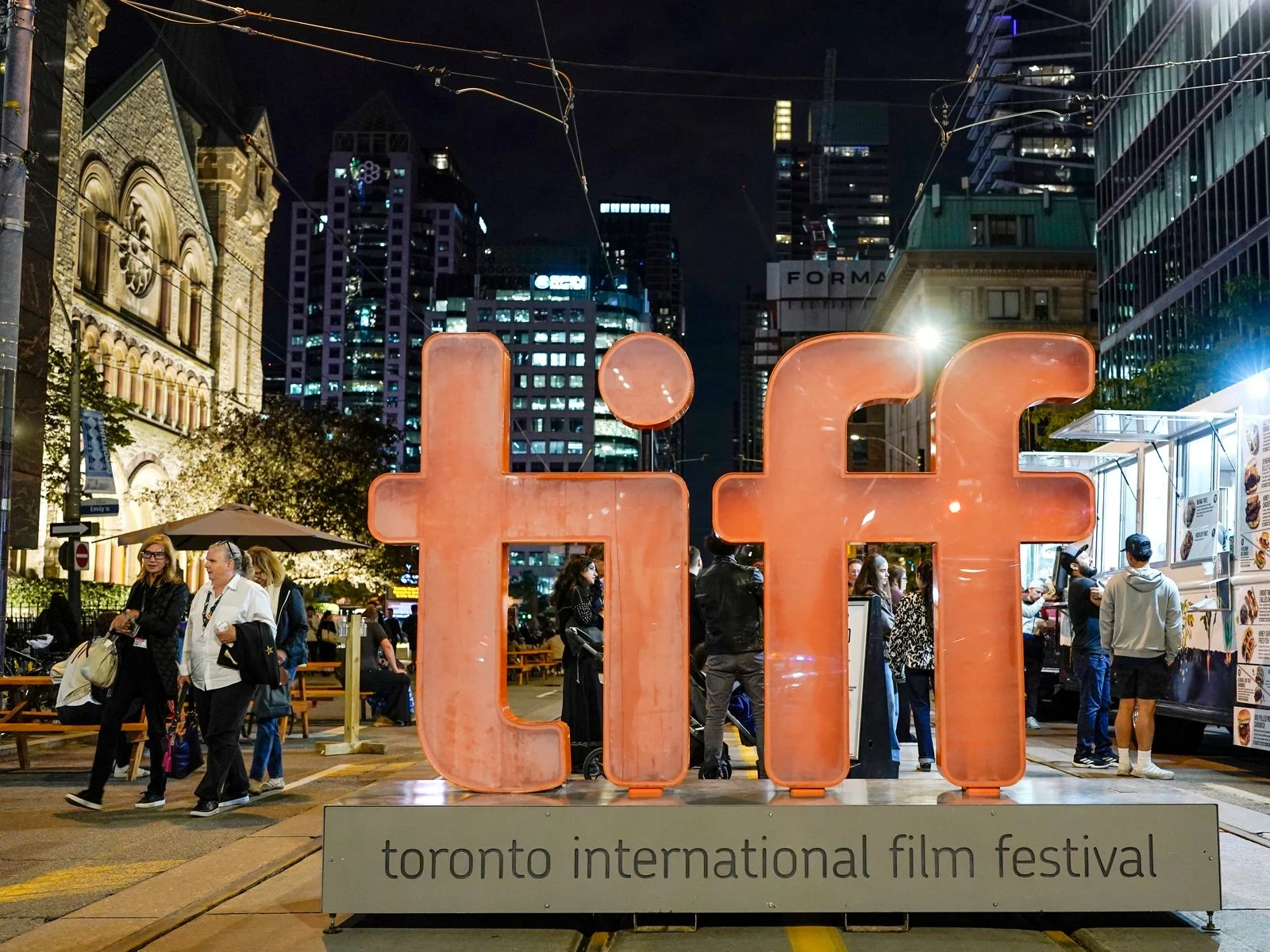
TORONTO, ONTARIO
For half a century, the Toronto International Film Festival has been the friendliest big festival in the world and, in one specific respect, the most curiously incomplete. Cannes has its Marché. Berlin has the European Film Market. Toronto — which for years has drawn roughly 800 buyers, launched more Oscar campaigns than almost anywhere, and effectively functions as the North American industry's autumn reunion — has never had a formal marketplace of its own. Deals happened in hotel bars and hallway ambushes, which is romantic until you try to schedule it.
That changes tomorrow. When the 51st TIFF opens on Thursday, September 10, it will do so alongside the inaugural edition of TIFF: The Market, running September 10 to 16 at the Metro Toronto Convention Centre — a separate, industry-facing operation with 120 exhibitor spaces, multiple stages, business lounges, dedicated screening cinemas, an 'innovation zone', and 650 market screening slots. It is funded by a landmark $23 million CAD investment from the Government of Canada, supported by Telefilm Canada, and overseen by newly appointed Head of Market Charles Tremblay under festival CEO Cameron Bailey.
An opening night with an argument in it
The film chosen to launch all of this is a pointed one. Being Heumann, the Apple Original Film that has its world premiere Thursday at Roy Thomson Hall, is Siân Heder's follow-up to CODA — the film that won her an Academy Award and, not incidentally, was itself a festival acquisition story. Ruth Madeley stars as Judy Heumann, the disability rights organiser who in 1977 led more than a hundred disabled people into the San Francisco Federal Building and refused to leave for 28 days, demanding that the government finally enforce Section 504 of the Rehabilitation Act, which required federal spaces to be accessible. Mark Ruffalo co-stars.
Opening a festival with a film about people occupying a building until an institution keeps its promises is, at minimum, a choice with a sense of humour about itself. It is also consistent with what Heder does: CODA succeeded because it cast deaf actors in deaf roles and treated that as unremarkable rather than heroic. Being Heumann arrives with the same expectation attached, and with a real-world subject whose movement is still, nearly fifty years on, arguing over the same word — access.
What a market actually changes
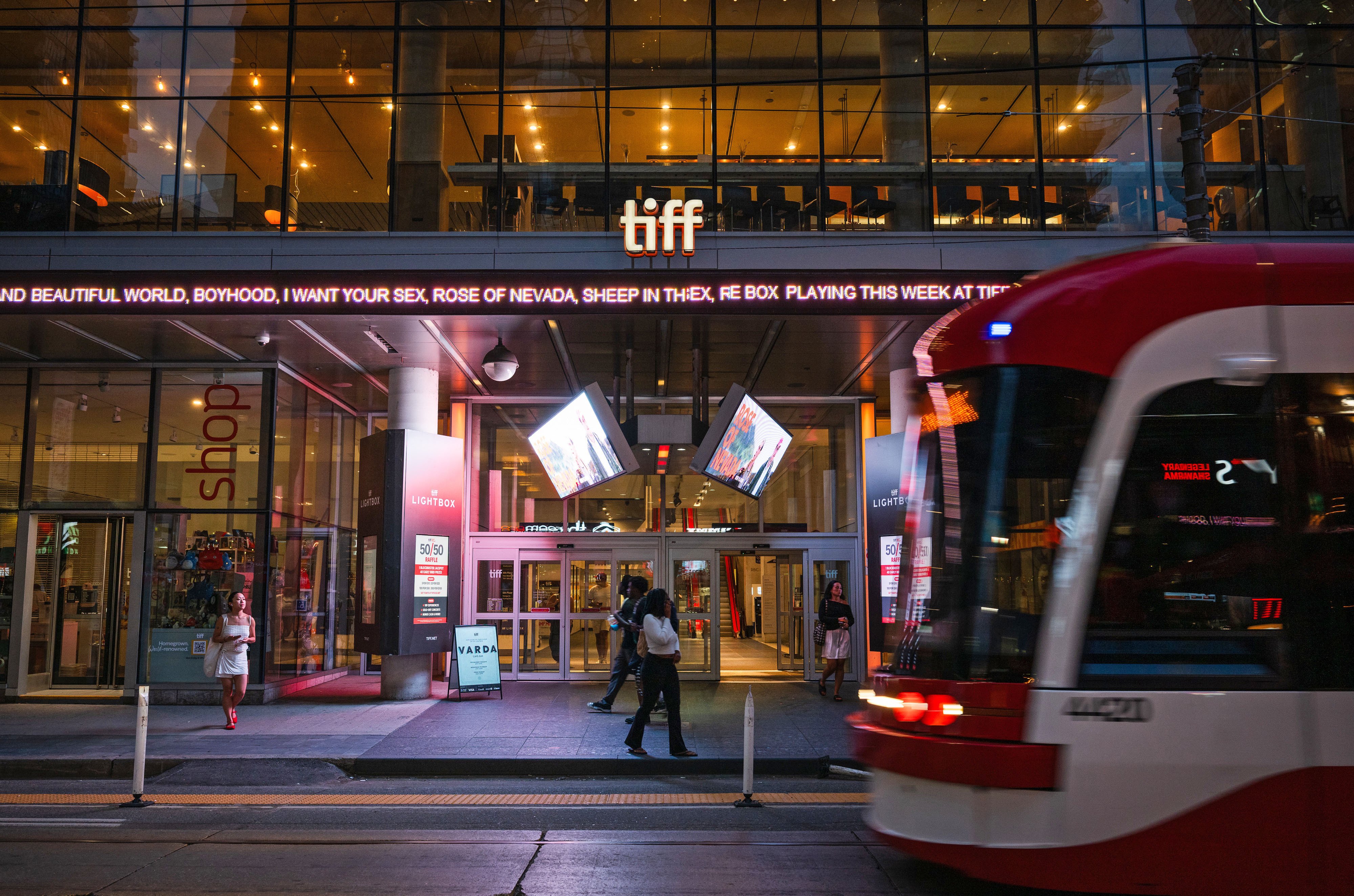
To the public buying tickets on King Street, none of this will be visible. TIFF's public festival continues as it always has, across the Princess of Wales Theatre, Roy Thomson Hall, the Royal Alexandra, TIFF Lightbox and Scotiabank Theatre, with the Convention Centre's John Bassett Theatre added as an additional screening venue this year.
To the industry, the shift is substantial. TIFF says it is inviting more than 250 new international buyers on top of its usual contingent — the kind of expansion that changes not just how many films sell but which films get made in the first place, because a producer's willingness to finance something often depends on where they think they can sell it. CAA, UTA and WME are all confirmed for the 2026 market. The packaging and sales world has been openly speculating about what a Toronto market does to the autumn calendar, and specifically to the American Film Market, which has spent recent years struggling to hold its position.
The subtext is not subtle. Toronto is making a claim on territory, and Canada is paying for it. A $23 million public investment in a film market is industrial policy dressed as a trade show — a bet that a functioning marketplace keeps production, jobs and intellectual property in the country rather than merely hosting them.
The films people will actually queue for
Underneath the institutional news is a lineup doing what Toronto lineups do. Zack Snyder crashes the world premiere slate with The Last Photograph, a title and a director that will generate a queue regardless of anything else on the schedule. Cynthia Erivo brings Prima Facie. And TIFF has assembled an unusually strong run of North American and Canadian premieres out of Cannes — Fjord, All of a Sudden, Wild Horse Nine and Club Kid among them — which is the festival's other historic function: the place where European festival breakouts meet North American distribution.
That combination is the argument for Toronto in a sentence. Venice, which closed its 83rd edition days ago, sets the awards conversation. Cannes sets the critical one. Toronto is where both get converted into release dates.

What this means for you
If you live in Toronto, the practical change is a slightly busier downtown and one additional screening venue. If you don't, the effect is delayed but real: the films that sell in a market in September are the ones that reach your local cinema — or, increasingly, your subscription service — between spring and the following winter. A larger buyer pool tends to mean more mid-budget films find distribution rather than disappearing into a festival's archive.
It also means the autumn festival calendar is now genuinely contested in a way it has not been for years. For a decade the question has been whether streaming would hollow out the theatrical acquisition business entirely. Toronto's answer, backed by public money and eleven days of programming, is to build a bigger room and see who shows up.
The verdict, eleven days from now
The 51st TIFF runs September 10 to 20. By the time it closes, two things will be measurable: whether Being Heumann converts an opening-night ovation into an awards campaign, and whether TIFF: The Market did enough business in its first week to justify the number attached to it.
Festivals are rarely judged on their first year of anything. But Toronto has spent fifty years building the audience, the reputation and the goodwill required to try this. Starting it with a film about people who refused to leave until an institution delivered on what it promised feels less like coincidence than like a statement of intent.
Published By | Features Editor