Written By | Sports Desk
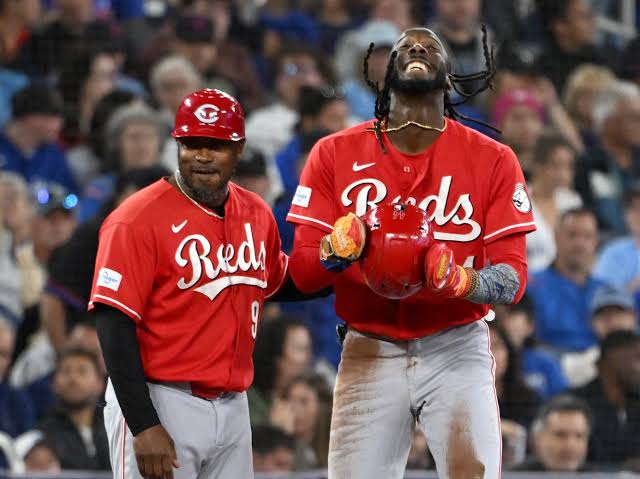
On a night his bullpen let slip, the Reds' 24-year-old shortstop stole his way into a fraternity of just four in franchise history, and gave a losing season something to remember
TORONTO
Some milestones arrive with a crack of the bat. Elly De La Cruz's arrived with a sprint. In the third inning at Rogers Centre on Friday night, moments after lashing a two-run double into the left-field corner, the Cincinnati Reds shortstop took off on the very next pitch from Toronto's Jose Soriano and slid into third base. It was his 30th stolen base of the season, and with it he became only the fourth player in Reds history to hit 30 home runs and steal 30 bases in the same year.
The names he joined are a roll call of Cincinnati heroes: Eric Davis in 1987, Barry Larkin in 1996, and Brandon Phillips in 2007. Nobody in a Reds uniform had done it in almost two decades. According to Redleg Nation's count, it was only the 82nd 30-30 season in the history of Major League Baseball.
Two Nights, Two Numbers
The chase had been building all week. De La Cruz reached the power half of the equation on Thursday in Atlanta, launching his 30th home run in a 7-6 Reds win over the Braves. That left him one stolen base short with only a handful of games left on the calendar, and for a player who has made speed his calling card since his 2023 debut, the outcome felt inevitable. It still had to be done, though, and he did it on the first real chance he got.
The steal capped a September that has looked like a player hitting a new gear. According to WKRC in Cincinnati, De La Cruz entered Friday with nine home runs in the month, the most ever by a switch-hitter in a single calendar month in Reds history. For a hitter whose early career was defined by jaw-dropping tools and frustrating inconsistency, it has been the most complete stretch of his young career.
There was more history tucked inside the achievement. De La Cruz also became the first Reds player, and only the eighth big leaguer since 1900, to steal at least 30 bases in each of his first four seasons, according to the Associated Press.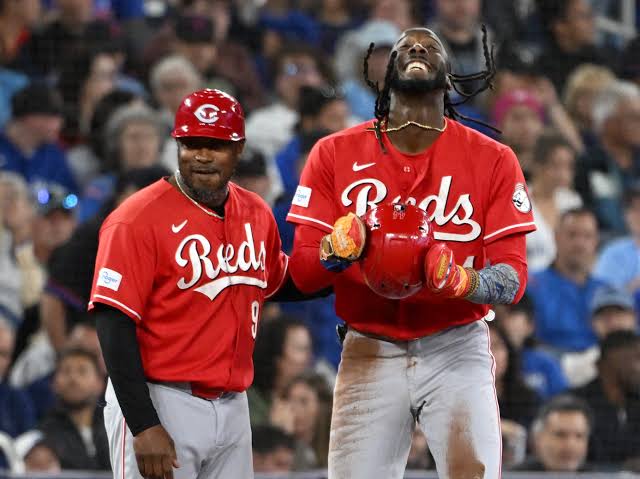
The Bittersweet Backdrop
If baseball had a sense of occasion, the night would have ended in celebration. It did not. De La Cruz's double and steal were the centrepiece of a five-run third inning that gave Cincinnati a 5-2 lead, with Sal Stewart and Eugenio Suarez adding runs behind him. Starter Nick Lodolo wriggled out of bases-loaded trouble twice and kept Toronto quiet into the sixth.
Then the seventh inning happened. Reliever Luis Mey walked the first two batters he faced and gave up a run-scoring single. An error loaded the bases, and the first pitch from Pierce Johnson was lashed off the centre-field wall for a two-run double that tied the game. Nathan Lukes followed with the go-ahead single, and the Blue Jays held on to win 6-5. As Redleg Nation noted, Reds pitchers handed out five walks and two hit batters on the night, one more free pass than they had strikeouts.
The loss dropped Cincinnati to 74-86, well out of the playoff picture in the final series of the season. In a year that has offered Reds fans few reasons to cheer, De La Cruz's milestone became the story worth keeping.
Why 30-30 Still Matters
In an era dominated by launch angles and three-true-outcome sluggers, the 30-30 season remains a rare badge of all-round excellence. It asks a player to be two things at once: a hitter strong enough to clear fences 30 times and a runner daring and efficient enough to take 30 bases. Most power hitters are not fast; most speedsters do not hit for power. The overlap is small, which is why only 82 seasons in more than a century of the sport fit the description.
Rule changes since 2023, including larger bases and limits on pickoff throws, have made stolen bases more plentiful across the sport, and some purists argue that has made the speed half of the feat easier. But the power half has not moved, and De La Cruz's case is less about the rules than about his own growth. The Cincinnati Enquirer framed the milestone as a sign that the gifts scouts raved about when he arrived as a raw 21-year-old have finally matured into production.
For the franchise, it is also a link to its past. Davis, the lightning-quick centre fielder of the late 1980s, was a symbol of the team that won the 1990 World Series. Larkin, a Hall of Famer, did it in 1996, a year after winning the National League MVP award. Phillips, the showman second baseman, was the last to do it in 2007. De La Cruz, at 24, is the youngest face of that tradition and, unlike his predecessors when they reached the mark, a switch-hitter.
What This Means for Fans
For Reds supporters, the practical meaning is hope. Cincinnati's season is over in every sense but the schedule, and the offseason will bring hard questions about a bullpen that has let too many leads slip. But the club now knows it has a genuine cornerstone at shortstop, a two-time All-Star entering the prime of his career who has just delivered the kind of season that shapes franchises.
For casual baseball fans, De La Cruz is simply one of the most exciting players to watch in the sport. Few players can change a game with a swing and then change it again with their legs on the very next pitch, as he did on Friday. If you have not caught him yet, the final weekend of the season is a good time to start: the Reds and Blue Jays meet again on Saturday afternoon in Toronto, with Rhett Lowder facing Trey Yesavage.
And for fantasy players and stat-heads, the question is what comes next. A player who can reach 30-30 at 24, with nine home runs in a single month, has room to chase numbers that only a handful of names in the sport's history have touched.
The Takeaway
Baseball rarely lets a milestone arrive cleanly. De La Cruz's came on a night of a blown lead, a late-inning error and a losing season winding down in another country. None of that diminishes it. Eric Davis, Barry Larkin, Brandon Phillips, and now Elly De La Cruz: four players across nearly four decades. In Cincinnati, where baseball history runs deep, that is a list worth being on. The rest of the league has been warned that its newest member is only getting started.



