Written By | International News Agencies
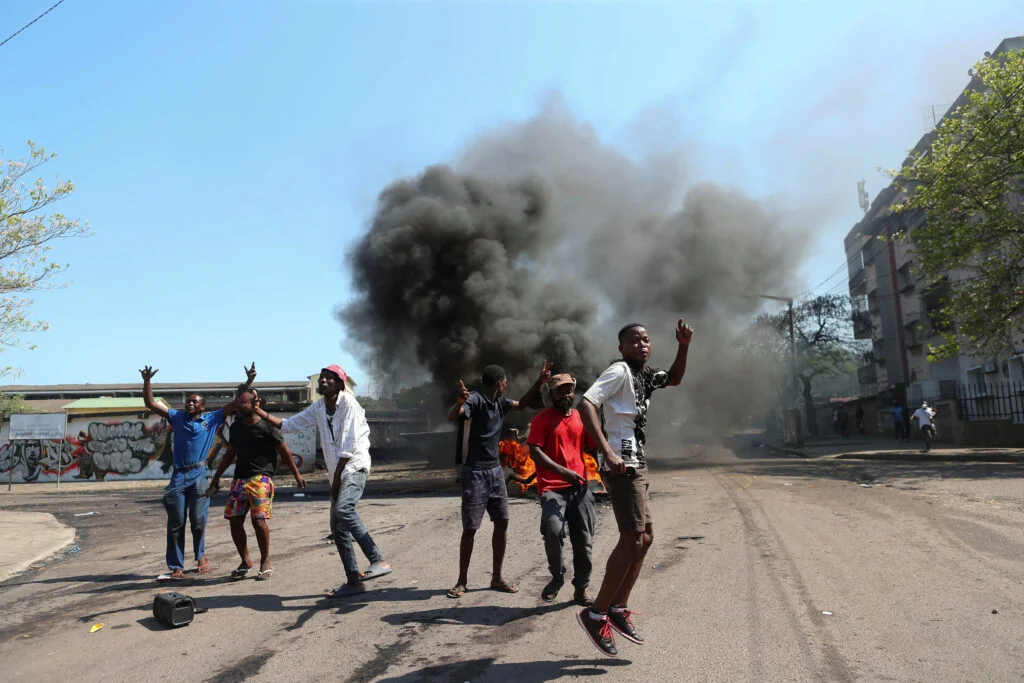
The shadow over the campaign is the killing of candidates and party officials.
JOHANNESBURG
South Africans began casting special ballots on Monday in municipal elections that will test the ruling African National Congress, the durability of the coalition government it leads, and the country's ability to hold a vote amid a surge in political killings. General voting takes place Wednesday, Nov. 4, a public holiday.
The contest is the first nationwide municipal poll since the 2024 formation of the Government of National Unity (GNU), a coalition that includes the Democratic Alliance (DA), and it comes with the ANC's local-government support at a historic low and its rivals eyeing the country's biggest cities.
Background: a party in long decline
The ANC won 45.59% of the vote in the 2021 local elections, its lowest share since the advent of universal suffrage and down from 64.82% in 2011, according to the election overview on Wikipedia. That slide continued nationally in 2024, when the party lost its parliamentary majority and entered a coalition with the DA and smaller parties. The DA's 2021 municipal vote share was 21.62%. Former president Jacob Zuma's uMkhonto weSizwe (MK) Party took about 15% in the 2024 general election and is contesting municipal elections for the first time, focusing on the Gauteng metropolitan areas and on eThekwini (Durban).
Municipal councils matter beyond the ballot box. They run water, electricity, refuse and roads in the cities, and councils elect their mayors. In recent years, fragile coalitions and frequent no-confidence motions have destabilized several metros. Service-delivery failures, including water outages, and Johannesburg's finances, including the national government's withholding of funds, are among the central issues, according to the Wikipedia overview. Corruption allegations involving senior figures and factionalism within parties compound the problem.
The scale of the vote
According to the Electoral Commission of South Africa (IEC), 29,230,808 voters are registered and 136,790 candidates are standing for 10,526 seats across 257 municipalities: eight metros, 44 districts and 205 local councils. Wikipedia's entry lists 620 registered parties as of July 29. About 754,000 new voters registered over two weekends in June and August, 46% of them under 29, and women make up 55% of the roll.
Special votes for people who cannot reach a polling station on election day are being cast on Monday and Tuesday. The IEC approved 2,655,067 special votes, up 131% from 2021, and scheduled more than 600,000 home visits, about 80% of them for voters aged 60 or older, according to the Rio Times. General voting runs from 7 a.m. to 9 p.m. Results will be posted at elections.org.za and at the results centre at the Gallagher Convention Centre in Midrand. The date of the official declaration has not been confirmed.
Polling: a fragmented field
The most recent national survey cited by the Rio Times, an Ipsos poll published Sept. 4, put the ANC at 31%, the DA at 25%, MK at 14% and the Economic Freedom Fighters (EFF) at 11%. The same survey produced city-level figures among registered voters with a party preference: in Cape Town, the DA stood at 46%; in eThekwini, MK stood at 55%; in Johannesburg, the ANC led with 31% to the DA's 27%; and in Tshwane, which includes Pretoria, the DA led with 31% to the ANC's 22%.
The Rio Times noted that other firms have published more recent polls it could not verify, and that some show the DA considerably stronger in Johannesburg than Ipsos does. An Institute of Race Relations poll reported that the DA was more popular than the ANC for the first time, according to Wikipedia. As with any such survey, none is a firm prediction, particularly in a field of hundreds of parties and with turnout uncertain. An Ipsos survey from March found that 64% of South Africans intended to vote, while 38% thought their local government was doing a good job and 63% wanted parties to cooperate at the local level.
The DA, now led by Geordin Hill-Lewis, who was elected in April, has set its sights on Johannesburg, where Helen Zille is its mayoral candidate. It projects growth from 27 councils to about 60, according to Wikipedia. The ANC, led by President Cyril Ramaphosa, has had to manage internal factional disputes, including a delayed announcement of its mayoral candidate.
A court fight over the ANC's candidate lists
The campaign's most dramatic procedural episode came in October. The ANC missed candidate-filing deadlines in six municipalities, in the Eastern Cape, KwaZulu-Natal and the Free State, and 181 of its candidates were excluded from the ballot. In mid-October, the Constitutional Court ordered the IEC to restore them, the Rio Times reported.
The ruling had a ripple effect. The IEC applied the same reasoning to 32 other parties and had to print 6.6 million extra ballots. IEC chair Mosotho Moepya said the election date should not change. Chief Electoral Officer Sy Mamabolo said audit findings on the results system had been addressed, and the commission says it is working to avoid a repeat of a roughly two-hour leaderboard glitch during the 2024 count. The Rio Times said it could not confirm that all the reprinted ballots had been delivered.
Political violence
The shadow over the campaign is the killing of candidates and party officials. The Global Initiative Against Transnational Organized Crime (GI-TOC) counted at least 43 suspected political killings in 45 attacks between Jan. 1 and Sept. 30, 2026, compared with 23 in the same months of 2025, according to the Rio Times. That already exceeds the group's full-year totals of 30 in 2021, 33 in 2024 and 31 in 2025. Of the 43 victims, 41 were killed in 36 attacks on party officials, ward councillors, civic group members and traditional leaders. June, the month of the voter-registration weekend, was the deadliest, with 12 political cases.
Researcher Julian Rademeyer estimated around Oct. 27 that 8 to 10 more people had died in October, bringing the total to about 50. The Rio Times stressed that this is an estimate and not a police count; the last published figure is 43. Motives are not settled in every case: some killings are linked to organized crime, and GI-TOC classifies the killing of one DA candidate that way.
As of Aug. 7, security officials listed victims among the ANC (two councillors, in the Eastern Cape and KwaZulu-Natal), the MK Party (two members, in Gauteng), the EFF (two members, in Gauteng) and the DA (one ward candidate, in the Western Cape). The police's Political Killings Task Team, set up in 2018, says it has arrested more than 400 suspects overall; seven suspects had been arrested in this year's cases as of Aug. 7. NATJOINTS, the police-led security body, describes an extensive election operational plan with visible policing but has not published deployment numbers. An inter-ministerial committee chaired by Minister Des van Rooyen has condemned the killings of candidates and urged parties, especially in KwaZulu-Natal, to stop them. Whether violence will reach polling days is unknown.
Analysis: what Wednesday will decide
Three questions hang over the count.
The first is the size of the ANC's fall. A result in the low 30s nationally, or the loss of control in Johannesburg and Tshwane, would amplify pressure on Ramaphosa from within his own party, even though municipal elections do not directly change the composition of the national government. In November, Ramaphosa reaffirmed that the GNU would continue, according to Wikipedia. How credible that commitment looks will depend on whether the ANC and DA, partners in the national government but rivals for the biggest cities, treat the morning after as a contest or as a negotiation over hung councils.
The second is coalition management at the local level. Wikipedia reports that a Municipal Structures Amendment Bill (B23-2026), intended to make coalitions more stable, was introduced in Parliament on Aug. 18, and it is unclear whether it will pass before the vote. If, as the polls suggest, no party wins outright in several metros, South Africa will once again face weeks of bargaining. Ipsos found that 63% of South Africans want parties to cooperate locally, which suggests voters will punish some forms of instability but may not object to compromise.
The third is MK's test. The party took about 15% nationally in 2024, but it has been dogged by internal turmoil, including leadership changes ordered by Zuma and reports of financial trouble, according to Wikipedia. A strong showing in eThekwini, where Ipsos has it at 55%, would confirm it as a durable regional force. A weak one would raise the question of whether its 2024 result was a personality-driven surge.
Meanwhile, a vote held amid roughly 50 political deaths, if the unofficial tally is right, is itself a stress test for the institutions that oversee it: the IEC, the courts, the police and the parties that sign codes of conduct they then struggle to enforce. The commission's quick adjustment after the Constitutional Court ruling suggests operational resilience. The violence is a harder problem, because motives are not settled in every case and some killings are tied to organized crime rather than electoral competition, which complicates any policing response.
What to watch
Observers should watch turnout, especially in the metros, where the 64% stated intention in the March Ipsos survey could prove high; the IEC's handling of the results system; any violence on Tuesday and Wednesday; and the timing of mayoral elections once results are certified. The first coalition deals in Johannesburg, Tshwane and eThekwini will be the clearest signal of how the GNU's partners intend to behave when they compete rather than govern together.



