MOGADISHU, Somalia
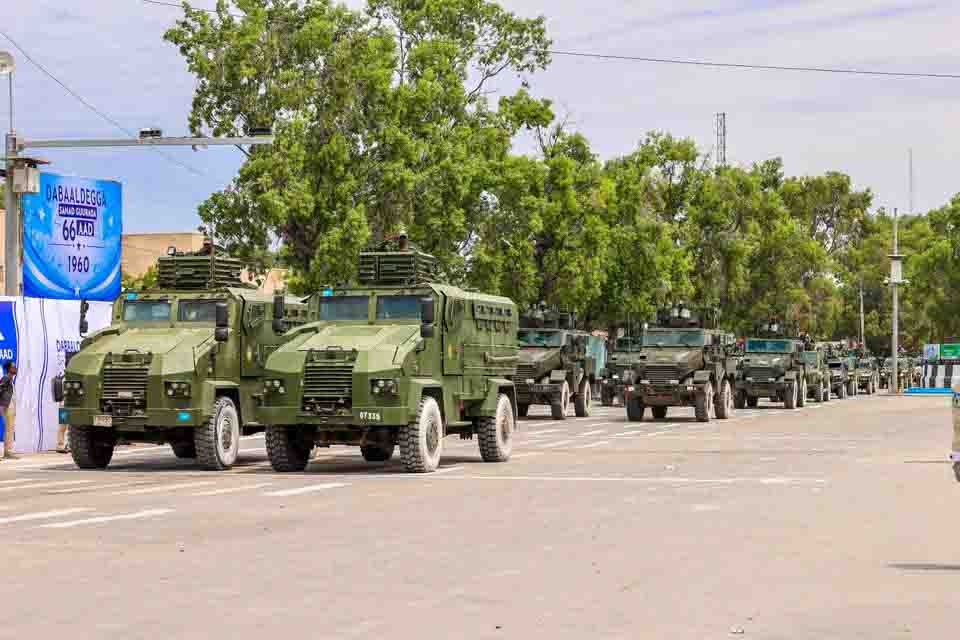
Somalia's monthslong standoff between the Federal Government of Somalia and the semiautonomous state of Puntland escalated further this month when Puntland security forces seized control of three military bases previously aligned with Mogadishu, consolidating the state's grip on security forces in the country's north and dealing a fresh setback to Federal Government efforts to assert control over a fracturing federation. The move, reported by the Washington-based Critical Threats Project in its closely watched Africa File briefing, is the latest flashpoint in a constitutional crisis that has pitted President Hassan Sheikh Mohamud's government against three of Somalia's five federal member states and a national opposition coalition, at a moment when the country's military is simultaneously battling a resurgent al-Shabaab insurgency and preparing for a fraught handoff of security responsibility from African Union peacekeepers.
The dispute traces back to March, when Somalia's Federal Parliament approved, and Mohamud signed, constitutional amendments extending both parliamentary and presidential terms from four to five years, pushing national elections back to 2027. The government has defended the move as necessary to complete technical preparations for a long-promised transition to direct, one-person-one-vote elections, replacing the indirect, clan-based system Somalia has used since the collapse of central government in the early 1990s. But the opposition, organized under the banner of the Somali Future Council — a coalition formed in October 2025 by Puntland President Said Abdullahi Deni, Jubbaland President Ahmed Madobe and several former Somali presidents and prime ministers — denounced the amendments as a "constitutional coup." Somalia's Federal Parliament had already completed its four-year mandate on April 16 without a transition plan in place, and when Mohamud's own presidential term formally expired on May 15, Puntland and Jubbaland followed through on threats to withdraw recognition of his government altogether, raising the prospect of dual, competing claims to national authority.
The irony has not been lost on Somali observers: Mohamud himself was among the most vocal critics of predecessor Mohamed Abdullahi Farmaajo's attempt to extend his own mandate in 2021, an episode that helped propel Mohamud to the presidency in a 2022 indirect election. Writing in the London School of Economics's Africa blog in May, Somali analyst Abdirashid Fidow described the recurrence as symptomatic of a political system in which "constitutional principles function as resources deployed when useful, set aside when not," given the near-total absence of enforcement mechanisms — Somalia has no constitutional court with genuine authority, and the parliament whose own mandate lapsed has shown no inclination to invalidate the extension it approved.
The clearest illustration of the government's approach came in South West State, whose president, Abdiaziz Hassan Mohamed Laftagareen, had until this year been a close Mohamud ally and had backed the federal term-extension amendments even as Puntland and Jubbaland rejected them. When South West's regional parliament moved in late March to re-elect Laftagareen under its own constitutional timeline, the Federal Government declared the process illegal, arguing the March amendments had harmonized state and federal election calendars and required South West to wait until 2027. Laftagareen countered that Mogadishu had no authority to unilaterally rewrite a federal member state's electoral calendar and suspended ties with the central government, signaling openness to joining the Somali Future Council. Somalia's federal army did not wait for the dispute to resolve politically: on March 30, National Army forces moved into Baidoa, the South West state capital, and dismantled the regional administration. Laftagareen resigned and fled to Kenya. Within weeks, Mohamud had installed a loyalist successor and, in a closed-door meeting at the presidential palace, positioned the sitting speaker of the Federal Parliament, Adan Mohamed Nur Madobe, as his party's candidate to formally take over the South West presidency — a maneuver critics have called a military-backed takeover of a federal member state, echoing the very tactics Mohamud once accused Farmaajo of contemplating. Forces loyal to the ousted Laftagareen have since repeatedly attacked Baidoa in an attempt to reverse the takeover, including clashes on July 15 and 16 that targeted a Turkish-backed Somali National Army base in the city, according to Critical Threats Project reporting.

Puntland has proven a harder target. Tensions there trace to mid-June, when the Federal Government appointed a new commander for the Somali National Army's 54th Division, based in Puntland's capital, Garowe — the first time, according to multiple Somali news outlets, that Mogadishu had unilaterally named a divisional commander in Puntland under the current federal framework. Puntland's government rejected the appointment on June 18 and ordered its own security forces to restrict the movement of federal and federal-aligned forces within the state, formally banning federal-aligned militias from recruiting on Puntland territory and requiring federal officials to obtain permission before operating there. Puntland state forces deployed additional checkpoints in the port city of Bosaso, in Garowe and in Galkayo, a city split between Puntland and neighboring Galmudug state, and by late June had reportedly surrounded federal-aligned positions around Garowe, including a base belonging to the contested 54th Division. Puntland has separately accused the Federal Government of smuggling weapons into the state to incite clan conflict and destabilize its government, an allegation Mogadishu has not directly addressed; Puntland forces arrested two federal army officers in early July on suspicion of illicit recruitment activity. President Deni declared on July 1 that the Federal Government was "subverting the federal constitution" and that Puntland would not accept intervention by federal forces on its territory. This month's seizure of the three federal-aligned bases represents Puntland's most consequential move yet to lock the Federal Government out of the state entirely, according to the Critical Threats Project's Aug. 13 assessment, which described the FGS's plan to weaken the anti-federal state government as having been foiled, at least in the short term.
The Federal Government has meanwhile pursued a parallel strategy of pressuring the two federal member states that remain nominally aligned with Mogadishu. In Galmudug, the government deployed forces to the state capital, Dhusmareb, beginning in May to pressure President Ahmed Abdi Karie, known as Qoor-Qoor, to step aside ahead of state elections; he announced on June 26 that he would not seek reelection. In neighboring Hirshabelle, federal forces have been deployed to the state capital, Jowhar, since April in an apparent effort to sideline President Ali Gudlawe Hussein in favor of a Federal Government-backed candidate; Gudlawe announced in late June that he would seek reelection after all, but simultaneously declared his allegiance to Mohamud's ruling party — a hedge that underscores how thoroughly the federal-state contest has come to dominate even ostensibly local elections.
International alarm over the crisis peaked in early June, when clashes broke out in Mogadishu over the Somali Future Council's plans to hold protests against the Federal Government; the government temporarily gained the upper hand by restricting opposition leaders' movements and blocking the demonstrations. The United States, the United Nations and more than a dozen European governments issued statements condemning the violence, and Turkey — long one of the Federal Government's closest security and economic partners — stepped in to mediate. The Somali Future Council offered a notable concession on June 20, proposing a transitional "hybrid" election model blending direct and indirect voting, a departure from its earlier blanket opposition to direct elections. The Federal Government did not formally respond to the proposal and has continued to insist on proceeding with direct, one-person-one-vote elections. Talks mediated by Turkey, the United States, the United Kingdom and the European Union on July 7 and July 9 produced no breakthrough, and Puntland and Jubbaland refused to even participate, citing Turkey's perceived favoritism toward Mogadishu.

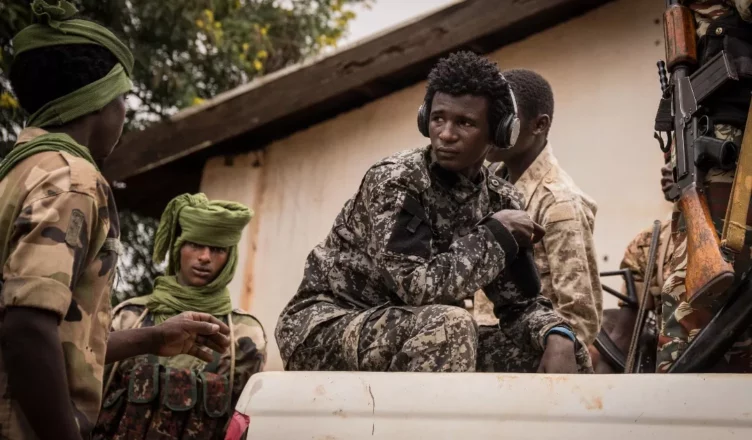
The stakes of the standoff extend well beyond the technical question of election timing. Somalia's National Army has suffered between an estimated 10,000 and 15,000 casualties over three years of fighting al-Shabaab, according to figures cited by the Africa Center for Strategic Studies, even as corruption and what critics describe as poor leadership have hampered the counterinsurgency campaign; public land sales to politically connected figures in Mogadishu have separately triggered protests and fresh corruption allegations. Analysts and Western officials warn that the internal political fight is diverting resources and attention from the fight against al-Shabaab at a delicate moment, as the African Union's support mission — AUSSOM — moves ahead with an accelerated handoff of security responsibility to Somali forces whose capacity to hold the line independently remains in serious doubt. Al-Shabaab has already intensified operations across central and southern Somalia and into northeastern Kenya in recent months, according to regional security assessments, appearing to exploit the political disarray in Mogadishu and the diversion of federal military resources toward confrontations with Puntland and South West's ousted administration rather than the insurgency itself.
With Puntland now in physical control of federal bases on its territory and the broader dispute between Mogadishu and the Somali Future Council no closer to resolution, the immediate outlook is for continued, low-grade confrontation punctuated by periodic international mediation efforts rather than a decisive settlement. A further round of talks was tentatively scheduled for late July, though it is unclear whether Puntland and Jubbaland's boycott of Turkish-mediated negotiations will persist. What remains clear is that Somalia's federal experiment — always fragile, and now stripped, as Fidow put it, of "procedural pretence" — faces its most serious internal challenge in years at precisely the moment its external security guarantees are being drawn down.
Published By | News Editor