Economic and social transformation
Ghana has spent 2026 producing the kind of macroeconomic numbers that finance ministers elsewhere on the continent study with envy. Real GDP expanded by 6.0 percent in 2025, the fastest rate since 2019, and accelerated to 6.4 percent year-on-year in the first quarter of 2026. Headline inflation, which stood at 23.2 percent in February 2025, fell to 3.2 percent by March 2026 before edging back to the mid-single digits. Public debt dropped from 70.3 percent of GDP at the end of 2024 to 49.0 percent at the end of 2025. Gross international reserves nearly doubled to US$11.9 billion, roughly four months of import cover, and had strengthened to five months by mid-2026. On 27 July 2026 the International Monetary Fund Executive Board completed the sixth and final review of Ghana’s 39-month Extended Credit Facility arrangement, releasing a last disbursement of SDR 265.9 million, about US$371 million, and concluded that the country’s risk of debt distress had returned to moderate.
And yet the World Bank’s tenth Ghana Economic Update, released in late August 2026, describes the recovery as structurally incomplete. The Bank’s poverty measurement puts 56.4 percent of Ghanaians below the poverty line despite that growth, with regional gaps widening rather than narrowing. Unemployment sits at 13.1 percent overall, 14.8 percent among women and 32 percent among young people. The gap between the two accounts — a stabilisation that international institutions describe as exemplary and a household economy that has not obviously improved — is the defining fact of Ghana’s 2026.

The gold that pays for the stabilisation
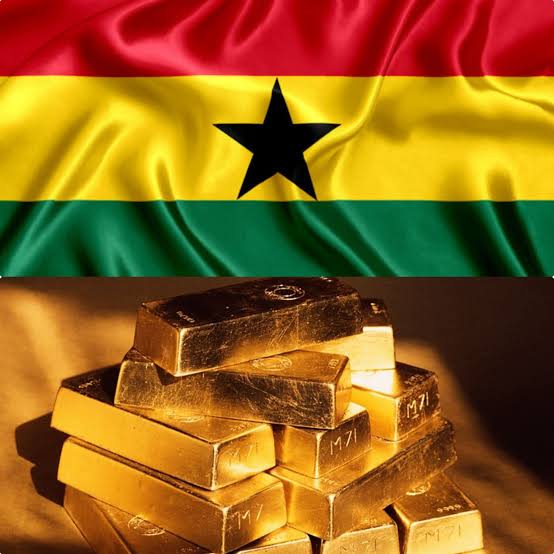
The arithmetic of the recovery runs through one commodity. Gold exports reached US$12.5 billion in the first half of 2026 alone, representing 68 percent of Ghana’s total exports. That concentration produced a current account surplus of 7.9 percent of GDP in 2025, the single largest contributor to the reserve build-up and to the cedi’s dramatic 2025 appreciation.
What makes the Ghanaian case unusual is where the gold is coming from. Artisanal and small-scale mining produced a record 104 tonnes in 2025, overtaking large-scale industrial output for the first time in the country’s history. The Ghana Gold Board, GoldBod, generated close to US$11 billion in foreign exchange earnings from the artisanal sector last year against roughly US$9 billion from the large miners. In the first half of 2026 GoldBod purchased up to 54 tonnes from artisanal and small-scale operators, and its chief executive, Samuel Gyamfi, has said output is on course to match or exceed the 2025 record even though softer gold prices have trimmed earnings expectations.
This is a genuine institutional achievement. Channelling artisanal output through a state aggregator has recaptured foreign exchange that previously leaked out through smuggling routes, and it has done so by formalising a sector that employs far more Ghanaians than the industrial mines do. But it also means that a very large share of the country’s external stability now depends on the world price of a single metal and on the continued willingness of tens of thousands of small operators to sell through an official channel. The cedi’s trajectory illustrates the exposure: after appreciating sharply through 2025, it gave back roughly 7.9 percent against the US dollar during the first half of 2026.
Cocoa: the rural economy that did not join the party
If gold explains the strength of the national accounts, cocoa explains much of the weakness in rural household income. In February 2026 the Ghana Cocoa Board cut the farmgate price by 28.6 percent, to 41,392 cedis per tonne, about US$3,728, five months after the 2025/26 season opened in August 2025 and only months after an October 2025 increase of roughly 12 percent. In June 2026 COCOBOD confirmed the price would be held unchanged for the mid-crop season. Production is expected to improve, with COCOBOD estimating output could reach 650,000 tonnes for the 2025/26 season, a recovery from the recent collapse driven by dry weather and black pod disease across the West African belt.
The tension is straightforward. A cocoa farmer producing more beans at a price nearly thirty percent lower than it was in January is not obviously better off, and the cedi’s 2025 appreciation compounded the squeeze by reducing the local-currency value of dollar-denominated world prices. Ghana and Côte d’Ivoire together account for more than sixty percent of global cocoa supply, which gives them theoretical pricing power, but the pass-through mechanism to farmgate income remains hostage to a futures market that fell to year-lows in 2026 on weak demand. For the roughly one in five Ghanaians whose livelihood touches cocoa, the macroeconomic recovery has arrived as a price cut.

Fiscal architecture after the Fund
The IMF programme ended in July 2026, but the surveillance did not. Alongside the final ECF review and the 2026 Article IV consultation, the Board reviewed Ghana’s request for a 36-month Policy Coordination Instrument — a non-financing arrangement that keeps the Fund engaged on reform without further lending. It is an unusual and revealing choice: Ghana no longer needs the money, but the authorities judged that they still need the discipline, or at least the external validation of it.
That discipline is codified domestically. The 2026 budget, presented to Parliament by Finance Minister Cassiel Ato Forson on 13 November 2025, targets a primary surplus of 1.5 percent of GDP on a commitment basis under the newly adopted Fiscal Responsibility Framework. The mid-year fiscal policy review, delivered on 23 July 2026 under the theme "Resetting for Growth, Jobs and Economic Transformation," showed revenue broadly on target at 7.8 percent of GDP against a 7.9 percent half-year goal, with domestic revenue at 7.7 percent and non-oil tax revenue at 6.4 percent. Spending, by contrast, ran well below plan: primary expenditure reached only 6.6 percent of GDP against a half-year target of 8.1 percent, and total expenditure came to 47.5 percent of the programmed GH¢302.5 billion for the year. Compensation of public sector employees, including SSNIT and Tier 2 contributions, absorbed GH¢48.8 billion; domestic interest payments took a further GH¢21.5 billion.
Underspending is where the fiscal story meets the jobs story. The 2026 budget increased the Big Push infrastructure programme by 116.61 percent, the largest single allocation increase alongside the Women’s Development Bank, precisely because capital expenditure is the channel through which stabilisation is supposed to become employment. The flagship 24-Hour Economy initiative received a direct allocation of GH¢110 million, with its authorising Act now operational and 268 fuel stations, 33 manufacturing companies and other institutions reported to have adopted multi-shift operations. These are real but modest numbers set against a labour force in which nearly a third of young people cannot find work. The African Development Bank, which forecasts 5.0 percent growth in 2026 rising to 5.4 percent in 2027 — marginally above the 4.8 percent projected by both the IMF and the World Bank — expects the fiscal deficit to narrow from 2.6 percent of GDP in 2026 to 2.2 percent in 2027, with a current account surplus of 3.0 percent easing to 2.7 percent.
The social ledger
The government’s answer to the transmission problem has been to expand social entitlements directly rather than wait for growth to trickle through the labour market. On 15 April 2026 Ghana launched a Free Primary Healthcare Programme covering 150 underserved districts, with nationwide expansion targeted for 2028 and GH¢1.2 billion ring-fenced for the rollout. Health Minister Kwabena Mintah Akandoh has been explicit that the programme complements rather than replaces the National Health Insurance Scheme. In parallel, the National Health Insurance Authority ran a free registration campaign from 15 April to 31 May 2026, waiving registration and renewal fees and the one-month waiting period; NHIS coverage stands at roughly 76 percent of the population, with President John Mahama targeting 90 percent.
These are meaningful commitments, and they are being made from a fiscal position that would not have permitted them three years ago. But health coverage does not by itself resolve what the World Bank identifies as the core structural problem: growth concentrated in sectors with limited capacity to create jobs. Gold mining, even in its artisanal form, employs a fraction of the workforce that agriculture does. The Bank’s tenth Economic Update accordingly devotes its thematic section to transport as a platform for transformation, setting out six priority reforms — sustainably funding road maintenance, improving coordination across transport agencies, revitalising rail freight along key trade corridors, treating road safety as an economic priority, integrating climate resilience into transport planning and financing, and expanding digital logistics systems.
What 2027 will test
Ghana enters the second half of the decade having done the hard, unpopular part. The comprehensive debt restructuring is largely complete, with bilateral agreements signed with most members of the Official Creditor Committee and agreements in principle finalised with several external commercial creditors. Inflation is inside single digits, though both the World Bank and the African Development Bank expect it to end 2026 nearer 9 percent than the 3.2 percent trough of March. Reserves are at their strongest level in years. The question is no longer whether Ghana can stabilise, but whether stabilisation converts.
Three tests will decide it. The first is whether the Big Push allocation is actually spent — a 116 percent budget increase that arrives as underspending against target does nothing for employment. The second is whether the gold windfall can be recycled into sectors that hire, rather than into reserves and debt service alone; the African Development Bank’s 2026 Country Focus Report for Ghana, subtitled "Mobilizing Ghana’s Development Financing at Scale in a Fragmented World," frames this as the central financing question. The third is cocoa, where farmgate policy will determine whether a rural population of several million experiences the recovery as anything other than a price cut. A country can post six percent growth and a 49 percent debt ratio and still have more than half its people in poverty. Ghana in 2026 is the proof.
Published By | Business News Editor