Written By | Health News Agencies
Rumours of a smashed test tube, a second sick colleague and a silent institute: what we know, what we don't, and why the WHO is still asking questions
IRKUTSK / GENEVA
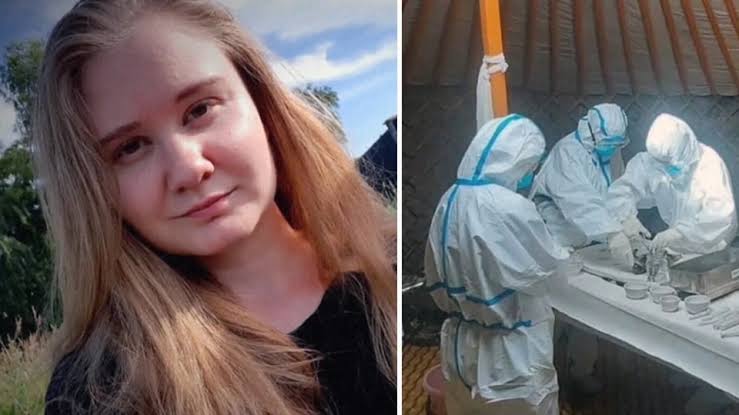
She worked in a building created in 1934 for one purpose: to stop plague. Now a 28-year-old technician at the Irkutsk Anti-Plague Research Institute of Siberia and the Far East is dead, nearly 200 people have been put under medical observation, and the rumour mill has gone into overdrive.
Within hours of her death on 2 October from what officials call "pneumonia of unknown cause," social media was awash with claims: a broken test tube of live plague bacteria, a secret second victim, even whispers of a bioweapon. Russia says none of it is true. The World Health Organization says it still has questions. And in the middle of the noise sits a single hard fact — a young woman has died, and the public still has not been told exactly why.
Here is what is confirmed, what is claimed, and what remains a mystery.
The Timeline: What Officials Have Said
According to Reuters reporting, the technician died on 2 October in circumstances that Russian authorities did not initially disclose. Officials said she had died of an unknown type of pneumonia. They added that she was vaccinated and "immune to the dangerous infections with which she worked."
Authorities placed about 200 people under quarantine or observation. A regional governor initially suggested she "may" have died of plague, a remark that sent alarm bells ringing across the internet. Russia's health watchdog, Rospotrebnadzor, later said that no microorganisms linked to her work were found in her samples and that no plague cases had been recorded in Irkutsk.
By Wednesday 7 October, the picture was calming. Reuters reported that officials said about 90 per cent of those quarantined had been released after nearly 5,000 laboratory tests, with no plague cases found among her contacts. The health regulator said there was no risk of an epidemic and began winding down precautionary measures.
But the central question — what actually killed her? — has not been publicly answered.
Rumour Versus Record
The most viral claim is that the technician dropped or broke a tube containing live Yersinia pestis, the bacterium that causes plague. The European Centre for Disease Prevention and Control's weekly report notes that she reportedly broke such a tube on 25 September, but stresses that the reports are unconfirmed. Russia's health watchdog has rejected the claim.
Other social-media posts claimed she had travelled to Thailand, Moldova or an area near the Mongolian border. Reuters reported that no public evidence supports those stories. Russian authorities also denied on 6 October that they were imposing anti-plague measures at all, a statement that sits awkwardly beside the quarantine of roughly 200 people.
Then there is the reported second case. Fox 5 reported on 7 October that unverified accounts described a second employee with pneumonia of undetermined cause, and that the WHO had asked Russia about it. As of the most recent reporting available, the existence of that second case has not been confirmed.
WHO Director-General Tedros Adhanom Ghebreyesus said the agency has asked Russia for details on the researcher's pneumonia, the pathogen involved, and the reported second case. Russian officials told the WHO that Irkutsk has recorded "no cases of plague." A WHO spokesperson said that, based on unofficial information, the risk to the general public appears low.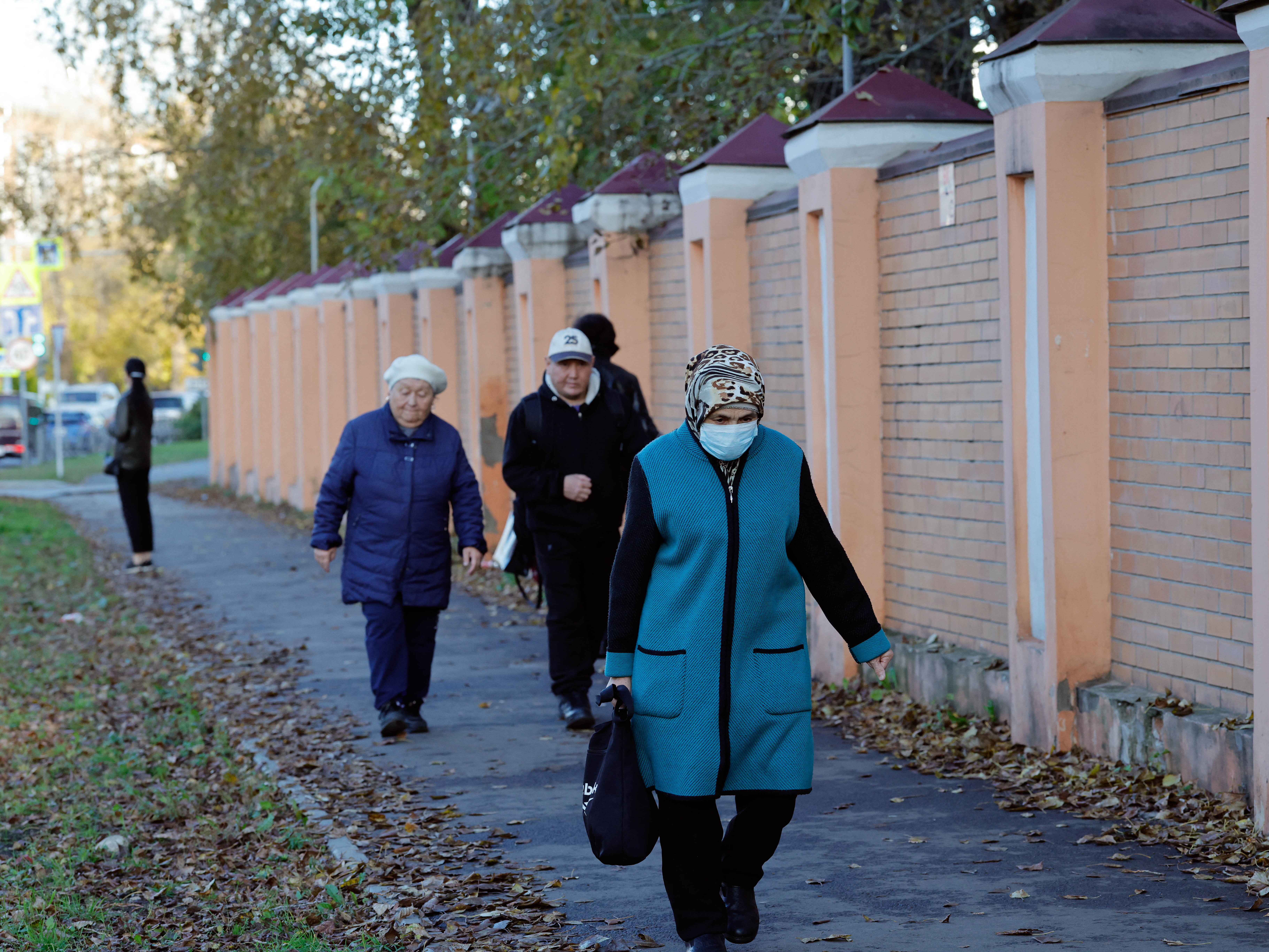
Why the Word 'Plague' Terrifies
Plague conjures the Black Death, which reportedly killed more than 50 million people in 14th-century Europe. It is caused by Yersinia pestis, which normally circulates among small animals and fleas. Untreated, mortality can range from 30 per cent to 100 per cent, depending on the form.
There are three main forms. Bubonic plague is the most common. Septicaemic plague is not spread from person to person. Pneumonic plague, the rarest and most virulent, infects the lungs and can pass between people through respiratory droplets. Incubation is typically one to seven days, and early symptoms look like the flu.
The reassuring part is that plague is treatable. Antibiotics work if the disease is identified quickly, and the WHO says recovery rates are high when treatment starts promptly. Most human cases in the past six years have been reported from the Democratic Republic of the Congo and Madagascar. The disease is endemic in parts of Siberia, but infections in Russians are rare.
That is exactly why the symptoms attributed to the technician — pneumonia — alarmed so many people. Pneumonia is a common condition with dozens of causes. It is also what pneumonic plague looks like. Without published test results, outsiders cannot tell the difference, and silence breeds speculation.
A Lab With a Long Pedigree
The Irkutsk institute was founded in 1934 to control plague outbreaks. Its founding scientist is reported to have helped quell outbreaks in Siberia, Mongolia and China. It later expanded into work on other dangerous diseases, including cholera and anthrax.
Labs like this exist in many countries precisely because dangerous pathogens do not disappear on their own. They also operate under strict biosafety rules, because a single lapse — a punctured glove, a dropped sample — can have outsized consequences. Whether such a lapse occurred here is the very thing the WHO is trying to establish.
Reuters noted that public-health experts urged caution, stressing that only one case has been reported. The agency also noted a broader context: although most scientists believe COVID-19 came from animals, some have suggested a lab leak, a debate that has left the world acutely sensitive to any hint of a laboratory incident.
The Political Fallout
The incident quickly spilled over into geopolitics. The WHO in Geneva and the United States both asked Russia for more information. US President Donald Trump said on Wednesday that he believed Moscow had the situation under control and that the US did not think a bioweapon had caused the death.
Neighbouring countries were not taking chances. Kazakhstan, Kyrgyzstan and Uzbekistan stepped up border precautions, according to Reuters. Russia is a full WHO member and the organisation has an office in Moscow, which means that under international health rules it is expected to share information about events that could have cross-border implications.
For ordinary readers, the sensible reading of all this is cautious calm. Official statements point to a contained event, but they also leave the cause of death unexplained, and both things can be true at once. Public-health authorities generally treat a gap in information as a reason to keep watching, not as a reason to panic.
The ECDC, meanwhile, was careful: in its week 41 report it said the available information was "not sufficient to draw a firm conclusion" about the risk to Europe. It noted that around 189 to 200 contacts were placed under observation and that all tested negative at the time of reporting.
Expert Perspective
Infectious-disease specialists cited in coverage of the case have drawn a clear line between what is known and what is feared. What is known: one death, a few hundred contacts monitored, thousands of negative tests, and a regulator that says the emergency is over. What is feared: a laboratory accident that has not been admitted, or a pathogen that has not been named.
The WHO's approach has been the standard one — ask for details, assess risk on the basis of unofficial reports while waiting for official ones, and avoid alarm. A statement that the risk to the general public appears low is not the same as a statement that the cause has been found, and experts note that the gap between the two is where transparency matters most.
The key tests are straightforward. If the death was caused by plague, laboratory confirmation and genome sequencing could show it and could link it to the institute's own strains. If it was not, the authorities can publish the actual diagnosis. Either answer would end the guessing. So far, neither has been made public.
What This Means for You
For almost everyone reading this, the risk is effectively zero. Hundreds of contacts have been monitored and, according to officials, no further plague cases have emerged. The WHO's early assessment is that risk to the public is low. No travel restrictions have been recommended by the agencies cited in this article.
If you are heading to Siberia, Central Asia or anywhere plague is known to occur, the usual advice applies: avoid contact with wild rodents and their fleas, do not handle sick or dead animals, use insect repellent, and see a doctor promptly if you develop a sudden fever, swollen painful lymph nodes, or cough with breathlessness. Tell the clinic where you have been. Because plague responds to antibiotics, speed makes all the difference.
And as a reader of fast-moving health news, treat unconfirmed claims — a smashed test tube, a secret second patient, an overseas holiday — as exactly that. Several of the loudest stories about this case have been denied by officials or lack public evidence.
The Bottom Line
A young scientist has died, and the world is still waiting for a clear explanation. Russia says the danger has passed; the WHO says it wants more information; neighbouring states have tightened their borders as a precaution; and the internet has filled the vacuum with theories.
The most likely outcome, based on everything officials have said so far, is that this will fade from the headlines as a tragic but contained event. But the quickest way to put the rumours to rest is simple: tell the public what she died of. Until that happens, Irkutsk will remain a place where the question is bigger than the facts — and the WHO will keep asking.