Written By | International News Desk
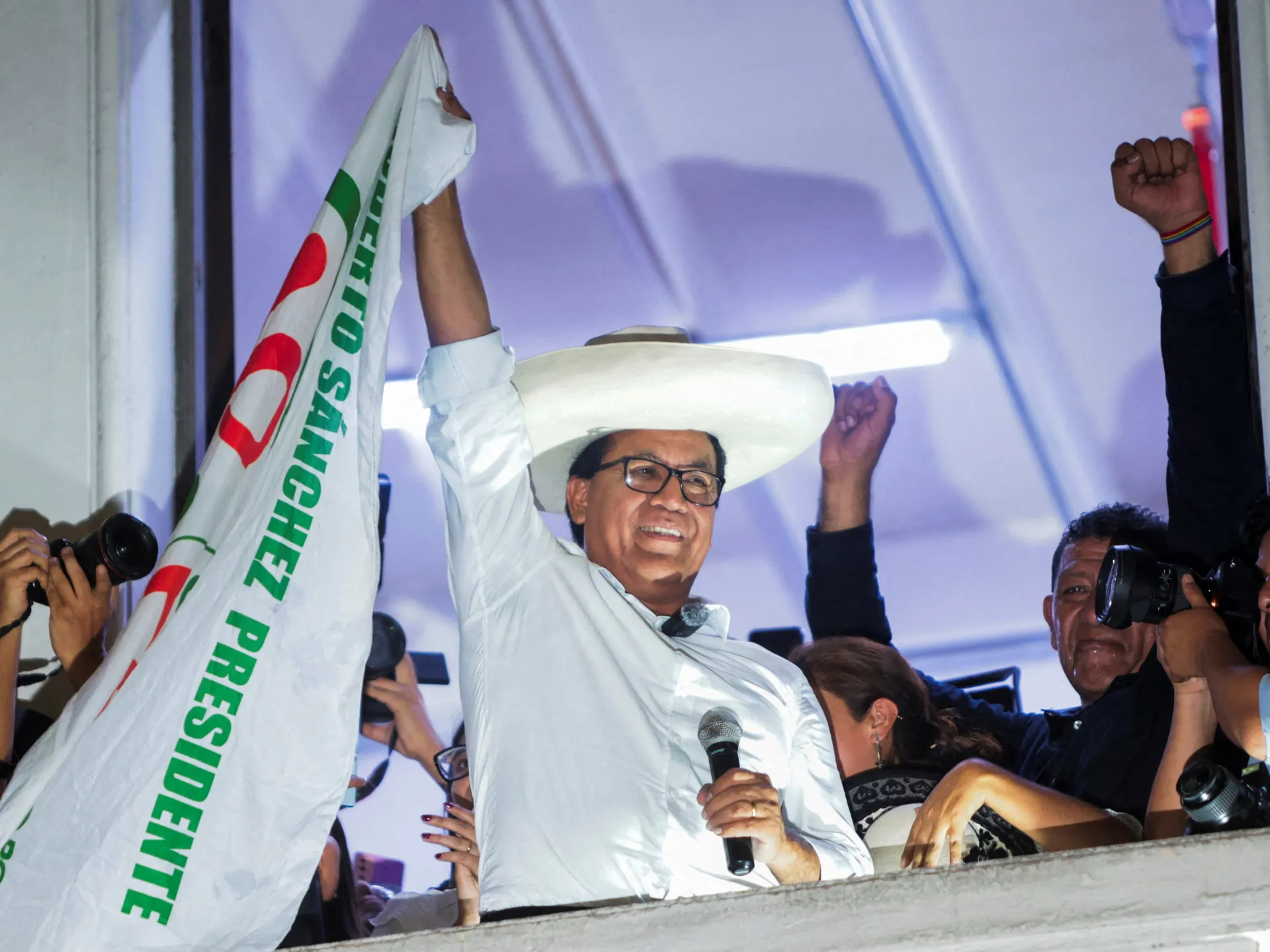
Leftist Sanchez
PERU
Peru is in the grip of one of the closest and most contested presidential elections in modern Latin American history—the latest chapter in a political crisis that has produced roughly six presidents in a decade. The most recent turbulence traces back to leftist President Pedro Castillo's failed self-coup in December 2022, his removal, and subsequent leadership churn that saw Dina Boluarte take over, then José Jerí, both forced out amid crackdowns and scandal.
Against that backdrop of institutional exhaustion, Peruvians went to the polls on April 12–13, 2026. With no first-round majority, the contest advanced to a June 7 runoff between Keiko Fujimori, the conservative leader of Popular Force and daughter of former president Alberto Fujimori, and Roberto Sánchez, a former psychologist and trade minister who led the left-leaning Together for Peru. Fujimori campaigned on restoring public order and cracking down on crime; Sánchez on anti-poverty measures, police reform, and a new constitution.
Key Developments
The June 7 runoff produced a result so close that, more than two weeks later, it still has not been settled. As ballots were tallied, the lead shifted by fractions of a percentage point: at one stage, Sánchez held a razor-thin edge of about 50.1% to Fujimori's 49.9%. As counting neared completion, the lead flipped, and Fujimori emerged ahead by roughly a tenth of a percentage point—a margin reported as around 35,000 to 40,000 votes out of more than 18 million cast.
Sánchez has not conceded and has publicly proposed a recount, pointing to how overseas ballots were tabulated. Peru's electoral system set up roughly 2,506 polling tables abroad to serve more than 1.2 million Peruvians registered outside the country, equivalent to about 4.4% of the national electorate. Sánchez has alleged that votes cast abroad were manipulated to benefit Fujimori. On June 23, he stated flatly that he "will not recognize" a Fujimori victory if the disputed ballots are not resolved. Compounding the sense of irregularity, April's first round was marred by a separate scandal in which 90 ballots were found pre-marked for Fujimori's party; two people were arrested. As of the most recent tallies, roughly 1,517 ballots had been formally contested, with additional votes requiring further scrutiny before a final certified result can be issued.
The shifting lead itself has become part of the story. Early in the count, results skewed toward Sánchez, fueling cautious optimism. As ballots from remote provinces and overseas tables were added, the count moved toward Fujimori—a pattern not inherently unusual, but one Sánchez's campaign has cited as circumstantial grounds for fraud allegations. Peru's electoral board, ONPE, has defended its process, noting that staggered reporting of overseas results is a structural feature, not evidence of manipulation.
Reactions
International election observers have so far declined to validate Sánchez's fraud claims. Both the OAS and EU observer missions, which monitored the runoff, said the vote was largely orderly. The head of the OAS mission acknowledged some concern over procedural changes but said no irregularities serious enough to affect the outcome had been identified. Analysts broadly agree that while a legal challenge is all but certain given the thin margin, there is little indication the international community will support allegations that the result was rigged.
Domestically, the dispute has deepened an already polarized climate. Fujimori, despite leading, has notably not declared victory, instead describing the race as a statistical tie—a measure of caution reflecting both the closeness and the bruising history of past Peruvian elections. Regional commentators have noted the symbolism of a potential Fujimori presidency: a win would hand power to the daughter of a former president remembered both for crushing insurgency and for corruption and human-rights abuses that sent him to prison. Supporters of Together for Peru argue that a Sánchez loss attributed to disputed overseas ballots would deepen grievances among rural and working-class voters who feel electoral institutions tilt toward Lima-based elites.
What's Next
Peru's electoral board has indicated that a full final count, incorporating the review of contested ballots, is expected to conclude in July, with some estimates pointing to a proclamation of results by mid-July. Peru's presidential inauguration remains scheduled for July 28, leaving a narrow window for the recount process, legal challenges, and formal certification to play out before the next president is due to take office.
A protracted or contested certification risks reigniting the street protests that have repeatedly accompanied changes of government over the past several years, particularly if Sánchez's supporters perceive the final result as illegitimate. Conversely, a clean and broadly accepted certification, even of a razor-thin Fujimori win, could offer Peru a rare moment of institutional stability after a decade of turnover—though given the country's recent history, few observers are treating that outcome as assured until the final votes are actually certified.



