Written By | International News Agencies
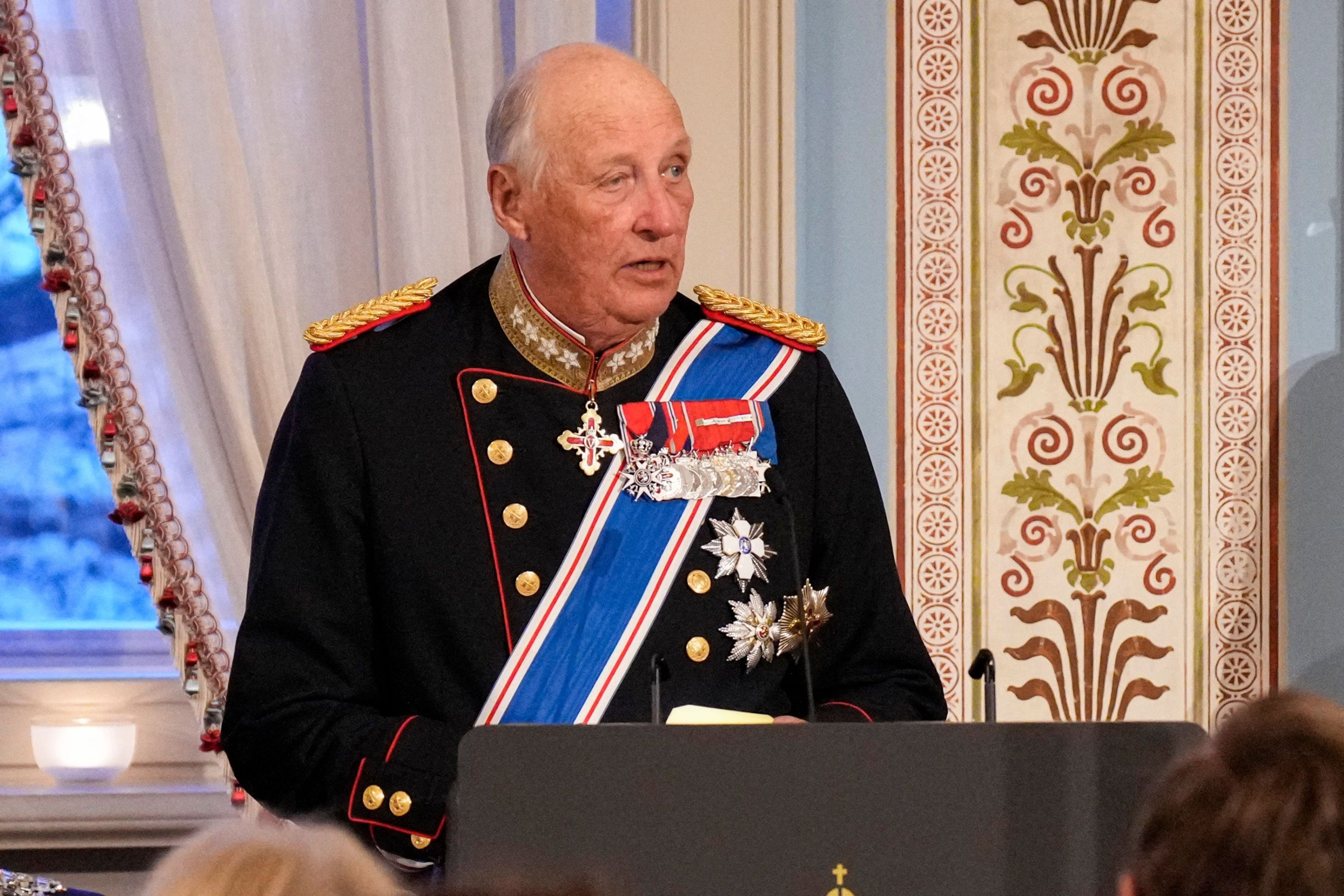
King Harald V, Europe's oldest reigning monarch
Background
King Harald V, Europe's oldest reigning monarch and the man who steered Norway through three and a half decades of national tragedy, oil-fueled prosperity, and family scandal, died early Friday morning at Rikshospitalet in Oslo. The Royal Palace confirmed he passed away at 6:35 a.m. local time at the age of 89. He is succeeded immediately and automatically by his only son, Crown Prince Haakon, who becomes King Haakon VIII, Norway's fourth monarch since the country won independence from Sweden in 1905.
Harald's life was shaped from its earliest days by war and displacement. Born in Oslo in 1937 to then-Crown Prince Olav and Crown Princess Märtha, he was just three years old when Nazi Germany invaded Norway in April 1940. He was smuggled out of the country with his mother and two sisters, eventually finding refuge in the United States, while his father and grandfather, King Haakon VII, remained in Britain to lead a government-in-exile and refused to cooperate with the German occupation. That childhood experience of exile, and his family's wartime example of quiet defiance, became a defining thread of the story Norwegians told about their royal house for the rest of the twentieth century.
Harald returned to Norway after the war, was educated at Norwegian military academies and later at Balliol College, Oxford, and pursued a lifelong passion for competitive sailing, representing Norway at three Olympic Games as a yachtsman. His most consequential personal decision, in the eyes of many biographers, came in 1968, when he insisted on marrying Sonja Haraldsen, a commoner and the daughter of a clothing merchant, rather than a princess from another European royal house. The engagement was controversial at the time and delayed for nearly a decade by concerns within the political establishment, but the marriage endured for 58 years until his death and is widely credited with beginning the modernization of a monarchy that had, under his father and grandfather, carried a heavier, more formal and military bearing shaped by the family's wartime history.
Harald ascended to the throne in January 1991 upon the death of his British-born father, King Olav V, who himself had been an immensely popular monarch. Harald reigned for 35 years, a tenure that spanned Norway's transformation into one of the world's wealthiest nations on the back of North Sea oil and gas revenue, the country's sovereign wealth fund becoming the largest of its kind on Earth, and a series of national traumas including the 2011 twin terrorist attacks by Anders Behring Breivik that killed 77 people, most of them teenagers at a Labour Party youth camp. Harald's public grief and steady, unifying response after that massacre, alongside then-Prime Minister Jens Stoltenberg, is remembered by many Norwegians as one of the defining moments of his reign.
Key Developments
Harald's health had visibly declined over the past two years, marked by repeated hospitalizations. He underwent heart valve replacement surgery in 2020, was fitted with a pacemaker in 2024, and was hospitalized on several occasions abroad, including a widely reported episode in Malaysia in 2023 that required medical evacuation back to Norway. He was admitted to Rikshospitalet most recently on August 17, 2026, for treatment of blood anemia, and remained there until his death eleven days later.
Under Norway's constitution, there is no interregnum and no requirement for a coronation. Haakon became king automatically at the instant of his father's death, a principle rooted in the historic doctrine that "the king never dies" — the monarchy passes without interruption. He will not have a crown physically placed on his head in the manner of the British coronation tradition; Norway abolished that ceremonial anointing more than a century ago. Instead, the new king is expected, if he chooses, to hold a separate consecration or blessing ceremony at Trondheim's Nidaros Cathedral, the traditional site of royal blessings, at a date to be announced by the Palace and the government. In the near term, Haakon is required to appear before the Storting, Norway's parliament, to swear an oath to govern in accordance with the constitution and the laws of the kingdom, a step expected within days.
Haakon, 53, was not always destined to inherit the throne in the order he did. He is the younger of Harald's two children, born after his older sister, Princess Märtha Louise. Under the succession rules in place at the time of his birth, only male heirs could inherit, and it was not until the Norwegian constitution was amended in 1990 — the year before Harald became king — to introduce absolute primogeniture, allowing a firstborn child of either gender to take precedence, that gender equality was formally written into the line of succession. Crucially, that 1990 change was not applied retroactively, meaning it did not alter Haakon's own position ahead of his sister; he became heir apparent only in 1991, when his grandfather Olav's death moved his father to the throne and moved him, as the elder son of the new king, into direct line. Haakon's own daughter, Princess Ingrid Alexandra, now becomes heir apparent as the eldest child of the new king, benefiting from the fully gender-neutral succession rule that will govern the throne for generations to come. Haakon is joined as consort by Crown Princess Mette-Marit, now Queen Mette-Marit, also 53, whom he married in 2001 in a union that, like his father's, once drew public controversy over her background as a single mother before entering royal life and went on to become broadly popular.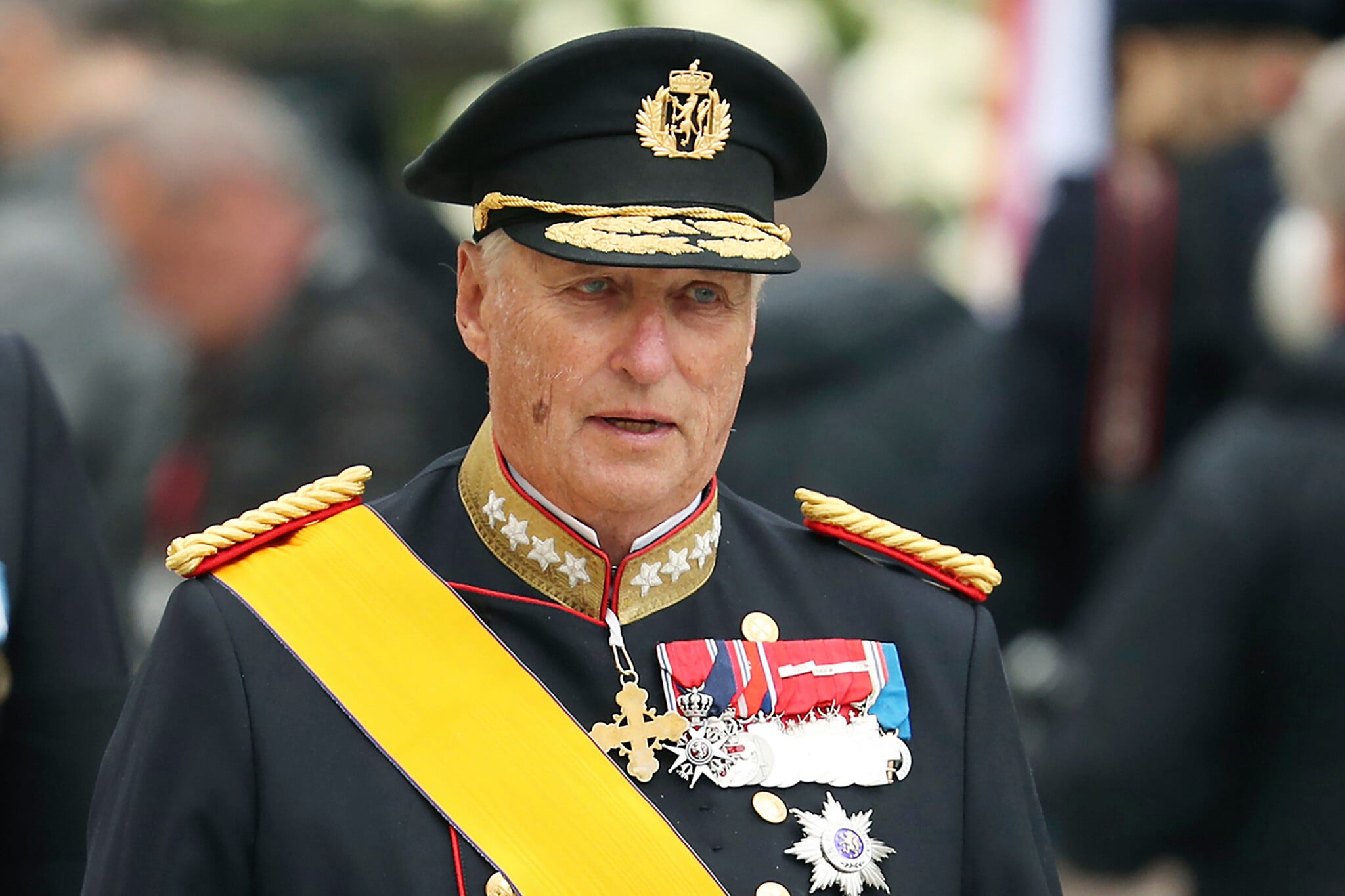
Reactions
Tributes arrived within hours from royal houses and heads of state across Europe and beyond. Britain's King Charles III said his family was mourning "a friend whose kindness, compassion and deep sense of duty echoed from across the sea and across the decades," a reflection of the close personal and family ties between the British and Norwegian royal houses that trace back to the Second World War, when Norway's royal family sheltered in London. Denmark's King Frederik X and Queen Mary remembered Harald as "a fine man with a twinkle in his eye and a big heart." Sweden's royal house, with which Norway's monarchy has a complicated history dating to the 1905 dissolution of their union, also issued condolences, as did the Netherlands, Spain, Belgium, and other European monarchies that regularly hosted or were hosted by Harald and Sonja over more than three decades of state visits and royal weddings.
Norwegian political leaders across the spectrum offered similar praise. Officials described Harald as a unifying figure who managed to remain above day-to-day politics while still projecting moral authority during moments of crisis, above all after the 2011 Utøya and Oslo attacks, when his emotional public remarks urging Norwegians toward openness and tolerance rather than retreat were widely credited with helping shape the country's response. Commentators and biographers publishing tributes on the day of his death repeatedly returned to two threads: his role, alongside Queen Sonja, in quietly modernizing a royal institution that had inherited a formal, martial bearing from the wartime generation, and his refusal, even in frail health in his late eighties, to follow the path of several other aging European monarchs, including Queen Margrethe II of Denmark and King Albert II of Belgium, who abdicated in favor of their heirs rather than serve until death.
Ordinary Norwegians gathered outside the Royal Palace in Oslo through the day, laying flowers along the palace gates in scenes reminiscent of the public mourning that followed King Olav V's death in 1991. Norwegian broadcasters interrupted regular programming to carry rolling coverage, and flags were lowered to half-staff on public buildings nationwide. The government is expected to announce a period of official mourning and the arrangements for a state funeral, which will likely draw a large gathering of European royalty and foreign dignitaries in the coming weeks, echoing the scale of recent royal funerals such as those for Britain's Queen Elizabeth II and Japan's former emperors.
What's Next
In the immediate term, attention turns to the formal transition of the crown: Haakon's oath before the Storting, the announcement of a state funeral date for Harald, and the question of whether and when Haakon will hold a consecration ceremony at Nidaros Cathedral. Norway's monarchy is constitutionally a ceremonial one, with executive power resting in the elected government, so the practical governance of the country is not expected to change. But the succession does mark a generational shift for an institution that consistently polls as one of the most trusted in Norwegian public life, and royal watchers will be watching closely how Haakon, who has spent more than three decades as a working member of the royal family and has cultivated a reputation for engagement on issues like ocean conservation and mental health, chooses to define his own reign.
Longer term, the succession also puts a spotlight on Princess Ingrid Alexandra, now 22 and the direct heir to the throne, whose public role is likely to expand in the coming years as she completes her education and takes on more formal royal duties. Norway's monarchy has in recent years also weathered turbulence from Harald and Sonja's daughter, Princess Märtha Louise, whose marriage to an American self-styled shaman and business ventures trading on her royal title prompted the palace to formally strip her of royal patronages and duties in 2022; how the new king manages the family's public image going forward, following that period of tabloid scrutiny, will be an early test of his stewardship. For now, though, the dominant mood across Norway and the wider community of European monarchies is one of mourning for a king widely seen as having steered his country's ancient crown steadily through a turbulent modern era.



