NIAMEY, Niger
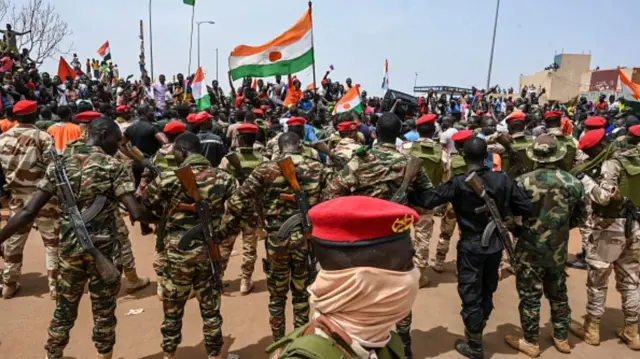
Dozens of soldiers were killed or arrested in Niger's capital, Niamey, after a group of mostly young troops staged an attempted mutiny against the country's ruling junta, attacking the international airport, threatening the presidential palace and briefly seizing the national broadcaster before loyalist forces, aided by Russian military contractors, put down the uprising. The nearly 24 hours of gunfire and explosions that convulsed Niamey beginning before dawn on Saturday, Aug. 29, mark the most serious internal challenge yet to Gen. Abdourahamane Tiani, who has ruled Niger since ousting elected President Mohamed Bazoum in a July 2023 coup.
The mutiny matters well beyond Niger's borders. It is the clearest sign to date that the security failures which toppled elected governments across the Sahel are now turning inward on the soldiers who inherited power, threatening to destabilize a military bloc that has become one of the most consequential geopolitical experiments in Africa: a trio of juntas that expelled Western troops, embraced Russia, and bet their legitimacy on a promise to defeat jihadist insurgents they have so far failed to contain.
What happened
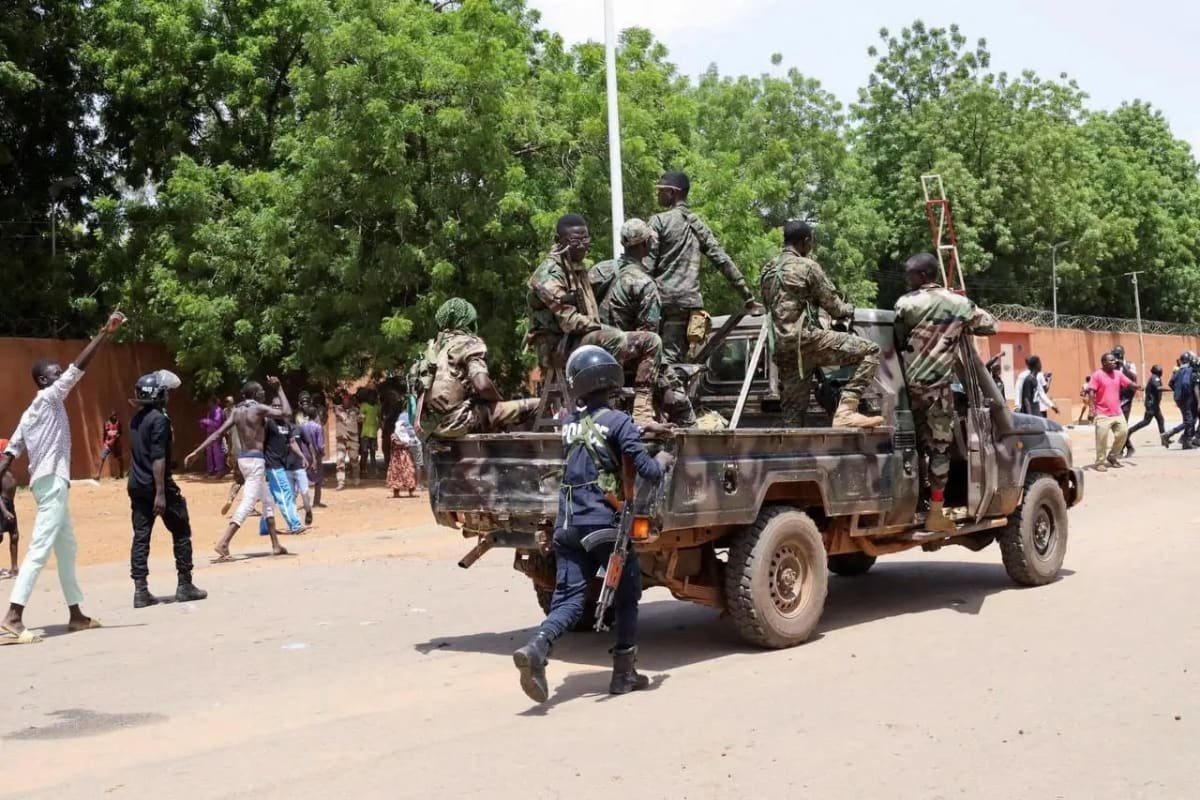
According to Reuters and Associated Press reporting from Niamey, sustained gunfire and explosions rang out shortly before dawn local time on Saturday in several areas of the capital, including around Diori Hamani International Airport — which also houses a Nigerien air force base and the headquarters of a joint Niger-Burkina Faso-Mali military force — and near the presidential palace. State television and radio were knocked off the air for several hours.
Niger's Defense Minister, Gen. Salifou Mody, said in a statement read on state broadcaster RTN that a group of soldiers had taken officers hostage at the base and opened fire on "sensitive sites" in what he called a "break with discipline and military regulations." A Niger security source and Bana Wagana Ibrahim, a member of the country's Bureau of the Consultative Council and a deputy in the Alliance of Sahel States parliament, said soldiers had targeted the military airbase known as Base 101. Ibrahim wrote on Facebook that "another cowardly attack on Base 101" had been repelled, though a Reuters witness reported renewed gunfire at the airport and heavy explosions after that post went up, complicating the government's account of how quickly the situation was contained.
By roughly 9 a.m. GMT, the presidential palace appeared to have been secured by loyalist troops, but state TV had briefly fallen into mutineers' hands, and the area around the airport remained contested, according to two security sources and a diplomat cited by Reuters. Wassim Nasr, a senior research fellow at the Soufan Center, said loyalist forces had regained "the upper hand at least at the airport and base" by Saturday evening, though it remained unclear whether additional troops moving toward the capital intended to reinforce the junta or join the mutiny. The Associated Press said it could not independently confirm whether security forces had regained full control.
State television later showed footage of dozens of mostly young soldiers being paraded in public after the fighting subsided. The whereabouts of Tiani himself were unclear for much of Saturday. Russia's Africa Corps, the successor to the Wagner Group that has operated in Niger since the junta severed ties with Western militaries, provided aerial and ground support to forces loyal to Tiani, according to analysts and diplomats. Russia's ambassador to Niger, Viktor Voropayev, was quoted by Russian media as saying senior Nigerien officers visited the Africa Corps base at the airport to thank its personnel "for their assistance in suppressing the rebellion." The ruling military council, the National Council for the Safeguard of the Homeland, called for unity in a Facebook statement: "Our Defense and Security Forces are mobilized for the Defense of the Fatherland. Let us remain united, vigilant and supportive." Algeria's foreign ministry offered Niger its "full solidarity and firm support," a notable gesture from a neighbor that has at times had tense relations with Niamey's junta over its handling of the Sahel crisis.
Background: a junta born of insecurity, now undone by it
Tiani seized power in July 2023 on the argument that Bazoum's elected government had failed to stem jihadist violence in Niger's border regions. That justification has aged poorly. Since the coup, Niger — like neighboring Mali and Burkina Faso, both also under military rule after their own coups — has severed longstanding security cooperation with France and the United States, expelled Western troops, withdrawn alongside Mali and Burkina Faso from the regional bloc ECOWAS as of January 2025, and formed the breakaway Alliance of Sahel States (AES) instead. All three governments pledged that a pivot toward Russian military support would succeed where Western partnerships had not.
It has not. Diori Hamani airport, the very site attacked Saturday, had already been targeted twice this year by jihadist groups: West Africa's al-Qaeda affiliate claimed an attack on the airport in June, five months after an assault by the Islamic State's Sahel Province. Heni Nsaibia, a West Africa senior analyst at the Armed Conflict Location and Event Data Project, said such attacks are "becoming commonplace and will continue to fuel unrest and aggravate tensions within the army ranks." He added that "deteriorating insecurity drove the coups that swept across the central Sahel, and the latest events show how these same pressures are now fuelling unrest within the militaries that seized power."
Saturday's mutineers reportedly came disproportionately from Ouallam, Tera and Dosso, localities in Niger's southwest that have suffered heavy military casualties fighting the regional Islamic State affiliate, according to Yvan Guichaoua, a senior researcher at the Bonn International Centre for Conflict Studies. That detail is significant: it suggests the uprising was less an ideological challenge to junta rule than an eruption of grievance among frontline units who feel they are dying in a war their government cannot win — precisely the dynamic that destabilized Bazoum's government in 2023 and has now turned on his successors.
The unrest also comes as Tiani's government tightens its grip on Niger's uranium sector, a pillar of the national economy and, until the coup, a key source of nuclear fuel for Europe. Niger's junta seized assets belonging to French nuclear group Orano last year, and a government decree issued just last week reallocated former Orano and GoviEx uranium permits to state-backed companies. At full capacity, Niger had accounted for roughly 15% of Orano's global uranium supply, and the confrontation over those assets has been one of the clearest markers of Niamey's rupture with Paris.
Political stakes and what to watch
For Tiani, the immediate task is demonstrating that he retains control of the security services he depends on for legitimacy — a task complicated by the fact that this mutiny, unlike jihadist attacks, came from within the ranks he commands. Any credible account of dozens of soldiers dead or arrested, drawn from specific, insecurity-battered garrisons, will fuel scrutiny of morale and cohesion inside Niger's armed forces at a moment when the junta has no elected mandate to fall back on and has staked its legitimacy almost entirely on a security promise it has not delivered.
The episode also tests the durability of the AES bloc itself. Mali and Burkina Faso's own military governments face similar insurgent pressure and will be watching whether unrest in Niger's ranks presages similar fractures in their own militaries — armies that, like Niger's, have grown reliant on Russian support to compensate for eroded Western cooperation and persistent insurgent gains. A junta unable to protect its own capital from its own soldiers will find it harder to argue, to its population or to allies in Bamako and Ouagadougou, that authoritarian consolidation was worth trading away democratic legitimacy and Western partnerships.
Longer term, the uranium dispute with Orano and the broader realignment toward Moscow give outside powers — Russia chief among them, but also Algeria and Gulf states courting influence in the Sahel — a direct stake in whether Tiani survives. Voropayev's public thanks to Africa Corps personnel underscored how quickly Moscow moved to claim credit for the junta's survival, a signal Russia is likely to reinforce with further security commitments in the coming weeks. Whether Niger's government responds to Saturday's events with further purges, a public tribunal for accused mutineers, or concessions to grievances within the ranks will shape whether this proves an isolated flashpoint or the first crack in a wider unraveling.
For now, the government's message — delivered by Defense Minister Mody and echoed by the ruling council — was one of restored order and appeals for unity. Whether that message holds will depend less on statements from Niamey than on what happens the next time frontline soldiers, exhausted by a war their government has failed to win, decide that mutiny is preferable to another deployment.
Published By | News Editor