Written By | Business Experts
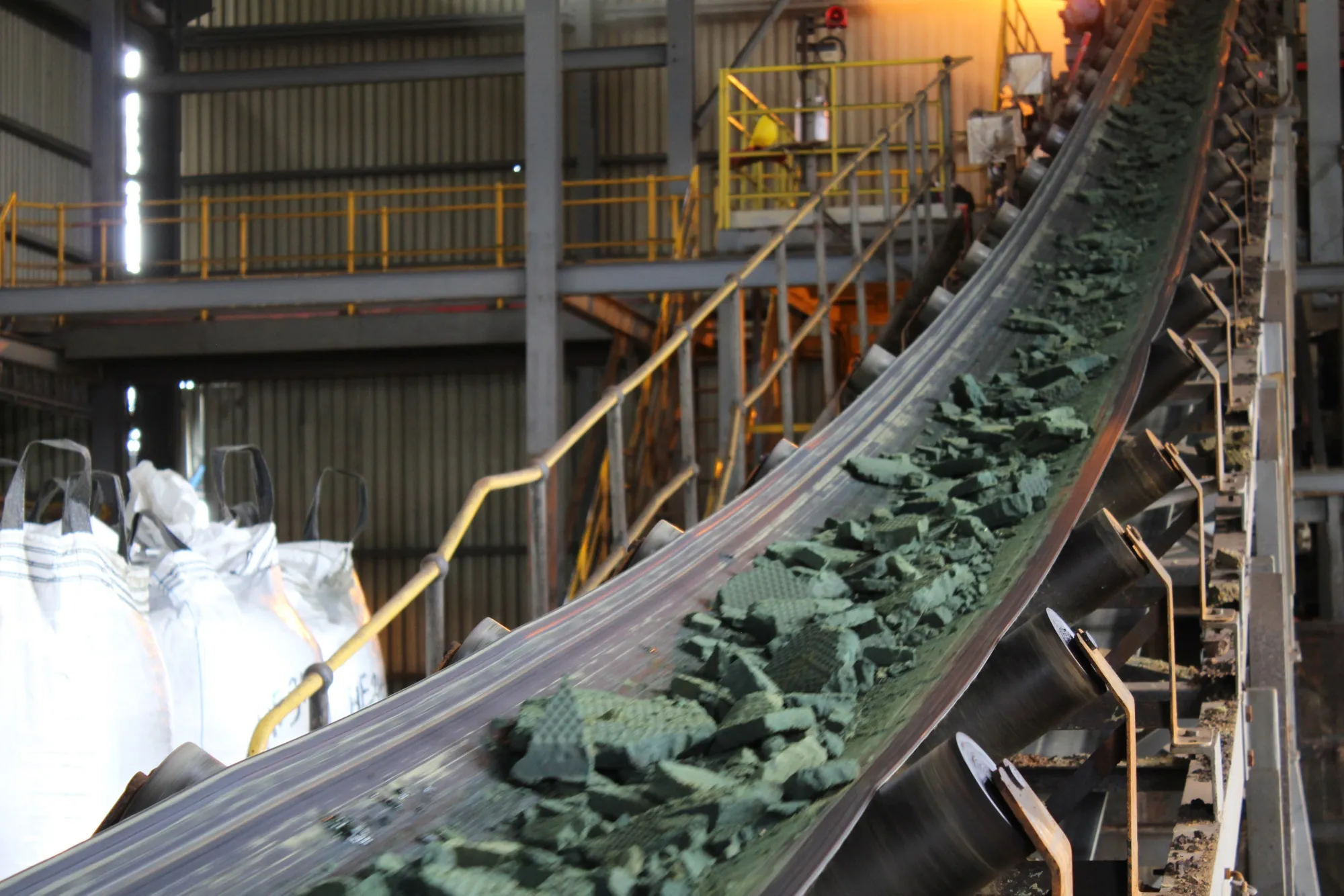
The DRC produces more than 70 percent of the world's mined cobalt, according to the US Geological Survey figures cited by Fastmarkets, and roughly 220,000 tonnes in 2024
Central Africa
A resource giant rewrites its terms of trade
For most of the past two decades the Democratic Republic of Congo (DRC) was a price-taker. It dug cobalt and copper out of the Katanga copperbelt, shipped them largely to Chinese refiners, and absorbed whatever the London and Shanghai markets handed back. In 2025 and 2026 that posture changed. Kinshasa halted cobalt exports outright, replaced the ban with a hard quota regime, issued its first-ever Eurobond, and signed a strategic minerals partnership with Washington while renegotiating terms with Beijing. At the same time the macro numbers look unusually calm: single-digit-low inflation, a stable franc, a central bank cutting rates, and an International Monetary Fund (IMF) programme that is largely on track.
This article examines whether that calm is a durable transformation or a commodity-cycle dividend. The answer, based on the latest data from the IMF, the Central Bank of the Congo (BCC), market reporting and private-sector economic monitors, is mixed. The DRC has found a real lever in managed scarcity of cobalt, and it has used a window of strong prices to rebuild buffers. But the fiscal accounts are slipping, the conflict in the east is consuming resources, and the administrative machinery of the new regime has already shown signs of strain.
The cobalt experiment: from embargo to quota
The DRC produces more than 70 percent of the world's mined cobalt, according to the US Geological Survey figures cited by Fastmarkets, and roughly 220,000 tonnes in 2024. In 2025 benchmark cobalt collapsed to a nine-year low near US$10 per pound. In February 2025 the government responded by suspending exports entirely. In October 2025 the ban was replaced by a quota system run by ARECOMS, the strategic minerals regulator, and set to run through the end of 2027.
The quota is severe. Reporting differs slightly on the headline, but the arithmetic reconciles: a 2026 base cap of 87,000 tonnes of cobalt contained in hydroxide (7,250 tonnes a month), plus a 9,600-tonne strategic allocation the government can release at its discretion, gives the 96,600 tonnes a year cited by Ecofin Agency and the Geopolitical Monitor. That is less than half of 2024 export volumes. Producers must prepay royalties, unused monthly allocations are forfeited, and quotas can be revoked for compliance failures. The payable value of Congolese hydroxide, meanwhile, rose from about 55 percent to 100 percent of the metal price.
The effect on the market has been dramatic. A global surplus of more than 100,000 tonnes in 2024 has become a projected 2026 deficit of about 10,700 tonnes (Fastmarkets). Cobalt traded above US$56,000 per tonne in January 2026, more than double a year earlier, and the BDO DRC monitor recorded US$55,603 per tonne in late June. The largest producer, CMOC, set a record 117,549 tonnes of cobalt output in 2025 and guides to 100,000-120,000 tonnes in 2026, yet holds an export quota of just 31,200 tonnes. Glencore's Congolese cobalt output fell 39 percent in the first quarter of 2026 while its copper output rose 19 percent, a vivid sign that miners are re-weighting toward the metal the state is not rationing.
Administrative fragility and the limits of the lever
A quota is only as good as the system that administers it. Implementation delays halted shipments in late 2025, and the first quota cargo left the country only in January 2026. In late June 2026 ARECOMS scrapped second-quarter allocations that had not shipped by 5 July, which market participants estimated removed 15,000-20,000 tonnes of annual allowance. Then in July the regulator's export platform failed for several days around a first-half deadline, putting an estimated 20,000 tonnes, worth roughly US$1.1 billion, at risk of forfeiture.
There are market signals of fatigue as well. Cobalt hydroxide in China fell from US$26.00-26.25 per pound in April to US$22.00-23.00 on 11 August 2026, still four times the level on the eve of the 2025 ban but softer, as weak demand for lithium-cobalt oxide batteries in consumer electronics curbed buying. On 12 August the ARECOMS chairman, Patrick Mpoyi Luabeya, told Fastmarkets the regulator did not intend to change volumes for now, but that a cut could be considered if the imbalance persisted. Chinese miners such as Jinchuan and MMG are lobbying for larger allocations, and a newly announced ban on copper and cobalt concentrate exports adds another layer of state direction. The lesson for investors is that the DRC now manages the cobalt market as a policy variable, which raises both its bargaining power and its regulatory risk.
Copper: the quieter engine
Copper is the larger and steadier source of export earnings. Prices rose over 40 percent in 2025, and three-month LME contracts passed US$13,407 per tonne in mid-January 2026; the BDO monitor recorded US$13,300.9 per tonne in late June. Volumes, however, have been bumpier. A seismic incident at Kamoa-Kakula in May 2025 held 2025 output to 388,838 tonnes against a projected 520,000, and Zijin has warned that flooding at the complex could trim its 2026 output share by up to 57,000 tonnes. Even so, BDO projects extractive value added to grow 9.4 percent in 2026, up from 8.7 percent in 2025, while the IMF notes only a mild slowdown in extractives. The two views are reconcilable only if copper volumes outweigh the cobalt curtailment, a reminder that headline figures from different institutions should be read with care.
The macro dividend: growth, prices and buffers
The IMF's staff statement after its 23 April-6 May 2026 mission found real GDP growth above 5.5 percent in both 2025 and 2026, led by construction, services and agriculture. BDO's June monitor is more specific, estimating 5.8 percent in 2025 and 6.2 percent in 2026, with non-mining growth of 5.0 percent. Year-on-year inflation has been at or below 2.5 percent since October 2025 per the IMF and was 2.9 percent in June per BDO, a remarkable outcome for an economy that has historically run double-digit inflation. The BCC cut its policy rate from 17.5 percent to 15 percent in January 2026 and to 13.5 percent in April.
The exchange rate has been steady. The interbank rate was CDF 2,259.40 per US dollar on 26 June 2026, with the parallel market only about CDF 66 weaker. International reserves reached US$8.8 billion at end-March 2026 on the IMF's measure, and BDO reports US$7.86 billion on 25 June, about three months of imports; the series are not directly comparable and the gap should not be over-read, but both indicate a buffer far stronger than in the pre-programme years. Revenue is also performing: cumulative receipts to end-May were CDF 12,807.6 billion, 103.7 percent of the cash plan, with customs at 108.9 percent of target.
Debut Eurobond and the IMF anchor
In April 2026 the DRC raised US$1.25 billion in its first Eurobond, in two tranches: a five-year note maturing in 2032 at a yield of 8.75 percent and a ten-year note maturing in 2037 at 9.5 percent. The order book exceeded US$5.2 billion from more than 110 investors, more than four times the amount sold, and S&P had earlier moved its outlook to positive. Rawbank and Citigroup were joint global coordinators, with Standard Chartered as joint bookrunner. Proceeds are earmarked for infrastructure, energy and social projects.
The bond sits on top of an IMF anchor. The 38-month arrangement approved in January 2025 totals US$2.76 billion, made up of a US$1.73 billion Extended Credit Facility and a US$1.04 billion Resilience and Sustainability Facility. On 25 June 2026 the Executive Board completed the third ECF review and second RSF review, releasing US$348.5 million (US$258.2 million ECF, US$90.3 million RSF) and bringing cumulative disbursements to more than US$1.03 billion. The IMF welcomed the Eurobond as a cheaper alternative to costly domestic financing while urging transparent use of proceeds.
Where the story frays: fiscal slippage, conflict and dollarisation
The IMF rated programme performance as satisfactory but flagged two misses: the domestic fiscal balance and compliance with mining exchange-rate practices. The end-December 2025 domestic deficit ceiling was exceeded by 0.6 percent of GDP despite strong revenue, a slippage the Fund attributes to the armed conflict in the east, deepened after AFC/M23 rebels captured Uvira in December 2025. A supplementary 2026 budget now tries to raise domestic revenue, trim non-priority spending and cushion the spillovers of the Middle East war, which has pushed oil prices up and could lift pump prices. Displacement, humanitarian need and an Ebola outbreak add pressure that no commodity price can offset.
Public financial management reforms are real but early: the Treasury (DGTCP) became operational in February 2026, spending authorisation is decentralised to four pilot ministries, and the treasury single account is not yet complete. The financial system remains heavily dollarised. In May 2026 bank deposits were US$18.69 billion, only 12.1 percent in Congolese francs, while credit was US$10.44 billion, just 3.1 percent in francs, and BDO's business climate index stood at 43.1 percent. Monetary policy transmission therefore reaches few borrowers, and a rate cut to 13.5 percent matters far less to a Kolwezi trader than the availability of dollar credit.
What transformation would actually look like
The social test is whether a mineral windfall reaches households. The IMF's call to raise the quality and level of social spending, accelerate labour market reforms and improve the business climate is an acknowledgement that growth in mining enclaves does not by itself create jobs. The positive signs are the 5.0 percent non-mining growth forecast and the construction and services expansion the Fund describes. The negative is that the sectors creating wealth are capital-intensive and dominated by foreign operators, while the east of the country bears war and displacement.
Three indicators will show whether managed scarcity becomes development. First, quota administration: whether ARECOMS can run a reliable platform and calibrate volumes without destroying value. Second, fiscal discipline: whether the supplementary budget closes the deficit overshoot and Eurobond proceeds flow to visible infrastructure rather than emergency spending. Third, diversification beyond hydroxide and concentrates, through local processing, power and transport corridors, and agriculture. If those hold, the DRC's bargain with the battery economy could finance a broader transformation. If they fail, 2026 may be remembered as the high-water mark of a price cycle.



