Written By | International News Agencies
Why a 5 percent growth forecast sits uneasily beside a fuel blockade, a seized mine and a budget that depends on one metal
A Fiscal Success Story in a Country at War with Itself
Mali is one of the more paradoxical economies in West Africa. On paper, the landlocked Sahel state looks disciplined: inflation below 3 percent, a fiscal deficit inside the 3-percent-of-GDP ceiling of the West African Economic and Monetary Union (WAEMU), public debt of roughly 41 to 42 percent of GDP, and an International Monetary Fund Staff-Monitored Program (SMP) that ended in March 2026 with every quantitative target and structural benchmark met. In practice, the same country has endured a jihadist fuel blockade of its capital, the court-ordered seizure of a major gold mine, coordinated attacks that reached Bamako in April 2026, and the loss of its defence minister.
This article examines how those two stories coexist. The central argument is that Mali's macroeconomic stability is real but narrow: it rests on a single commodity, gold, and on a handful of mines whose operating environment is shaped as much by security convoys and fuel trucks as by prices. For policymakers and investors across the Sahel, the lesson is that headline growth numbers say little about household resilience when the transport corridors that feed the economy can be cut at will.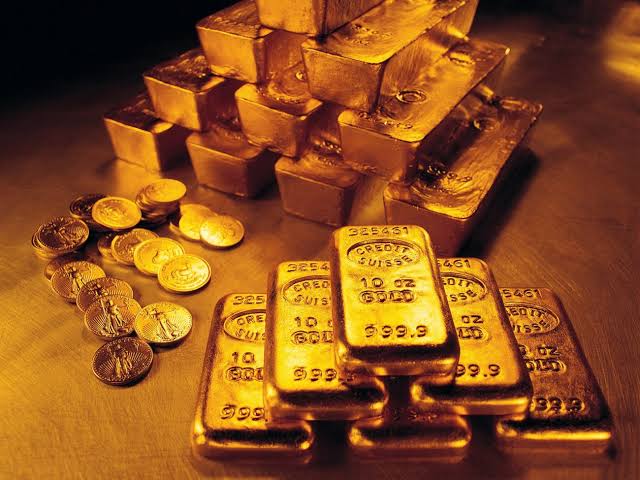
The Numbers: Growth, Deficits and a Debt Cushion
The IMF's second and final SMP review, approved by Management in March 2026 (press release 26/085), records growth accelerating after a difficult 2025. The accompanying staff report puts 2025 growth at 4.9 percent and projects 5.5 percent for 2026, settling near 5.25 percent over the medium term. The World Bank is more cautious: its Macro Poverty Outlook estimates 2025 growth at 4.1 percent, after 4.5 percent in 2023 and 4.7 percent in 2024, and forecasts 5.0 percent in 2026, 5.2 percent in 2027 and 5.3 percent in 2028, noting that the rebound is supported by mining but weakened by spillovers from the Middle East conflict. Local reporting by Ecofin Agency cites 5.4 percent for 2026. The spread between 4.1 and 4.9 percent for 2025 is itself a reminder of how hard it is to measure activity in an economy where fuel, power and security disruptions hit unevenly.
The fiscal picture is similarly sensitive to the source. The IMF reports a 2025 deficit of 1.6 percent of GDP, better than the 2.7 percent projected at the programme's start, and targets 2.4 percent for 2026; the World Bank's figure for 2025 is 2.9 percent. Either way, Mali is inside the WAEMU ceiling. The 2026 budget projects revenue of CFA 3,057.8 billion, about US$5.3 billion and 11.6 percent above the revised 2025 figure of CFA 2,739.7 billion. Public debt stands at 40.8 percent of GDP in the IMF's estimate and 42.3 percent in the World Bank's, expected to ease to about 41 percent through 2027. The current-account deficit narrowed sharply to 0.9 percent of GDP in 2025 from 4.3 percent in 2024, largely because gold and lithium prices were high even as volumes wobbled.
The World Bank also puts the 2025 poverty rate at 33.9 percent at the US$3.00-a-day line, with the extreme poor projected to reach 8.8 million by 2028 on a population of about 25.2 million. A country can meet every fiscal benchmark and still see the absolute number of poor people rise; that is Mali's situation.
One Metal, Four-Fifths of Exports
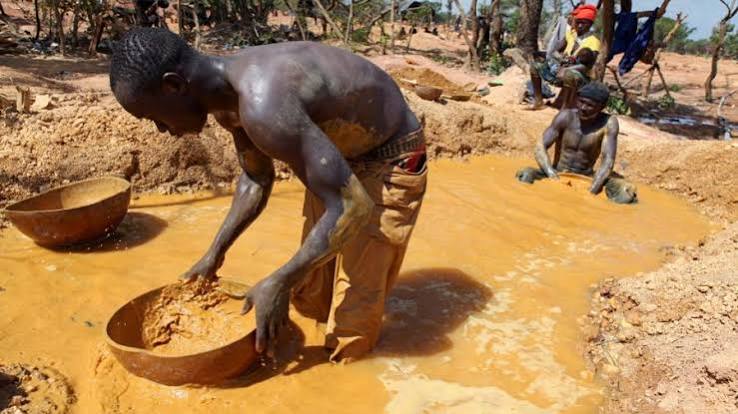
Concentration is the structural weakness behind the stability. Gold accounts for roughly 80 percent of Mali's exports, according to both the IMF and Al Jazeera's May 2026 mapping of the country's resources. Mining contributed 41 percent of state budget revenue in 2024, according to Ecofin, and gold prices rose by more than 60 percent during 2025, flattering the revenue and external numbers. Mali holds around 800 tonnes of proven gold reserves, the third largest on the continent, with geological potential of up to 2,000 tonnes; official output is about 57 tonnes a year, and total production including artisanal mining was around 100 tonnes in 2024, with more than two million people depending on the sector.
What makes the 2025 data striking is that high prices masked a collapse in volumes. The IMF's 2026 staff report says gold production fell from around 50 tonnes in 2023 to under 3 tonnes in 2025 because of the mining dispute, and that the November 2025 settlement should allow a gradual recovery to at least 10 tonnes in 2026, worth about 0.2 percentage points of additional growth and 0.6 percent of GDP in fiscal revenue. Put differently, Mali recorded respectable fiscal and external outcomes while one of its largest producers was largely idle, which implies that the recovery now underway is an upside the budget has only partly captured.
The Barrick Standoff and the 2023 Mining Code
The dispute at the centre of that collapse involves the Loulo-Gounkoto complex, operated by Barrick since 2005, which produced 723,000 ounces in 2024. Following allegations of unpaid taxes and friction over Mali's 2023 mining code, which allows the state a stake of up to 35 percent in mining operations, Barrick shut the mine in January 2025 after Mali blocked exports and seized roughly one tonne of gold. In June 2025 a court appointed an interim administrator, Soumana Makadji, for at least six months. Operations restarted in late October 2025 after a deal to resume contractor payments, and a November 2025 resolution put the relationship on firmer footing, though Barrick had initiated international arbitration and four of its employees had been detained since November 2024 on allegations the company denies.
The episode illustrates a broader trend of resource nationalism across the Sahel. Bamako's argument is that a country supplying most of its export earnings from gold deserves a larger share of the proceeds; investors counter that retroactive tax claims and detentions raise the risk premium. The economic evidence from 2025 supports both views: the state's revenue stayed resilient on price, but the output loss cost growth and put pressure on contractors and local suppliers.
The Fuel Blockade: When Logistics Becomes a Macroeconomic Variable
The second shock was not fiscal at all. In September 2025 the jihadist group JNIM launched what Ecofin describes as an economic-jihad campaign against fuel imports, targeting tanker convoys that supply Bamako from coastal ports. Within about two months, reporting from Ecofin noted that industrial gold output had already fallen 32 percent year on year by the end of August 2025, even before the blockade took hold, and that the capital faced lengthy queues and price hikes. Cement and sugar factories and mining sites were attacked from May 2025, and businesses were forced to close while the junta moved fuel under military escort.
The IMF attributes the weak fourth quarter of 2025 primarily to the fuel disruption, which constrained electricity availability and mobility and hit manufacturing and services. The mines proved more resilient than the cities: Resolute's Syama facility holds 4 million litres of bulk fuel storage, enough for more than 30 days, plus a 10-megawatt battery system, and Loulo-Gounkoto and Fekola already run solar units, with Allied Gold planning 35 megawatts of solar by 2027. Ecofin nonetheless cautioned that the question may be when, not whether, the mines are affected. On 25 April 2026 coordinated attacks struck Bamako and other regions, killed Defence Minister Sadio Camara and targeted the airport, yet mining companies confirmed on 28 April that operations were continuing.
The policy implication is that energy security is now an economic-development issue, not only a military one. Mali's grid and its transport corridors are the transmission mechanism by which insecurity becomes lost output, and distributed solar and storage, already a mining-sector adaptation, are the clearest available template for households and small firms.
Lithium: A Second Engine, With Chinese Ownership
Diversification within mining is under way. The Goulamina project, majority-owned by China's Ganfeng Lithium alongside Leo Lithium and the Malian state, holds more than 200 million tonnes of lithium-bearing resources, and Kodal Minerals' Bougouni project in the south is also advancing. The World Bank expects lithium production to offset the decline in gold output in the near term. The IMF notes that elevated gold and lithium prices offer additional revenue potential, and urges the authorities to separate mining from non-mining revenue through fiscal rules and to manage windfalls through transparent governance, which is a notable recommendation given that mining already supplies two-fifths of budget income.
The caution is that a second commodity does not equal a diversified economy. Lithium prices are volatile, processing happens largely abroad, and the associated jobs are modest compared with agriculture, which still employs most Malians and is exposed to climate shocks and insecurity in rural markets.
What the IMF Programme Did and Did Not Fix
The SMP, launched in March 2025, was a non-financing arrangement, but it carried credibility. Mali met all targets, including priority social spending and net tax revenues, and completed structural reforms such as digitising tax collection, interconnecting tax and customs administrations, and planning a census of public accounts. The authorities also published quarterly reports on the Rapid Credit Facility resources disbursed in April 2025, with procurement and beneficial-ownership detail. Remaining priorities include broadening the tax base towards the WAEMU's 20-percent-of-GDP target, clearing CFA 213 billion of outstanding domestic arrears, and reducing vulnerabilities in state-owned enterprises. Arrears matter because they transmit fiscal stress to private contractors, precisely the group whose payments underpinned the restart of the seized mine.
A successful SMP is typically a stepping stone to a financed programme, though no such arrangement had been announced in the sources reviewed for this article, and regional financing costs remain high. Mali's reliance on the WAEMU regional bond market makes it vulnerable to the broader Sahel risk premium, not just its own record.
Risks and What to Watch
The World Bank lists its main risks plainly: recurrence of corridor blockades, the electricity crisis, climate shocks, a prolonged Middle East conflict and insecurity disrupting farming and markets. The IMF adds renewed insecurity and persistently high regional financing costs. Three indicators will show whether the stability is durable. The first is gold output against the 10-tonne recovery target and whether arbitration with Barrick stays dormant. The second is fuel: the frequency of convoy attacks, the length of queues in Bamako and the speed of mine and household solar uptake. The third is the poverty trajectory, since a falling headline deficit alongside a rising count of extreme poor would mean that the macro gains are not reaching people.
Mali's story is not one of collapse, and it is not one of success. It is a case study in how a narrow, price-driven economy can post strong ratios while its physical foundations, roads, fuel, power and security, remain contested. The country's next chapter depends less on the gold price than on whether the state can keep its supply lines open and convert mining windfalls into broad-based jobs.



