ANTANANARIVO, Madagascar
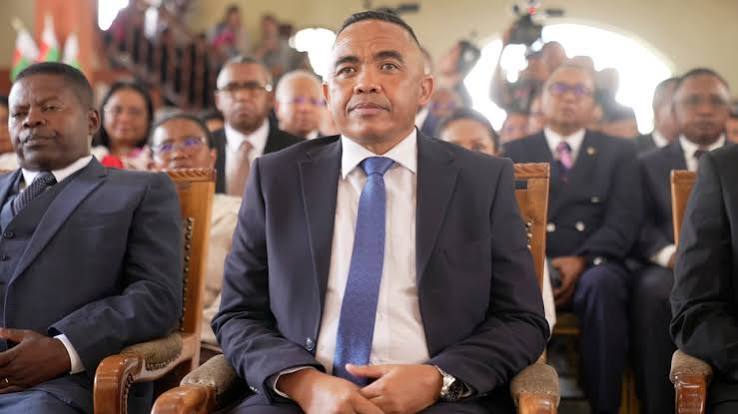
Ten months after an elite army unit swept President Andry Rajoelina from power amid youth-led protests, Madagascar's military-installed transitional leader is now leaning on the very political establishment the uprising was aimed at, holding a string of consultations with former presidents and opposition figures to resolve what officials describe as the most sensitive unfinished business of the transition: the creation of a credible Constitutional Council. The outreach, capped by an late-July meeting at the Iavoloha presidential palace with two former heads of state, comes as Madagascar simultaneously relaunches its electoral roll ahead of elections still officially planned for 2027, and as the country prepares to face fellow Southern African leaders at a regional summit this week over its continued suspension from two continental bodies.
What Happened
On July 28, Col. Michael Randrianirina, who has governed Madagascar since October 2025 under the title "president of the Refondation" — a French term signaling institutional refounding rather than an ordinary presidency — received former presidents Marc Ravalomanana and Hery Rajaonarimampianina at the Iavoloha palace outside the capital, Antananarivo. According to a statement from the presidency, the meeting focused squarely on institutional mechanics rather than politics for its own sake: establishing a functioning Constitutional Council, the body responsible in Madagascar for validating laws and arbitrating political crises, which has been effectively dormant since Rajoelina's ouster left the country without settled constitutional machinery. "Like other democracies, Madagascar needs a Constitutional Council to validate laws and arbitrate crises," the presidency said in a statement explaining the rationale for the meeting.

The two former presidents represent rival political traditions with a direct stake in how that council is built. Ravalomanana's party, Tiako I Madagasikara, has pushed for a council mandate centered on guaranteeing respect for the vote and a clear electoral calendar — a populist framing consistent with Ravalomanana's history as an opposition figure demanding accountability from the state. Rajaonarimampianina's party, Hery Vaovao ho an'i Madagasikara, has instead emphasized stability, calling for an independent, legally robust body that can secure the transition "without paralyzing it." The discussion, described by the presidency as "frank and constructive," ended without a decision, but officials signaled that the council's composition and the method for selecting its members will be the real test of whether the consultations amount to genuine consensus-building or symbolic gesture.
Randrianirina followed that meeting with further outreach on Aug. 5, receiving a delegation from the Komity Mpiaro ny Tolona, a civic organization known by its acronym KMT, led by its president, Lanto Rakotomavo, at the Ambohitsorohitra state palace. That meeting focused on preparations for a broader national political dialogue that authorities have promised but have yet to schedule. The transitional government has also previously consulted Norbert Lala Ratsirahonana, a former head of state and founder of the AVI party who was once a close collaborator of Rajoelina — underscoring the breadth of political figures Randrianirina is drawing into pre-dialogue talks even as the precise calendar, format and full list of eventual participants remain officially unannounced.

Background: From Water Cuts to a Colonel in the Palace
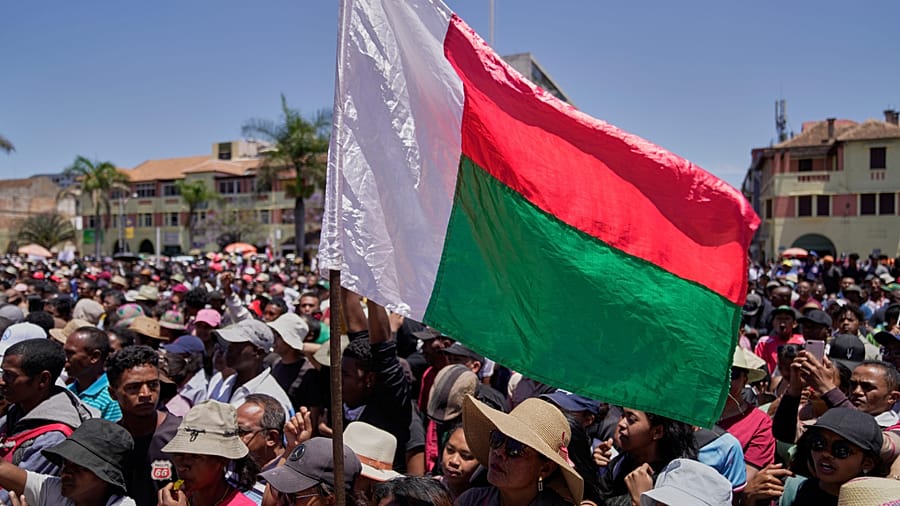
The transition traces back to protests that began in late September 2025, initially triggered by chronic water and electricity outages in Antananarivo before broadening into a youth-led "Gen Z" movement demanding an end to corruption and Rajoelina's government more broadly. As the unrest spread nationwide, the elite CAPSAT military unit turned against the president; Rajoelina fled the country, Madagascar's parliament voted to impeach him, and on Oct. 17, CAPSAT's commanding officer, Col. Michael Randrianirina, was sworn in as interim president by the High Constitutional Court. Rajoelina's location remained unclear for weeks after his departure. The new authorities subsequently stripped him of his Malagasy citizenship, citing his acquisition of French nationality in 2014 in violation of Madagascar law, while a former adviser, businessman Maminiaina Ravatomanga, was arrested in Mauritius on suspicion of laundering more than $160 million.
The African Union suspended Madagascar's membership "with immediate effect" following the takeover, and the Southern African Development Community deployed a high-level mediation effort led by former Malawian President Joyce Banda, whose Panel of Elders conducted shuttle-diplomacy missions to the country in January-February, February-March and May of 2026. Regional and continental bodies have conditioned any path back to normalized standing on a Malagasy-led inclusive dialogue, a credible transition roadmap and, ultimately, elections; Randrianirina's government submitted its dialogue readiness report and transition roadmap by the AU's Feb. 28, 2026, deadline, setting a 24-month transition timetable that targets presidential elections in 2027.
Randrianirina reshuffled his own government partway through the transition, dismissing Prime Minister Herintsalama Rajaonarivelo on March 9 and dissolving the cabinet, before appointing Mamitiana Rajaonarison — previously head of Madagascar's financial intelligence unit, SAMIFIN, where she led anti-corruption efforts — as prime minister on March 15. He has also taken unconventional steps to vet the government he is building, ordering polygraph screenings for prospective ministers in a bid to signal a break from the corruption allegations that helped topple Rajoelina.

Stakeholders and Stakes
The consultations underway now cut to the heart of a question hanging over Madagascar's transition: whether a government installed by a coup, however popular it may have been at the time, can construct institutions credible enough to be accepted by rival political factions and, eventually, by voters. A Constitutional Council seen as stacked in favor of the transitional authorities — or of any single party — would risk delegitimizing the elections it is meant to oversee before they even take place, particularly given that Ravalomanana and Rajaonarimampianina each command loyal, organized bases through TIM and HVM respectively, and each has a recent history of contesting Madagascar's presidency.
Notably absent from the list of figures Randrianirina has consulted is Rajoelina himself, who remains abroad and stripped of his citizenship. The transitional government has shown little appetite for rehabilitating him: after Rajoelina met Eswatini's King Mswati III in February, Randrianirina issued a statement expressing his "strongest condemnation" of the visit, calling it "politically unacceptable" — a signal that reconciliation, in this transition, is being extended to Madagascar's older political rivals but not to the man whose downfall made the process possible.
Beyond the political class, the transitional government is also racing to rebuild the technical machinery elections require. On Aug. 13, Thierry Rakotonarivo, president of Madagascar's National Independent Electoral Commission, known as the CENI, told reporters that two weeks into a complete overhaul of the electoral roll, the central challenge had shifted from institutional organization to public participation. "The success of this operation does not depend solely on the electoral institution," Rakotonarivo said, calling on political parties, civil society organizations and other national actors to actively support the process, inform the population and encourage citizens to register. He specifically warned against a public misunderstanding that could suppress registration: enrollment in the "Izaho Tokana" biometric identity project, underway separately, does not automatically register a citizen as a voter. "A citizen already enrolled in the biometric system should not assume they are automatically registered as a voter," Rakotonarivo said, adding that the two procedures "are distinct."
Analysis
Randrianirina's strategy of publicly courting Ravalomanana and Rajaonarimampianina — while pointedly freezing out Rajoelina — reflects a calculated bet that Madagascar's fractious opposition establishment, despite years of mutual antagonism, can be assembled into a broader coalition legitimizing the transition, so long as the man whose ouster triggered it remains excluded from the process. It is a strategy with real political logic: both Ravalomanana and Rajaonarimampianina were themselves removed from power in circumstances Malagasy voters remember well — Ravalomanana ousted in a 2009 crisis that similarly drew SADC mediation, Rajaonarimampianina defeated at the ballot box in 2018 — giving each an interest in seeing the current transition end in a credible vote rather than another indefinite military-led interregnum.
Yet the approach also carries risk. By channeling reconciliation efforts through Madagascar's traditional political elite, Randrianirina risks alienating the "Gen Z" protest movement whose grievances over corruption, unemployment and failing public services brought him to power in the first place, and who may see engagement with recycled establishment figures as a betrayal of the uprising's anti-corruption impetus. The presidency's own emphasis on polygraph vetting for ministers suggests an awareness of that tension — an attempt to signal continuity with the movement's anti-corruption demands even while negotiating institutional questions with the same political families the protests initially targeted.
The AU and SADC's continued insistence on elections as the ultimate benchmark for readmission also puts a premium on exactly the kind of institution-building underway now. Without a functioning, broadly trusted Constitutional Council to certify results and adjudicate disputes, any election Madagascar holds in 2027 risks the same credibility problems that have dogged disputed votes elsewhere on the continent — undermining the very goal the current consultations are meant to secure.
What to Watch Next
Madagascar's government is preparing to send a delegation to the 46th SADC Summit in Durban this week, where its transitional progress — and the terms of its eventual reintegration into the bloc and the AU — are expected to feature prominently in discussions among regional heads of state. Domestically, attention will turn to whether Randrianirina's consultations produce an announced composition and selection method for the Constitutional Council, seen by his own government as the "real test" of whether the dialogue process yields genuine consensus. The pace and credibility of the electoral roll overhaul, now entering what CENI's Rakotonarivo has called its more delicate phase of translating public awareness into actual registrations, will also be a closely watched indicator of whether Madagascar's 2027 election timetable is realistic — and whether the transitional government can convert months of elite consultation into an institutional framework Malagasy voters, and the country's continental partners, are prepared to trust.
Published By | News Editor