Written By | Entertainment Desk
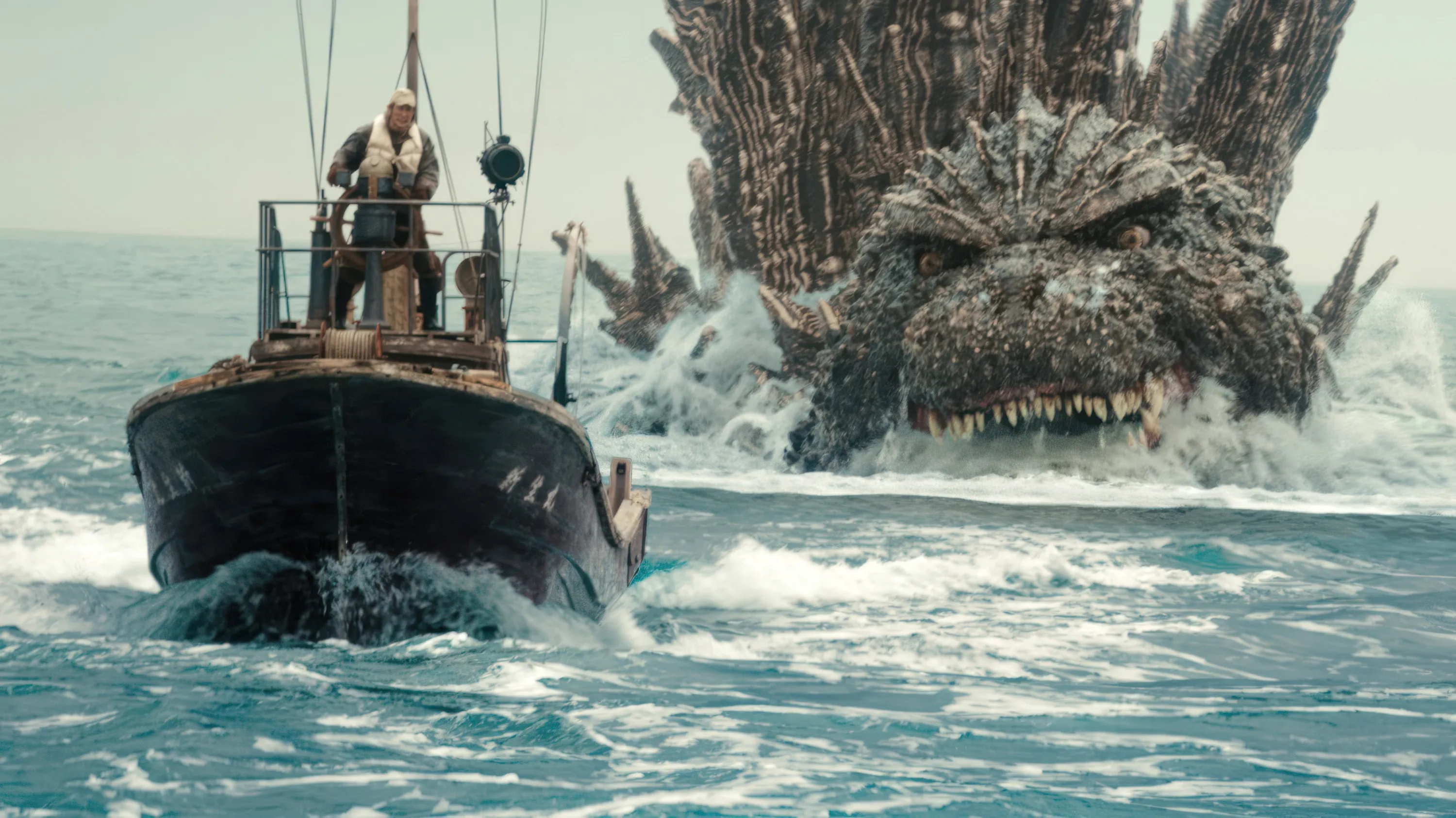
Takashi Yamazaki's Godzilla Minus Zero, the sequel to his Oscar-winning Godzilla Minus One, had its world premiere at the New York Film Festival
NEW YORK
Film festivals are not usually known for mid-screening applause. But on Saturday night, inside Alice Tully Hall at Lincoln Center, the audience at the world premiere of Godzilla Minus Zero clapped and cheered through the film as the monster tore through the screen. By the time the credits rolled, the first reactions online were calling it one of the best sequels ever made.
It is a remarkable moment for a franchise that is 72 years old, and a big one for director Takashi Yamazaki, who has now had to follow one of the most surprising hits of the decade.
From small budget to Oscar winner
To understand the excitement, go back to 2023. Godzilla Minus One cost less than $15 million to make, a small budget by Hollywood standards. It became one of the highest-grossing Japanese films of all time and won the Academy Award for Best Visual Effects, beating far more expensive Hollywood films. Audiences loved its mix of giant-monster spectacle and a sad, human story about a former kamikaze pilot living with survivor's guilt in post-war Japan.
Toho confirmed a new Yamazaki Godzilla film in November 2024, and the title, Godzilla Minus Zero, was revealed a year later. Filming ran from August to December 2025, entirely in Japan, and it became the first Japanese production filmed for IMAX. Yamazaki wrote and directed the film and supervised its visual effects again, with the Tokyo studio Shirogumi doing the effects work.
A first in 72 years
The story picks up in 1949, two years after the first film, and follows the Shikishima family as they face a new disaster. Ryunosuke Kamiki returns as Kōichi Shikishima and Minami Hamabe as his wife Noriko, alongside returning cast members Hidetaka Yoshioka, Yuki Yamada, Kuranosuke Sasaki and Sakura Ando. The dancer and actor Min Tanaka joins as a biologist carrying his own scars from the war. And Godzilla is not alone: the three-headed King Ghidorah arrives, setting up one of the biggest monster fights the series has ever staged.
What has people talking most is the rating. The film has been rated R for "violent content/bloody images," the first time a Godzilla film has received that rating. Some fans worried that it meant gore for its own sake. After the premiere, many critics said the rating made sense once they had seen how the film shows destruction and its cost to ordinary people.
Yamazaki defended the choice on the red carpet. "There were certain scenes that, for me as a director, were so essential to the film," he told Variety. "Censoring it or cutting it was just not an option for me."
What the critics are saying
Reactions from the premiere were close to unanimous. Critics used words like "jaw-dropping" and "awe-inspiring," and several predicted a Best Picture campaign, which would be extraordinary for a monster movie. Variety's review described it as an even grander follow-up to Minus One, built around the battle between Godzilla and King Ghidorah. Others praised the fact that, even at 135 minutes and with a much larger scale, the film keeps the emotional focus on the Shikishima family.
That balance is the heart of Yamazaki's approach. His Godzilla films treat the monster as a force of nature and a symbol of war and trauma, and treat the people running from it as characters who matter. The first reactions suggest he has done it again, with more money and more monsters.
A long road to cinemas
The festival premiere was carefully planned. The film was a Spotlight Gala at the 64th New York Film Festival, and it will be the Centerpiece screening at the Tokyo International Film Festival in October. It opens in Japan on November 3, known to fans as Godzilla Day because the original film was released on that date in 1954, and in North America on November 6 through GKIDS, including in IMAX.
There is a business reason for the timing. Toho has an agreement with Legendary Pictures, which makes the American MonsterVerse films, that stops competing Godzilla films from being released in the same year. Legendary's next film, Godzilla x Kong: Supernova, is set for 2027, leaving 2026 to Yamazaki.
The promotion has been unusual too. The Los Angeles Dodgers held a Godzilla Minus Zero Night at Dodger Stadium on September 24, with bobbleheads and a Godzilla drone show. And James Cameron, meeting Yamazaki in Tokyo last December, jokingly offered to direct the film's second unit if it fell behind schedule.
What this means for moviegoers
If you loved Minus One, this is the film to put in your calendar for November, and the IMAX release is worth paying extra for. Parents should take the R rating seriously: this is not a family monster movie, and younger viewers who enjoyed the more cartoonish Godzilla x Kong films may find it much more intense.
It also matters beyond Godzilla fans. Minus One proved that a Japanese film made on a modest budget could beat Hollywood at its own game. A second success, this time with an R rating and a bigger scale, would show that audiences around the world will turn up for subtitled blockbusters, and that could change what studios are willing to make.
The final word
Godzilla has been stomping on cities since 1954, and each generation gets the monster it needs. For now, the early verdict from New York is that Yamazaki has made a sequel that is bigger, darker and, remarkably, just as moving. Japan gets it on November 3 and North America on November 6.



