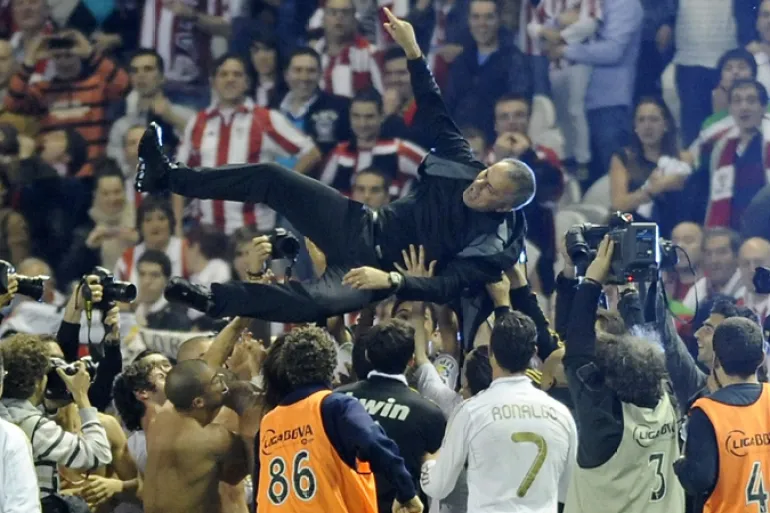
MADRID
The last time José Mourinho lifted a European Cup, he did it in Madrid, in somebody else's stadium, wearing somebody else's badge. In May 2010 he stood in the Santiago Bernabéu with Inter Milan's treble sealed, and within days had walked out of the Italian club and into the Real Madrid dugout — one of the strangest exits in modern football.
On Tuesday evening, at 21:00 CEST, that circle closes with a snap. Real Madrid host Inter Milan at the Bernabéu in the opening fixture of the 2026–27 Champions League league phase, and Mourinho — back in the Madrid dugout for a second stint — will spend ninety minutes looking across at the club whose supporters still sing his name.
A New Season, A New Shape
The competition that begins on Tuesday is not the one Mourinho won in 2010. The league phase runs from 8 September through 27 January, with 36 clubs playing eight matches apiece in a single table rather than the old six-game mini-groups. Twenty-four of those 36 survive. The top eight go straight into the round of 16. Teams ranked ninth to twenty-fourth contest a knockout play-off round, with ninth to sixteenth seeded and seventeenth to twenty-fourth unseeded. Everyone from twenty-fifth down is eliminated from European competition entirely — no parachute into a secondary tournament, no second life.
Matchday one runs Tuesday to Thursday, with kick-offs staggered at 18:45 and 21:00 CET. Tuesday alone offers Porto against Manchester City, Borussia Dortmund against Villarreal, Club Brugge against Aston Villa, Lille against Real Betis and AEK Athens against LASK. But UEFA has front-loaded the marquee: Real Madrid and Inter on night one.
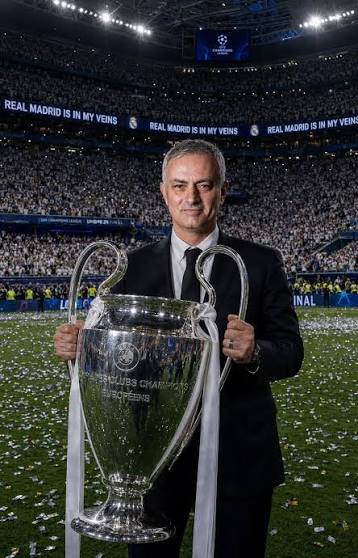
The Man in the Middle
Mourinho's return has been the story of the Spanish season before a ball was kicked in Europe. His first spell, 2010 to 2013, delivered a record 100-point Liga title and institutional friction that took the club years to metabolise. He returns older, more decorated and — by his own account — less interested in the war of attrition that defined that era.
The early evidence is mixed. Madrid have won five of their last six matches in all competitions, a run that looked serene until Friday, when they lost 1-0 at Real Betis and dropped their first points of the campaign. The timing was unhelpful. Inter arrive unbeaten in fifteen matches across competitions, with four wins in their last six, and a squad that has spent two seasons learning to defend a lead without panicking.
Mourinho's selection problems are real. Ferland Mendy, Aurélien Tchouaméni and Raúl Asencio are unavailable. So is Endrick. Rodrygo is out with a cruciate ligament injury, a blow that removes Madrid's most reliable option for stretching a compact defence — precisely the kind of defence Inter build. Kylian Mbappé, who fronted Madrid's pre-competition media duties, will be asked to carry an even heavier share of the attacking burden than usual.
The Subplot Nobody Planned
There is a second returning face, and he will be in a white shirt. Denzel Dumfries joined Real Madrid from Inter this summer, meaning the right of Madrid's attack will be occupied by a player who learned Inter's defensive patterns from the inside. In a fixture this tight, that can be the difference: Dumfries knows the runs, the triggers and the habits of the men he will be trying to beat.
History favours the hosts. Madrid have won their last four Champions League meetings with Inter, scoring eight and conceding two, and start as clear favourites. Those numbers, though, were compiled against a different Inter and under a different Madrid manager.
What the Format Change Really Means
Analysts have spent two seasons arguing about whether the expanded league phase has made the early rounds more meaningful or less. The evidence suggests both. With eight fixtures and a single table, one defeat is survivable in a way it never was in a four-team group. But the cliff at the bottom is steeper: finish twenty-fifth and the European season is simply over in January.
The practical effect is that clubs treat the league phase as a points-accumulation exercise rather than a series of must-win nights. For Real Madrid against Inter, that is quietly liberating. Neither side needs to win — though the difference between eighth and ninth is the difference between a February off and two extra knockout matches in the middle of a domestic title race.
Voices
Mourinho has been characteristically unbothered by the sentimentality of the occasion, framing the fixture as a scheduling accident rather than a homecoming. Inter's supporters have never stopped associating the Bernabéu with the greatest night in their modern history, and a significant travelling contingent is expected.
The neutral view, offered by several European analysts in the build-up, is that this is the most instructive fixture of the round. Madrid are a team in transition under a manager with something to prove at the same address twice. Inter are a settled, veteran side whose ceiling is defined by whether they can still win away against elite opposition.

What This Means for You
If you are picking one match to watch this week, this is it — not because the result will decide anything, but because it is the clearest available window into how the 2026–27 season is going to feel. Watch whether Madrid can create clean chances without Rodrygo. Watch how Inter handle Mbappé in transition. And watch the touchline, because Mourinho against a club he loves, in a stadium he has already conquered with them, is theatre that does not schedule itself twice.
For the more casual viewer, the format is worth understanding first: a defeat on Tuesday is not fatal for either club. What matters is the table position each side builds over eight matches between now and late January. Tuesday is the first brick.
The Bottom Line
A new European season opens with an old European story. Sixteen years after Mourinho used the Bernabéu as the stage for his exit from Inter, he stands in it as the home manager, facing them. The trophy is nine months away and nothing is decided. But for one night, the Champions League has arranged itself into a shape that looks almost too neat to be accidental.
Published By | Sports Editor