KINSHASA/GOMA, Democratic Republic of the Congo
Eight months after Presidents Félix Tshisekedi of the Democratic Republic of the Congo and Paul Kagame of Rwanda signed a peace declaration at the White House, fresh clashes around the eastern town of Minembwe and near Bukavu's Kavumu airport this past week are the latest evidence that the accord has yet to translate into a durable ceasefire on the ground. The Congolese army and allied militias have traded territory with the Rwanda-backed M23 rebel coalition and its local ally, the Twirwaneho militia, even as diplomats from both governments met in London in June to review a separate framework for disarming a Rwandan Hutu militia and withdrawing Rwandan troops — a sign that the war's political and military tracks remain badly out of sync.

Background
The current phase of the conflict dates to the M23's resurgence in 2024, when the group — widely assessed by United Nations experts and Western governments to receive backing from Rwanda, which Kigali denies — seized swaths of North and South Kivu provinces, including the regional hub of Goma. The fighting has since displaced more than 4.3 million people across the two Kivu provinces, according to humanitarian trackers, and has repeatedly outpaced diplomatic efforts to end it.
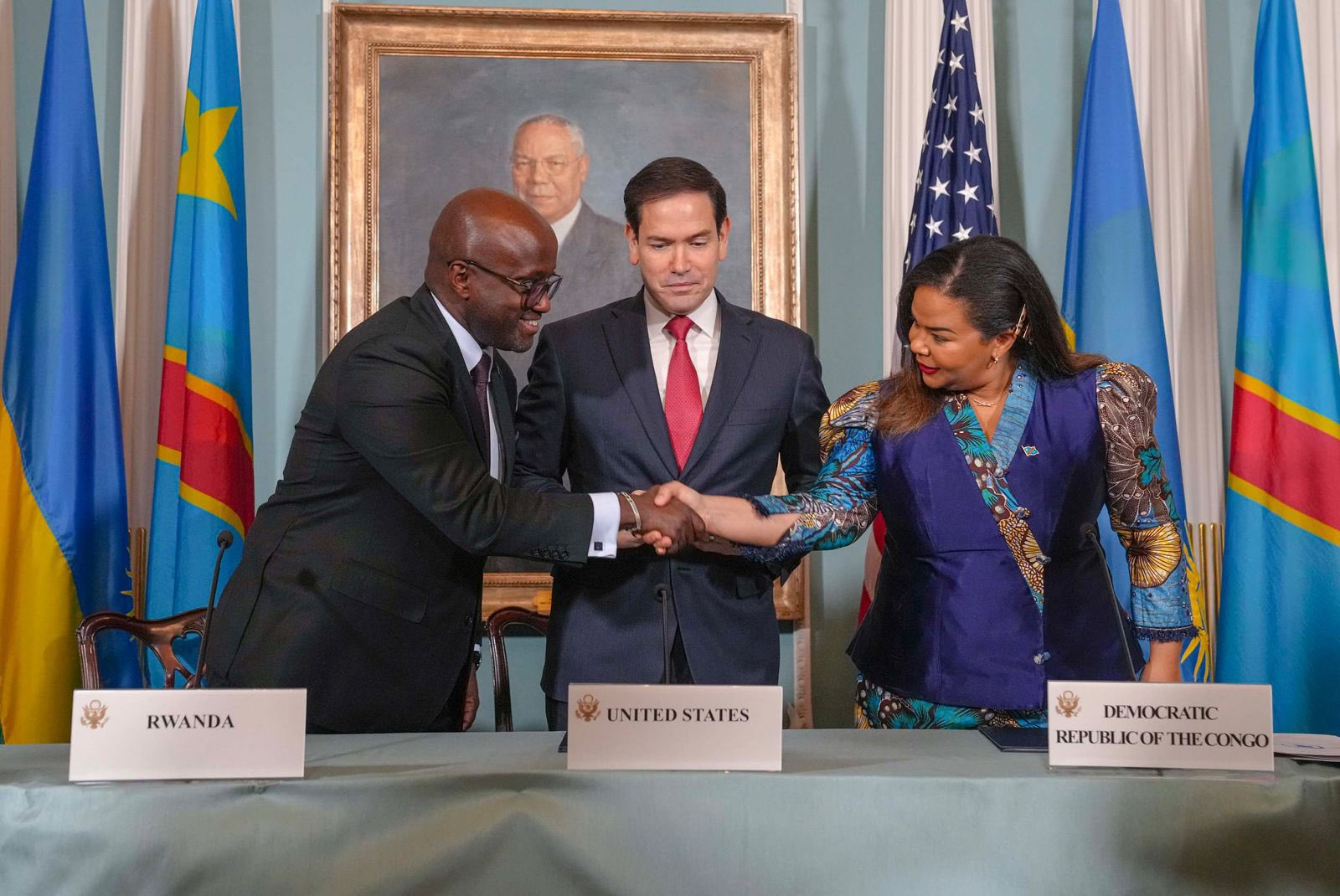
Those efforts reached a high point on Dec. 4, 2025, when Tshisekedi and Kagame signed a peace agreement at the White House, with President Donald Trump presiding over what he called a "great day for the world." Tshisekedi described the deal as combining a declaration of principles with a regional economic-integration framework meant to open "a new era of friendship, cooperation and prosperity" between the two countries, whose economies are deeply intertwined around eastern Congo's mineral wealth. Kagame struck a more guarded tone even as he signed, saying "there will be ups and downs on the road ahead, there is no doubt about it." Separately, the Congolese government and the M23-aligned AFC political coalition signed a nonbinding Doha Framework for a Comprehensive Peace Agreement on Nov. 15, 2025, which the African Union welcomed — though the head of M23's Doha delegation cautioned at the time that the framework "would not change the lines of territorial control in the short to medium-term" and that "the path is still long."
That caution proved warranted. Within days of the Washington signing, Tshisekedi told Congolese lawmakers that Rwandan forces had attacked several locations in South Kivu, accusing Kigali of breaking the agreement before the ink had dried.
Key developments
The peace process now runs on two parallel, largely disconnected tracks. On the diplomatic side, the Joint Oversight Committee established under the Washington Accords held its sixth meeting in London on June 24, bringing together representatives of the DRC, Rwanda, Qatar, the African Union — represented by mediator Togo — and the United States. At that meeting, the DRC briefed participants on its efforts to neutralize the Forces Démocratiques de Libération du Rwanda, or FDLR, a Rwandan Hutu militia whose presence in eastern Congo Kigali has long cited as a security justification for its own involvement in the conflict, while Rwanda reported on its progress withdrawing troops and materiel from Congolese territory. On May 30, Victor Byiringiro, president of the FDLR's political wing, wrote to Tshisekedi outlining a commitment to disarm and demobilize the group's fighters into cantonment sites, conditioned on security guarantees and assurances against forced extradition to Rwanda. Kinshasa has moved cautiously on the militia's disarmament: the Congolese army mobilized two to three battalions to North Kivu in late March in case peaceful disarmament efforts failed, and the government separately declined an offer from the U.S. private military contractor Bancroft Global Development to assist with the FDLR's disarmament, a decision reported by Africa Intelligence on July 28.
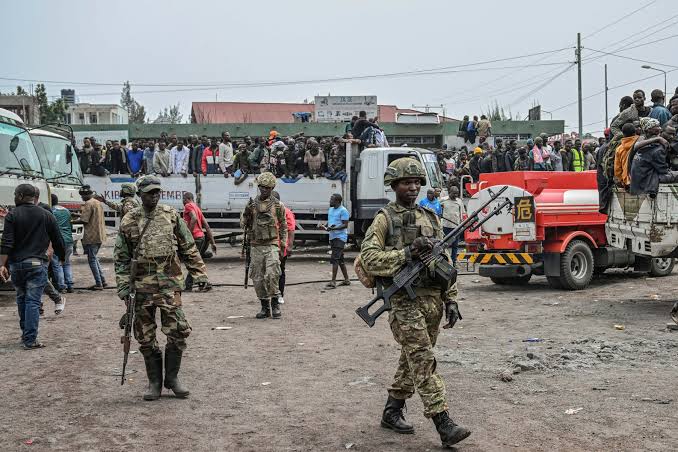
On the ground, the picture has continued to deteriorate. According to the latest Congo War Security Review from the Critical Threats Project, published Aug. 7, Twirwaneho fighters aligned with M23 repelled a government offensive to capture Point Zéro, a strategically significant hilltop roughly 15 miles east of Minembwe in South Kivu's highlands, and seized several nearby villages in the final days of July, including Kipupu in the Itombwe sector and Kimete and Kabanja to the south and southwest of Minembwe. Further north, the Congolese army, known by its French acronym FARDC, conducted a drone strike on an M23 position near Nyabiondo in Masisi territory, North Kivu. Near Bukavu, pro-government Wazalendo militia fighters clashed with M23 forces close to Kavumu airport, with fighting reported in Kabushwa village on the outskirts of Katana town on Aug. 1 and resuming in the nearby Buliriko neighborhood the following day.
The fighting in the Minembwe highlands has proven especially difficult for humanitarian agencies to reach. Human Rights Watch reported in April that aid delivery and civilian movement in the South Kivu highlands had been severely restricted for more than a year, with medical facilities facing chronic shortages of basic supplies while civilians remain trapped between competing armed factions — a dynamic that analysts tracking the region say has changed little in the months since.
Named actors and stakes
The conflict's core actors have not shifted since the Washington signing: Tshisekedi's government in Kinshasa, Kagame's government in Kigali, the M23-led AFC coalition and its various local militia allies including Twirwaneho, and the FDLR, whose presence remains both a genuine security concern for Rwanda and a pretext Kinshasa's critics say Kigali has used to justify continued involvement in Congolese territory. The Wazalendo — a loose coalition of pro-government militias fighting alongside FARDC — have emerged as a significant, if less internationally scrutinized, force shaping outcomes in contested areas like Bukavu's outskirts.
The stakes extend well beyond the two Kivu provinces. Eastern Congo holds some of the world's largest reserves of coltan, cobalt and other minerals critical to global electronics and battery supply chains, giving the conflict an economic dimension that helped draw Washington's direct involvement in brokering the December agreement. For Congolese civilians, the stakes are more immediate: continued displacement, disrupted access to healthcare, and a peace process that, eight months on, has yet to reduce the frequency of armed clashes in the areas most affected by the war.
Analysis and outlook
The disconnect between the diplomatic and military tracks is the defining feature of the conflict's current phase. Formal oversight mechanisms — the Joint Oversight Committee, the Joint Security Coordination Mechanism, and the Doha talks — continue to meet on regular schedules and produce statements of progress, most recently on FDLR disarmament planning and Rwandan troop withdrawal reporting. Yet the Critical Threats Project's week-by-week security reviews have chronicled near-continuous small-unit clashes throughout 2026, suggesting that neither the Congolese government nor the M23-Twirwaneho coalition sees a strong incentive to freeze the current battle lines while negotiations continue — a dynamic regional analysts describe as a race to establish facts on the ground that will shape any eventual territorial settlement.
What happens next likely hinges on whether the FDLR disarmament plan Byiringiro outlined in May can be operationalized without triggering renewed fighting, and whether Rwanda's reported troop-withdrawal steps are verifiable enough to satisfy Kinshasa and its Western backers. Both are preconditions Washington has signaled it wants met before pressing for the broader economic-integration provisions of the December accord to move forward. Absent visible progress on either front, and with fighting continuing in the Minembwe highlands and around Bukavu, the coming weeks are likely to bring further contested village-level battles rather than the ceasefire consolidation the Washington and Doha frameworks were designed to produce — a pattern that, if unbroken, will keep the accords' credibility, and Congo's displaced millions, in limbo.
Published By | News Editor