Written By | Staff Writer
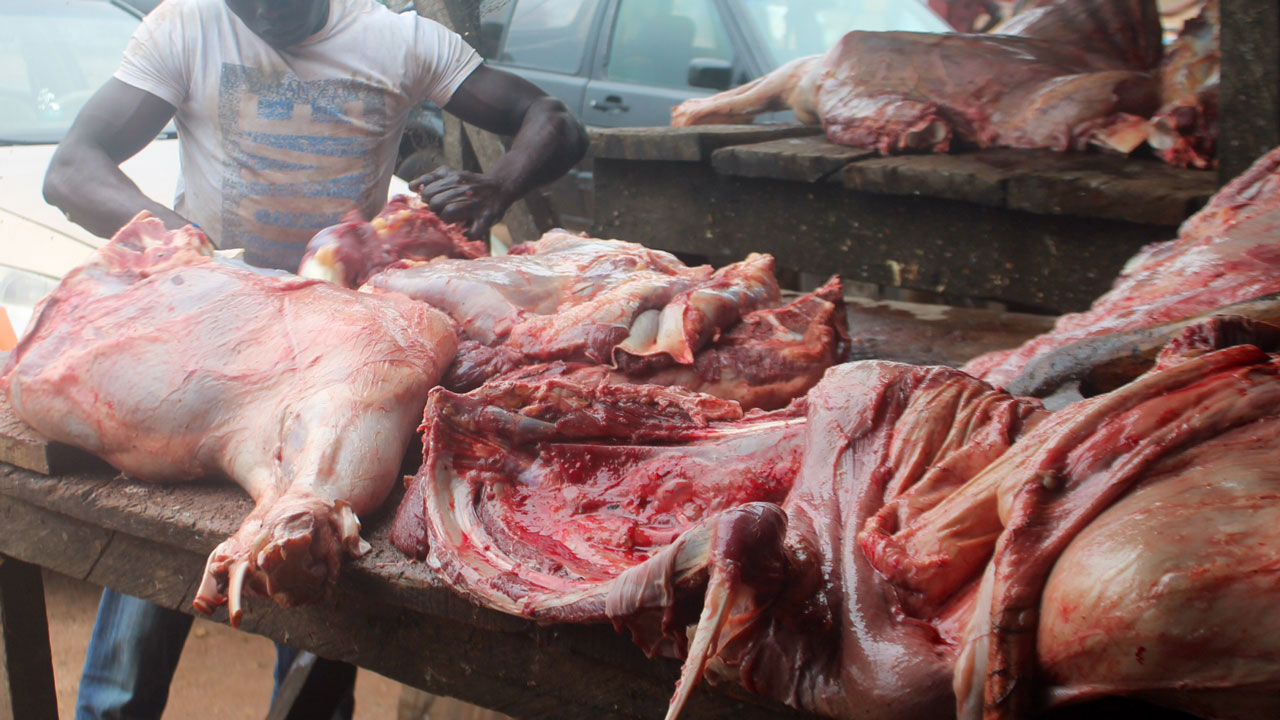
According to Sheema's Deputy Resident District Commissioner, Sam Orikunda, residents in the area consumed meat from a cow that had died under unclear circumstances
Agriculture
Five people are dead and at least nine others were fighting for their lives at Mulago National Referral Hospital after a family in Sheema Municipality did what generations of cattle-keepers in western Uganda have done in lean times: they ate the meat of a cow that had died suddenly, rather than let it go to waste. Within days, that decision had triggered one of the most serious anthrax outbreaks the sub-region has recorded in recent years, exposed the limits of Uganda's rural disease surveillance system, and reignited a debate over whether cultural practice or public health policy will ultimately govern how the country's cattle corridor eats.
The outbreak, confirmed by district officials in mid-July, unfolded in Nshungyezi cell, Kashozi Division, on the outskirts of Sheema Municipality in western Uganda. According to Sheema's Deputy Resident District Commissioner, Sam Orikunda, residents in the area consumed meat from a cow that had died under unclear circumstances. Days later, five people were dead and nine more were in critical condition, eventually referred to Mulago for specialised care. "Samples have been taken to government laboratories for confirmation, but all signs point to a case of anthrax," Orikunda said in a statement announcing the outbreak.
The Sheema District Veterinary Officer, Dr Joseph Amanya, confirmed that the District Disease Outbreak Response Taskforce had convened to coordinate a response involving health, veterinary and security teams. Authorities moved quickly to contain the disease's spread from animals to humans, announcing a temporary suspension of the slaughter, sale and distribution of meat and milk in the affected sub-counties, alongside a quarantine on the movement of livestock out of Kashozi Division. "We have intensified surveillance and community sensitisation in Nshungyezi and neighbouring areas, with health, veterinary and security teams working together to prevent further infections," Dr Amanya said.
A DISEASE THAT REFUSES TO STAY BURIED
Anthrax is caused by Bacillus anthracis, a spore-forming bacterium that lies dormant in soil for years, sometimes decades, before infecting grazing livestock. Once an animal dies of the disease, its blood — thick, dark and unable to clot — becomes a reservoir of spores that can survive to infect the next animal, or the next person who handles or eats it. It is one of the oldest recognised diseases in veterinary and human medicine, and one of the most persistent in Uganda's cattle-keeping regions, particularly the western districts of Sheema, Kiruhura, Kanungu, Isingiro and Kyotera, as well as the Karamoja sub-region and Amudat in the northeast.
This is not Sheema's first encounter with the disease. Previous outbreaks have struck Mashyojwa Village in the district's Kagango Sub-county and in neighbouring Kyeizooba Sub-county in Bushenyi district, both resulting in hospitalisations and deaths after residents slaughtered and ate meat from infected livestock. Public health researchers have separately documented anthrax outbreaks in Kyotera District linked to the same pattern of behaviour — communities consuming carcasses of cattle that died unexpectedly — as well as in Amudat District, where cutaneous anthrax has been tied to the handling of cattle hides.
What makes anthrax particularly dangerous in Uganda's rural livestock economy is the gap between how the disease actually behaves and how communities interpret a sudden animal death. Dr Amanya explained that animals infected with anthrax may show no visible signs of illness until it is too late, meaning a family looking at what appears to be a healthy, if unlucky, dead cow has no easy way of knowing the animal was carrying a lethal pathogen. "Animals may not show signs of illness until it is too late, so it is crucial to avoid handling or consuming carcasses," he said, urging residents to bury carcasses properly and buy meat only from gazetted slaughterhouses and authorised butcheries.
CULTURE VERSUS CONTAINMENT
The most difficult obstacle facing health authorities has not been diagnosing the outbreak, but persuading affected communities to report it. Orikunda said officials encountered direct resistance from residents of Nshungyezi, some of whom attempted to conceal information about the dead cow because of a long-standing local tradition of eating meat from animals that die of unknown causes rather than "wasting" the carcass. "We have faced resistance from the community of Nshungyezi, who attempted to conceal information about the incident because it has been their tradition to eat meat from dead animals," Orikunda said. "Please advise our people to avoid eating meat from carcasses and to buy meat only from gazetted slaughter facilities and authorised butcheries."
That tension between subsistence economics and biosecurity is not unique to Sheema. Across Uganda's cattle corridor, where a single cow can represent a household's most valuable asset, the loss of an animal to sudden death is as much an economic emergency as it is a potential health hazard. For many smallholder families, slaughtering and distributing or selling the meat of a dead animal — even one that died of unclear causes — recoups at least part of that loss. Veterinary officers interviewed in previous anthrax investigations in western Uganda have noted that this economic logic, more than ignorance of the disease, drives the behaviour that keeps triggering outbreaks.
THE ECONOMIC STAKES FOR FARMERS AND MARKETS
Beyond the immediate human toll, anthrax outbreaks carry a heavy economic cost for livestock farmers and local meat markets. The quarantine imposed on Kashozi Division halts the movement, slaughter and sale of livestock and livestock products in the affected zone, cutting off farmers' access to markets precisely when they most need income to offset losses from dead animals. Butchers and traders in gazetted slaughterhouses lose business as consumer confidence in local beef dips, a pattern that has repeated itself in past outbreaks in Kanungu, Bududa and Amudat districts. For a country where livestock underpins rural livelihoods across the cattle corridor and contributes significantly to household incomes outside the crop sector, repeated localized anthrax flare-ups chip away at both public trust in the meat supply chain and the informal economy that depends on it.
There is also a wider reputational dimension. Uganda's livestock and meat exports — including recent efforts to ship processed beef to markets such as Ethiopia and to expand poultry and dairy trade with partners like Egypt — depend on credible animal health systems and disease-free certification. Recurring, poorly contained anthrax outbreaks in the western cattle-keeping belt complicate that picture, even when, as in Sheema's case, the outbreak remains geographically contained.
A ONE HEALTH PROBLEM WITHOUT A SIMPLE FIX
Public health specialists frame anthrax as a textbook "One Health" problem — one that sits at the intersection of animal health, human health and environmental management, and that cannot be solved by any single government department acting alone. Uganda's Ministry of Agriculture, Animal Industry and Fisheries and the Ministry of Health have, in past outbreaks, worked jointly with district task forces, but the recurring nature of these incidents in the same handful of districts suggests that the underlying drivers — weak carcass disposal infrastructure, limited veterinary extension coverage, and entrenched food practices — remain largely unaddressed between outbreaks.
Prevention measures recommended by veterinary officers are straightforward in principle: livestock vaccination against anthrax where the disease is endemic, prompt reporting of sudden animal deaths, proper burial or incineration of carcasses, restrictions on informal slaughter, and public education campaigns timed to reach communities before, not after, an outbreak. In practice, sustaining these measures requires consistent funding and staffing for district veterinary offices that are frequently stretched thin across large rural areas.
For now, Sheema's response has followed the reactive template that has become familiar in western Uganda: a suspected case, a scramble to send samples to the National Animal and Diagnostics Epidemiology Centre in Entebbe for confirmation, a hurried quarantine, and public appeals for cooperation from a population already grieving. Whether this outbreak proves to be the catalyst for more durable investment in rural disease surveillance, or simply the latest entry in a recurring pattern, will depend on decisions made in Kampala long after the headlines from Nshungyezi have faded.
As Dr Amanya put it in his appeal to residents: "Let us strictly observe the recommended precautions and ensure that all carcasses are properly buried. Purchasing meat from unauthorised butcheries puts you at a high risk of contracting anthrax." For the families of Nshungyezi already mourning five deaths, that warning has come at an unbearable cost.



