World Politics
Overview
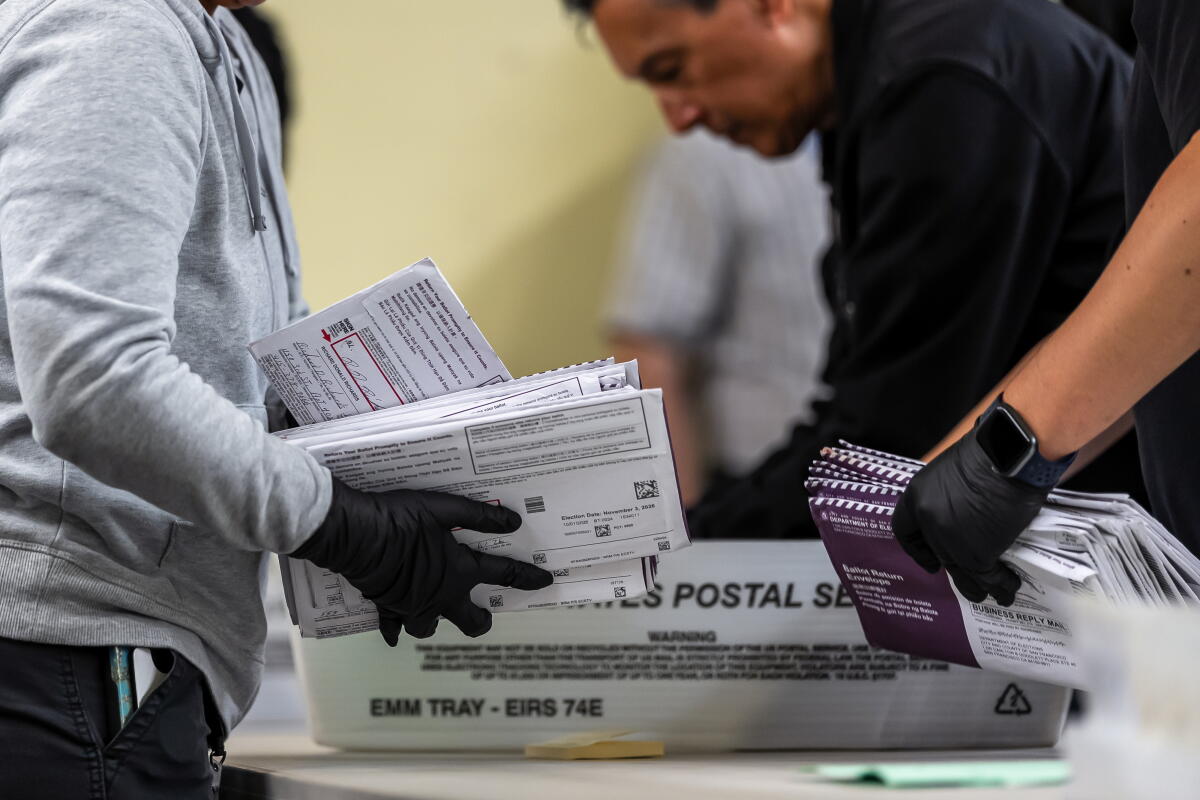
With the November midterm elections about two and a half weeks away, two separate developments this week have pushed the machinery of American elections to the centre of the political fight. On Thursday, October 15, the Justice Department sued California in federal court, asking a judge to stop the state from counting mail-in ballots cast by more than 20,000 people the federal government suspects are noncitizens. The same week, the FBI and the US Postal Inspection Service opened what officials described as an expansive investigation into suspicious letters, some containing an unknown powdery substance, sent to state election offices and congressional offices across the country.
The two stories are not known to be connected, and nothing published so far links the mailings to the lawsuit. But together they illustrate the pressure now bearing on the people who run American elections: a federal government pressing aggressively on voter-roll integrity and a wave of intimidation that election officials say will not deter them. The California suit is also notable as the first time the administration has sought, in court, to directly halt the counting of votes, after months of efforts to expand federal influence over how states run their elections.
The Lawsuit Against California
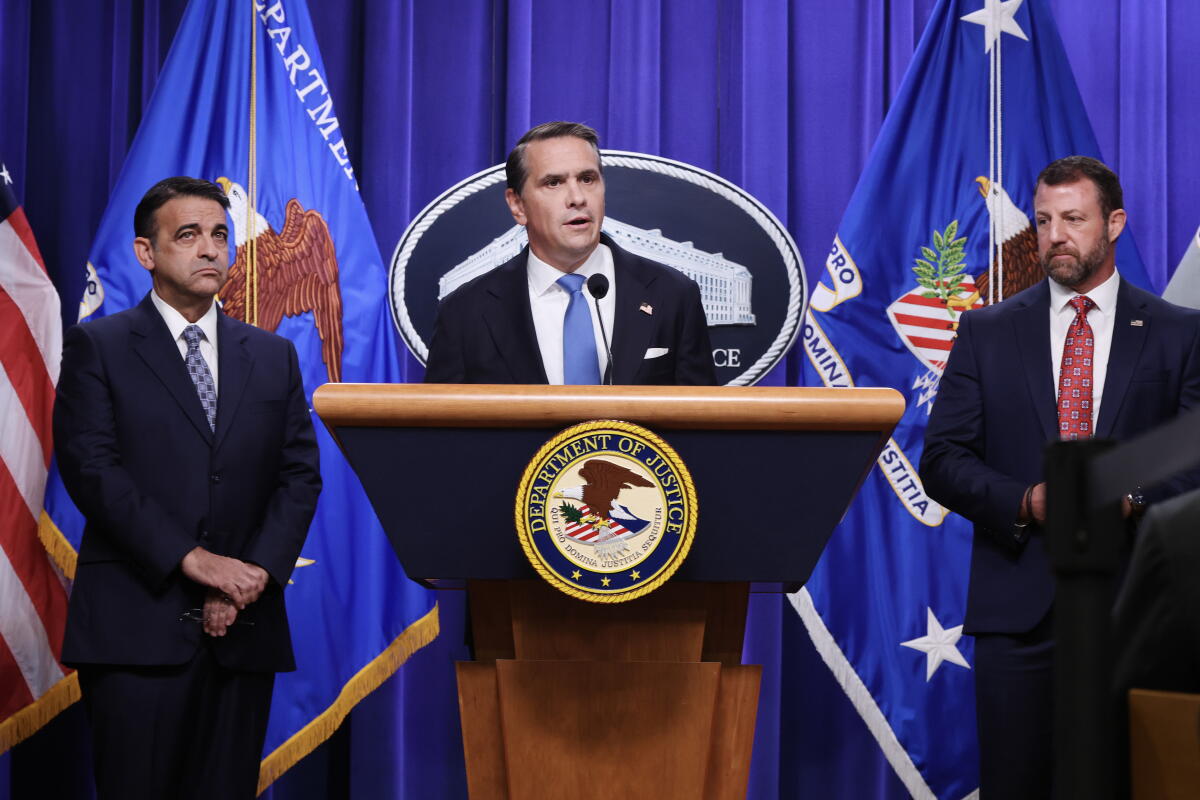
The complaint was filed in the US District Court for the Central District of California. It alleges that the federal government has identified more than 20,000 noncitizens unlawfully registered to vote in the state and that California has not made a serious effort to work with federal officials to check its rolls. The department asks the court to require the state to segregate the mail ballots of those voters and not count them until their citizenship has been verified. Attorney General Todd Blanche said in a statement that "state-facilitated voter fraud is unacceptable in the United States of America."
The filing followed letters earlier in the week from Acting Deputy Attorney General Trent McCotter to California counties, including Los Angeles. According to CBS News, the Los Angeles letter enclosed a password-protected thumb drive containing names compiled by the Department of Homeland Security and set a 48-hour deadline for review. Dean Logan, the county's Registrar-Recorder and Clerk, said his office would not review the material, citing data-privacy and information-security protocols and noting that the device was not a secure medium. California Secretary of State Shirley Weber said the Justice Department had not actually provided the list of names and called the administration's separate claim that California has 190,000 noncitizens on its voter rolls unsubstantiated.
Legal observers have noted that the suit is unusual in its construction. According to reporting summarised by Roll Call, the complaint does not cite a statute that requires voters to prove citizenship before their ballots are counted. Instead it argues that California is inducing noncitizens to vote, conduct that federal law makes a crime. The articles reviewed do not specify the exact causes of action, nor the basis for the 20,000 figure beyond the Department of Homeland Security compilation, and no hearing date or court deadline has been reported. Noncitizens are barred from voting in federal elections, and states do remove them from rolls when they are identified, but the dispute here concerns how the list was compiled, whether it is accurate, and whether a court can order ballots to be set aside before any individual has had a chance to respond.
A Pattern of Federal Pressure on Elections
The California case sits atop a series of earlier moves. CBS News reports that the Justice Department's Civil Rights Division has filed 31 lawsuits seeking unredacted voter rolls from states, and that it intends to share the data with the Department of Homeland Security to screen for noncitizens. In July, Assistant Attorney General Harmeet Dhillon wrote to all 50 states threatening criminal action against officials who knowingly kept noncitizens on voter rolls. CBS counts 26 of those cases as lost, with none won so far, while Roll Call, in a slightly different formulation, says courts have ruled in every case to date that federal law does not give the administration the right to the sensitive data it seeks. The two accounts agree on direction, though the exact tallies may reflect different counting dates.
The wider policy backdrop is also contested. Trump sought a citizenship verification requirement on the federal voter registration form in 2025, which courts blocked. In March he issued an executive order meant to curb mail voting and require states to use a federal voter list. In September the Supreme Court blocked a Postal Service rule that was a key part of that order, but allowed the creation of a nationwide citizenship database. Separately, a League of Women Voters, EPIC and LULAC lawsuit filed this week alleges that the Department of Homeland Security obtained voter files from at least 47 states in violation of federal law, according to Democracy Now. FBI Director Kash Patel has declined to rule out sending agents to polling places on Election Day, and the Justice Department has charged several dozen people with illegal voting in the past two weeks.
The administration's supporters see these actions as overdue enforcement of a basic principle: only citizens should vote, and states should be able to prove their rolls are clean. Critics, including Democratic state officials and voting-rights groups, see an effort to create doubt about the results before voters have cast their ballots and to put federal agencies in a position to contest local counts. Evidence of widespread noncitizen voting has been scant in previous reviews, and the administration's repeated courtroom losses suggest judges have so far been unpersuaded by its legal theories.
Threatening Letters to Election Offices
On a separate track, the FBI said that "some of the letters contained an unknown substance" and that it is working with law enforcement partners on each incident. Votebeat reported, citing three election officials briefed on the probe, that more than 100 letters went to people and groups nationwide, though it is unclear how many were directed at election officials as opposed to politicians or other recipients. Recipients include Democratic Senators Alex Padilla of California and Chris Murphy of Connecticut, and a polling organisation; the offices of Senator Chuck Schumer were also reported among those targeted.
Officials in many states described incidents. Louisiana and Oklahoma received letters with a powdery white substance. The Wisconsin Elections Commission received a mail piece with an unidentified powder that was examined and deemed not dangerous, and administrator Meagan Wolfe said "this incident will not shake us." Arizona Secretary of State Adrian Fontes's office was evacuated and cleared by hazmat crews after receiving a white-powder letter, and Fontes said officials "will not be scared out of" their jobs. Nebraska staff left an envelope unopened and gave it to the FBI. Law enforcement intercepted similar letters bound for the offices of the secretaries of state of Ohio, New Hampshire and Washington; Pennsylvania's was blocked by the Postal Service; and letters were also intercepted in Connecticut, Georgia, Idaho and South Dakota. Ohio's Frank LaRose called the threats "cowardly."
The episode is not unprecedented. In 2024, suspicious packages were sent to election officials in at least six states in a similar wave, and threats against election workers have risen sharply since the 2020 election. Officials have not said who is responsible for the current mailings, and no motive has been confirmed. Reporting so far does not indicate that any letter contained a dangerous substance, but the disruption, evacuations and fear are themselves significant in the run-up to an election.
Reactions
Congressional Democrats responded quickly to the lawsuit. Senators Richard Durbin, Alex Padilla, Mark Warner and Gary Peters wrote to Blanche and Patel demanding information about the administration's efforts to interfere with the midterms, calling oversight their "constitutional duty." California officials have largely let their filings speak, with Weber's office telling reporters that, because of the pending litigation, it had nothing further to add beyond her letter to McCotter.
Election administrators of both parties have emphasised resilience. LaRose, a Republican, and Fontes, a Democrat, offered similar messages that officials will not be intimidated. Nebraska's Bob Evnen, noting it was the second suspicious envelope his office had received since 2024, said swift action was taken both times. Their consistent tone matters because the safety and morale of local election workers is an important constraint on the system's ability to function.
What's Next
In the short term, the key question is whether a federal judge will act on the California request before ballots are counted. Courts have been sceptical so far, and an order to set aside tens of thousands of ballots on the strength of a Homeland Security list that the state says it has not seen would be a dramatic step. A more likely outcome is that the case becomes a vehicle for further litigation over data access and for political messaging. Los Angeles County's refusal to review the thumb drive may also become a flashpoint, and the department could escalate against individual counties.
On the safety side, investigators will try to identify the sender or senders, and laboratories will confirm what the substances were. If the mailings continue, states may need to add screening procedures at election offices during the busiest weeks of the year. Voters should expect more news from federal courts and from state election officials as early voting and mail ballots arrive. The broader concern, shared by officials across party lines, is whether confidence in the process can survive a campaign season in which the rules, the rolls and the safety of those counting the votes are all under dispute.
Published By | News Editor