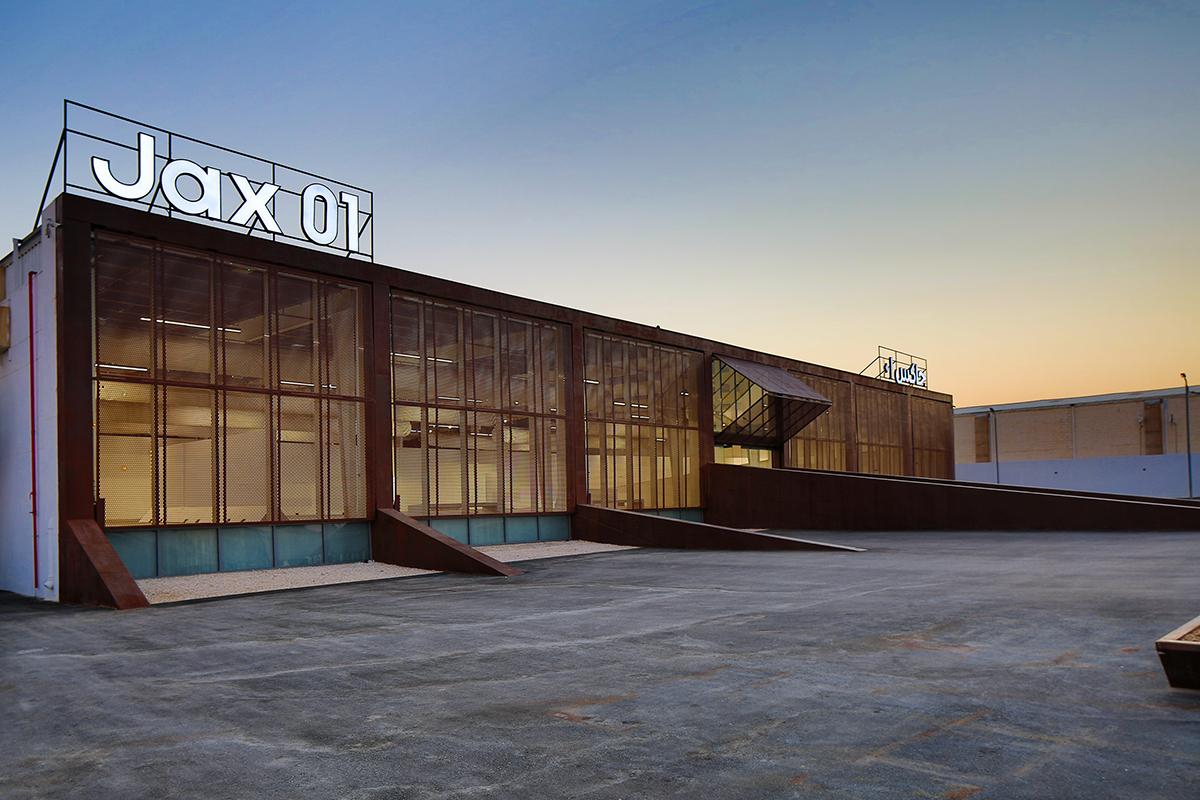
Downtown Design Riyadh opens today at JAX District for a second, expanded edition — Venini and Poltrona Frau alongside emerging Saudi studios, in a complex of industrial sheds now legally protected as heritage.
The most interesting thing about Downtown Design Riyadh may be the building it is in. JAX District is not a convention center. It is a cluster of low industrial warehouses and converted silos on the edge of Diriyah, a short distance from At-Turaif, the mudbrick birthplace of the Saudi state and a UNESCO World Heritage Site. The sheds were built to store and make things. Saudi Arabia’s Heritage Commission has since designated the district an industrial heritage site — a formal acknowledgment that twentieth-century working architecture is worth keeping.
That combination — a UNESCO site on one side, protected industrial fabric on the other, a contemporary design fair in the middle — is a fairly precise summary of what the Kingdom is currently trying to do with design.
The Second Edition
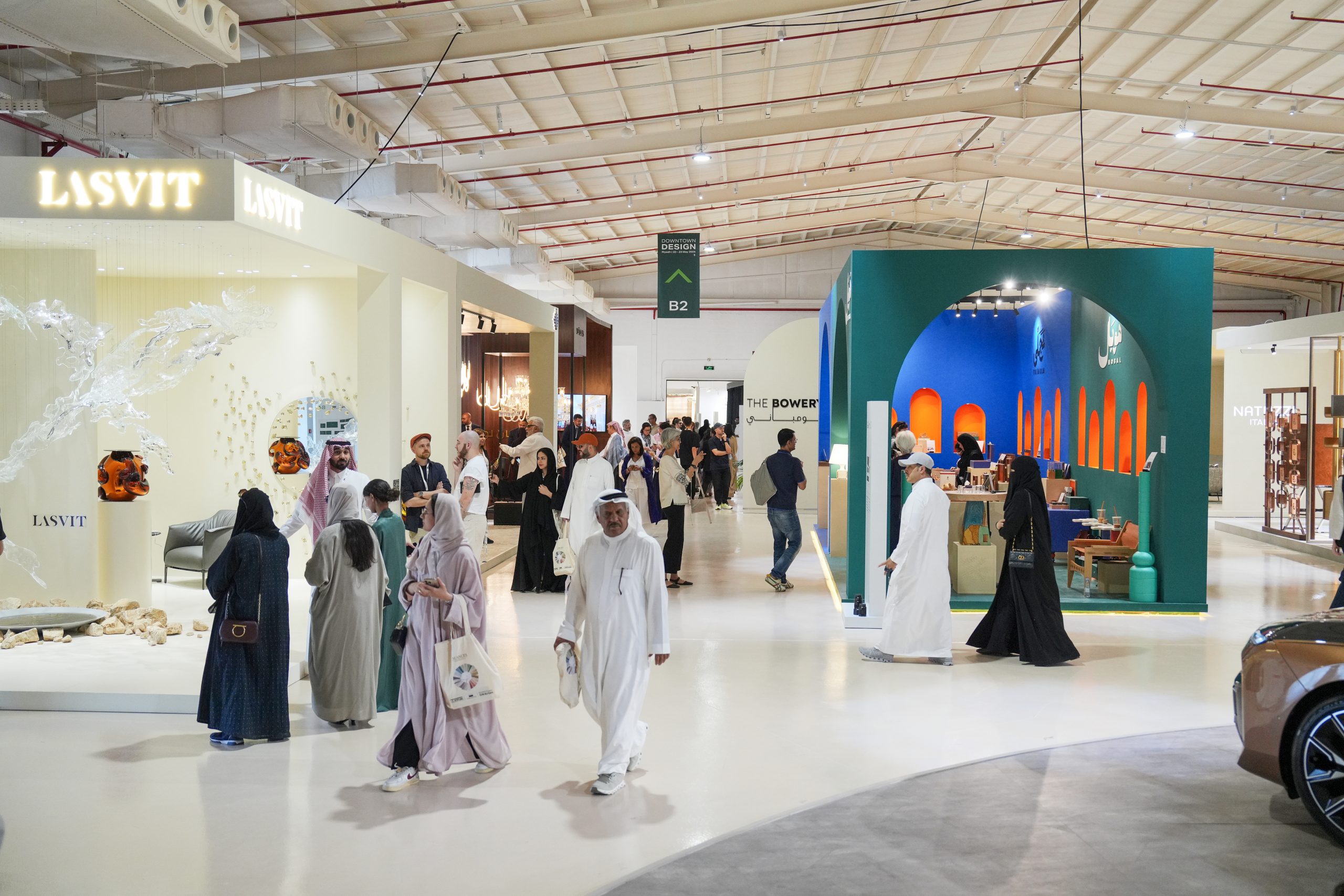
Downtown Design Riyadh runs from today through September 18, its second edition and its first in an expanded format. It is staged in strategic partnership with the Architecture and Design Commission of the Ministry of Culture, and it is a direct extension of Downtown Design Dubai, which has spent more than a decade establishing itself as the Gulf’s most credible design fair.
The 2026 exhibitor list reads as a deliberate mix of establishment and emergence. Venini, the Murano glasshouse founded in 1921, sits alongside Poltrona Frau, the Italian furniture manufacturer whose leather work has furnished everything from Ferrari interiors to opera houses, and THG Paris, the French bathroom fittings house. Emerging names include Esther Knopfler.
The inaugural edition brought Saint Louis, Visionnaire, Scarlet Splendour, Natuzzi and Huda Lighting, alongside a contingent of Saudi designers — the balance that has defined the fair’s programming logic from the start.
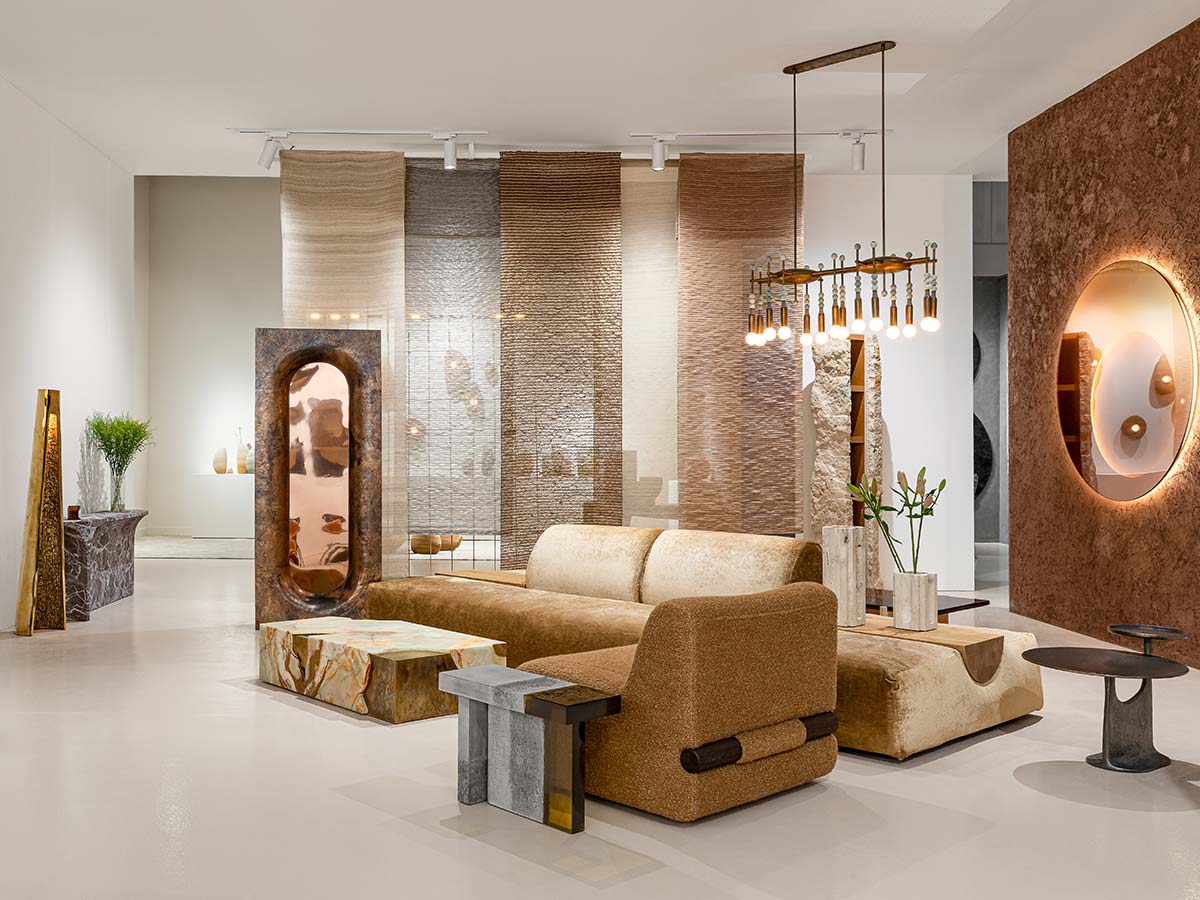
Alongside the commercial floor sits a Forum programme that, in its first edition, addressed collectible design, cultural preservation through design, and the trajectory of architecture in the Kingdom. Immersive installations and limited-edition works from international and regional studios fill out the rest.
Why a Fair, and Why Now
Design fairs are strange institutions. They are simultaneously trade events, cultural festivals and arguments about legitimacy. A city that hosts one credible fair is a market. A city that hosts one for several consecutive years becomes a destination on a calendar that runs from Milan in April to Dubai in November.
Saudi Arabia’s interest in that calendar is not aesthetic sentiment. The Architecture and Design Commission was established in February 2020 as one of eleven commissions under the Ministry of Culture, with a mandate covering architecture, urban design and planning, landscape architecture, interior design, graphic design and industrial design. Its stated purpose is to support Saudi architects and designers, articulate national identity and contribute measurably to the economy.
The economic logic is straightforward. Vision 2030 commits the Kingdom to an enormous programme of construction, tourism and entertainment infrastructure. Every one of those projects requires interiors, furniture, lighting, wayfinding, landscape and product design. The choice is whether that work is imported wholesale or generated domestically — and building a domestic design sector requires exactly the things a fair provides: visibility, buyers, peer comparison and a reason for young designers to stay.
JAX, and What It Became
JAX District has been quietly assembled into the country’s primary venue for contemporary culture. It hosts the Diriyah Contemporary Art Biennale, whose third edition ran from January 30 to May 2 of this year. It has housed XP Music Futures, the Hia Hub fashion and beauty conference, and elements of the Noor Riyadh light festival. Artist studios and galleries occupy the sheds year-round.
The adaptive-reuse move is familiar — Bilbao, Beijing’s 798, London’s Bankside have all done versions of it — but the speed here is unusual. Most warehouse-to-culture conversions take a generation and begin with artists arriving because the rent is cheap. JAX was converted deliberately and quickly, as policy.
That is both its strength and the thing critics most often point to. Organic creative districts accumulate messiness, cheap space and failure tolerance. Planned ones start with better infrastructure and have to grow the messiness afterward. Which model produces more durable work is a genuinely open question, and the Gulf is currently running the largest experiment on it anywhere in the world.
The Regional Picture
Downtown Design Riyadh does not exist in isolation. Dubai Design Week and Downtown Design Dubai anchor the autumn. Doha has built substantial museum and design infrastructure. The Gulf now has enough institutions to sustain internal careers — a designer can plausibly build a practice moving between Riyadh, Dubai and Doha without relocating to Europe.
For international brands, the appeal is more prosaic: a concentration of large-scale projects with real budgets, in a region where hospitality and residential development are proceeding at volumes Europe has not seen in decades. Venini and Poltrona Frau are not in Riyadh this week out of curiosity.
What It Means If You Are Not a Buyer
Most readers will never attend a design fair. The relevance is downstream.
Regional design fairs are where vernacular materials and techniques get translated into contemporary products — and then, if they work, exported. The Gulf’s current design conversation is heavily concerned with heat, shade, palm fibre, mudbrick, and the geometric traditions of Najdi architecture. Those preoccupations are increasingly relevant well beyond the region, for the straightforward reason that a great many places are getting hotter.
There is also the simpler proposition that a design ecosystem which includes Riyadh produces different objects than one that does not. Whether the fair’s second edition delivers on that is what the next four days are for.
Four Days in Diriyah
The measure of a second edition is never the guest list. It is whether the studios that showed in the first one came back, whether anything sold, and whether a designer who was a student at the inaugural fair is now exhibiting at this one.
The doors open today in a warehouse the state decided was worth preserving, a few minutes from a mudbrick citadel that the world decided was worth preserving. The proposition on the floor is that something new can be made in between.
Published By | Features Editor