Written By | Staff Writer
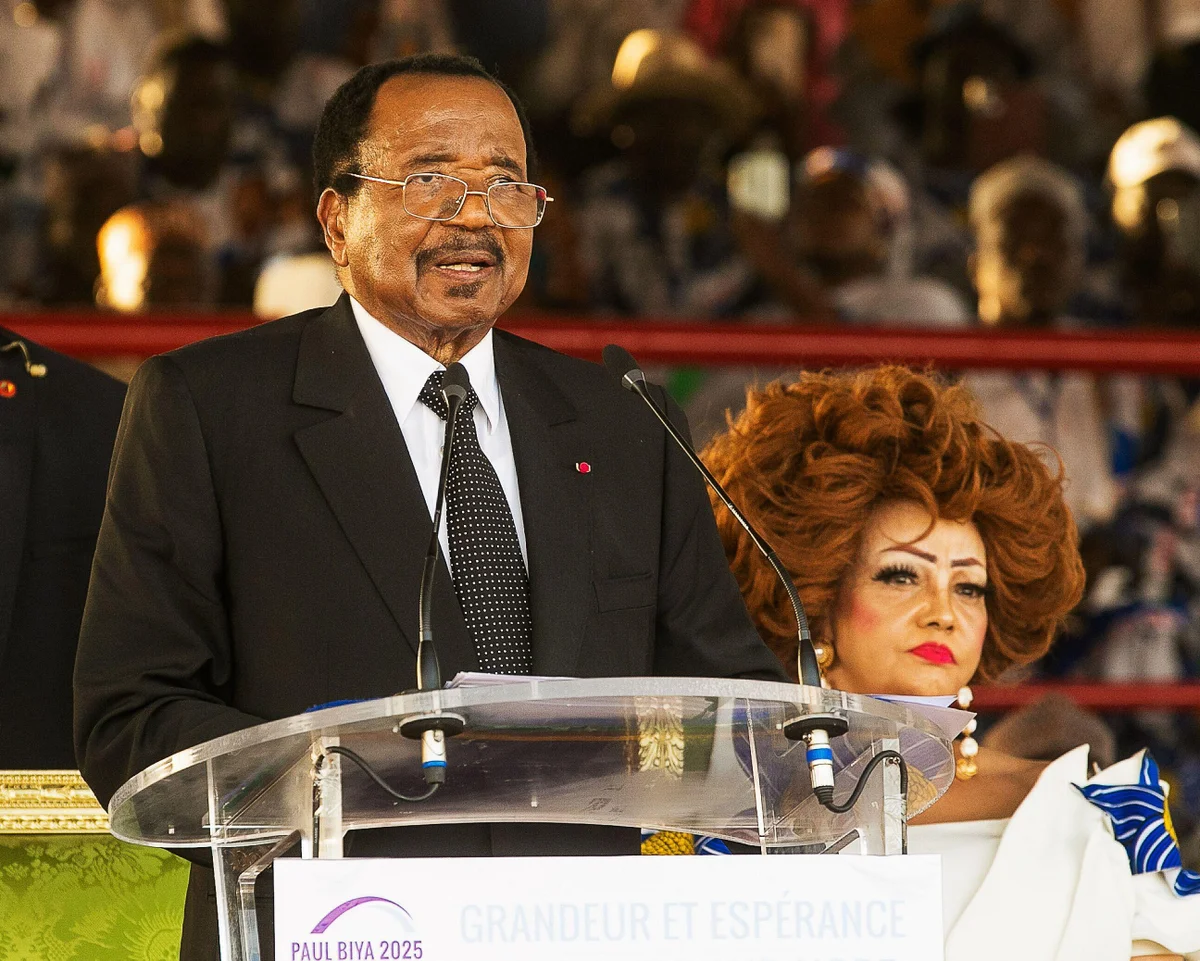
President Paul Biya's return to Cameroon on August 20, after 73 days at Geneva's InterContinental hotel, was staged by state media as the return of a vigorous head of state to a grateful nation
YAOUNDÉ, Cameroon
President Paul Biya's return to Cameroon on August 20, after 73 days at Geneva's InterContinental hotel, was staged by state media as the return of a vigorous head of state to a grateful nation. But the extended absence — his longest ever, eclipsing a 42-day stretch abroad in 2024 — has only sharpened the question hanging over Africa's oldest sitting president and the country he has ruled for 44 years: who actually runs Cameroon, and what happens when Biya, now 93, is no longer able to.
That question gained new urgency this month when Maurice Kamto, the opposition's most nationally recognized figure, abruptly resigned as president of his own party on September 8, throwing the anti-Biya camp into disarray at precisely the moment a succession crisis appears to be building. The convergence of an aging, largely invisible president, an unresolved constitutional mechanism for succession, and a suddenly leaderless opposition has left Cameroon — a Central African country of roughly 28 million people bordering Nigeria, Chad, the Central African Republic and conflict-scarred Lake Chad Basin states — in a position analysts describe as acutely vulnerable to instability whenever the succession question is finally forced.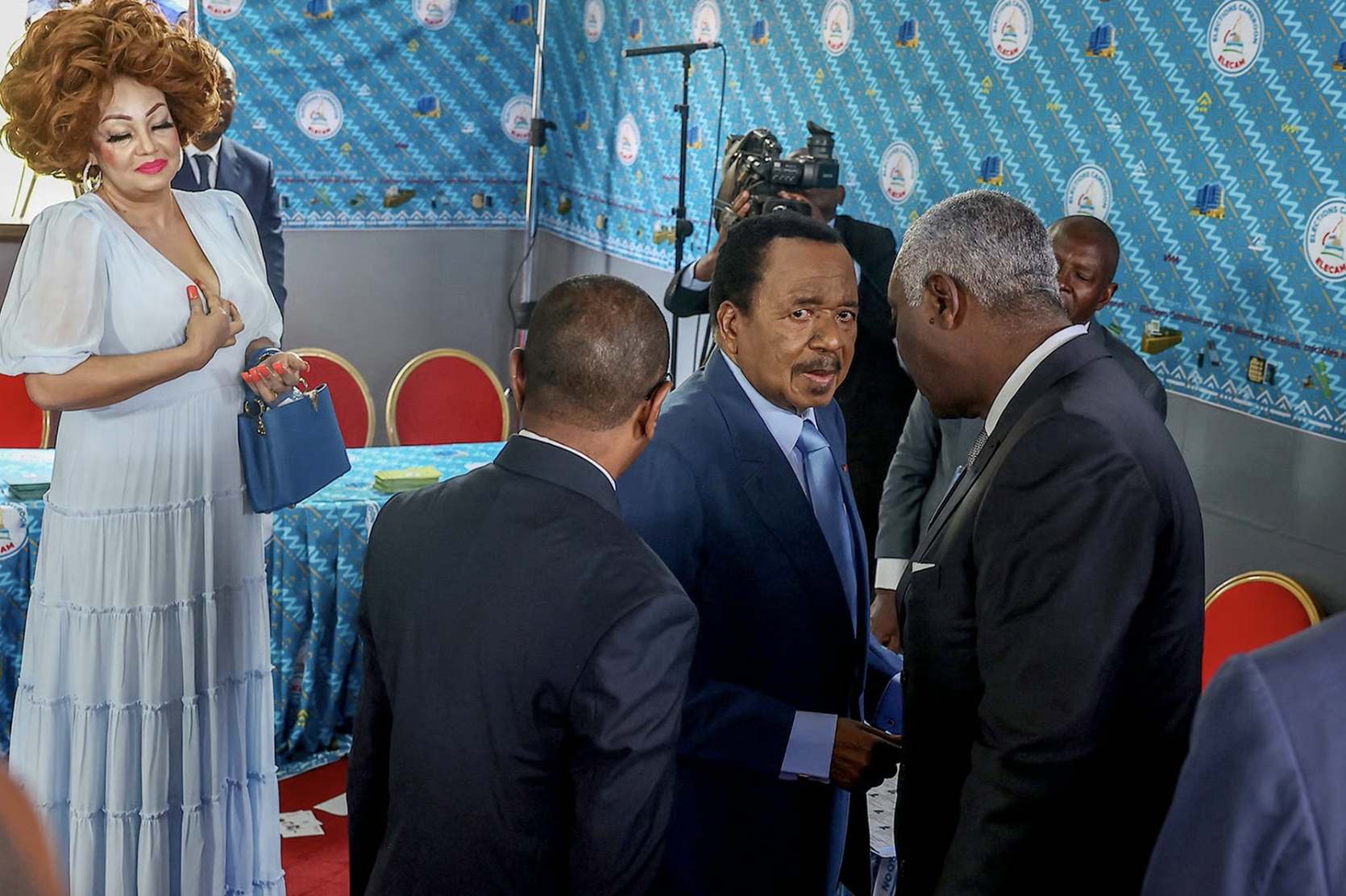
A presidency built around one man since 1982
Biya has governed Cameroon continuously since 1982, one of the longest tenures of any head of state in the world. His government abolished presidential term limits in 2008, clearing the way for him to seek — and win — re-election indefinitely; he was declared the winner of an October 2025 vote whose legitimacy opposition parties and international observers challenged. His government has also taken unusual steps to control public discussion of his health, including a 2024 directive barring domestic media from reporting on the president's medical condition, a measure that has only fed persistent speculation whenever Biya disappears from public view for extended stretches, as he did this summer.
Cameroon's parliament did amend the constitution earlier this year to reinstate the position of vice president, a post that had been left vacant for decades and that many observers read as a long-overdue nod toward orderly succession planning. But as of this month, the vice presidency remains unfilled — meaning that if Biya's office were declared vacant today, through death, incapacity or resignation, the constitutional process would default to having the president of the Senate assume an interim role, with new elections required within a window of 20 to 120 days. No mechanism exists to groom or vet a chosen successor in advance, and no consensus candidate has been publicly designated.
The men positioning to succeed him
In the absence of a formal succession plan, several figures are widely understood to be positioning themselves, according to analysts tracking Cameroon's opaque elite politics. Franck Biya, the president's son, has a natural base in family networks and among Beti elites — the ethnic group from which Cameroon's post-independence political establishment has long drawn much of its security and administrative leadership — but is seen as lacking the political and security credentials of a seasoned operator, having spent much of his adult life outside the country. Ferdinand Ngoh Ngoh, secretary-general of the presidency since 2011, holds signing authority over presidential matters and is understood to have the backing of Cameroon's first lady, giving him a central administrative perch from which to consolidate influence during any transition. Philémon Yang, prime minister from 2009 to 2019 and now holder of a senior ceremonial post, is viewed by some as a potential consensus figure who could offer continuity without the sharper edges of a factional candidate. Territorial administration minister Paul Atanga Nji and finance minister Louis-Paul Motazé are also cited as influential players whose control over security appointments and state finances, respectively, would matter enormously in any contest for power.
Underpinning all of this is a security architecture that has long been designed less to project power outward than to prevent a coup from within: roughly two-thirds of Cameroon's military officers are drawn from Biya's own Beti ethnic group, and the government maintains parallel security forces whose overlapping mandates are widely understood to be a deliberate check against any single force accumulating enough power to move against the presidency. That structure has kept Biya secure for four decades. Whether it can manage an orderly transfer of power to a successor — rather than fracturing along the same ethnic and institutional lines it was built to protect — is a separate and untested question.
An opposition in disarray
Maurice Kamto had been the most visible face of organized opposition to Biya, having founded the Cameroon Renaissance Movement (MRC) in 2012 and run credible, if ultimately unsuccessful, presidential campaigns against him. Barred from contesting the October 2025 election, Kamto's political options had already narrowed considerably. His resignation letter, issued September 8, ran to just three sentences and cited only the party's "higher interest," offering no detailed explanation, naming no successor and leaving open whether he intends to leave politics altogether. The MRC's first vice president, Mamadou Yakouba, resigned the same day, saying he did not want his continued presence to become "a pretext for weakening the party" — language that hints at internal factional pressure without clarifying its source.
The timing has drawn intense scrutiny. Kamto's departure comes as a separate scandal involving allegedly missing billions of CFA francs from Cameroon's Special Criminal Court has added to a sense of institutional instability, and as speculation intensifies that opposition figures may be quietly repositioning themselves for a post-Biya political landscape rather than continuing to organize against a president many now expect to leave power through incapacity rather than defeat at the ballot box. Whether Kamto's exit reflects personal calculation, party-internal conflict, or pressure from Cameroon's security state is not yet publicly known, and his silence on his own reasoning has only amplified competing theories.
Why the stakes reach beyond Yaoundé
Cameroon's internal stability carries regional weight. The country sits at the intersection of several active security crises: Boko Haram and Islamic State-linked militants remain active in the Lake Chad Basin along its northern border; instability and displacement continue to spill over from the Central African Republic to its east; and Cameroon's own Anglophone regions have been gripped by a separatist armed conflict since 2016 that has killed thousands and displaced hundreds of thousands more. A chaotic or contested succession in Yaoundé — particularly one that exposes rivalries within the security services or the ruling apparatus — could give armed separatist factions in the Anglophone west, or jihadist groups in the north, an opening to expand operations while the state's attention and coercive capacity are consumed by an elite power struggle at the center.
What to watch next
The most immediate signal to track is whether Biya's government moves to actually fill the long-vacant vice presidency, a step that would suggest a genuine, if belated, effort to formalize succession rather than leave it to an improvised scramble. Equally important is what becomes of the MRC without Kamto: whether it fractures into competing factions, whether a new leader emerges capable of unifying anti-Biya sentiment, or whether opposition energy simply diffuses in the absence of its most prominent figure. Observers will also watch for any further extended absences by Biya himself, which have historically triggered fresh rounds of health speculation and elite jockeying, and for signs of movement — public or otherwise — among the ethnic and institutional power centers, from Ngoh Ngoh's administrative network to the security services drawn disproportionately from Biya's own community. Cameroon has avoided the sudden ruptures seen elsewhere in Central Africa for four decades under Biya's careful management of rival factions. Whether that management survives its architect is now the central question of Cameroonian politics.
International partners are watching closely but have so far said little publicly. France, Cameroon's former colonial power and still its largest source of military and economic cooperation, has historically preferred quiet influence over public statements on Biya's health or succession, a posture unlikely to change ahead of any actual vacancy. The United States, which maintains security cooperation with Cameroon's military focused on the Lake Chad Basin counterterrorism fight, has similarly avoided direct comment on the succession question, though the fate of that security partnership would almost certainly hinge on who eventually emerges to lead the country and how the transition unfolds. For now, the calculus in Yaoundé, Paris and Washington alike appears to be the same one that has governed Cameroonian politics since 1982: wait, watch, and avoid saying anything that might upset an arrangement that has, whatever its costs, kept the country outwardly stable for far longer than most of its neighbors.



