A Growth Story Still Anchored in Hydrocarbons
Algeria's economy grew 3.9 percent in 2025, according to the International Monetary Fund's July 2026 Article IV mission, which visited Algiers from June 16 to 30 under mission chief Charalambos Tsangarides. That figure sits above the 3.6 percent recorded in 2024, but the composition of growth tells a more complicated story: expansion in the hydrocarbon sector remained subdued even as public investment and consumption kept overall output climbing. The World Bank, in its most recent country update, projects growth will ease to roughly 3.5 percent in 2026, citing global uncertainty and softer hydrocarbon prices that could weigh on investment, exports, and fiscal revenue.
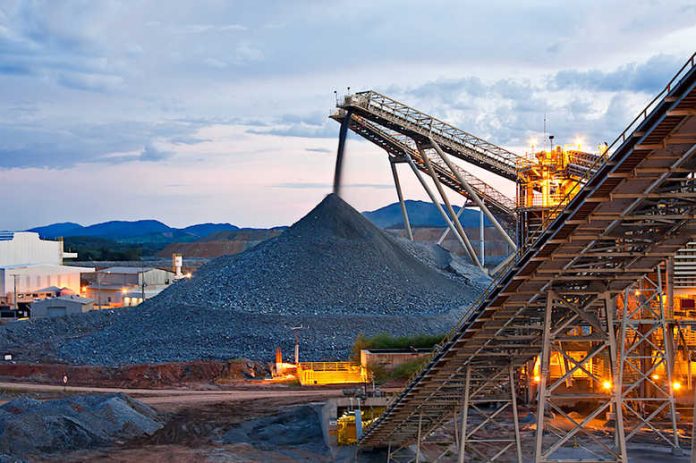
The more striking number is on the non-hydrocarbon side of the ledger. The World Bank has singled out Algeria as a "notable exception" within the Middle East, North Africa, Afghanistan and Pakistan region, pointing to non-hydrocarbon sectors — mining, infrastructure, manufacturing — that expanded 5.4 percent in 2025. That is the crux of Algeria's current economic narrative: a state-led push to build activity outside the oil and gas complex that has defined the economy for decades, even as that complex still accounted for 13 percent of GDP, 83 percent of exports, and 46 percent of budget revenue on average between 2020 and 2024.
Fiscal Buffers Are Eroding Even as the Deficit Narrows
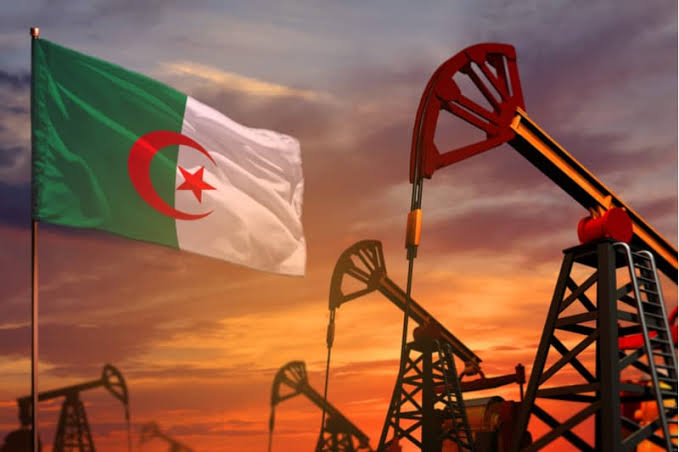
Algeria's fiscal deficit narrowed to 10.5 percent of GDP in 2025, but the IMF was careful to note that the improvement was flattered by one-off dividends from state-owned enterprises and the Bank of Algeria, alongside genuinely stronger non-hydrocarbon revenues. Public debt has climbed to 52.1 percent of GDP. More concerning to the Fund is the external position: the current account deficit deteriorated significantly in 2025 as import demand — driven by large public investment programs — surged while hydrocarbon export receipts declined, producing a marked drop in international reserves that had previously been a source of resilience.
The IMF's policy prescription is blunt: a more consistent macroeconomic policy mix, meaning sizable fiscal consolidation, a monetary policy oriented toward price stability, and greater exchange rate flexibility. Algiers has so far resisted the scale of adjustment the Fund envisions. The 2026 finance law, worth 17.636 trillion dinars — a 5 percent increase on the prior year — leans heavily on the same subsidy architecture that has underpinned social stability for decades rather than a structural pivot away from it. The budget allocates roughly 657.65 billion dinars (about €4.5 billion) to commodity subsidies alone, including sums for cereals, milk, and price stabilization for staples such as sugar, cooking oil, and green coffee. The public wage bill absorbs a further $44.5 billion, and direct social transfers and subsidies together exceed $21 billion. Analysts at the Arab Reform Initiative and elsewhere have described the 2026 finance bill as a fundamentally redistributive budget that talks about diversification without laying out a clear roadmap away from oil and gas dependence.
Betting on Iron Ore and Phosphate to Diversify Exports
Where the diversification push is most concrete is in mining. The Gara Djebilet iron ore deposit in the far southwest, one of the largest such deposits in the world with reserves estimated at 3.5 billion tonnes, is moving from a long-delayed concept to an operating mine. State mining group Sonarem has targeted first-quarter 2026 for the launch of an ore-processing plant with capacity for 4 million tonnes a year and a recovery rate above 85 percent; the first train carrying more than 1,000 tonnes of processed ore reached export terminals in early 2026. Officials envision eventual annual revenues around $10 billion once the project is fully built out — a figure that, if realized, would meaningfully change Algeria's export mix, though the project has a long history of delayed timelines that warrants some caution about how quickly that scale will materialize.
A second pillar is phosphate. The Bled El Hadba mine south of Tébessa province, backed by an estimated $7 billion in investment, is designed to produce 6 million tonnes of fertilizer a year — equivalent to roughly 10 million tonnes of phosphate ore — with ambitions of making Algeria one of the world's leading fertilizer exporters. Companies from the United States, India, and China have shown interest in partnering on downstream phosphorus-reduction technology, and joint working groups have been set up to accelerate local technical testing. Algeria's stated goal is to reach $29 billion in non-hydrocarbon exports by 2030, a target that would require both of these mining projects, and others like them, to deliver largely on schedule.
Stellantis and the Bet on Auto Manufacturing
Algeria's third diversification track is automotive assembly. Stellantis, through its Fiat brand, began production at its Tafraoui plant near Oran with an initial investment exceeding €200 million across its own operations and those of its suppliers. The plant is targeting annual assembly capacity of 90,000 vehicles by 2026, with a local-content, or localization, rate surpassing 35 percent — two years ahead of the regulatory 30 percent threshold the government has set for the sector. Employment tied to the project is projected to reach roughly 2,000 direct jobs by 2026, up from 500 in 2023, and Stellantis has signaled it wants to use the Algerian plant as an export platform serving the wider Middle East and North Africa region rather than purely the domestic market. It is a modest slice of the economy in dollar terms next to hydrocarbons or mining, but it represents the kind of value-added manufacturing that Algerian planners have long said they want more of.
The Social Picture Behind the Growth Numbers
The diversification narrative sits alongside a labor market that has not kept pace. Algeria's youth unemployment rate stood at roughly 29.4 percent in 2025, essentially flat against 29.8 percent in 2024, after a modest improvement from 30.5 percent in 2023. The national statistics office and independent researchers have also documented sharp geographic disparities: poverty rates in rural areas run about four times higher than in urban centers, and young people in rural regions are estimated to be 3.64 times more likely to live in poverty than their urban counterparts. Those figures complicate the political economy of subsidy reform — the IMF's preferred adjustment path would likely fall hardest on exactly the households least able to absorb it, which helps explain why successive Algerian governments have preferred to fund social transfers through hydrocarbon and one-off revenue rather than restructure them.
Algeria's 2026 story is therefore one of parallel tracks that have not yet converged. On one track, non-hydrocarbon growth of 5.4 percent, a $10 billion iron ore project inching toward production, a $7 billion phosphate mine, and a European automaker's expanding assembly line all point to a broader industrial base slowly taking shape. On the other, a fiscal deficit still above 10 percent of GDP, reserves that fell sharply in 2025, a budget still built around tens of billions of dollars in subsidies and wages, and youth unemployment stuck near 30 percent all point to a state that has not yet made the harder political choices the IMF says are needed to convert diversification into durable resilience. Whether Algeria closes that gap before external buffers erode further is likely to be the central economic question of the next two to three years.
Published By | Business News Editor