NEWARK, NEW JERSEY
For four years, LIV Golf had an answer for everything, and the answer was money. Criticism of its Saudi backing? Money. Thin galleries at its 54-hole, shotgun-start events? Money. Players who said they would never leave the PGA Tour and then left the PGA Tour? Money, in quantities that made the question feel impolite.
On Tuesday the money ran out.
LIV Golf and a cluster of affiliated entities filed for Chapter 11 bankruptcy protection in the U.S. Bankruptcy Court for the District of New Jersey, listing assets of between $100 million and $500 million against liabilities of between $500 million and $1 billion. It is a stunning collapse for a league that arrived in 2022 with a reported war chest north of $2 billion and an explicit mission to break the century-old order of professional golf.
It did not break golf. It broke itself.
A Creditor List That Reads Like a Leaderboard
The most extraordinary document in the filing is not a balance sheet. It is the schedule of the thirty largest unsecured creditors — the list of everyone LIV owes money to and cannot currently pay. Fourteen of those thirty are golfers.
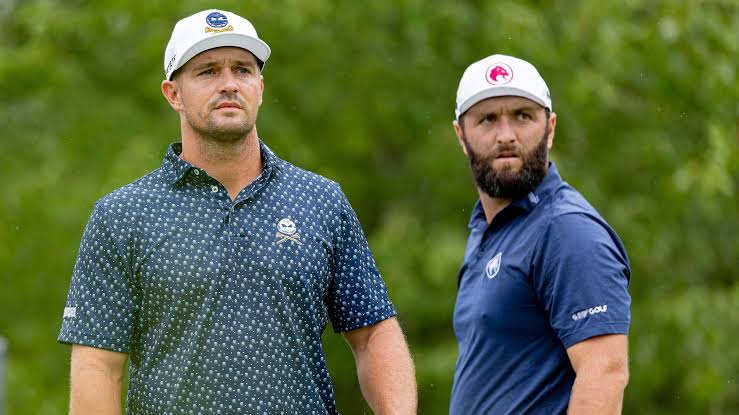
Jon Rahm, the two-time major champion whose 2023 defection was LIV's single greatest coup, is owed $7.5 million. Bryson DeChambeau, the league's most visible and most successfully rebranded star, is owed $5.7 million. Dustin Johnson, LIV's very first marquee signing, is owed $5.5 million. Cameron Smith, the 2022 Open champion, is owed $4.8 million. Tyrrell Hatton is owed $3.4 million and Brooks Koepka $1.7 million.
The state of Louisiana appears on the same list, owed roughly $1.2 million — a residue of the tournament LIV agreed to stage there and then cancelled.
There is a particular cruelty to that document. These are men who were told, repeatedly, that they had chosen certainty over risk — that whatever else one thought of LIV, the cheques cleared. They are now queuing behind vendors and contractors in a New Jersey courtroom.
How a Sovereign Wealth Fund Walks Away
The unravelling began in April, when Saudi Arabia's Public Investment Fund — LIV's founder, patron and sole meaningful source of capital — informed the league it would stop funding operations after the 2026 season. For two months there was no clarity on whether LIV could even finish the year. In June the PIF agreed to a secured loan to keep the lights on. In total, the fund spent roughly $495 million carrying the league through a season it had already announced it was abandoning.
The PIF has now agreed to provide $49.6 million in debtor-in-possession financing — enough to keep the restructuring moving, not enough to suggest it wants the business back. BC Partners Credit and other investors are expected to supply exit financing when the reorganised company emerges.
That is the shape of the thing: the sovereign wealth fund that once seemed prepared to spend indefinitely is now a lender managing an orderly withdrawal.
The Season That Came Apart in Public
Anyone watching closely could see it coming. LIV called off a June event in New Orleans. It scrapped what was meant to be its $40 million season-ending showcase in Michigan, finishing the 2026 schedule in Indianapolis a week earlier than planned. A league that had built its identity on spectacle spent its final months subtracting spectacle.
"The Next Chapter"
LIV's public framing is defiantly forward-looking. Chief executive Scott O'Neil, who replaced Greg Norman at the end of 2024, described the filing as a deliberate manoeuvre rather than a defeat.
"This process gives us the structure and time to pursue a landmark transaction and begin the next chapter of LIV Golf — one built around the fans, an innovative, player-first ownership model, and a part of the global golf ecosystem," O'Neil said. He added that the reorganised league would rest on "a sustainable business model and deeper alignment between players and the League, with team golf at its core."
Translated: LIV wants the players to own it. The league remains in what it calls advanced discussions with golfers about taking control of the business, and says it intends to relaunch a smaller, leaner version as early as 2027.
The Clause Nobody Thought About
Here is the twist that will occupy agents for the rest of the month. Chapter 11 automatically voids LIV's existing multi-year player contracts. The exclusivity commitments that kept Rahm, DeChambeau and the rest off the PGA Tour and out of most world-ranking events are, as a matter of bankruptcy law, gone.
Every LIV golfer is now, functionally, a free agent — while simultaneously being an unsecured creditor of his former employer. Some will want to be paid. Some will want to leave. A few, presumably, will want both, and will discover that the two ambitions do not sit comfortably together.
What This Means If You Just Watch Golf
For the ordinary viewer, the practical effect is likely to be consolidation. The great schism that split the men's game — separate schedules, separate broadcasts, arguments about world rankings and major eligibility that consumed four years of column inches — has been resolved less by diplomacy than by insolvency.
Expect a run of high-profile returns, or attempted returns, to the PGA Tour and the DP World Tour over the coming months, and expect those tours to extract terms. Expect the majors, which never stopped inviting LIV players, to become the venue where the story finally closes. And expect the team-golf format — genuinely LIV's most interesting innovation, and the one thing O'Neil is fighting to preserve — to survive in some reduced form, because it is the only part of the experiment that fans actually asked for more of.
The Lesson in the Ledger
LIV's failure was not primarily a failure of golf. The fields were strong, the production was slick, the shotgun start was a reasonable idea. It was a failure of the assumption underneath it: that a sports league can be conjured into existence by capital alone, without the slow accumulation of history, rivalry and habit that makes people care.
You can buy the best players in the world. You cannot buy the reason anyone watches them. That bill came due on Tuesday, and it ran to more than half a billion dollars.
Published By | Sports Editor