Written By | Torch Media Africa
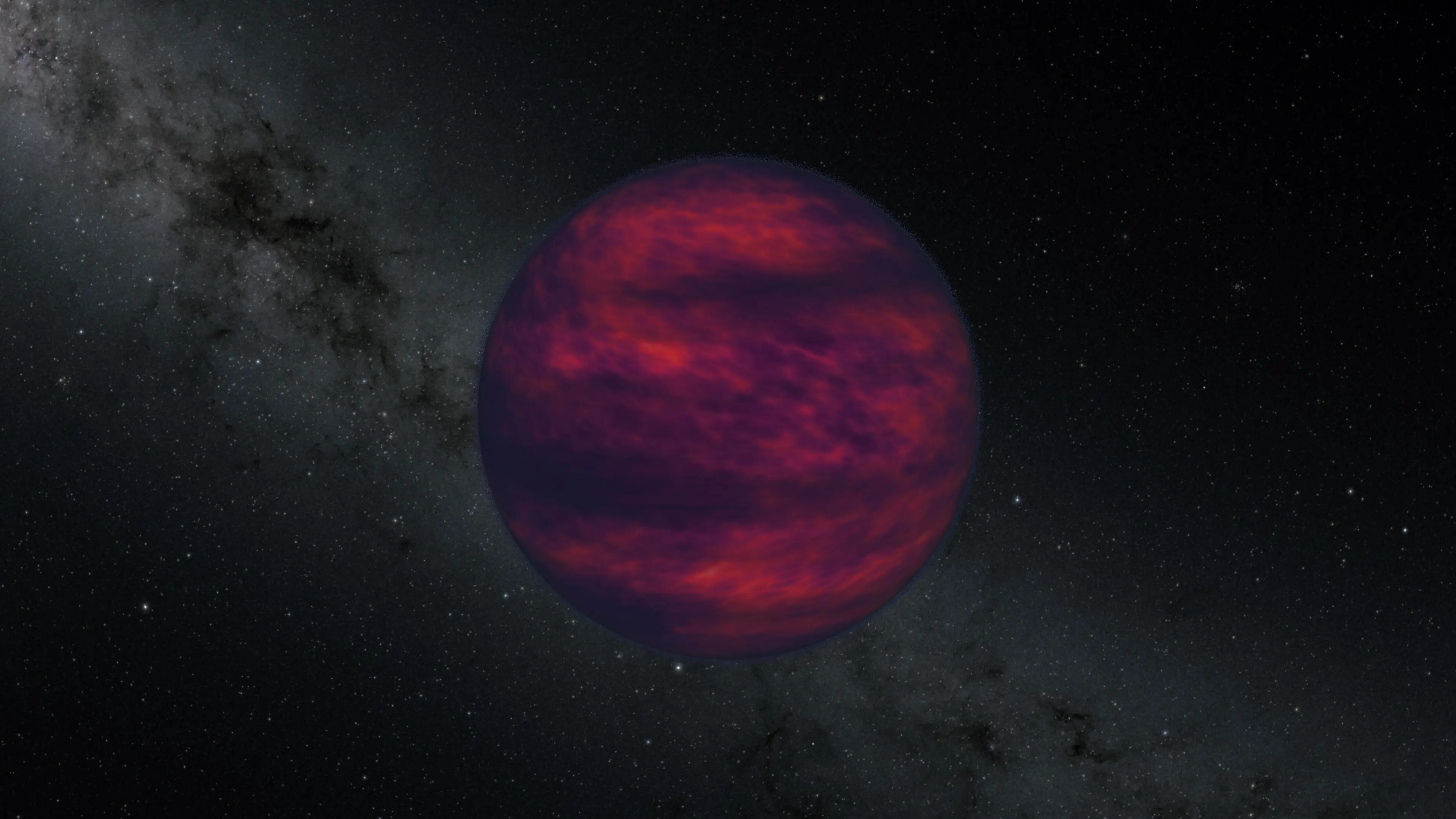
A 'failed star' as cold as a household freezer has shown off its changing skies for the first time — while NASA's SPHEREx telescope reveals brown dwarfs are 'kind of goth'
TUCSON, Arizona / PASADENA, California,
Seven and a half light-years from your sofa, there is a dark, lonely world with a sky that changes by the hour. It is not quite a planet and not quite a star, it is about as cold as a household freezer, and this month astronomers announced they have watched its clouds thicken and thin as it spins.
It is the first time scientists have detected variable water clouds outside our own solar system. The world in question, a brown dwarf called WISE 0855, is the coldest object of its kind ever found, and the discovery — made with NASA's James Webb Space Telescope — was announced on 8 October by the University of Arizona.
Then, just days later, a second brown dwarf bombshell landed: NASA's newer SPHEREx telescope has measured the atmospheres of dozens of these "failed stars" and found a menagerie of chemistry that existing computer models struggle to explain. Together, the two stories mark a big week for the strange, shadowy objects that sit between planets and stars. And they may help answer one of astronomy's biggest questions: what do the skies of alien worlds actually look like?
Meet WISE 0855: The Coldest Brown Dwarf Known
Brown dwarfs are cosmic misfits. They form like stars, from collapsing clouds of gas, but they never become massive enough to sustain the hydrogen fusion that makes a star shine. Instead they simply cool, year after year, radiating away the heat left over from their birth.
WISE 0855, formally WISE J085510.83-071442.5, is the extreme example. It was discovered in 2014 by astronomer Kevin Luhman using data from NASA's Wide-field Infrared Survey Explorer. At roughly 7.43 light-years away, it is the fourth-closest system to the Sun. Its temperature is about 265 kelvin — around minus 8 degrees Celsius, or 17 degrees Fahrenheit — about as cold as a household freezer, yet balmy compared with most of space. It has about twice Jupiter's mass and nearly Jupiter's size.
At such low temperatures, scientists have long suspected its atmosphere would be dominated by water clouds, much as Earth's weather is. Hints appeared in 2014, when astronomer Jacqueline Faherty and colleagues found indications of water. But that was based on indirect signs, and for twelve years nobody could prove the clouds were there, let alone watch them change.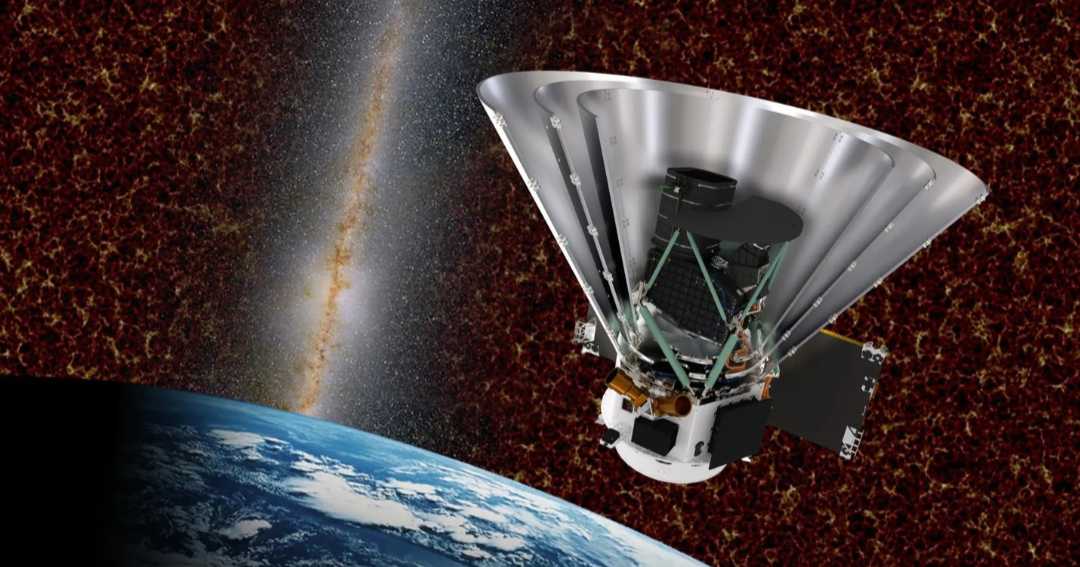
Eleven Hours Staring at a Frozen Sky
The breakthrough came from careful patience. Webb's NIRSpec instrument observed WISE 0855 on the night of 1-2 December 2023 as part of a Cycle 1 programme. The observation lasted 11 hours, 6 minutes and 14 seconds, and recorded 44 separate spectra, one every 15 minutes, covering wavelengths from 2.87 to 5.27 micrometres in the infrared.
A spectrum is like a barcode of light: different gases and clouds absorb different colours, so splitting the light into thin slices reveals what is in the atmosphere. By taking a new barcode every quarter of an hour, the team could see how the object's atmosphere changed as WISE 0855 rotated, carrying different patches of sky into view.
The results, published in a paper titled "Water Cloud and Chemical Modulations in the Coldest Brown Dwarf", show the object's brightness varying by between 1 and 10 per cent depending on the wavelength, with the biggest swings in a band tied to carbon monoxide. The paper, led by Brittany Miles of the University of Arizona's Steward Observatory, has 27 authors, including Mark Marley, director of the university's Lunar and Planetary Laboratory.
To untangle what was happening, the team used a statistical method called principal component analysis. The biggest signal, accounting for about 60.5 per cent of the variation, matched a patchy, rotating water-cloud layer combined with temperature changes. The second, at about 4.7 per cent, showed carbon monoxide and phosphine rising and falling together — a sign that convection is hauling gases up from deep in the atmosphere. The researchers placed the water clouds at pressures of roughly 1.2 to 2 bar, close to sea-level pressure on Earth, while phosphine and carbon monoxide are signals from far deeper, at roughly 24 and 70 bar.
Why the Discovery Is a Big Deal
Before Webb, astronomers had mostly photometry — measurements of total brightness over a few broad colour bands. "Before JWST, we only had photometry, which mixed up the effects of clouds, chemistry, and temperature all together," Miles said. Earlier observations with NASA's Spitzer Space Telescope had shown WISE 0855 flickering by a few per cent, but could not say why.
Webb's spectra unscrambled the puzzle. "Even though brown dwarfs are not true planets, they exhibit planet-like behavior," Miles said. That matters because directly imaging the clouds of a genuine exoplanet is brutally hard: planets are drowned out by the glare of their host stars. A free-floating brown dwarf such as WISE 0855 has no glare to fight, so it makes a near-perfect laboratory for studying alien weather.
Marley put it elegantly. "We're learning about the world on either side of the screen," he said, in reference to the idea that cloud layers act as a screen between us and the deeper atmosphere. By watching the screen flicker, astronomers can infer what is happening behind it.
There is also a lovely sense of closure. It took twelve years from the first hints in 2014 to confirmation of variable water clouds in 2026, and between those dates came the first spectrum from the Gemini North telescope in 2016, Spitzer's brightness monitoring, and a 2023 Webb spectrum that confirmed carbon monoxide.
Not Everything Adds Up
Science rarely tells a tidy story, and the WISE 0855 paper is honest about loose ends. The object's rotation period is not firmly pinned down. The new data show power around 5.4 to 5.6 hours, but an earlier Spitzer data set favoured a period of 9.33 hours, so the team will need more Webb time to settle it.
The amount of phosphine detected is lower than theory predicts. Two different sets of atmospheric models also disagree on the cloud properties and the average temperature, giving 256 kelvin in one case and 264 kelvin in the other. Miles plans more baseline Webb observations to refine the rotation period and the three-dimensional structure of the winds and gas flows in the object's atmosphere.
One further wrinkle: some descriptions of the paper name different journals. The University of Arizona release refers to The Astrophysical Journal, while the preprint record points to The Astronomical Journal. Either way, the peer-reviewed publication is the one to watch.
Enter SPHEREx: The 'Kind of Goth' Census
While Webb zooms in on one object, NASA's SPHEREx is zooming out. Launched in March 2025, SPHEREx is an infrared observatory built mainly to map galaxies across the sky and hunt for ices in star-forming regions. It measures light in 102 wavelength bands, creating a spectrum for each object, and by working from space it escapes the water vapour in Earth's atmosphere that blocks some infrared colours from ground telescopes.
A new study led by Zafar Rustamkulov of Caltech's IPAC, published in The Astrophysical Journal, used SPHEREx data on 37 nearby brown dwarfs with temperatures spanning from about 2,200 degrees Celsius down to roughly minus 20 degrees Celsius. In them the team found water, methane, carbon monoxide and carbon dioxide, with signatures that shift as the objects cool.
Methane becomes steadily more abundant in cooler brown dwarfs. Between roughly 1,000 and 700 kelvin, the signatures of carbon monoxide and carbon dioxide weaken sharply, while methane changes more gradually. Hotter brown dwarfs may form silicate clouds that sink deeper as the objects cool, and the very coldest may develop condensate clouds, giving them atmospheres that look somewhat like those of Jupiter and Saturn.
"They're kind of goth," Rustamkulov said of brown dwarfs, a quip that has already travelled around science media. Co-author J. Davy Kirkpatrick said the paper concentrated on just three dozen objects, "but we have thousands more that we are in the process of analyzing."
Models Meet Reality — and Stumble
The study also did something less glamorous but vital: it put five leading atmospheric models to the test against real observations. The models captured the broad trend of methane growing as objects cool, but struggled with the details, especially during transitions when clouds form or sink. The largest mismatches involved carbon monoxide and carbon dioxide, suggesting that the way the models treat chemistry and gas mixing needs refining.
Clouds muddy the picture further. Objects with similar temperatures can produce noticeably different spectra, so temperature alone cannot explain what astronomers see. Younger, lower-gravity brown dwarfs and those with fewer heavy elements also show different infrared patterns.
Even WISE 0855 had a cameo. Because SPHEREx only measured part of its infrared light, radius estimates from different models for that object varied by a factor of three to four. That is a vivid illustration of why combining facilities matters: Webb's detailed look at one world and SPHEREx's broad look at many are two halves of the same puzzle.
Expert Perspective
The scientists' own words give the clearest guide. Miles stresses that brown dwarfs behave like planets even though they are not planets, making them a testbed for the models astronomers will use on Earth-sized exoplanets. Marley's "screen" analogy captures the central challenge of the field: to understand the world behind the clouds, you first have to understand the clouds themselves. Kirkpatrick's remark about thousands more objects in the pipeline hints that SPHEREx's census is only beginning.
A 2024 Webb study published in Nature, which found methane emission from a cold brown dwarf, possibly caused by aurora-like heating, shows how fast this field is moving. Each new instrument seems to reveal a more dynamic, violent and beautiful set of atmospheres than the textbook picture of a dim, quiet ball of gas.
What This Means For You
You are unlikely to pack your bags for WISE 0855, but this research has real-world echoes. The models that astronomers are now stress-testing on brown dwarfs are the same tools that will be used to interpret the atmospheres of rocky planets that might host life. If a model cannot correctly predict the clouds of a giant ball of gas, it will struggle to read the sky of a distant Earth. Every improvement here sharpens the search for habitable worlds.
There is a wider lesson about how astronomy works. It took a decade of patient work, a space telescope and a team of 27 authors to move from "probably water clouds" to "here they are, changing in real time". And it took a second observatory, launched less than two years ago, to put that single object in context among dozens of its cousins.
Finally, there is simple wonder. A world twice the mass of Jupiter, a few degrees below freezing, drifting alone just beyond our stellar neighbourhood, is having weather. Somewhere out there, clouds of water are drifting across a dark sky that no sun lights.
The Verdict
The week's brown dwarf news is a double win for NASA's infrared fleet: Webb has delivered the first clear detection of variable water clouds beyond our solar system, and SPHEREx has delivered a first big census showing just how diverse and awkward to model these objects are. Both teams are clear that this is a beginning, not an end. More Webb time is planned for WISE 0855, and thousands more SPHEREx spectra are waiting to be analysed. For now, the forecast for the coldest brown dwarf we know is simple: variable cloud, convection from below, and plenty more surprises to come.



