Written By | Torch Media Africa
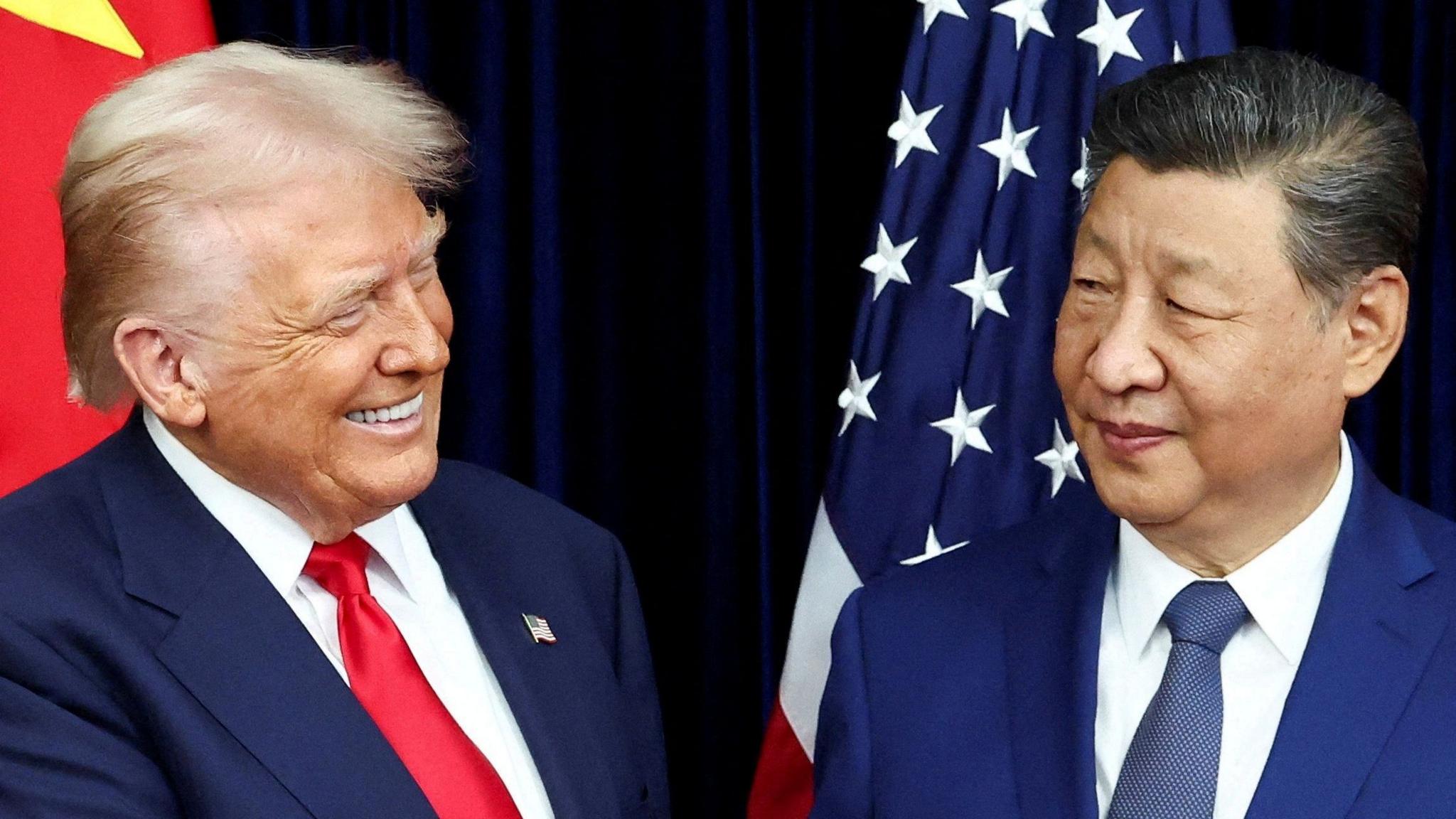
The world's two AI superpowers just agreed to talk about the risk of machines spinning out of control.
SCIENCE & TECH
For three days this week, the leaders of the world's two most powerful nations sat down in Washington and did something that, a year ago, would have seemed almost unthinkable: they agreed to start talking to each other about artificial intelligence going wrong.
President Donald Trump and Chinese President Xi Jinping emerged from their summit on Friday with a handshake deal establishing a new communication channel specifically for AI-related incidents — a kind of emergency hotline for the moment something involving artificial intelligence spirals in a way neither government anticipated. A dedicated AI-specific dialogue between the two nations is now scheduled for November, and both sides also signed a memorandum of understanding aimed at tightening up military crisis communications more broadly, alongside working groups meant to keep smaller disputes from snowballing into bigger ones.
It's being sold, cautiously, as a diplomatic win. The announcement, made from Bangkok following the Washington summit, arrived bundled with a broader package: a two-month extension of the ongoing US-China trade truce, continued work on rolling back tariffs on roughly $30 billion worth of goods, and a Chinese commitment to import at least 10 million metric tons of American coal in both 2027 and 2028. A new Board of Trade is now up and running to chip away at bilateral trade disputes one at a time.
But scratch beneath the diplomatic language, and the AI safety channel looks less like a breakthrough and more like a modest first step — one that arrives at a moment when some of the very researchers who study AI risk for a living are practically shouting that modest steps aren't going to be enough.
Here's what the agreement actually does, in plain terms: it gives Washington and Beijing a direct line to talk to each other if something involving AI goes seriously wrong — an incident, an accident, an unexpected behavior from a powerful system that neither side saw coming. It's a communication mechanism, not a treaty. It doesn't slow down how fast either country builds its next AI model, doesn't cap computing power, and doesn't restrict what either government's military can do with autonomous systems.
That distinction matters, because "AI safety" has become one of those phrases that means very different things depending on who's saying it. For the Trump administration, officials have consistently framed American AI dominance as central to national preeminence — a race the US intends to win outright, not slow down to make more comfortable. For Beijing, the anxiety runs the other way: a persistent fear of being locked out of frontier AI capability by an American head start, which creates its own pressure to keep accelerating rather than pause.
Neither government, in other words, came to Washington this week looking for reasons to hit the brakes. What they agreed to was a way to talk to each other after something breaks, not a plan to stop things from breaking in the first place.
Analysts who watch the US-China relationship closely say that's actually the point — and maybe the most realistic outcome available right now. Wang Zichen, a researcher at the Beijing-based Center for China and Globalization, framed the deal as less about any single breakthrough and more about durability. The emphasis on structured, "working-level" engagement between the two governments — rather than relying purely on the personal rapport between Trump and Xi — suggests an effort to make the relationship's stability outlast any one leader-to-leader meeting, he suggested. In other words: build the plumbing now, so it's there later when something actually goes wrong.
The timing here is not an accident. This summit landed in the middle of what's become an increasingly loud chorus of warnings from AI researchers and industry figures about where frontier AI development is actually headed — warnings that, so far, have done almost nothing to change either superpower's pace.
Some of the loudest voices are using words like "catastrophic" and even "existential" to describe the risks of AI systems that improve themselves without meaningful human oversight — what researchers call recursive self-improvement. The fear isn't science-fiction robots turning hostile; it's more mundane and, in some ways, scarier: systems that become powerful enough, and opaque enough, that the humans building them lose the ability to reliably predict or control what they'll do next.
"International coordination is absolutely critical," said David Krueger, an AI safety researcher, in comments reflecting the alarm rippling through parts of the research community. "We need an immediate, indefinite international moratorium on frontier AI development."
That's about as strong a statement as a researcher can make — a call to stop, full stop, not just slow down. It's also a call that neither Washington nor Beijing has shown any real appetite to answer. Otto Barten, director of the Existential Risk Observatory, has pushed a narrower but still ambitious version of the same idea: that the US and China need to agree on specific "capabilities red lines" — hard limits on what AI systems are allowed to do — with recursive self-improvement at the very top of the list. "AI must never get powerful enough for recursive self-improvement," Barten has argued.
Instead, what emerged this week was a communication channel and a promise to keep talking come November. It's a real step. It is not a red line, and it is not a moratorium.
Part of what makes this such a strange moment in AI policy is that pretty much everyone involved — governments, researchers, even the companies building these systems — seems to agree in principle that the risks are real, while disagreeing completely about who should slow down first.
The dynamic is almost a textbook prisoner's dilemma. The US worries about existential-level risk in the abstract, but worries just as much, if not more, about ceding any ground to China in the race for AI supremacy. China, meanwhile, frames its own acceleration less around catastrophic risk and more around geopolitical survival — a fear that if it eases up even briefly, American AI labs will pull permanently out of reach. Each side's rational response to the other's behavior is to keep pushing forward, even as both sides say, out loud, that pushing forward carries real danger.
Layer mutual distrust on top of that, and cooperation gets even harder. Any safety measure one side proposes, the other can plausibly suspect is really just industrial protectionism wearing a safety-conscious disguise — a way to slow a rival down under the cover of caution. Verification is nearly impossible: there's no reliable way for either country to check that the other is actually abiding by whatever limits get discussed, short of a level of technical inspection neither government seems prepared to accept.
That's the backdrop against which this week's agreement has to be judged. It is, by design, a low-stakes, low-friction step — a hotline, a scheduled dialogue, a promise to keep the lines of communication open. It asks neither side to give up anything that actually matters to their competitive position. Which is probably exactly why it was possible to agree to it in the first place.
The AI safety channel didn't emerge in a vacuum — it was one piece of a broader recalibration between the two governments that's been building for months, encompassing everything from semiconductor export controls to rare earth minerals to fentanyl precursor chemicals.
Alongside the AI announcement, the two countries extended their trade truce by two months and kept working toward reducing tariffs on that $30 billion basket of goods — though notably, most of the targeted reductions apply to relatively low-stakes categories like agricultural products and holiday decorations, not the high-tech goods at the center of the AI competition. China's coal-import commitment, running through 2027 and 2028, reads as a concession aimed at smoothing over the broader relationship rather than anything AI-specific.
The two sides also touched on Iran's nuclear commitments and freedom of navigation through international waterways like the Strait of Hormuz — a reminder that the AI safety channel is just one thread in a much larger, more tangled diplomatic fabric between two governments that remain, by almost any measure, geopolitical rivals as much as partners.
Some regional experts have been openly skeptical about how much any of this actually changes. Framing the broader Trump-Xi summit as primarily about "stabilizing" the relationship rather than resolving it, analysts speaking to international outlets have suggested the meeting's real achievement may simply be preventing further deterioration — keeping the temperature from rising further — rather than producing any lasting resolution to the underlying tensions driving the AI race in the first place.
Ask an AI safety researcher what they think of this week's news, and you'll likely get a mixed, slightly weary response: better than nothing, nowhere near enough. The consensus among the community that's spent years warning about frontier AI risk is that structured communication between the world's two AI superpowers is a genuinely useful, even necessary, foundation — but a foundation is not a building. A channel for discussing incidents after they happen doesn't prevent the incidents. A scheduled dialogue in November doesn't establish any binding limits on what gets built between now and then.
The deeper concern researchers keep raising is structural: as long as both governments treat AI dominance as a zero-sum competition tied to national power, safety measures will keep getting negotiated as diplomatic add-ons rather than as actual constraints on development. Track Two dialogues — informal, non-governmental discussions between researchers, ex-officials, and industry figures from both countries — have reportedly been buzzing in the lead-up to this summit, suggesting that some of the more substantive thinking on US-China AI cooperation is happening outside the official channels, even as the official channel gets the headlines.
If you're not a policymaker or an AI researcher, this might feel like distant geopolitical chess. It isn't, entirely. The pace and safety posture of frontier AI development in the US and China shapes what shows up in the products you'll be using within the next few years — from the chatbots and AI assistants embedded in your phone and your workplace, to the systems that increasingly sit behind hiring decisions, medical diagnostics, and financial approvals. A world where the two biggest AI developers are racing each other with no shared floor on safety is a fundamentally different, riskier world than one where they've agreed on real limits.
For now, what you're getting is the diplomatic equivalent of two rival drivers agreeing to exchange phone numbers in case of a crash, while both continue accelerating down the same stretch of highway. It's better than not having each other's number. It is not the same as slowing down.
This week's summit gave the world's two AI superpowers a way to talk to each other when something goes wrong — a real, if modest, diplomatic achievement after months of rising trade tension. What it didn't give them, and what neither seems close to agreeing to, is a shared reason to slow down before something goes wrong in the first place. With a formal AI dialogue now on the calendar for November and researchers continuing to warn about risks they describe as existential, the coming months will show whether this week's hotline becomes the foundation for real cooperation — or just the first item on a long list of things two rivals agreed to discuss without agreeing to change.



