Written By | Torch Media Africa
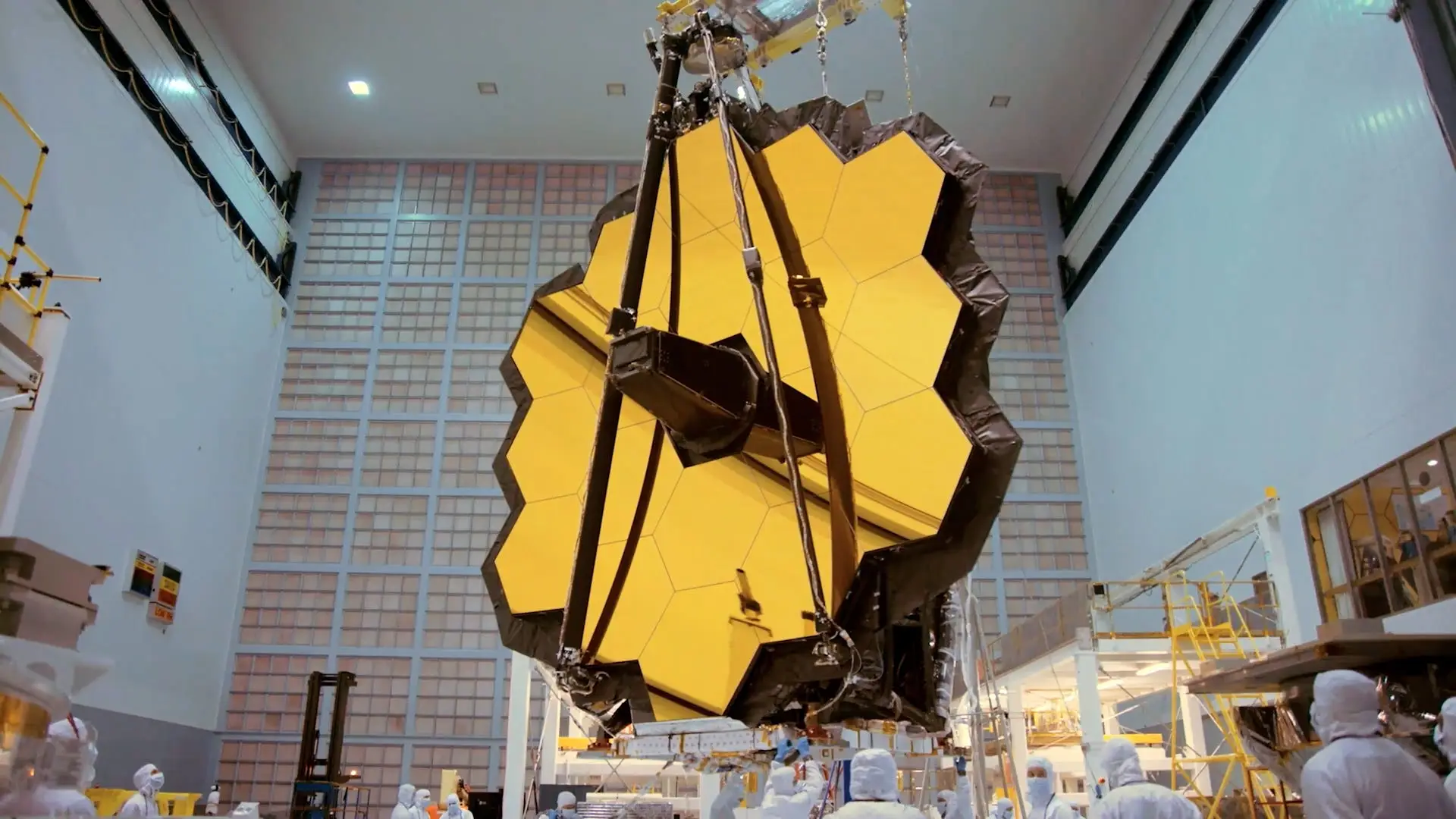
A single, near-perfect three-minute rocket burn has handed the Nancy Grace Roman Space Telescope an extra decade-plus of life before it has even switched on its cameras for real science
SCIENCE & TECH
NASA just got the best kind of surprise: an extra twelve years, completely free of charge.
The Nancy Grace Roman Space Telescope — the space agency's newest and, in some ways, most ambitious observatory — launched less than three weeks ago aboard a SpaceX Falcon Heavy rocket from Cape Canaveral. It was built and budgeted for a mission of roughly ten years: five years of guaranteed "core" observing time, plus an optional five-year extension if everything went well and the money held out. Engineers are now saying Roman could keep working for 22 years — more than double what anyone planned for — and the observatory hasn't even finished its first month in space.
The secret wasn't a stroke of luck in the traditional sense. It was the product of years of meticulous engineering finally paying off all at once, in a single maneuver so precise that it left the telescope with fuel to spare that nobody expected to have.
THE BURN THAT CHANGED EVERYTHING
On August 31, one day after launch, Roman fired its thrusters for roughly three minutes in what's called a mid-course correction burn — a routine but critical maneuver designed to nudge the spacecraft onto the exact trajectory it needs to reach its final destination, a gravitationally stable point in space nearly a million miles from Earth known as the second Lagrange point, or L2.
The burn was budgeted to use up to 441 pounds (200 kilograms) of propellant. In the end, it used just 40 pounds (18 kilograms) — a mere 9% of what engineers had set aside for it. The trajectory that resulted was more than 99% accurate.
"As a result of exquisite planning by our orbital dynamics team, brilliant execution by the operations team, and a precise launch from SpaceX, Roman has fuel for at least 22 years of potential science operations," said Jamie Dunn, director of NASA's Goddard Space Flight Center in Greenbelt, Maryland, where the mission is managed.
That single sentence represents years of institutional nail-biting finally resolving into relief. Space missions live and die by their fuel budgets — once the propellant runs out, there's no gas station in deep space, and a billion-dollar telescope becomes an expensive, silent hunk of metal drifting through the dark. Every ounce of extra fuel a spacecraft carries into orbit translates directly into extra years of science it can perform, which is exactly why NASA is treating this fuel windfall as such a big deal.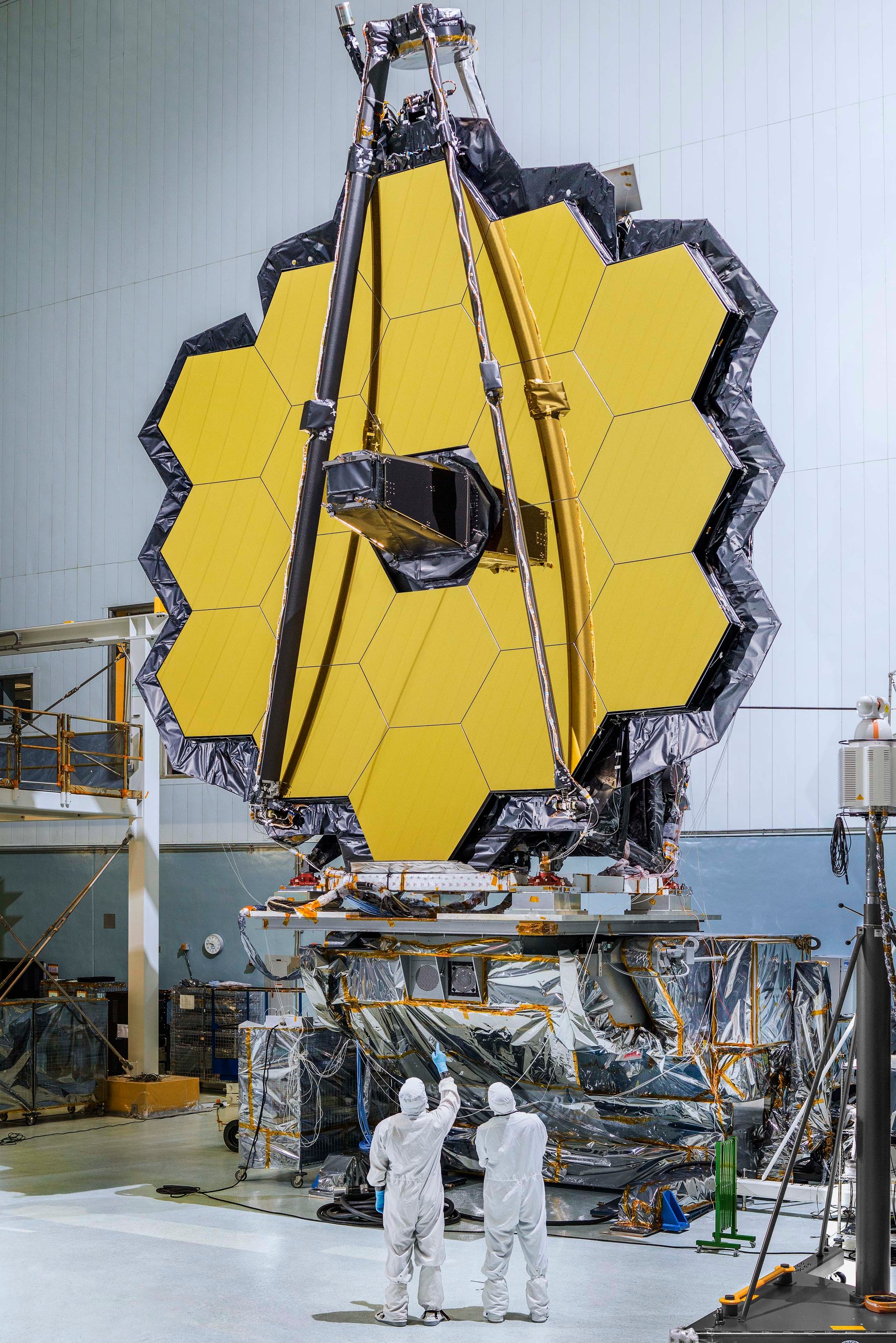
THREE STROKES OF ENGINEERING LUCK, STACKED TOGETHER
According to NASA's own accounting, the extra dozen years of operational life didn't come from any single factor — it came from three separate sources of efficiency stacking on top of each other, each contributing roughly four years apiece.
The first was the SpaceX Falcon Heavy rocket's launch accuracy itself. The rocket delivered Roman onto its intended trajectory with better than 99% precision, which meant the telescope needed to do far less correcting on its own once it separated from the rocket — work that would otherwise have burned through fuel meant for later maneuvers and, eventually, for the fine-pointing adjustments that keep the telescope's instruments aimed with pinpoint accuracy for years of observing.
The second factor was simpler, and almost charmingly mundane: Roman came in lighter than expected. The spacecraft weighed 17,760 pounds (8,056 kilograms) at launch, well under the conservative maximum of 21,605 pounds (9,800 kilograms) that engineers had budgeted for during design. That roughly 3,845-pound (1,744-kilogram) margin meant there was room to spare in the tanks — so instead of loading only the minimum fuel required, the propulsion team topped off the tanks to full capacity.
"We track the propellant needed based on actual mass throughout integration and testing as well, to make sure we have wiggle room," explained Alison Rao, Roman's propulsion systems lead at Goddard. Because the spacecraft's actual measured mass came in under budget, that "wiggle room" turned into hard, usable fuel reserves.
The third contributor was the sheer precision of the August 31 burn itself, compounded by similarly tight execution expected on the second mid-course correction burn planned for later this month, plus the eventual orbit-insertion maneuver that will settle Roman into its permanent observing position at L2 in early December. Stack all three efficiencies together, and NASA's engineers now believe Roman has enough propellant on board to keep functioning for at least 22 years — nearly a quarter century of observing time from a telescope that, on paper, only had to last a decade.
WHY EVERY DROP OF FUEL MATTERS SO MUCH
To understand why NASA is so thrilled about a rocket burn that most people would never have heard about otherwise, it helps to understand where Roman is going and why it can't simply be topped off later.
Roman is headed to the L2 Lagrange point, a location in space where the combined gravity of the Earth and the sun lets a spacecraft essentially "hover" in a stable position relative to both, using minimal fuel to stay put once it arrives. It's the same neighborhood already occupied by the James Webb Space Telescope, which has been observing from L2 since shortly after its December 2021 launch and is itself projected to keep operating for more than 20 years.
But L2 is nearly a million miles from Earth — roughly four times farther away than the Moon — which puts it well beyond the reach of any human repair mission with current technology. That's a sharp contrast with the Hubble Space Telescope, which orbits a mere 550 kilometers above Earth's surface and was serviced in person by space shuttle astronauts on five separate occasions over its lifetime, allowing NASA to swap out failing instruments and extend its life again and again. Roman has no such safety net. Whatever fuel it carries when it leaves Earth is all the fuel it will ever have. When the tank runs dry, the mission ends — permanently. That is precisely why an unplanned fuel surplus, discovered just days into the mission, is being treated by NASA less like a footnote and more like a headline.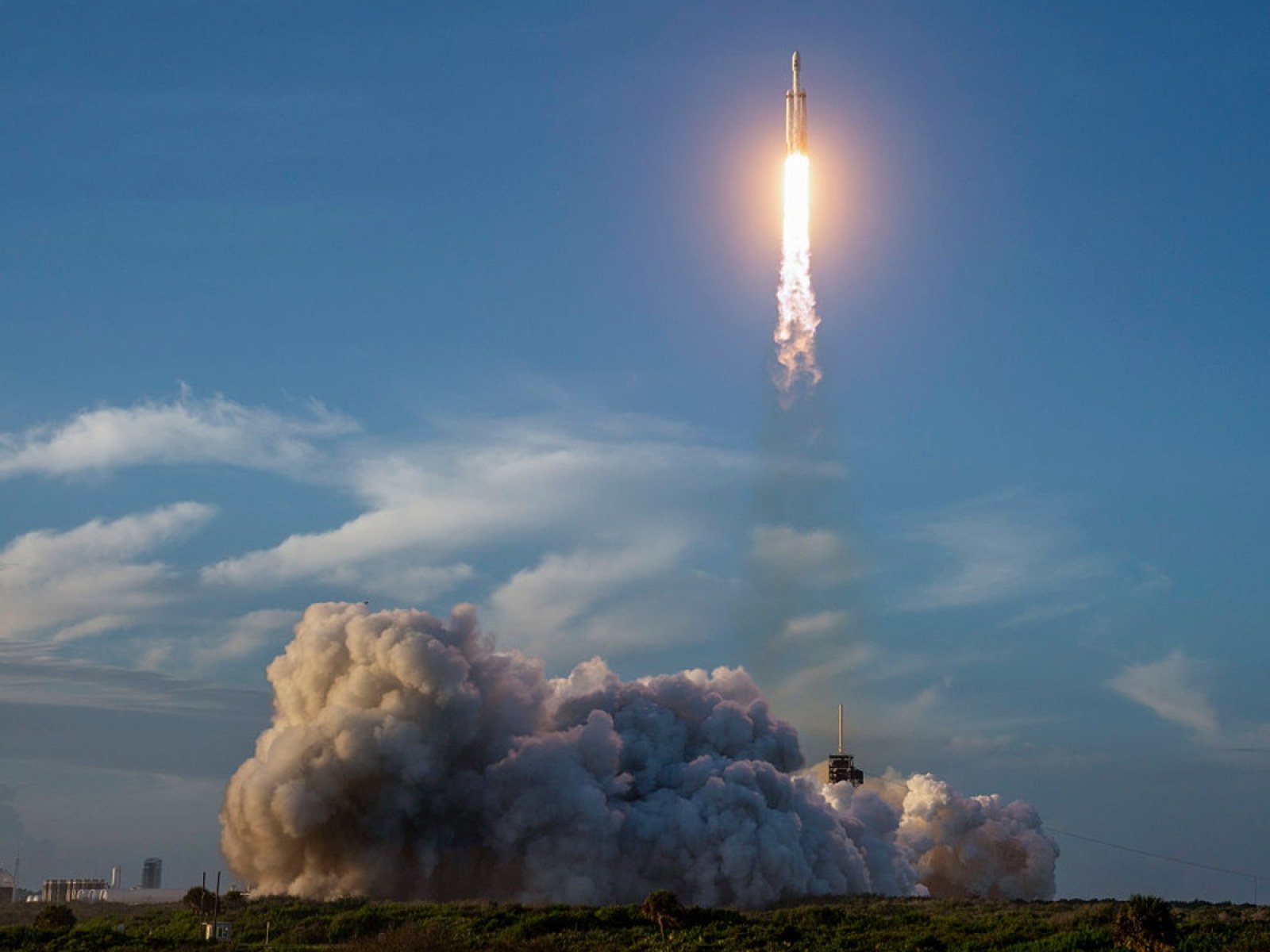
WHAT ROMAN IS ACTUALLY GOING TO DO UP THERE
Extra lifespan is only exciting because of what Roman is designed to accomplish — and its science mission is genuinely enormous in scope.
At the heart of the telescope sits a 300-megapixel Wide Field Instrument with a field of view roughly 100 times larger than Hubble's. Where Hubble captures exquisitely detailed but narrow snapshots of the universe, Roman is built to do the opposite: survey hundreds of millions of galaxies across huge swaths of sky, mapping the large-scale structure of the universe in enough detail to help scientists pin down the behavior of dark energy — the mysterious force that appears to be accelerating the expansion of the universe and that remains one of the biggest unsolved puzzles in all of physics.
Roman will also hunt for planets beyond our solar system using a technique called gravitational microlensing, which detects the brief, telltale brightening of a distant star's light as an unseen planet's gravity passes in front of it and magnifies that light like a natural lens. Over the course of its extended mission, Roman is expected to catalog tens of thousands of new exoplanets this way — including a class of worlds called "rogue planets," which drift through space entirely unbound to any host star, making them essentially invisible to most other planet-hunting methods.
A third instrument, a coronagraph designed to block out a star's overwhelming glare so the much fainter light of orbiting planets can be directly imaged, is flying as a technology demonstration — a test bed for techniques that future missions will need if they hope to take actual pictures of Earth-like planets around other stars.
With 22 years of potential operating life instead of ten, and with James Webb also expected to still be running at L2 for most of that time, scientists are looking forward to a rare and powerful pairing: Roman's ultra-wide survey work can flag countless objects of interest across huge patches of sky, and Webb's much narrower but far more detailed instruments can then zoom in on the most interesting of those targets for close-up follow-up study. Neither telescope can do the other's job — together, they cover both the wide net and the fine detail.
THE ROAD AHEAD
Roman isn't done traveling yet. A second mid-course correction burn is planned for later this month, and the spacecraft isn't expected to arrive at its final L2 orbit until early December 2026. From there, the mission enters a commissioning phase — checking out and calibrating its instruments — before formal science operations are expected to begin in earnest sometime in mid-2027.
During the initial five-year core mission, Roman's time will largely be dedicated to a slate of pre-planned "Core Community Surveys" designed to deliver the telescope's flagship dark-energy and exoplanet-census results. But it's the extended mission — the years scientists weren't originally sure they'd get — where things get especially interesting for the broader astronomy community. NASA has already fielded roughly 50 candidate General Observer proposals from scientists around the world hoping to use Roman's newly extended lifetime for their own research projects, covering everything from nearby asteroids to the earliest galaxies in the observable universe.
WHAT THIS MEANS FOR YOU
You will probably never touch, see, or directly interact with the Nancy Grace Roman Space Telescope — but the payoff from missions like this one tends to arrive in places you don't expect. Dark energy research reshapes our fundamental understanding of physics and the ultimate fate of the universe. Exoplanet discoveries feed directly into the broader search for life beyond Earth, a question that captivates scientists and the public alike. And every technological win in spacecraft efficiency — precision navigation, lightweight engineering, propellant management — eventually filters down into other technologies, from GPS satellites to commercial space ventures to the rockets that might one day carry humans back to the Moon and on to Mars.
There's also a simpler, more universal lesson buried in this story: sometimes careful, unglamorous planning — the kind of work that happens in windowless rooms full of engineers double-checking mass calculations — pays off in ways that are almost impossible to predict in advance. Nobody set out to build a telescope that could last 22 years. They set out to build one that could reliably last ten, and to leave enough margin for error that small wins could compound into something much bigger. This week, that patient, conservative engineering philosophy handed NASA more than a decade of bonus science, before the telescope has even reached its parking spot in space.
THE BOTTOM LINE
The Nancy Grace Roman Space Telescope isn't scheduled to capture its first science images for the better part of a year, and it hasn't even reached its final orbital home yet. But thanks to a near-flawless launch, a slightly lighter-than-expected spacecraft, and one extraordinarily precise three-minute engine burn, NASA is already looking at a mission that could run through the year 2048 — outlasting the careers of some of the very engineers who built it, and giving astronomers a fresh two decades to hunt for answers about dark energy, distant worlds, and the fundamental shape of the cosmos.
As NASA's Jamie Dunn put it, summing up what months of careful planning and one perfect burn ultimately bought: fuel "for at least 22 years of potential science operations" — a bonus nobody was promised, and one the entire astronomy community is now counting on.



