Written By | Torch Media Africa
After 13 fireballs, belly-flops and near-misses, Starship finally tries to do the one thing it's never done — actually reach orbit.
SCIENCE & TECH
Somewhere on a scorched stretch of Texas coastline, the tallest rocket ever built is standing on its pad, fully fueled and ready to do something it has never, ever done before: actually make it to orbit.
At 7:15 a.m. Central time on Monday, September 28, SpaceX plans to light 33 Raptor engines at the base of its Super Heavy booster and send the 124-meter Starship — taller than the Statue of Liberty, taller than most skyscrapers most people have ever stood inside — screaming off the launch pad. If everything goes right, for the first time in the program's history, the ship on top won't just fly a suborbital hop and belly-flop into the ocean. It will slip into genuine Earth orbit, circle the planet roughly six times, and drop off a payload of brand-new satellites before splashing down in the Pacific, west of Chile, nearly ten hours later.
If everything goes wrong — and with Starship, something has gone wrong on nearly every one of its 13 previous test flights — the fallout won't just be measured in scattered rocket debris. It'll be measured in billions of dollars, a bruised Wall Street darling, and a very public gut-check for the most ambitious rocket program on the planet.
This is the flight SpaceX has been building toward for the better part of a decade. And it's happening now, with the whole world — and increasingly, the stock market — watching.
THE $2 TRILLION ROCKET
Here's what's different this time: money. Real, publicly-traded, moves-when-you-tweet money.
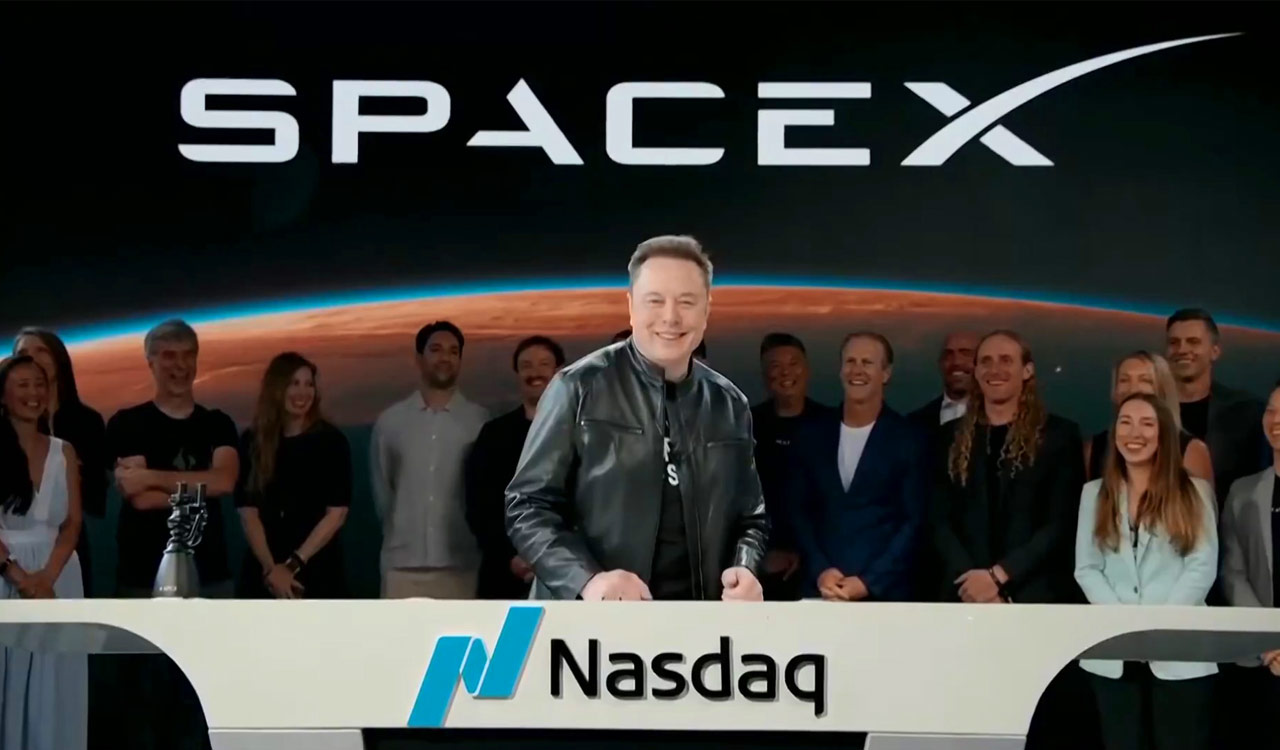
SpaceX went public in a blockbuster IPO back in June 2026, and its stock — ticker symbol SPCX on the Nasdaq — has rocketed the company's valuation to roughly $2 trillion as of last week's close. That makes SpaceX one of the most valuable companies on Earth, in the same neighborhood as the biggest tech giants in history, built on the promise that Starship will actually work the way Elon Musk has spent years insisting it will.
The market is already nervous. When SpaceX pushed Flight 14 back six days, from September 22 to September 28, to squeeze in extra checks on the booster and heat shield, SPCX shares dropped more than 2% in a single session. That's a multibillion-dollar swing in market value over a launch delay — before a single engine has even ignited. Imagine what happens if Monday's launch ends in a fireball.
Musk himself has been counting down the days publicly. "In 7 days, the first Starship launch to orbit will be carrying Starlink V3 satellites intended for operational use," he posted on X last week, framing this flight not as another test but as the moment Starship starts actually earning its keep.
That's a big shift in tone. Musk has previously talked about Starship eventually hauling up to 10 million tons of payload to orbit annually — an almost unfathomable number, roughly equivalent to launching the mass of a small city's worth of steel into space every year. Monday's flight, by comparison, is carrying just 26 satellites. But it's the first flight where the cargo actually matters, rather than being ballast for a test.
THIRTEEN STRIKES AND COUNTING
To understand why Monday's launch has so much riding on it, you have to understand just how badly Starship has struggled to reach this point.
Flight 13, launched back in July 2026, came agonizingly close. The upper stage flew a clean trajectory and even nailed a simulated splashdown in the Indian Ocean without exploding — good enough that SpaceX engineers were able to recover pieces of it afterward for analysis. But the Super Heavy booster, the massive first stage that does the heavy lifting off the pad, struggled to properly relight its engines after separating from the ship. It didn't reach orbit. It wasn't supposed to — Flight 13 was still a suborbital test — but the booster hiccup was one more data point in a long, expensive string of near-misses and technical stumbles stretching back years.
Earlier flights had it worse. Multiple Starship prototypes have disintegrated mid-flight, tumbled out of control, or been deliberately destroyed by flight-termination systems after something went sideways. Every single one of those failures forced SpaceX back to the drawing board — new heat shield tiles, new booster hardware, new software — in the company's trademark "build, blow up, learn, rebuild" approach that has made Musk both a billionaire folk hero and a punching bag for critics who say the company moves too fast and breaks too much.
For Flight 14, SpaceX engineers made what they're calling "several modifications" to both the booster and the ship's heat shield, directly incorporating lessons from Flight 13's booster relight problem. And in a notably cautious move for a company famous for aggressive risk-taking, Musk has walked back earlier plans to attempt catching the returning Starship upper stage — the kind of dramatic, chopstick-arm catch SpaceX has already pulled off with its smaller boosters. Not this time. "An explosion would be too big a setback," Musk said, opting instead for a safer splashdown in open ocean.
That's Musk, the man who once described SpaceX's test philosophy as treating "excitement" and "disassembly" as roughly the same thing, choosing caution over spectacle. It tells you something about how much is riding on this particular flight going right.
WHAT'S ACTUALLY ON BOARD
The payload matters as much as the rocket itself. Flight 14 will deploy 26 satellites from SpaceX's next-generation Starlink V3 constellation — and these aren't just bigger, better versions of the satellites already crowding low Earth orbit.
Each V3 satellite is designed to deliver around 1 terabit per second of downlink capacity, roughly ten times what current-generation Starlink satellites can manage. Scale that across an entire V3 constellation, and SpaceX says it could deliver more than 100 times the total bandwidth of today's network of over 11,000 satellites already up there. That's the difference between streaming a movie and streaming an entire studio's back catalog, simultaneously, to everyone on the ground at once.
It's also, not coincidentally, a business necessity. Starlink subscriptions hit 12 million by June 2026, roughly doubling year over year, and the current fleet of satellites is straining to keep pace with demand. SpaceX has already halted Falcon 9 Starlink launches out of Cape Canaveral, betting that all future East Coast Starlink missions will ride on Starship instead — a bet that only makes sense if Starship can fly, and fly often.
Wall Street analyst Ron Baron has estimated that Starlink alone could generate $1 trillion in revenue within a decade, an eye-watering number that depends almost entirely on SpaceX being able to loft satellites faster and cheaper than anyone else on the planet. NASA is watching closely too — the space agency has already added three missions worth $946 million to SpaceX's order book, a vote of confidence in a rocket that still hasn't technically finished its first successful orbital flight.
MISSION PROFILE: SIX LAPS AND A SPLASHDOWN
If Monday's countdown holds, here's roughly what the next ten hours will look like. The Super Heavy booster — designated B21 — will fire its 33 engines and push the stack skyward before separating from the upper stage, Ship 41 (S41), a 52-meter vehicle that makes up the top half of the 124-meter stack. The booster will attempt its own relight and controlled descent, the same maneuver that tripped it up on Flight 13.
Ship 41 will continue on, climbing to roughly 275 kilometers of altitude — solidly into low Earth orbit territory — and complete approximately six full orbits of the planet over the following hours. Somewhere in that window, it will release its 26 Starlink V3 satellites into their own independent orbits. Then, rather than attempting the dramatic tower-catch maneuver SpaceX has practiced with its boosters, Ship 41 will reenter the atmosphere and come down in a controlled splashdown in the Pacific Ocean, west of Chile.
The whole mission, launch to splashdown, is expected to take just under ten hours — an entire working day compressed into a single, white-knuckle sequence that space watchers around the world will be tracking in real time.
SpaceX has also secured a Federal Aviation Administration temporary flight restriction extending through October 7, covering airspace up to 10,000 feet, standard practice ahead of a major launch but also a quiet acknowledgment that things could still go sideways in the immediate area.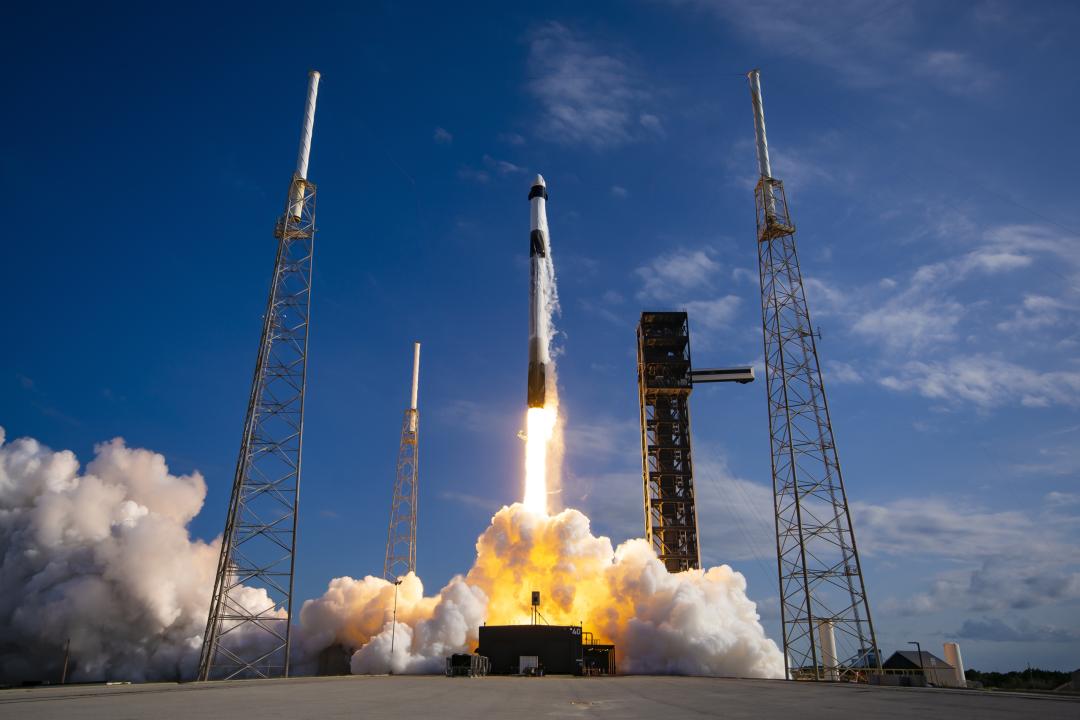
THE EXPERT VIEW
Aerospace analysts have been blunt about the stakes. The consensus among industry watchers is that Flight 14 represents the clearest test yet of whether Starship can transition from expensive fireworks show to functioning workhorse rocket — the same transition Falcon 9 made years ago on its way to becoming the most reliable rocket in history.
Financial analysts, meanwhile, are treating this launch less like a science experiment and more like an earnings report. With SPCX shares already having dropped over 2% on a mere six-day delay, market watchers expect a successful orbital insertion and satellite deployment to send the stock — and SpaceX's already-stratospheric $2 trillion valuation — even higher. A failure, particularly one involving the loss of 26 operational satellites rather than test cargo, could do real and lasting damage to investor confidence in a company that just months ago pulled off one of the largest IPOs in history.
There's also a broader industry angle. SpaceX has bet its entire East Coast launch strategy on Starship, halting Falcon 9 Starlink missions from Florida in anticipation of the bigger rocket taking over. If Starship isn't ready to fly "several times per week" — the cadence Musk says is necessary to retire Falcon 9 and Falcon Heavy for good — that transition could stall, leaving a gap in America's launch capacity at a moment when demand for satellite bandwidth has never been higher.
WHAT THIS MEANS FOR YOU
If you've never thought twice about a rocket launch in Texas, here's why Monday matters anyway. If Starship succeeds, it accelerates the buildout of a satellite internet network that's already reshaping how rural communities, ships at sea, and disaster zones get connected — Starlink's subscriber base has already doubled in a year, and a working Starship means that growth could keep accelerating rather than hitting a satellite-capacity wall.
It also matters for anyone with money riding on the space economy, directly or indirectly, through retirement funds, index funds, or plain old curiosity about where a $2 trillion company's stock is headed next. And for space fans, a successful orbital flight would mark the moment Starship stops being a spectacular experiment and starts becoming the actual infrastructure NASA, the Pentagon, and the broader satellite industry have been planning their futures around.
THE BOTTOM LINE
Thirteen flights. Countless fireballs, near-misses, and multibillion-dollar redesigns. And now, on a Monday morning in South Texas, SpaceX finally gets to find out if all of it was worth it. Whether Starship makes six clean orbits and a tidy Pacific splashdown, or ends the day as another expensive lesson for the engineers back at Boca Chica, the outcome will ripple far beyond the launch pad — into Wall Street trading floors, NASA's Artemis planning meetings, and the internet connections of 12 million Starlink subscribers who are, whether they know it or not, about to find out if their satellite provider's rocket actually works.



