Written By |
Mount Elgon
Mount Elgon National Park
A Mountain Older Than Memory
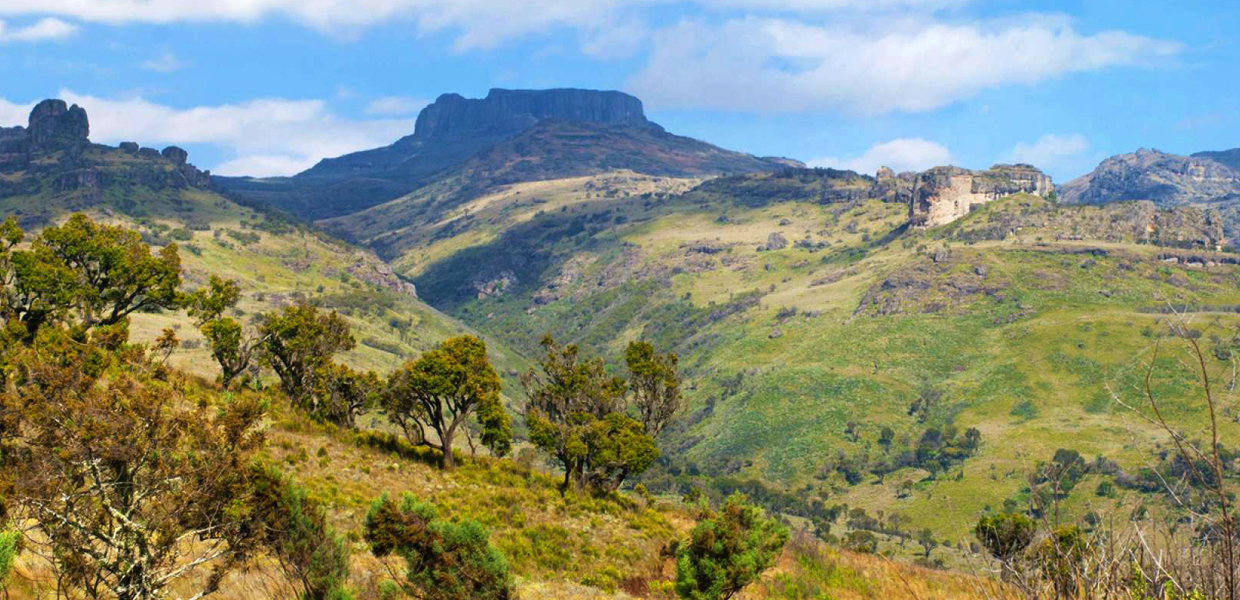
Before the sun clears the rim of the Mbale plains, the slopes of Mount Elgon are already awake. Coffee farmers tend terraces in the mist, a troop of black-and-white colobus shakes the canopy, and above it all a vast, broken shoulder of rock rises toward the cloud. This is the ancient volcano the Bagisu call Masaba, and on its Ugandan flank it is protected as Mount Elgon National Park, one of the country's least-visited and most quietly spectacular destinations.
Straddling the Uganda–Kenya border in the east, the park covers roughly 1,121 square kilometres. Geologists count Elgon among the oldest extinct volcanoes in East Africa, and its sprawling base is often described as the largest solitary volcanic mass on the continent. Its collapsed caldera is ringed by five main peaks, the highest of which, Wagagai, stands at 4,321 metres. The mountain is sacred to the Bagisu people, whose circumcision rites and oral histories are woven into its slopes. Forest reserve protection came to parts of the mountain in 1929, and the Ugandan side was gazetted as a national park in 1992.
What Lives on the Slopes
Elgon does not trade on the Big Five. Its appeal is altitude, texture and surprise. Montane rainforest gives way to bamboo, then to heath and giant lobelias in the afro-alpine zone, a vertical journey that would take thousands of kilometres to match on the flat. Elephants and buffaloes move through the lower forest, alongside duikers, bushbuck, blue monkeys and colobus. Birders can tally more than 300 species, including the rare lammergeier, while the park shelters around half of Uganda's butterfly species.
Water and rock define the landscape. Waterfalls spill from the escarpment, hot springs steam in the caldera, and caves such as Mude and Hunter's serve as camps for trekkers. Tutum Cave sits along the Sipi route. Local lore holds that elephants once ventured into some of these caves to lick mineral salts from the walls, and the story adds an almost mythic quality to a night spent in one.
Three Ways Up
Most climbers choose among three trails. The Sasa Trail begins at Budadiri and is the steepest and most direct, climbing through farmland, rainforest and a long bamboo belt to the caldera rim before a different descent. The Sipi Trail, starting near Kapkwai, is the longest, a five-to-six-day round trip that passes Tutum Cave and the caldera on the way to Wagagai. The Piswa Trail, from Kapkwata Village, is the gentlest and offers sweeping views over the Karamoja plains. None requires technical climbing, though the altitude and sudden weather demand respect, warm layers and a good guide.
For those who prefer to stay closer to the ground, the park offers guided nature walks, birding, mountain biking and rock climbing, as well as the Bushiyi excursion. Community visits introduce the Bagisu, Sabiny and Ndorobo, and coffee-farm tours explain how the region's celebrated Arabica goes from hillside to cup. Many travellers combine Elgon with the nearby Sipi Falls, whose three tiers lie just along the escarpment.
Planning Your Visit
Mount Elgon is open all year, but the drier months, roughly June to September and December to February, bring firmer trails and clearer views. The park lies in Mbale District, about seven to eight hours by road from Kampala via Jinja and Iganga, or a short flight to nearby airstrips for those who want to save time. Travellers should carry waterproofs and sturdy boots even in the dry season, since the upper slopes make their own weather.
Published figures put the park entrance fee at about US$40 per day for foreign non-residents and UGX 20,000 for East African citizens, with the fee covering guided activities inside the park. One source lists US$35, so visitors should confirm the current rate with the Uganda Wildlife Authority before booking. Accommodation ranges from community campsites and park bandas to lodges around Mbale and Sipi, and booking a licensed guide in advance is strongly advised for multi-day treks.
This Week in Ugandan Tourism
1 October 2026: Uganda hosted its first African Dragon Boat Racing Competition on Lake Victoria at Kawuku in Wakiso, a new addition to the country's sports-tourism calendar, according to the Uganda Tourism Board.
30 September 2026: The Uganda Tourism Board met the German-backed Import Promotion Desk to discuss growing the European market, while on 28 September it promoted intra-African travel at the ATPSA roadshow in Zanzibar.
September 2026: The Uganda Wildlife Authority and the Wildlife Conservation Society launched the Ishasha Collaborative Management Partnership to help restore the famed tree-climbing lion population in the Queen Elizabeth Protected Area.
September 2026: Speaking at World Tourism Day celebrations in Mbale, close to Elgon itself, President Museveni described forests, wetlands and parks as national economic assets that must be protected. On 21 September the UWA also outlined forest-restoration and climate projects covering Kibale, Mount Elgon and other protected areas.
30 April 2026 (latest annual figures): The Ministry of Tourism, Wildlife and Antiquities reported that Uganda received more than 1.6 million international arrivals in 2025, with earnings of about UGX 5.8 trillion (roughly US$1.62 billion) and an estimated 5.9 percent contribution to GDP.
Details were drawn from UTB, UWA and Ministry of Tourism pages and from travel-trade sources. Fees and dates should be verified with the relevant authority before travel.



