Written By | International News Agencies
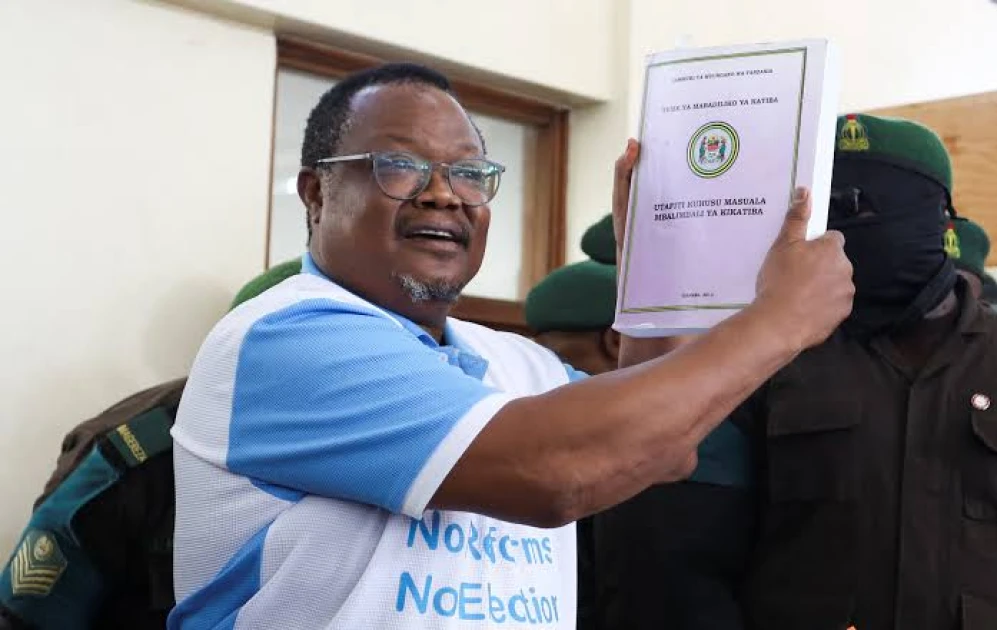
Lissu, 58, has been in detention since April 2025 on charges that he incited public rebellion in a bid to derail last October's general election.
Dar es Salaam, Tanzania
A Tanzanian High Court panel is now weighing a verdict that could send the country's best-known opposition figure to the gallows or set him free, after final submissions concluded last week in the treason trial of Chadema party leader Tundu Lissu — a case that has become the clearest test yet of how far President Samia Suluhu Hassan's government is willing to go to suppress dissent.
Lissu, 58, has been in detention since April 2025 on charges that he incited public rebellion in a bid to derail last October's general election. The charge of treason carries a maximum sentence of death by hanging under Tanzanian law, though the country has not carried out a judicial execution in decades. A three-judge panel at the High Court in Dar es Salaam heard closing arguments last week, with Lissu's defense team urging the judges to deliver what they called a "courageous verdict" — a pointed reference to the political pressure surrounding the case. The court has not indicated when it will rule.
A Case Rooted in a Disputed Election
The prosecution's theory traces back to the run-up to Tanzania's October 2025 general election, in which Chadema, the country's largest opposition party, was barred from fielding candidates after it refused to sign an electoral code of conduct that the party said would have legitimized a rigged process. Election authorities separately disqualified Lissu, the party's chairman and runner-up to the ruling Chama Cha Mapinduzi (CCM) in the 2020 presidential race, from standing. Prosecutors allege that Lissu subsequently called on Tanzanians to disrupt the vote through the slogan "No Reforms, No Election," which they characterize as incitement to insurrection. Lissu has pleaded not guilty and told the court the case against him is a political prosecution designed to eliminate CCM's most durable challenger.
The stakes of the underlying election were laid bare in its aftermath. Samia Suluhu Hassan was declared the winner with 97.66 percent of the vote when results were announced on Nov. 1, 2025, and she was sworn in two days later for a second term in a closed ceremony held amid ongoing street protests — a margin of victory that human rights researchers and Western governments have cited as evidence the vote was neither free nor competitive. In the days around the election, Tanzanian authorities imposed a three-day lockdown from Oct. 29 to Nov. 3 that residents said prevented them from buying food or accessing banking services, cut internet access on Oct. 29 with social media restrictions persisting for days after partial restoration, and denied accreditation to most foreign journalists; Agence France-Presse reporters were among those blocked from covering a rally in Zanzibar.
The human toll of the crackdown that followed remains contested. Chadema's party director, John Kitoka, has said the party's own data collection points to as many as 1,000 deaths across eight of Tanzania's 31 regions, though Human Rights Watch has said it has not been able to independently verify that figure. What is documented is a pattern of lethal force: Amnesty International has accused security forces of using unlawful lethal force against protesters and, in some cases, removing bodies from the scene, while the United Nations Office of the High Commissioner for Human Rights and independent UN experts condemned what they called a lethal crackdown compounded by the digital blackout. In one specific incident cited by Human Rights Watch, a bystander was shot dead by a person in civilian clothes near his home in the Temeke district of Dar es Salaam on Oct. 30, illustrating how violence spread beyond organized protest sites into residential neighborhoods.
"The government has a responsibility to maintain security, but it needs to respect rights and ensure that all those responsible for violence are investigated and appropriately prosecuted," Oryem Nyeko, a senior Africa researcher at Human Rights Watch, said of the crackdown. The African Commission on Human and Peoples' Rights, the Southern African Development Community and the European Union all separately raised concerns about the fatalities and the conduct of security forces, though none has imposed concrete consequences on Dar es Salaam.
Lissu's Long Road to the Dock
Lissu is not a newcomer to political violence in Tanzania. He survived an assassination attempt in 2017 when he was shot 16 times outside his home in Dodoma; no one was ever charged in that attack, a fact his supporters frequently invoke as evidence of impunity for violence against the opposition. He went on to challenge President John Magufuli in the 2020 election, losing in a vote that international observers also criticized as deeply flawed, before going into exile and later returning to Tanzania to rebuild Chadema's organizing base ahead of the 2025 cycle.
Inside the courtroom, the defense has argued that prosecutors failed to meet their burden of proof, closing their case after the defense declined to call further witnesses following an earlier ruling — issued in February — that found Lissu had a case to answer and ordered him to formally defend himself. That ruling cleared the way for the trial to proceed to its merits rather than being dismissed at a preliminary stage, and defense lawyers have since argued in court filings that the treason case will "set a historic legal precedent" for how Tanzania treats political speech, given that it hinges on statements and slogans rather than any allegation that Lissu personally organized or participated in violence.
The government has consistently rejected characterizations of the case as politically motivated, maintaining that the charges rest on Lissu's own public statements calling for disruption of a constitutionally mandated election. Officials have not commented publicly on the timing of a possible verdict.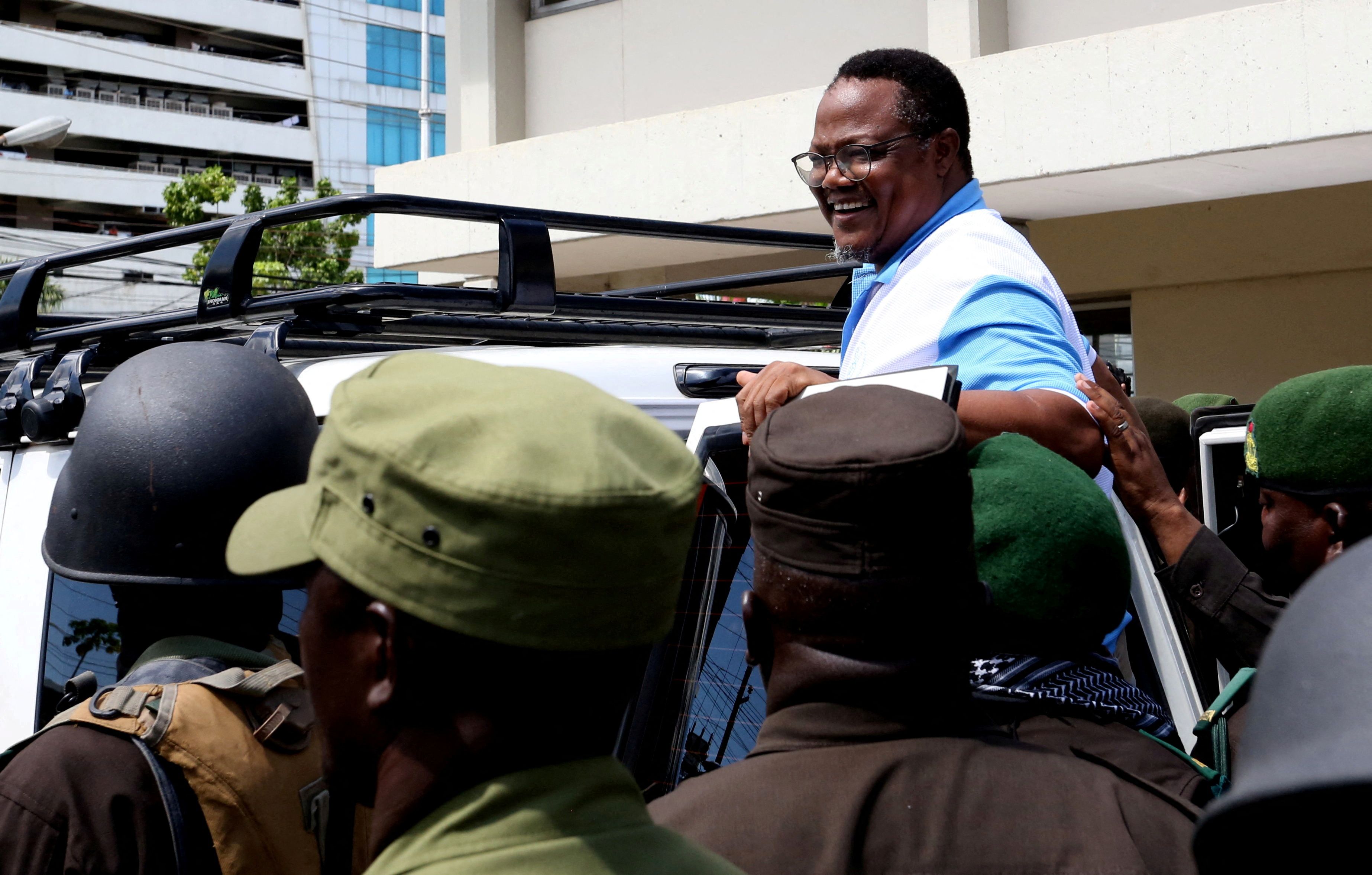
What a Verdict Would Mean
The political stakes of the ruling extend well beyond Lissu's personal fate. Chadema has effectively been without its most prominent national figure for a year and a half, a period during which the party has struggled to mount unified opposition to a CCM government that has controlled Tanzanian politics without interruption since independence-era single-party rule gave way to multiparty politics in the 1990s. An acquittal would hand Lissu a galvanizing platform and could reinvigorate Chadema's organizing ahead of future electoral cycles, while a conviction — particularly one carrying a lengthy prison term or, in the most extreme scenario, a capital sentence — would remove him from active politics for years, if not permanently, and could chill the willingness of other opposition figures to challenge the ruling party as directly.
Regional and Western governments are likely to treat the verdict as a bellwether for whether Hassan, who took power in 2021 following Magufuli's death and was initially seen by some diplomats as a reformist compared with her predecessor, is reverting to the harder line associated with CCM's historical dominance. Her government's handling of the 2025 election and its aftermath has already strained that reformist image, and international rights bodies have signaled they are watching the Lissu case closely as a further test of judicial independence in a country where courts operate under significant political pressure.
For ordinary Tanzanians, the case has also become a proxy fight over the space available for dissent more broadly. Rights groups have documented restrictions on media accreditation, internet access and public assembly that extend well beyond the immediate election period, suggesting that whatever the court decides about Lissu individually, the broader climate for opposition politics in Tanzania remains constrained. Diplomats in Dar es Salaam expect the ruling within weeks, though the three-judge panel has given no public timeline, and any verdict — particularly a conviction — is expected to trigger appeals that could keep the case, and Lissu's fate, unresolved for months to come.
A Test Case for the Region
Tanzania's handling of the Lissu case is being watched well beyond its own borders. East African governments have their own histories of prosecuting opposition figures on charges that blur the line between genuine security concerns and political retaliation, and rights advocates argue that a treason conviction secured largely on the basis of campaign rhetoric would set a troubling precedent for how incumbent parties across the region can use the criminal justice system to sideline rivals ahead of future elections. The Southern African Development Community, of which Tanzania is a member, has generally been reluctant to publicly criticize sitting governments' domestic legal proceedings, even as it has voiced concern about the broader death toll from the crackdown — a tension that illustrates the limits of regional bodies' willingness to intervene in what governments characterize as internal judicial matters.
Chadema, for its part, has continued to operate despite the loss of its chairman's day-to-day leadership, with other party officials stepping into public roles even as they face their own restrictions on organizing and public assembly. Party officials have said they view the verdict as a referendum not just on Lissu but on whether Tanzania's courts retain any meaningful independence from the executive branch — a question that will likely shape how the opposition approaches its relationship with state institutions for years regardless of the outcome. With the three-judge panel now deliberating, Tanzanians and outside observers alike are left waiting to see whether the country's judiciary will assert independence in one of the most politically charged cases in its recent history, or affirm the government's narrative that Lissu's prosecution was a straightforward application of the law rather than a political act.



