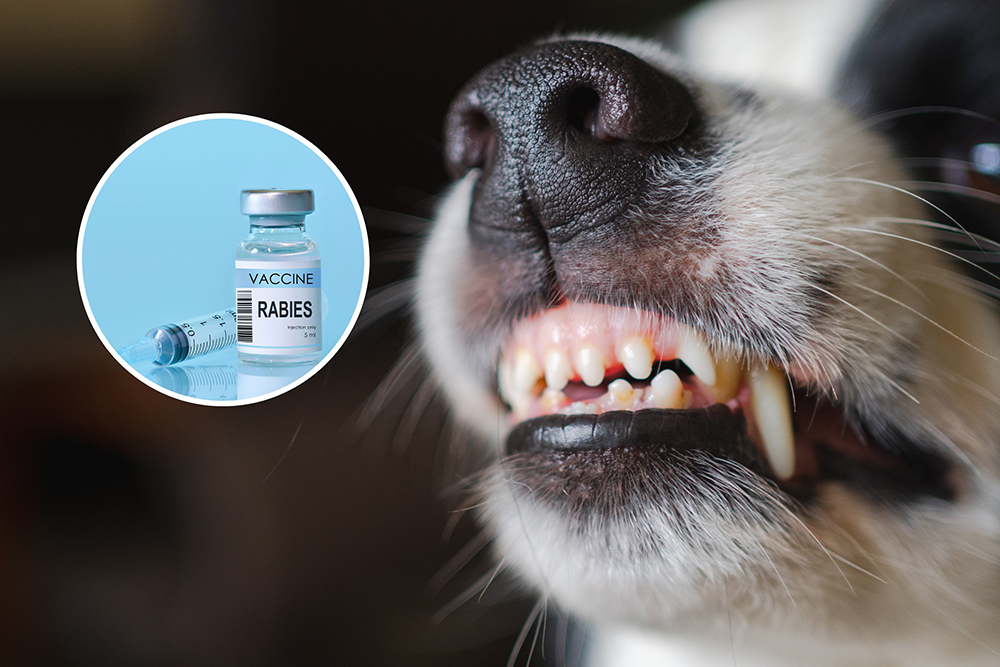
America's rabies bill has exploded — use of the antibody injection is up 76 per cent in a single year — and the CDC has just issued a nationwide alert warning that some of the people being treated are being treated WRONG
SCIENCE & HEALTH
They were four baby goats. That is all. Four kids small enough to sit in a child's lap, hauled around North Carolina in the back of a van by a business called Farm Adventures, out of the town of Harmony.
Between 28 July and 27 August this year those goats went to at least ten venues. A Masonic picnic. Assisted living centres, where residents in their eighties stroked them from wheelchairs. A back-to-school bash. Private birthday parties. Hundreds of hands went into that pen.
What nobody knew was that sometime in late July, a skunk had got into the goats' enclosure back at the farm — and that skunk had rabies.
By the time North Carolina's Department of Health and Human Services confirmed it in late August, local health departments were working through a list of nearly 300 people. The state ended up recommending post-exposure treatment for 213 of them. The four goats — "our 4 precious baby goats", as the farm put it in a statement — were euthanised.
That single event is now one of the case studies behind a national warning. And the warning is not quite the one you would expect.
The alert nobody saw coming
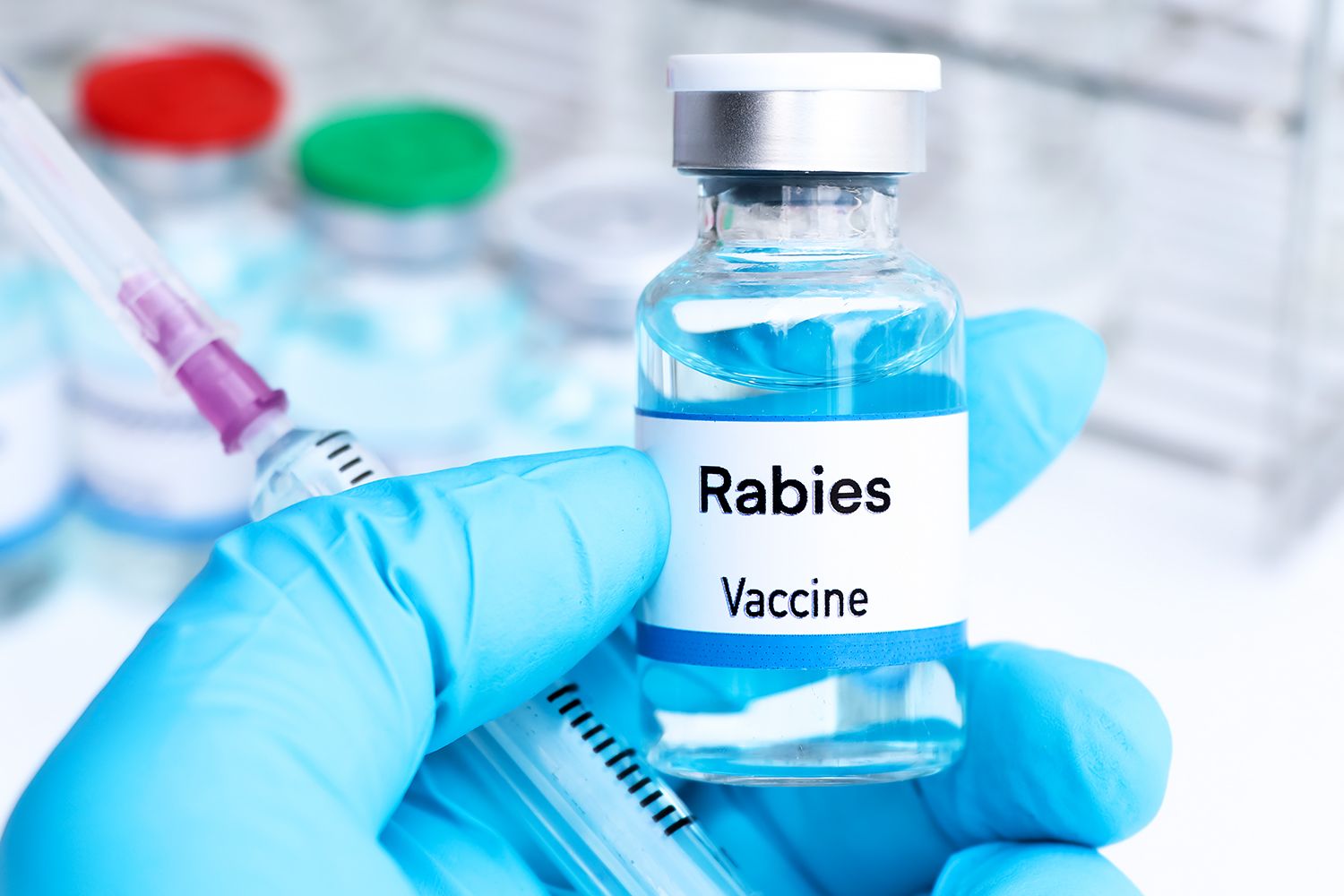
On 10 September the US Centers for Disease Control and Prevention pushed out Health Advisory CDCHAN-00533 through its Health Alert Network — the pipeline that goes straight to state and local health officers, epidemiologists, laboratory directors and clinician organisations across the country.
The headline finding: since July 2026, multiple US jurisdictions have reported local increases in human rabies exposures. Not just from the usual suspects — bats, raccoons, skunks, foxes — but from animals in which rabies is, in the CDC's careful phrasing, "less commonly reported".
Goats, for instance.
The numbers in the advisory are blunt. From July through August 2026, the CDC fielded 17 per cent more rabies-related inquiries than it did over the same two months of 2025, including reports of mass exposure events involving more than one person. At least eight state health departments flagged increased use of post-exposure prophylaxis — PEP, the treatment regimen — or errors in how it was given, or both.
And then the number that made pharmaceutical analysts sit up. According to weekly pharmacy data as of 2 September 2026, use of the two rabies vaccines licensed in the United States is up an estimated 33 per cent year on year. Use of the two human rabies immune globulin products — the antibody injection given alongside the vaccine — is up an estimated 76 per cent.
Three quarters again as much, in twelve months.
Wall Street gets the memo
That figure did not stay inside public health circles for long. On Thursday morning, 17 September, Kamada Ltd — the Israeli biopharmaceutical company that makes KedRAB, one of only two FDA-approved anti-rabies immunoglobulin products on the American market — issued a statement confirming it has the inventory and manufacturing capacity to keep supplying the US.
"Kamada is a global leader in human rabies prevention using immunoglobulin and we remain committed to delivering reliable, uninterrupted supply of KedRAB to meet the needs of patients and clinicians across the United States," said chief executive Amir London, citing the company's partnership with distributor Kedrion Biopharma, its vertically integrated supply chain and the recent FDA approval of its in-house rabies testing lab.
Kamada puts the total US market for rabies immunoglobulin at roughly $200 million a year. A 76 per cent jump in utilisation is, in commercial terms, an event.
The CDC, for its part, is emphatic that there is currently no shortage of either rabies vaccine or immune globulin in the United States. But the agency wants health departments to monitor supplies and have processes ready to procure from suppliers "if allocation limits are implemented" — which is the sort of sentence public health agencies write when they are thinking several moves ahead.
The part of the alert that should worry you more
Here is the twist. Read the advisory closely and it becomes clear that the CDC is not primarily sounding an alarm about rabid animals. It is sounding an alarm about the people in scrubs.
The agency lists, in plain language, the errors that clinicians are actually making when they administer rabies PEP:
Giving the rabies vaccine in the gluteal area — the buttock. A dose given there is not considered valid and must be repeated at a proper site.
Failing to infiltrate the immune globulin into and around every identifiable wound, which is the entire point of the product.
Putting the immune globulin and the vaccine in the same syringe, or the same anatomical site — where the CDC warns the two "could neutralize each other, potentially making both ineffective."
Forgetting to give immune globulin to someone who needs it. Giving it to someone who was already vaccinated and does not.
Misclassifying a patient's vaccination history or immune status. Using the wrong schedule. Restarting the whole four-dose series unnecessarily after a minor timing slip.
Rabies is described by the CDC as "nearly 100% fatal" once symptoms begin — and almost entirely preventable if PEP is given correctly beforehand. Which makes a buttock injection, or a mislabelled vaccination history, a very large mistake dressed up as a small one.
Eleven to fourteen thousand dollars
There is also the bill. A typical course of rabies PEP costs between $11,000 and $14,000 per person, the CDC states — driven largely by the immune globulin, which is dosed at 20 international units per kilogram of body weight and made from human plasma.
Multiply that by 213 people who stroked a goat at a school event. Then remember that roughly 1.4 million Americans seek medical care for a possible rabies exposure every year, and about 100,000 of them go on to receive PEP.
The CDC's worry is that unnecessary treatment inflates that already enormous figure while straining the supply of a product that somebody, somewhere, urgently needs. Its guidance is pointed: in general, PEP is not recommended when the animal is available for a ten-day observation period, when rabies test results come back negative, or when health officials determine the exposure carries no rabies risk.
At the same time — and this matters — officials stress that worrying about the cost should never stop anyone from getting evaluated after a possible exposure.
Kansas, and the bats in the attic
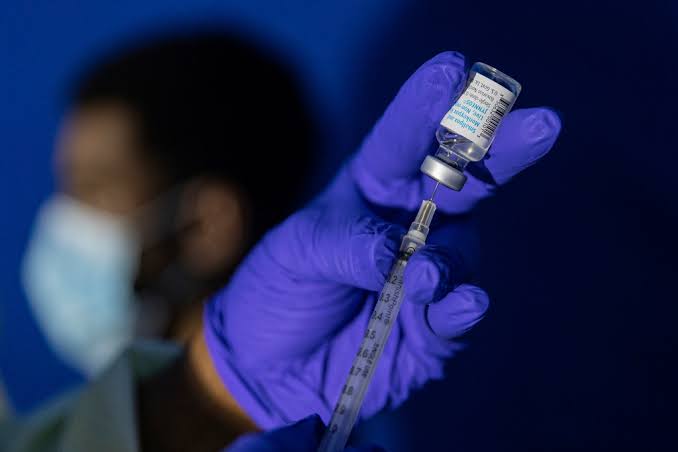
The states are moving. On Tuesday 16 September the Kansas Department of Health and Environment issued its own advisory, urging healthcare providers to perform a proper rabies risk assessment before starting treatment, because of increases in rabid animals across the state — primarily bats.
Kansas has recorded no human rabies cases this year. KDHE data updated in June logged nine positive animal cases: six skunks, one cow, one dog, one bat.
Bats deserve their own paragraph. They are the leading source of human rabies deaths in the United States, and the reason is horrible in its simplicity: a bat bite can be so small that the person never knows it happened. Someone wakes up with a bat in the bedroom, shrugs, opens a window. Months later — the incubation period runs from weeks to as long as a year — they present with a fever and a sore throat that nobody connects to anything.
The number in the academic literature that nobody wants to say out loud
And that brings us to the most uncomfortable research finding of the year.
In a paper published on 29 August in Communications Health, Younjung Kim and Professor Christl A. Donnelly of the University of Oxford's Department of Statistics and Pandemic Sciences Institute did a piece of arithmetic that has been sitting in plain sight for decades.
Four times since 1978, an American organ or tissue donor has died with undiagnosed rabies, and the virus has gone on to kill transplant recipients — six deaths in total across those events. The most recent was confirmed in February 2025, when the CDC diagnosed rabies in a kidney transplant recipient and then, working backwards, in the donor who had died the previous December. The chain, investigators concluded, most likely ran from a rabid silver-haired bat, to a skunk, to a man who was scratched while defending a kitten, to a stranger in Michigan who needed a kidney.
Kim and Donnelly's logic is this: only a tiny fraction of people who die in America become organ and tissue donors. If three donors in twenty-five years died of rabies without anyone noticing, out of 239,251 deceased donors, then scale that rate across all 68,266,224 American deaths over the same period.
Their central estimate: 856 undiagnosed human rabies deaths in the US between 2000 and 2024 — a 95 per cent confidence interval of 213 to 2,220 — against an official confirmed average of just 2.4 cases a year.
Which would mean only around 7 per cent of American rabies deaths were ever identified as rabies. Even at the most generous end of their confidence interval, only about 22 per cent.
"Substantial under-detection in the general population may both result from and contribute to an underappreciation of rabies transmission," the authors write, "thereby sustaining ongoing transmission risks to transplant recipients." Their recommendation is to explicitly include rabies in the differential diagnosis for patients who die of unexplained encephalitis.
It is an estimate, not a body count, and it rests on an assumption the authors flag themselves: that organ donors carry the same average rabies risk as everybody else. But the direction of travel is unmistakable.
What this means for you
If you or your pet has had contact with wildlife or a strangely behaving animal — particularly a bite or a scratch — the CDC's instructions are specific and worth memorising.
Wash the wound immediately with soap and water, or water alone, for a full 15 minutes. Do not close the wound. Then talk to a clinician or your local health department about whether you need rabies care, and tell them exactly what animal it was and whether it was behaving oddly.
If the animal was somebody's pet, ask the owner for proof of its rabies vaccination. If it was wildlife and you can do it safely, confine it and call animal control — because an animal that can be observed for ten days or tested may spare you a $12,000 course of injections.
Keep your distance from wildlife generally. Never approach an animal that appears sick, injured or dead — and treat a nocturnal animal wandering about in daylight as a red flag rather than a photo opportunity. Keep your own pets' rabies shots current; in the US, cats are reported rabid more often than dogs.
And if you are offered post-exposure treatment: it is entirely reasonable, in the light of this month's advisory, to ask where the vaccine is going. Deltoid, not buttock. Immune globulin into the wound, not into the same spot as the vaccine, and never in the same syringe.
The bottom line
Rabies has not changed. It remains one of the most reliably lethal infections known to medicine and one of the most reliably preventable, and America's prevention infrastructure — surveillance, diagnosis, PEP — keeps annual deaths in the low single digits where other countries count them in thousands.
What has changed this summer is volume. More exposures, more mass events, more injections, more opportunities for a tired clinician at 2am to put a needle in the wrong muscle.
The goats are gone. The alert is live. And somewhere in America tonight there is a bat in an attic that nobody has noticed yet.
Published By | Health News Editor