Written By | Health News Agencies
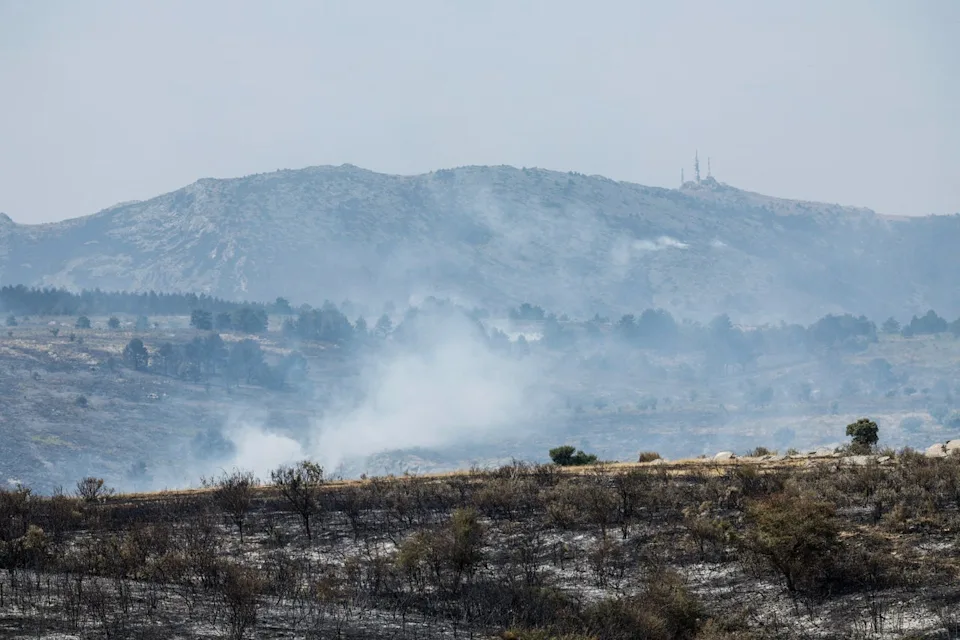
The 10th annual Lancet Countdown reveals heat killed more people in 2023 than malaria or HIV, and 146 experts say the world is losing the race between harm and response.
LONDON / GENEVA
Seven hundred and ten thousand. That is the record number of people the world's leading medical journal estimates were killed by heat in 2023 alone, more than died that year from malaria or HIV. This week, 146 researchers are asking a question that would have sounded like science fiction a decade ago: should climate change be formally declared a global health emergency?
The answer, according to the 2026 Lancet Countdown on Health and Climate Change, published ahead of the COP31 summit, is an emphatic yes. The report, now in its 10th year, finds that many of the health harms of a heating planet are growing faster than the world's response to them. Marina Romanello, a professor at University College London and executive director of the Lancet Countdown, did not mince words: "This isn't a gradual worsening; it's a step change that must be recognized as the global health emergency it is."
The Report That Doctors Cannot Ignore
The Lancet Countdown is not a campaign pamphlet. It is an annual stocktake led by University College London, produced in collaboration with the World Health Organization, and compiled by 146 researchers from more than 100 institutions across over 30 countries. The 2026 edition tracks 54 indicators, including four new ones: water availability on land, the greenhouse gas footprint of healthcare, climate-related health research funding, and legislative engagement on health and climate.
Its central conclusion is simple. Compared with the decade before the Paris Agreement, the damage to human health has accelerated, and the progress made on clean energy, health system readiness and health-protecting laws is real but too small to offset it. The report's co-chair, Professor Anthony Costello, put it this way: "the pace and scale of emissions reduction remains entirely out of step with the pace and scale of the harm."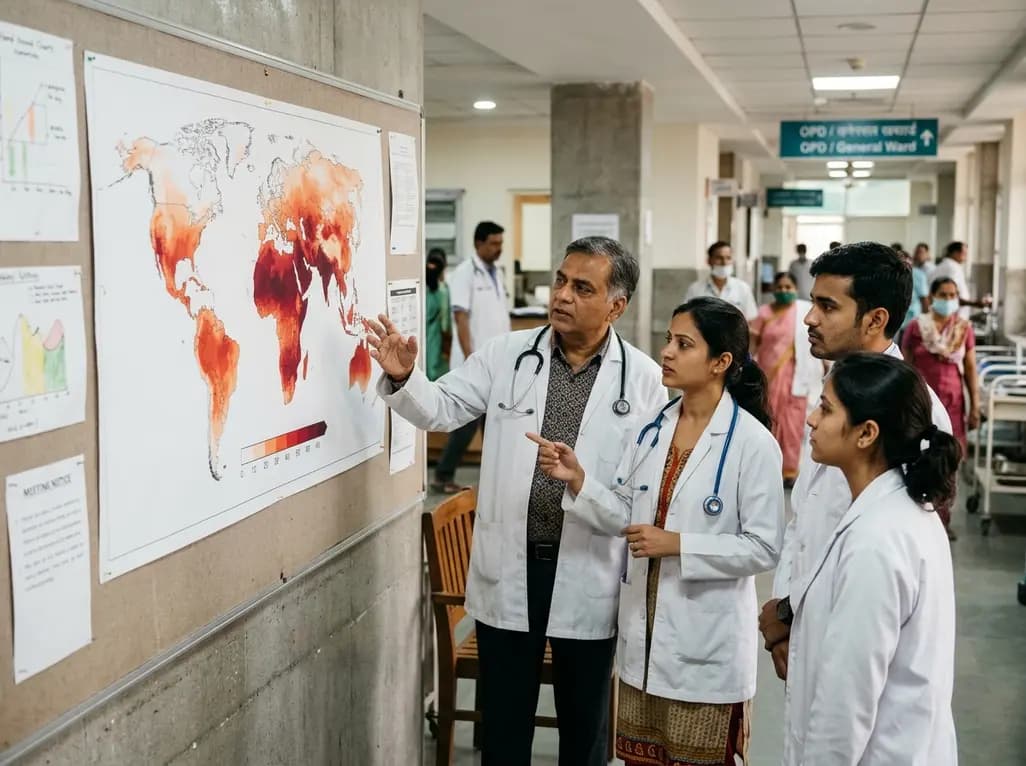
A Planet That Kills Quietly
Start with heat, because that is where the numbers are most shocking. Between 2016 and 2023 an average of about 540,800 people a year died from heat, according to the report. Of those deaths, 68 percent, roughly 369,900 people a year, are attributed to human-caused climate change, up from 55 percent in the decade before.
The annual average of heat-related deaths in the post-Paris era is nearly 36 percent higher than in the previous decade. And 2023, the hottest year in the study period, set a grim record: an estimated 710,000 heat deaths, with 71.5 percent of them attributable to climate change. Across 2016 to 2023, climate change is estimated to have caused almost 3 million heat deaths.
These are modelled estimates, and experts widely believe they undercount. Heat rarely appears on a death certificate. It pushes a failing heart over the edge, tips an elderly kidney patient into crisis, or turns a bout of dehydration deadly. The victims are recorded as heart attacks and strokes, not heatstroke. The people most at risk are adults aged 85 and over, outdoor workers, and communities in South Asia, Sub-Saharan Africa and the Middle East.
The last 11 years have been the hottest on record. Dr. Diarmid Campbell-Lendrum of the WHO summed it up: "Climate change is already harming health in every region of the world."
Over $1 Trillion Lost to Sweat
The toll is not just human. Heat is also draining pay packets and national economies. The report estimates that heat-related labour losses in 2025 reached US$1.07 trillion, or 0.91 percent of global output. It was the third consecutive year the figure has topped a trillion dollars.
The burden falls unevenly. Losses amounted to 3.9 percent of GDP in South-East Asia and 3.2 percent in Africa, compared with 1.5 percent in the Americas and just 0.2 percent in Europe. Agriculture absorbed 38 percent of the losses worldwide and construction 29 percent. In Africa, farming alone accounts for 71 percent of the heat-related damage. These are people who cannot simply work from an air-conditioned office.
Droughts, Floods and a Thirsty Earth
Heat is only one front. The report finds that in 2025, 51.8 percent of the world's land experienced at least one month of extreme drought, the second-worst year on record after 2023. By one reading of the data the pace at which extreme drought strikes land has risen by roughly 700 percent in 2016 to 2025 compared with the decade before the Paris Agreement.
Meanwhile, the sky is also falling harder. Very extreme rainfall now hits 17.2 percent of global land in a typical year, up from 14.8 percent in 2006 to 2015. Since 2003, 43 percent of the world's land has become drier over the long term while 37 percent has become wetter, meaning hydrological extremes now touch more than 80 percent of the land surface. For human health, that means failed harvests, hunger, contaminated water, flooding, and displacement.
The Good News, Such As It Is
The report is not all doom. Global investment in clean energy hit a record US$2.1 trillion in 2025, which is 82 percent more than the US$1.16 trillion put into fossil fuels. Renewables climbed from 5.5 percent of the world's electricity in 2016 to 13.5 percent in 2023.
Cleaner air is saving lives too. In at least 77 countries where fossil fuel air pollution has fallen since 2016, an estimated 323,000 deaths a year are being prevented. More governments are preparing for what is coming: 56 of 194 WHO member states now have a national health climate adaptation plan, up from just 14 in 2015, and 75 of 145 countries that responded to the survey have at least one climate-informed health early warning system. The report finds those warning systems are slowing the rise in deaths from extreme weather. National laws that mention both climate and health have grown about 50-fold since 2000, and climate-related health research funding has jumped 655 percent between 2016 and 2024, from US$42 million to US$316 million.
But even the good news comes with an asterisk. Eighty-four percent of that research money still goes to scientists in the wealthiest countries, and the cleaner-air gains elsewhere have been offset by increases in other places.
The Fossil Fuel Elephant
Fossil fuels still supply more than 80 percent of the world's energy, and greenhouse gas emissions hit a record in 2024. Air pollution from burning them is estimated to kill about 2.73 million people every year.
The report is scathing about where the money is going. Net fossil fuel subsidies hit record highs in 2022 to 2024, and ten countries spent more on subsidies in 2024 than on their entire health systems. Cumulatively, subsidies since the Paris Agreement add up to US$6.20 trillion. The 100 largest oil and gas companies plan to produce 150 percent more fossil fuel by 2040 than is compatible with limiting warming to 1.5 degrees Celsius, up from 138 percent a year earlier. The authors also point to lobbying and disinformation by fossil fuel interests as weakening support for climate action.
Helen Clark, chair of the Lancet Countdown Board and a former prime minister of New Zealand, delivered the line that is already being quoted across the health world: "What's missing is not evidence, but the political will to act on it."
Why Call It an Emergency?
The headline demand from the report is that climate change be formally recognised as a global health emergency, and that a new WHO mechanism be created to coordinate the response. In international health law, the closest existing label is a public health emergency of international concern, or PHEIC, the same designation currently applied to the Ebola outbreak in Congo. Climate change has never received it. The WHO has noted that climate-driven events may meet the criteria under the International Health Regulations.
Would the label change anything? Not automatically. A PHEIC creates coordination obligations and unlocks technical assistance, but it does not by itself deliver cash. The authors argue the symbolism and the structure matter: it would put health ministers at the centre of climate decisions and force the question of who is protecting people when disaster hits.
The report lists a package of other demands: make health and well-being core goals of every climate policy, cut emissions quickly and fairly, build a shared open pool of climate and health data, sustain investment in science, and have wealthier countries deliver climate finance for health as grants rather than loans.
The Money Gap
Poorer countries are being left to cope. Developing nations estimate they need at least US$3.3 billion a year just for the minimum health adaptation measures, a figure based on 48 of 79 countries reporting. In 2024, only about US$1.1 billion was committed. Finance and human resources are the top barriers, and the report warns that cuts to foreign aid risk widening the gap further.
The political backdrop is gloomy too. The United States formally withdrew from the Paris Agreement effective January 27, 2026. Campaigners say the host of the next summit is itself under scrutiny: COP31 opens on November 9 in Antalya, Turkey, and one campaigner, Duygu Kutluay, said the COP31 presidency is "coming up short" and that Turkey "has no plan to fully phase out coal while the rest of Europe leaves it behind." The WHO will staff a Health Pavilion at the talks, running from November 9 to 20.
The WHO also said that since September it has been responding to El Niño's expected health effects through a graded emergency response and a Global Incident Management Team, a sign that the agency is already treating climate-driven risks as an operational reality rather than a distant forecast.
What the Critics and Cautious Voices Say
As with any modelled estimate, the figures come with uncertainty. The 710,000 number is a modelling output based on temperature records and attribution methods, not a head count, and the report's attribution method estimates how many deaths can be linked to climate change by comparing the real world with a counterfactual one. Specialists often disagree on the precise numbers even while agreeing about the direction of travel. The most useful way to read the report is as evidence of a trend that is consistently pointing the wrong way.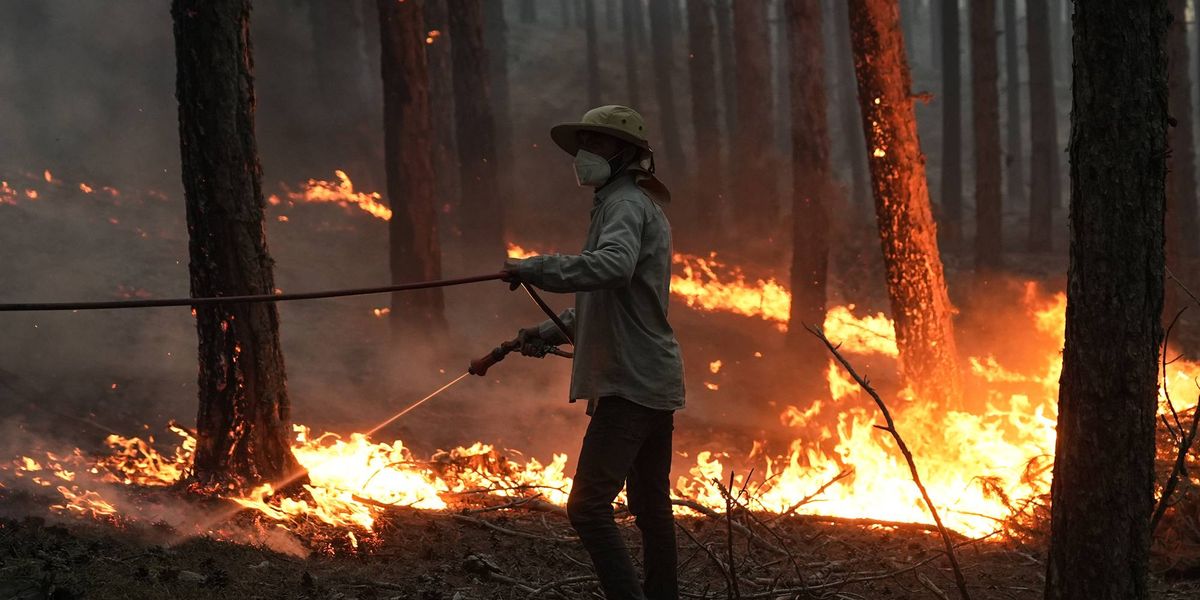
What This Means for You
Heat is a health threat that readers can act on today, wherever they live. Check on elderly neighbours and relatives during heatwaves, because adults over 85 are the most vulnerable group. Drink water before you feel thirsty, avoid strenuous activity in the hottest part of the day, and know the signs of heat exhaustion and heatstroke: heavy sweating, dizziness, nausea, confusion, a rapid pulse, and in severe cases a body temperature above 40 degrees Celsius, which is a medical emergency.
If you work outdoors or employ people who do, push for shade, water and rest breaks. Look up whether your area has a heat early warning system, as the report shows these systems work. If you take medication that affects hydration or body temperature regulation, ask your pharmacist or doctor how to handle hot weather.
And at the ballot box, in the workplace and at the dinner table, the report offers a sharper argument than the usual one: climate policy is health policy.
The Bottom Line
Ten years ago, the Lancet Countdown began measuring a problem that many still treated as a problem for the future. A decade on, its authors report that the future has arrived: record heat deaths, record drought, a trillion-dollar hit to workers, and a global response that is, in the words of its own authors, too slow, too small and not reaching those who need it most.
Whether the world's governments answer the call to declare a global health emergency will not be known until negotiators meet in Antalya in under two weeks. But the verdict of 146 experts is already in. As Romanello put it, the health harms of climate change are growing faster than the world's response to them.



