Written By | Health News Agencies
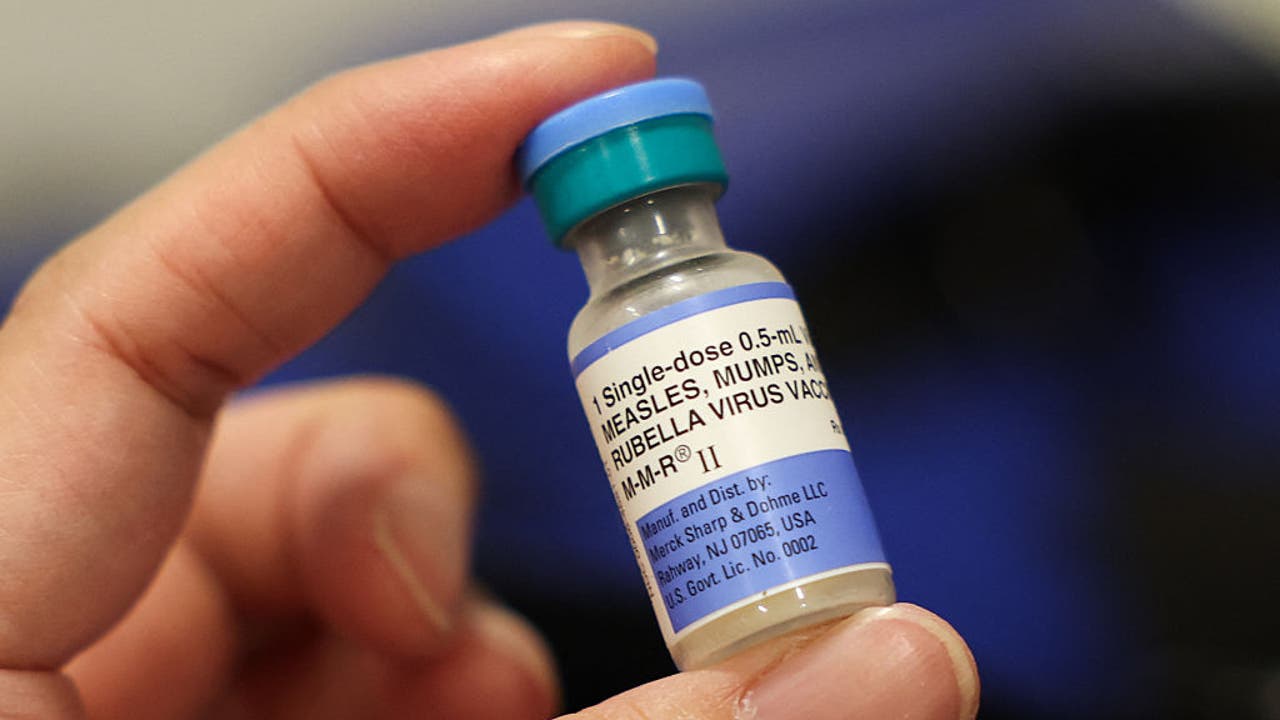
America's measles total has more than doubled last year's, the Keystone State is in its worst outbreak in three decades, and almost every victim was unprotected
HARRISBURG / WASHINGTON
A disease America declared eliminated in the year 2000 is roaring back, and this week the numbers got even harder to ignore. The US Centers for Disease Control and Prevention says measles cases have climbed to 4,588 this year, more than double last year's total, with the outbreak still spreading. At its heart is Pennsylvania, where the state's largest measles outbreak in more than three decades has now passed 1,200 cases and killed six people.
Pennsylvania has formally asked the CDC for help through its Epi-Aid programme, and the agency is sending a so-called disease detective to investigate. Epi-Aids are short-term field investigations reserved for urgent public health problems. It is not a step taken lightly.
Epidemiologist John Brownstein put it starkly to ABC News: "We're seeing measles come back at a scale we haven't experienced in decades."
How a few cases became a statewide crisis
The Pennsylvania outbreak began quietly in Lebanon County in late April 2026. Early in the year there had been a dozen unrelated cases in Lancaster, Montgomery and Chester counties, but nothing that signalled what was coming. On 1 May, the state health department issued an advisory after three cases appeared in Lebanon County. By 6 May there were eleven.
From there the climb was relentless, according to the timeline compiled from state health department reports. There were 84 statewide cases by 26 June. By 25 August the count had reached 393 and the first two deaths were announced. By 3 September it was 540; by 9 September, 624; and by 14 September, 693 cases across 38 counties, with well over a hundred people in hospital. Six weeks later, the count is at least 1,200, and the death toll has tripled from the two announced in August to six.
The early victims were heartbreaking. Four of the deaths announced by mid-September were two infants, a 40-year-old woman and an 18-year-old, all unvaccinated. The Lancaster County coroner found that measles caused one infant's death and was a significant contributing condition in the second.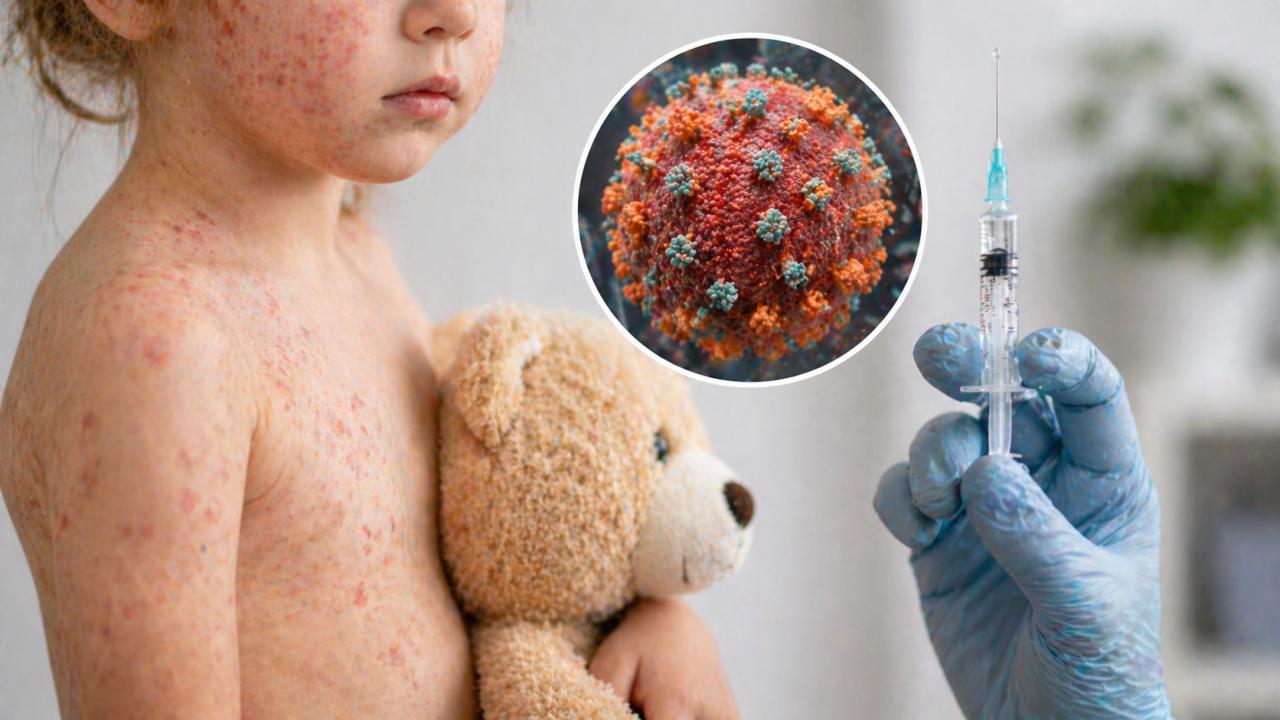
The vaccine gap in black and white
What makes the numbers so stark is who is getting sick. Pennsylvania's health department says fewer than 1 per cent of cases in the state have been in people fully vaccinated with the MMR jab. Of 676 cases reported by 11 September, only four involved people appropriately vaccinated for their age.
The pattern is the same nationally. About 96 per cent of this year's US cases were in people who were unvaccinated or whose vaccination status is unknown. Roughly 2 per cent had received one MMR dose, and another 2 per cent had received two. The CDC recommends two doses, the first at 12 to 15 months and the second at 4 to 6 years. One dose is about 93 per cent effective against measles; two doses are about 97 per cent effective.
Measles is one of the most contagious viruses known. It lingers in the air and on surfaces for up to two hours after an infected person has left a room, and a single case can infect most unprotected people nearby. That is why public health experts aim for about 95 per cent vaccination coverage in a community to stop the virus finding a foothold.
America is falling short. Kindergarten MMR coverage stood at 92.4 per cent in the 2025 to 2026 school year, down from 95.2 per cent in 2019 to 2020. That may sound like a small drop, but it leaves pockets of unprotected children, and measles is expert at finding them. Trust is also slipping: a Reuters/Ipsos poll found that 76 per cent of Americans considered the MMR vaccine safe, down from 84 per cent in May 2020.
A national picture: 45 states and counting
The outbreak is no longer a single-state story. In its most recent update before the latest total, the CDC reported 4,410 confirmed cases, with most reported by 45 states and the District of Columbia. Eighteen of this year's cases were among international visitors. The agency's latest count of 4,588 shows the total still rising by well over a hundred cases in a matter of days.
Other states have had their own flare-ups. Earlier this year, South Carolina was confirming new cases in clusters as the national total neared 1,000, a figure that now looks quaint. Since then the count has more than quadrupled.
Politics enters the outbreak
As the toll has risen, so has the political temperature. Health and Human Services Secretary Robert F. Kennedy Jr., who has long been criticised for his past statements on vaccines, has said he and CDC Director Erica Schwartz continue to recommend the MMR vaccine as the most effective prevention. Kennedy said he was "confident I will bring that outbreak to a quick close."
But the outbreak has also become a flashpoint. Reuters reported that Kennedy had questioned whether measles caused the Pennsylvania deaths, saying they "may even have been altogether fabricated," and asked Schwartz to remove the deaths from the national tally. Those comments drew fire. Pennsylvania Governor Josh Shapiro criticised Kennedy's past vaccine statements and said federal personnel were already assisting the state. Senator Bill Cassidy, chair of the Senate Health Committee, blamed vaccine misinformation and Trump administration policies for the deaths.
The facts on the ground are not in dispute at state level. A county coroner has attributed at least one infant death directly to measles, and state officials continue to report deaths in unvaccinated patients. The Epi-Aid request itself suggests the state expects a long fight.
What measles actually does
Many people think of measles as a harmless childhood rash. It is not. Typical symptoms begin with a high fever, cough, runny nose and red eyes, followed several days later by the telltale rash that spreads from the face downward. Complications can include pneumonia, brain swelling and, in the youngest children, lasting damage. The disease can also wipe out part of the immune system's memory of past infections, leaving survivors more vulnerable to other illnesses for months or years.
Babies too young to be vaccinated depend entirely on the people around them being immune. That is why two of Pennsylvania's first deaths were infants, and why public health officials describe community vaccination as protection for others, not only for yourself.
Expert perspective
Brownstein's warning reflects the view of many epidemiologists: the current outbreak is the predictable result of years of slipping vaccination rates. When coverage falls below the herd-immunity threshold, outbreaks do not creep, they leap. Pennsylvania's explosion from 84 cases in June to more than 1,200 by late October fits that pattern exactly.
The CDC's decision to deploy a disease detective is a sign the agency sees real potential for further spread. Typical Epi-Aid teams help with case investigations, contact tracing, identifying clusters, and advising on vaccination clinics and exclusion of unvaccinated children from schools or childcare when cases appear.
What this means for you
First, check your records. Adults born in 1957 or later who have not had measles and are not sure they received two MMR doses should ask their doctor or pharmacist; an extra dose is safe. Children should receive the first dose at 12 to 15 months and the second at 4 to 6 years. In an outbreak area, doctors may advise giving the first dose earlier to infants, so ask your paediatrician if you live in or are travelling to an affected county.
Second, know the signs. If you or your child develop fever, cough, runny nose, red watery eyes and a rash, phone ahead before going to a clinic or emergency room. Measles spreads quickly in waiting rooms, and staff need to isolate you on arrival.
Third, remember who you are protecting. Newborns, people with weakened immune systems and pregnant women who cannot be vaccinated rely on the immunity of everyone around them.
Why this outbreak matters beyond Pennsylvania
Measles outbreaks are an early-warning system for the health of a whole vaccination programme. Because the virus is so contagious, it is usually the first disease to return when immunity slips. If measles is spreading in communities with lower coverage, other preventable diseases such as whooping cough are often not far behind. Public health officials therefore watch measles numbers as a canary in the coal mine.
The cost is not only human. Every case triggers contact tracing, testing, quarantine of exposed people, and in many cases hospital isolation. Schools, childcare centres and workplaces can be disrupted for weeks. For local health departments already stretched thin, a single large outbreak can consume resources for months, which is exactly why Pennsylvania reached out to the CDC for extra hands.
The good news is that the tools to stop measles exist and work. With two doses of MMR, the odds of catching the virus fall to a small fraction of the risk faced by the unvaccinated, and the data from Pennsylvania, where fewer than one in a hundred cases were fully vaccinated, shows it. The bad news is that tools only work when people use them.
The road ahead
Measles was declared eliminated in the United States in 2000, and that status is now under real pressure. This year's total is already far larger, and Pennsylvania's outbreak shows no sign of burning out. Whether the country keeps its elimination status will depend on whether the trend of falling kindergarten coverage can be reversed.
For now, health officials in Harrisburg are counting cases while families in Lebanon and Lancaster counties count the cost. Six people, among them two babies, are dead from a disease that a vaccine available for decades can prevent. The next few weeks will show whether that message finally lands before the toll climbs higher.
Figures in this story come from CDC and Pennsylvania Department of Health data as reported by ABC News, US News, NPR and public records of the outbreak as of 27 October 2026, and are updated regularly.



