Written By | Staff Writer
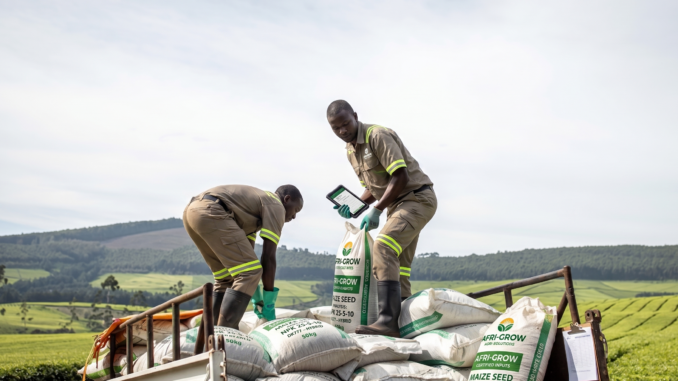
Global urea prices have fallen back to pre-war levels. In Lilongwe, Dar es Salaam and Nairobi they have not, and with a very strong El Niño forming, the bill for 2027 is already being written
Economic & Social Transformation
A price spike that ended abroad but not at home
When the Strait of Hormuz closed on 28 February 2026, fertiliser was one of the first casualties. The WTO Secretariat's trade data show fertiliser shipments leaving the Gulf through the strait falling to close to zero from early March. The reason this matters is that the Gulf economies supplied 24.8% of global nitrogenous fertiliser exports and 11.4% of phosphatic exports in 2024. Urea, the nitrogen fertiliser that most African maize farmers depend on, went from about US$400 per tonne before the war to more than US$850 in April, its highest level since April 2022, according to the World Bank's April 2026 Commodity Markets Outlook. Diammonium phosphate (DAP) rose from roughly US$580 to about US$770 per tonne.
Then the global market partly reset. By June, the WTO reports, urea had fallen back to US$453 per tonne, and by July it was close to its pre-conflict level. A reader of the international benchmark could fairly conclude that the shock was over.
East and Southern Africa show something different. Market data from the African Market Observatory cited by the Bloomsbury Intelligence and Security Institute (BISI) put locally traded urea in July 2026 at about US$975 per tonne in Malawi, US$933 in Tanzania and US$1,059 in South Africa, when the world price was around US$400. In other words, African farmers were paying more than double the global price after the global spike had faded. That gap between the world price and the farm-gate price is the real story of this shock. It will decide how much maize is planted, and how much is harvested, across the region over the next 18 months.
Why the gap exists
Three structural features explain why price relief abroad does not reach farmers at home. The first is import dependence. Roughly four-fifths of the fertiliser used in sub-Saharan Africa is imported. The WTO's vulnerability analysis places Kenya, Malawi, Mozambique, Rwanda, South Africa, Tanzania, Uganda and Zimbabwe among 18 economies worldwide that combine above-average reliance on imported nitrogen with above-average sourcing from the Gulf. Ethiopia, Africa's largest fertiliser importer at nearly 1.97 million tonnes in 2024, depends on a single import corridor through Djibouti and a narrow group of Gulf suppliers.
The second is timing. Fertiliser for the main season is bought months before planting. IFPRI notes that Malawi's orders for the 2026/27 season were largely completed by July, which means they were priced off the April–June peak rather than the later decline. Using average April–June world prices and Malawi's usual import mix, IFPRI estimates that local fertiliser costs for the coming season are 61% above the pre-war baseline. Stock bought at the top of the market does not get cheaper when the benchmark falls.
The third is everything between the port and the plot: weak currencies, delays at port, high inland freight and insurance costs, and shortages of foreign exchange. BISI concludes that these frictions mean domestic prices will not track lower global prices for some time. Export restrictions add to the pressure. The WTO estimates that licences, quotas and bans, from China's urea quota system to Russia's suspension of ammonium-nitrate export licences and Türkiye's temporary ban on sulphur exports, could affect up to 15% of world fertiliser exports. If the Gulf closure is counted as a de facto restriction, the figure rises to 23.3%.
Malawi: the most exposed balance sheet
Malawi shows the problem in its most extreme form. It imports all of its fertiliser and all of its fuel, and in recent years it has needed large maize imports to meet national demand. Before the farming season began, Malawian press reported 50 kg bags selling for about MK210,000 in markets such as Kasungu and Jenda, one of the earliest and steepest pre-season increases observers had seen. Poor tobacco sales have left many farmers without working capital, and members of parliament have publicly asked the government to step in.
IFPRI's computable general equilibrium modelling, published on 11 September 2026, puts numbers on the risk. The fertiliser shock alone, combined with higher fuel prices, reduces Malawi's 2027 GDP by 0.86% and agricultural GDP by 2.42% through lower fertiliser use and lower yields. The bigger risk is weather. NOAA's Climate Prediction Center gives a greater than 90% chance of a very strong El Niño in 2026–27. Historically, El Niño has brought drought to Southern Africa's December–March cropping season. When IFPRI layers the yield losses from the five strongest El Niño seasons since 1980 onto the fertiliser shock, Malawi's combined GDP losses range from 1.0% to 7.0%, averaging 2.9%. Agricultural GDP falls by 8.1% on average, and domestic agricultural prices rise by 17.6% on average, with a range of 5.4% to 52.3%.
The social effects are severe. In the average scenario, an additional 495,000 Malawians fall below the US$3.00-a-day poverty line, on top of a baseline in which 75.4% of the population is already poor. Another 4.6 million become undernourished, which would roughly double the undernourished population from 4.0 million. The fertiliser shock accounts for about half of the increase in poverty but only one-fifth of the increase in undernourishment. This split is useful for policy. Input prices mainly affect incomes, while drought mainly affects how much food there is.
Kenya: subsidies bought time, not immunity
Kenya's experience shows both what policy can achieve and where it runs out. Most Kenyan fertiliser for the long-rains season was procured before April, which largely protected this year's crop from the price peak. Through the National Fertilizer Subsidy Programme run by the National Cereals and Produce Board, the government announced on 24 August 2026 that a 50 kg bag of subsidised fertiliser would fall from KSh2,500 to KSh2,000, and that the cost of certified maize seed would be halved from KSh300 to KSh150 per kilogramme, ahead of the short rains. Kenya is one of several countries, along with Ghana, Sri Lanka and Thailand, that the WTO identifies as having increased budgets for subsidised fertiliser distribution since the conflict began. Separately, a temporary cut in fuel VAT from 16% to 8% in April has limited the rise in pump prices.
Even so, IFPRI and KIPPRA modelling published on 9 October finds that Kenya's main problem in 2026 is drought, not fertiliser. Much of western Kenya had its driest or second-driest June–August period since at least 1981, damaging a long-rains season that normally produces about 70% of the country's crops. In the moderate scenario, national GDP falls 1.3% and agricultural GDP 5.3%, an additional 756,000 people fall into poverty, and 4.9 million more become undernourished. The modellers warn that fertiliser exposure has been postponed rather than eliminated. Global prices could push up domestic input costs much more in 2027, when subsidy budgets will already be under strain. Subsidies also depend on what the authors call timely availability, eligibility and distribution. Independent checks found that, a week after the announcement, depots had not yet all confirmed the KSh2,000 price.
The supply-side answer is arriving, but slowly
The shock is speeding up a shift that African policymakers have discussed since the 2006 Abuja fertiliser summit: producing fertiliser on the continent rather than shipping it from the Gulf. Nigeria is the clearest success. Dangote's and Indorama's urea plants have made the country a net urea exporter. Nigeria earned US$2.216 billion from urea exports between 2023 and the first quarter of 2026. In April, Aliko Dangote said exports were being redirected towards African buyers, with shipments to South Africa, Kenya and Ghana reported to be rising. Indorama expects to commission a third urea line in Nigeria this year.
In East Africa, the main project is the Dangote–Ethiopian Investment Holdings joint venture at Gode. It is 60% owned by Dangote, has a design capacity of 3 million tonnes of urea a year, and will draw gas from the Calub field under a 25-year supply agreement. Committed investment has reportedly risen from US$2.5 billion to more than US$4 billion, and in October Dangote pledged to list at least 10% of the venture on the Ethiopian Securities Exchange. Commissioning, however, is not expected before about 2029. Morocco's OCP, the continent's phosphate leader, is itself exposed: the World Bank notes that OCP brought forward maintenance at its phosphate facilities as sulphur and ammonia markets tightened. Regional production will reduce Africa's vulnerability over the next decade. It does nothing for the 2026/27 season.
What would narrow the gap now
The window for action is short. BISI expects food inflation to peak between late 2026 and mid-2027, as reduced fertiliser use before planting shows up in smaller maize harvests. The World Bank already counts more than 87 million people facing hunger in East and Southern Africa. Several measures would make a difference:
Conclusion
Before the Hormuz shock, most analysis of African fertiliser focused on low use: farmers applying a fraction of the nutrients common in Asia. The shock shows a second weakness. The continent pays a large premium for distance, currency risk and fragmented logistics, and that premium persists after global prices fall. Whether East and Southern Africa's 2027 harvest falls short will depend partly on the rains and partly on whether governments can bring farm-gate prices closer to the world price. The supply-side fixes in Lagos and Gode are real, but they will arrive in years, while the decisions that matter for 2027 are being made this season.



