MOGADISHU
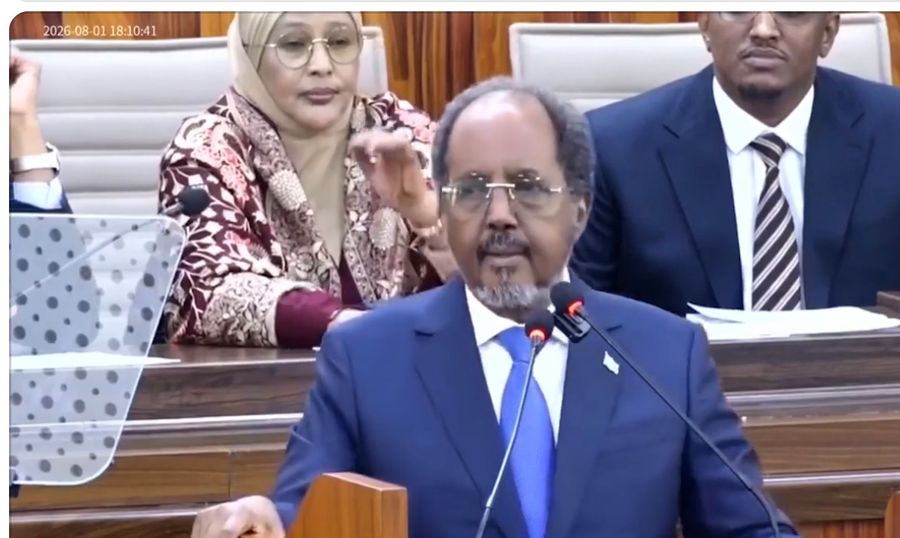
Somali President Hassan Sheikh Mohamud said his government will not accept an Israeli military presence in Somaliland "under any circumstances," accusing Israel of seeking a naval base at the port of Berbera and use of its airport. Somaliland's government answered within a day, calling his remarks "misleading" and declaring that Somalia "has no authority to determine Somaliland's foreign relations or speak on behalf of its people." The exchange, which began with an exclusive Al Jazeera interview published Oct. 3, puts a decades-old secession dispute at the center of a widening geopolitical contest over the Red Sea approaches.
The president's warning
In the interview, Mohamud said Somalia will reject any Israeli military or strategic presence in the country, according to Al Jazeera's reporting and a summary published by The Somali Guardian. "We will overcome the challenges posed to our country by Israeli moves," he said.
He accused Israel of planning to establish a naval base in Berbera, a port on the Gulf of Aden, and to use its airport. Mohamud argued that Israel's real objective is to position itself closer to Persian Gulf states and Iran. He described Israel as a "destabilising force" that disregards international law and tied its plans to the "Greater Israel" concept, a term for territorial expansion proposals rooted in biblical interpretations. He also said, according to the Somali Guardian summary, that no Somaliland residents support an Israeli presence.
The president struck a more conciliatory tone elsewhere in the interview. He confirmed positive relations with Ethiopia and said Somalia is willing to share its ports to give Ethiopia trade access. He criticized the Houthi movement in Yemen for destabilizing regional navigation.

Why Berbera matters
Berbera sits on the Gulf of Aden near the Bab al-Mandeb strait, a critical shipping corridor, and faces Yemen, where Iran-aligned Houthis operate, according to the Somali Guardian's account. That geography explains why a port in a self-declared republic that most of the world considers part of Somalia has become a focus of competing strategic ambitions.
Israel recognized Somaliland in December 2025, becoming the only UN member state to do so, according to reporting by allAfrica and The Somali Guardian. Somaliland declared independence in 1991 but has not been recognized internationally otherwise, and Somalia contests its status. PBS reported at the time that African regional bodies rejected Israel's recognition of Somaliland as an independent nation.
Tensions over a possible Israeli footprint are not new. Al Jazeera reported in January 2026 that Somaliland denied agreeing to host Israeli bases or to resettle Palestinians, and in February it reported that Mohamud slammed Israel's "interference" and rejected a base in Somaliland. The Algemeiner, in a February report, said Somalia also signed a defense pact with Saudi Arabia in that period. Those accounts frame the October interview as a continuation of a position Mohamud has held for months, now delivered with sharper language.
Somaliland's response
The Somaliland Ministry of Foreign Affairs issued a formal rebuttal on Oct. 4, published by outlets including Qaran News and summarized by allAfrica. It rejected what it called "misleading claims made by the Somalian president in his recent interview with Al Jazeera."
On Israel, the ministry said its diplomatic ties with Israel are sovereign decisions that promote "cooperation, development and regional stability." On Berbera, it called the allegation that the port would facilitate aggression "unfounded." A headline on Hiiraan Online, whose full text could not be accessed for this report, says Somaliland denies Israel has plans for a Berbera naval base or airport use.
The statement also reached back to history. Somaliland asserted that it "attained independence on 26 June 1960, before Somalia attained independence on 1 July 1960," and that it restored its sovereignty on May 18, 1991. It said it has "built functioning institutions, held competitive elections, ensured peaceful transfers of power, and contributed to regional stability," contrasting that record with what it described as Somalia's continuing insecurity and political fragmentation.
Two other points stand out. Somaliland said it supports Ethiopia's efforts to secure sea access through negotiated arrangements and criticized Mogadishu's opposition to the January 2024 Ethiopia-Somaliland memorandum of understanding. It also condemned what it called "threats of force and interference in its internal affairs." The summaries reviewed for this report do not specify which remarks or actions the statement refers to.
A president under domestic pressure
The sovereignty fight comes as Mohamud faces a legitimacy challenge at home. The Somali Guardian reported on May 16, 2026, that his original term expired on May 15, 2026, and that he claims parliamentary constitutional amendments extended it by one year, to May 15, 2027. The opposition rejects that claim. Leaders including Puntland President Saeed Abdullahi Deni and former President Sharif Sheikh Ahmed argue the amendments were unconstitutional and unilateral, and said they no longer recognize Mohamud's authority.
According to that report, negotiations between the government and the opposition collapsed after three days at Mogadishu's Halane compound, and mediators from the United States and the United Kingdom failed to broker a compromise. The opposition warned that Somalia had "entered a dangerous and unpredictable phase." Separate headlines in search results from People's Daily and the International Center for Transitional Justice also describe fighting in the capital over the election delay. This reporter could not retrieve the latest status of that dispute for this story, so readers should consult current coverage for developments since May.
The domestic backdrop matters to the Israel story. The sources do not say whether the domestic dispute shapes Mohamud's messaging, and any such link is an inference. It is nonetheless notable that Somaliland's rebuttal explicitly contrasts its own record of elections and peaceful transfers of power with Somalia's "political fragmentation."
Ethiopia's quiet role
The interview and the rebuttal both mention Ethiopia, which is itself engulfed in a major conflict in its north (see our report on Ethiopia). Mohamud offered port access to Addis Ababa through Somalia. Somaliland's government pointed to the 2024 memorandum, under which Ethiopia would have gained sea access via Somaliland, and said it backs negotiated arrangements. Ethiopia, as a landlocked country that imports through Djibouti, is courted by both sides. Fighting in Afar that threatens the Djibouti corridor, as Al Jazeera reports, could raise the value of alternative routes through either Berbera or Somali ports, though none of the sources reviewed draws that link explicitly.
Analysis: sovereignty as the real stake
Strip away the rhetoric and the dispute turns on a single question: who speaks for Somaliland in the world? Mogadishu, which contests Somaliland's status, treats Israel's moves as interference in Somalia's affairs. Hargeisa, the Somaliland capital, insists it is a separate state with the right to choose its partners. Israel's recognition in December 2025 gave that claim its first official validation from a UN member, and the Israel link has become the sharpest expression of the dispute.
For Somalia, a visible Israeli military presence would, by Mohamud's own framing, bring Israel closer to the Gulf and Iran, which is why he calls the plan destabilizing. Somaliland's ministry, for its part, rejects the allegation that Berbera would facilitate aggression and frames its Israel ties as sovereign and peaceful.
The outside players are also lined up. Mohamud links Israel's interest to Iran, and he criticizes the Houthis for destabilizing navigation, an indication that he is trying to speak to Gulf and Western audiences wary of both. Somalia's February defense pact with Saudi Arabia, per The Algemeiner, suggests where he is looking for partners.
What to watch
Several developments would clarify the trajectory: any official statement from Israel on Berbera, since neither the interview nor the rebuttal quotes an Israeli government source; whether Somalia takes diplomatic or legal steps against Israel's recognition at the African Union or United Nations; whether Mohamud's mandate dispute with opposition leaders and Puntland reignites in Mogadishu; and whether Ethiopia, preoccupied with war in the north, moves on its sea-access ambitions.
For now, the war of words is the news. But Berbera's position on one of the world's busiest sea lanes means the stakes extend well beyond the Horn.
Published By | News Editor