With the pipeline 92 percent complete and the Tilenga field only 78 percent done, officials have traded a mid-2026 target for a window that closes on 30 June 2027, leaving a budget assumption and parliamentary patience under strain.
Uganda's long-awaited first oil has been pushed back again. After missing a mid-year target, officials now say production will begin "before the end of our financial year", which closes on 30 June 2027. The statement was made on Thursday by Kristina Kasebayo, head of compliance at the Uganda National Oil Company (UNOC), and no production month was named. For a country that has treated oil as the engine of its next phase of growth, the vague new window is another reminder of how often the schedule has moved.
How the timeline has moved
The target for first oil was originally around 2018, then 2020, then 2025. Officials subsequently set June 2026 and, in March 2026, end-July 2026. That July date was missed. Public statements from the project operators had since pointed to earlier outcomes: TotalEnergies chief executive Patrick Pouyanne said in April that Kingfisher would be ready by the northern summer, the East African Crude Oil Pipeline (EACOP) in September or October, and Tilenga in the fourth quarter. In July he said crude production would begin before the end of 2026, with Tilenga ramping up in the first half of 2027. CNOOC Uganda's president, Liu Xiangdong, had cited an October target for first exports. The new financial-year framing is looser than any of those.
Where the projects stand
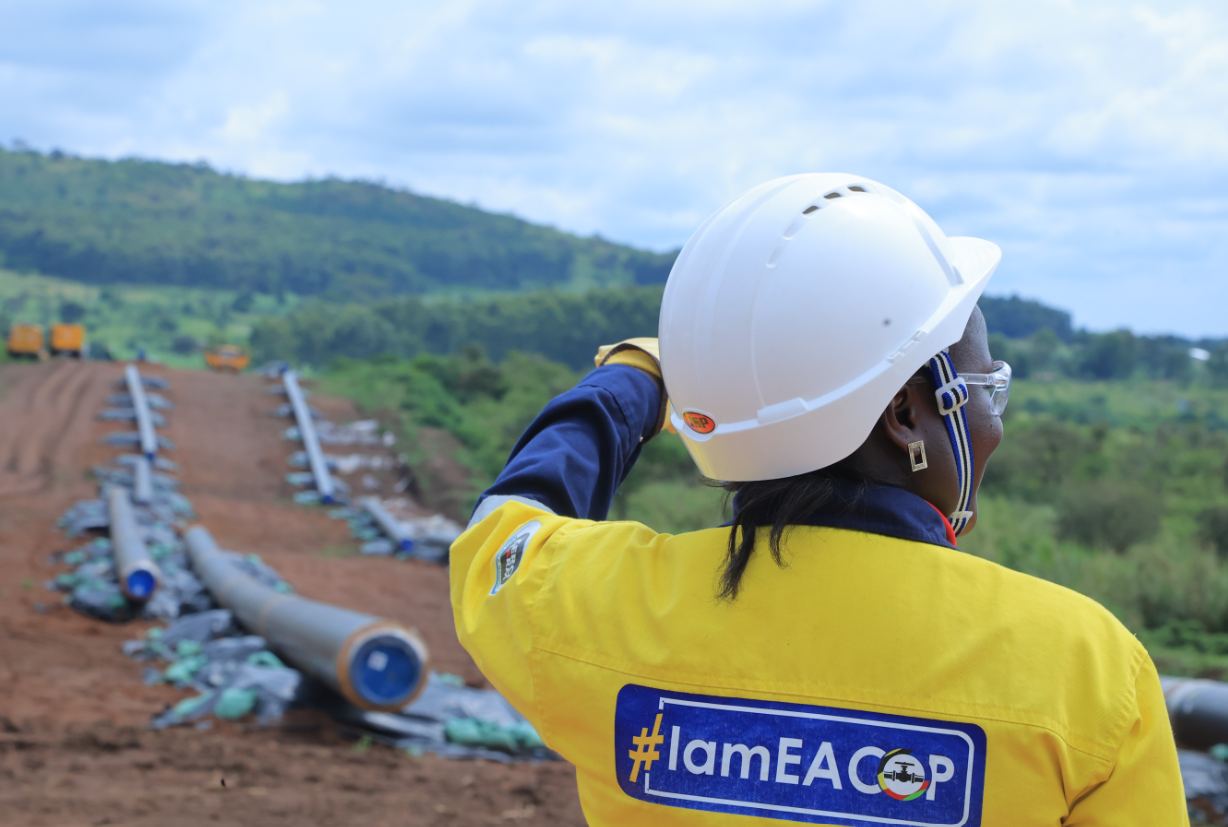
Members of Parliament were told in October that EACOP is 92 percent complete, Kingfisher 90 percent and Tilenga 78 percent. In March, the figures were 81, 77 and 67 percent respectively, so progress has been steady, if slower than hoped. The 1,443-kilometre pipeline to Tanga in Tanzania officials told Parliament it should be ready to receive crude by mid-December 2026. Remaining pipeline work includes pump stations three and four and electrical, telecoms, ICT and security systems, expected to finish in early December. Exports cannot begin until the heated line is commissioned and filled.
Kingfisher has a central processing facility that was 99 percent built by late September and in pre-commissioning. It is designed to produce 40,000 barrels a day. Energy Minister Sandra Santa Alum said, however, that Kingfisher alone cannot support commercial production. Tilenga, operated by TotalEnergies and designed for 190,000 barrels a day at peak, is the larger prize and the one with the most work left. Drilling at both fields is ahead of the minimum needed for first oil, but processing, electrical and control systems remain to be completed.

Why the delay
Ernest Rubondo, then director of the Petroleum Authority of Uganda, said in August that equipment for metering, electrical instrumentation and telecoms had been delayed by the war in the Middle East. Some shipments loaded in the United Arab Emirates were moved by road to Oman after attacks at ports. Officials have not given a specific cause for the latest slip beyond that, and earlier delays have been attributed to long negotiations, development plans and critical infrastructure.
Finance Minister Henry Musasizi has defended using a financial-year deadline, arguing that announcing a specific date prematurely could affect investment decisions. He declined in September to say whether the start would be January, March or April. That caution drew pushback in Parliament: MP Patrick Oshabe Nsamba asked for the exact month "so that Ugandans may know", and budget committee chair Amos Kankunda said MPs want no further delay.
The fiscal angle
The 2026/27 budget projects Shs1.8 trillion in petroleum revenue, including capital gains tax, on the assumption of a start later in 2026. How much of that is at risk is unclear; the reporting does not quantify it. The finance ministry has not said how it would adjust if first oil slips into the second half of the financial year. A later start would delay the tax and royalty flows that officials have been counting on, though the Petroleum Fund and UNOC's own finances offer some context.
The Petroleum Fund stood at Shs131.27 billion at 30 June 2025, down from Shs145.98 billion a year earlier, before rising to Shs212.6 billion by December 2025. Annual petroleum receipts reached Shs263.2 billion, up from Shs184 billion. Of a Shs281.87 billion appropriation in 2024/25, Shs166.5 billion went through UNOC and Shs115.37 billion helped fund Hoima City Stadium for the 2027 Africa Cup of Nations. UNOC imported 2.675 billion litres of fuel in 2024 and reported a net profit of Shs247 billion for 2024/25, with unaudited profit of Shs334 billion for the following year. It paid Shs132 billion in taxes against a Shs150 billion target, and its profits remain in the company pending a shareholder decision on dividends. Oil companies still owe Shs3.1 billion in training and surface rental fees.
Sales and downstream plans
In September, UNOC's Edith Tushabe told S&P Global that the first cargo of Pearl Sweet crude was expected in December on a Suezmax tanker. The latest statement did not confirm that. Separately, UNOC aims to take a final investment decision on a domestic refinery in February 2027, with completion by 2030; that project is less advanced and does not depend on the upstream schedule.
Implications and what to watch
For the economy, the immediate effect is uncertainty rather than loss. Officials still say production will start within about eight months, and the pipeline is close to ready. The risk is that a vague window lets further slippage pass without scrutiny. For investors and contractors, the window tied to the financial-year end gives little signal for planning, and the finance minister's argument that precise dates affect investment decisions cuts both ways: clarity helps some decisions and a missed date damages credibility.
Several milestones will show whether the new deadline is realistic. The first is the mid-December target for EACOP to be ready to receive crude. The second is commissioning of Kingfisher, which is in pre-commissioning but not sufficient on its own. The third is progress at Tilenga, the field that remains furthest from completion. The fourth is whether a first cargo is confirmed for December or quietly moves. Finally, watch Parliament: MPs have signalled impatience, and the budget committee could press for an exact month and for revised revenue estimates.
This article draws on reporting by UG Business and AllAfrica from September and October 2026. Some figures, including progress percentages, come from statements to Parliament and have not been independently audited.
Published By | News Editor




