Written By | International News Agencies
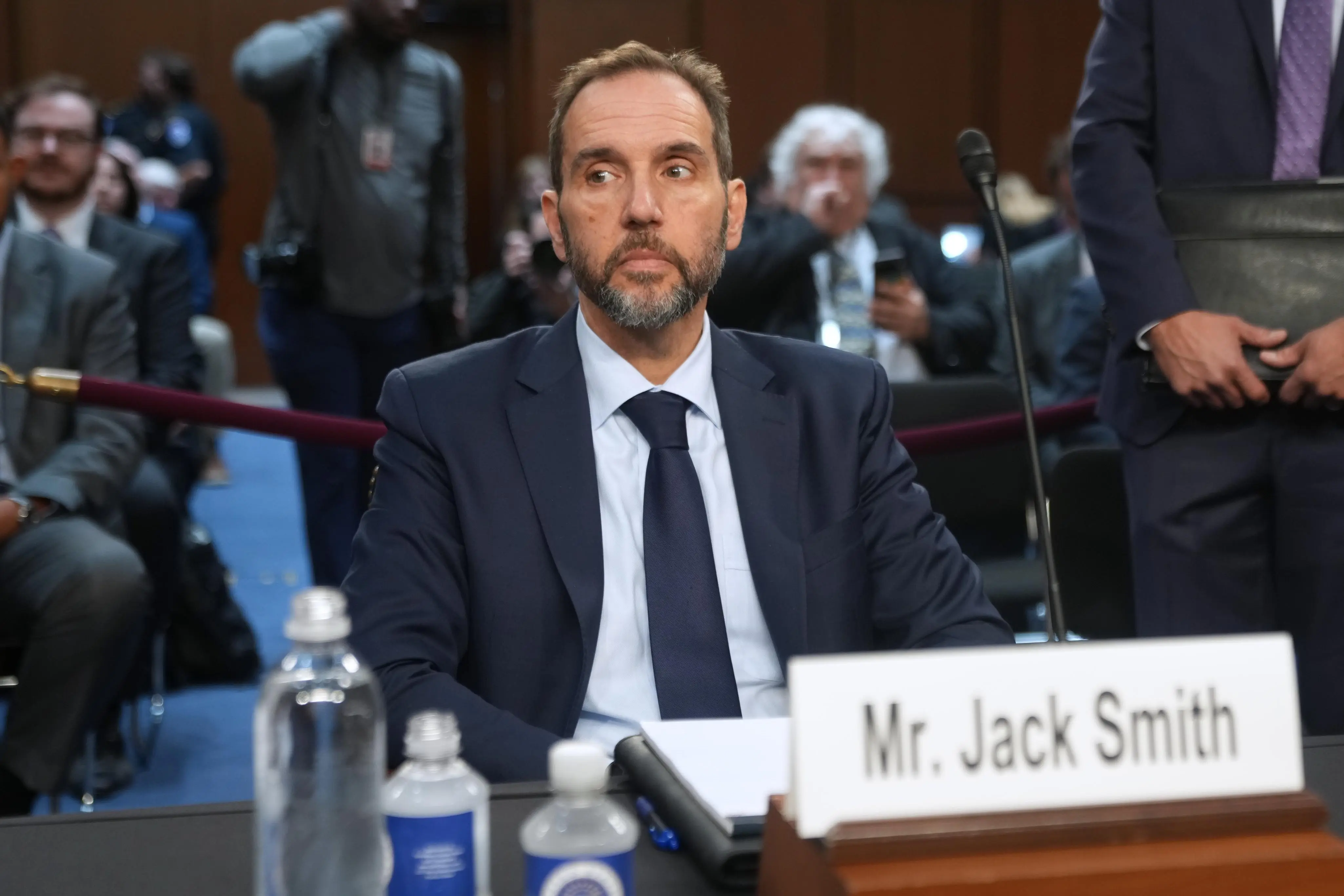
Smith was appointed special counsel in 2022 to oversee investigations into Trump's handling of classified documents at Mar-a-Lago and his efforts to overturn the 2020 election
World Politics
Overview
Jack Smith, the former special counsel who brought two federal indictments against Donald Trump, appeared on Tuesday before the Senate Judiciary Committee in one of the most anticipated and combative congressional hearings of the year. Smith told senators that he stood by his decisions, including the decision to charge the president, and that his investigation had established proof beyond a reasonable doubt that Trump committed serious crimes, according to CNN's live coverage and other outlets. Republicans, led by Chairman Chuck Grassley of Iowa, used the hearing to attack Smith's methods and motives. Democrats, led by ranking member Dick Durbin of Illinois, argued that the proceeding was a smokescreen for the president's own conduct.
The hearing matters beyond its theater. It came as the Trump administration's Justice Department, according to press accounts, is pursuing its own inquiries into the officials who investigated Trump, as courts weigh the consequences of the administration's firings of prosecutors, and as the midterm elections approach. Smith used the hearing to announce, in effect, that he would not be intimidated.
Background: Two Cases That Never Reached a Jury
Smith was appointed special counsel in 2022 to oversee investigations into Trump's handling of classified documents at Mar-a-Lago and his efforts to overturn the 2020 election. His office brought two federal prosecutions: one over alleged efforts to obstruct the transfer of power culminating in the January 6, 2021 attack on the Capitol, and one over the retention of classified materials. Neither case reached trial. After Trump won the 2024 election, Smith moved to dismiss the charges, citing longstanding Justice Department policy against prosecuting a sitting president.
In the period since, Trump and his allies have turned on the prosecutors involved. Smith has said his team's members were fired, and he called those firings illegal at the hearing. He also addressed criticism over subpoenas and phone-record requests connected to Republican lawmakers, saying they were part of the January 6 investigation period. Those records, which the committee's Republicans have made a central grievance, were described by Smith as providing corroborating evidence that Trump sought to exploit the violence of January 6 to delay the certification of the election.
Key Developments: What Smith Said
In his opening remarks, Smith defended his record directly. He told the committee, "I stand by my decisions as special counsel, including my decision to bring charges against President Trump," and said he made those decisions "without regard to President Trump's political association, activities, beliefs, or candidacy." Elsewhere he said that anyone who had worked with him during his career knew he would not let politics play a role. According to IBTimes and other accounts, he added that he would not be silenced by the continued threats of prosecution from the president or others, a reference to demands from Trump allies that Smith himself be investigated.
On the firings of prosecutors who worked on his team, Smith was emphatic, calling the terminations something that had never happened in his career and saying he had never seen anything remotely like it. Headlines from MS NOW framed this as Smith blasting the illegal firings of Justice Department prosecutors. On the phone records, he explained that the material offered corroborating evidence that Trump tried to use the January 6 violence to delay certification, and that the subpoenas were narrowly aimed at the investigation period in question rather than at Republicans as such.
CNN's headline captured the most consequential claim: that his investigation proved beyond a reasonable doubt that Trump engaged in serious crimes. IBTimes reported him saying he would prosecute again if presented with the same evidence. That is a striking statement from a prosecutor whose cases never went to a jury, and it means the hearing is likely to be quoted repeatedly in the fall campaign.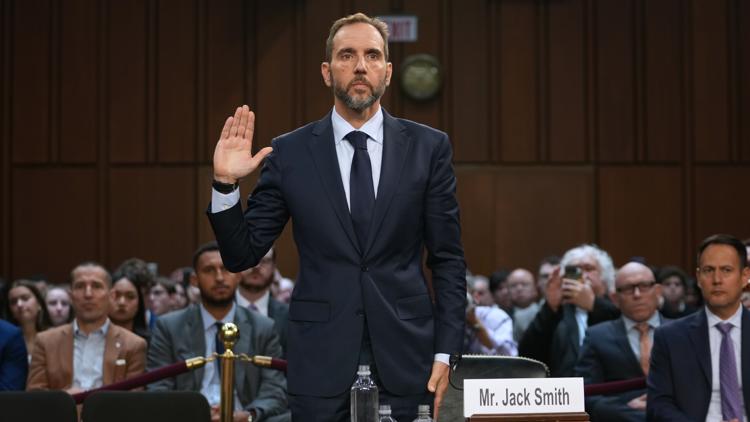
The Republican Attack
Republican senators treated the hearing as an opportunity to litigate the origins and conduct of the Trump investigations. Grassley suggested the probe had expanded inappropriately beyond Trump to target a wider Republican network, reflecting a long-running committee inquiry into the phone records. Senator Ted Cruz accused Smith of having done enormous damage and called the investigation the most egregious abuse of power in the history of the Department of Justice. Senator John Kennedy told Smith, "You make me want to throw up in my mouth," an exchange that NBC News used to describe the hearing as one filled with Republican insults.
One episode drew particular attention. Senator Eric Schmitt tried to accuse Smith of perjury over a basketball question, but in doing so confused the Iowa Hawkeyes with the Atlanta Hawks, according to CNN's account. The moment was widely shared as a symbol of how far the questioning strayed from the substance, though Republicans maintain that Smith's credibility on the classified-documents probe and the subpoenas remains a legitimate subject of oversight. CNN also described Smith as a confident witness who did not appear rattled by the barrage.
The Democratic Response
Durbin countered that Republican attacks were a smokescreen to distract from the president's own clear and unlawful conduct, and accused the party of promoting conspiracy theories in order to whitewash the 2020 election loss and the Capitol attack. Democrats used their questioning time to draw out Smith's account of the evidence, the firings of his prosecutors, and the pressure his former colleagues have faced. They also sought to put on the record the point that dismissal of the cases followed from Justice Department policy on sitting presidents rather than any finding on the evidence.
The partisan split was, as many observers noted, complete. Reporting from PBS said Republicans continue to push for Smith's prosecution, and the hearing did nothing to close the gap between the two parties' accounts of what the investigations were.
The Legal and Political Context
The hearing landed on a day when other Trump-related legal fights were also in the headlines. According to the newsletter Mueller, She Wrote, the full DC Circuit heard arguments on Judge James Boasberg's contempt inquiry, the 11th Circuit declined to block sanctions against administration lawyers in a case involving a Justice Department settlement fund, and Trump associate Kurt Olsen withdrew from the so-called grand conspiracy investigation. Those items, drawn from a partisan newsletter, should be verified independently, but they illustrate how many parallel disputes now surround the administration's treatment of its prosecutors and judges.
For the administration, Smith's appearance is awkward because it gives him a national platform, sworn testimony and a chance to restate the evidence. For Republicans it is an opportunity to energize their base with a familiar target. For Democrats, who see the administration's actions as retaliation, the hearing offers a way to frame the fall campaign around accountability and the rule of law.
What Comes Next
Several threads will now unfold. The first is whether the administration's Justice Department escalates against Smith personally. Smith's own words, that he would not be silenced by threats of prosecution, suggest he expects it, and Republicans on the committee signalled they want it. Any move to charge him would prompt an immediate legal and political confrontation and would raise questions about the independence of federal prosecutors that courts are already examining.
The second is the fate of the fired prosecutors and the litigation over their dismissals. Smith's testimony that the firings were illegal will be cited by the plaintiffs and by Democrats, even though a hearing is not a legal ruling. The third is the politics: with midterms on November 3, both parties will clip the most quotable moments, from Smith's proof-beyond-a-reasonable-doubt claim to Kennedy's insult and Schmitt's basketball mix-up.
Finally, the hearing leaves an unresolved historical question. Because neither case went to trial, the public will never see a jury's verdict on Smith's evidence. What the country has instead is a former prosecutor's sworn assertion of his confidence, a chairman's insistence that he overreached, and a partisan divide that this Tuesday only deepened.



