POLITICS
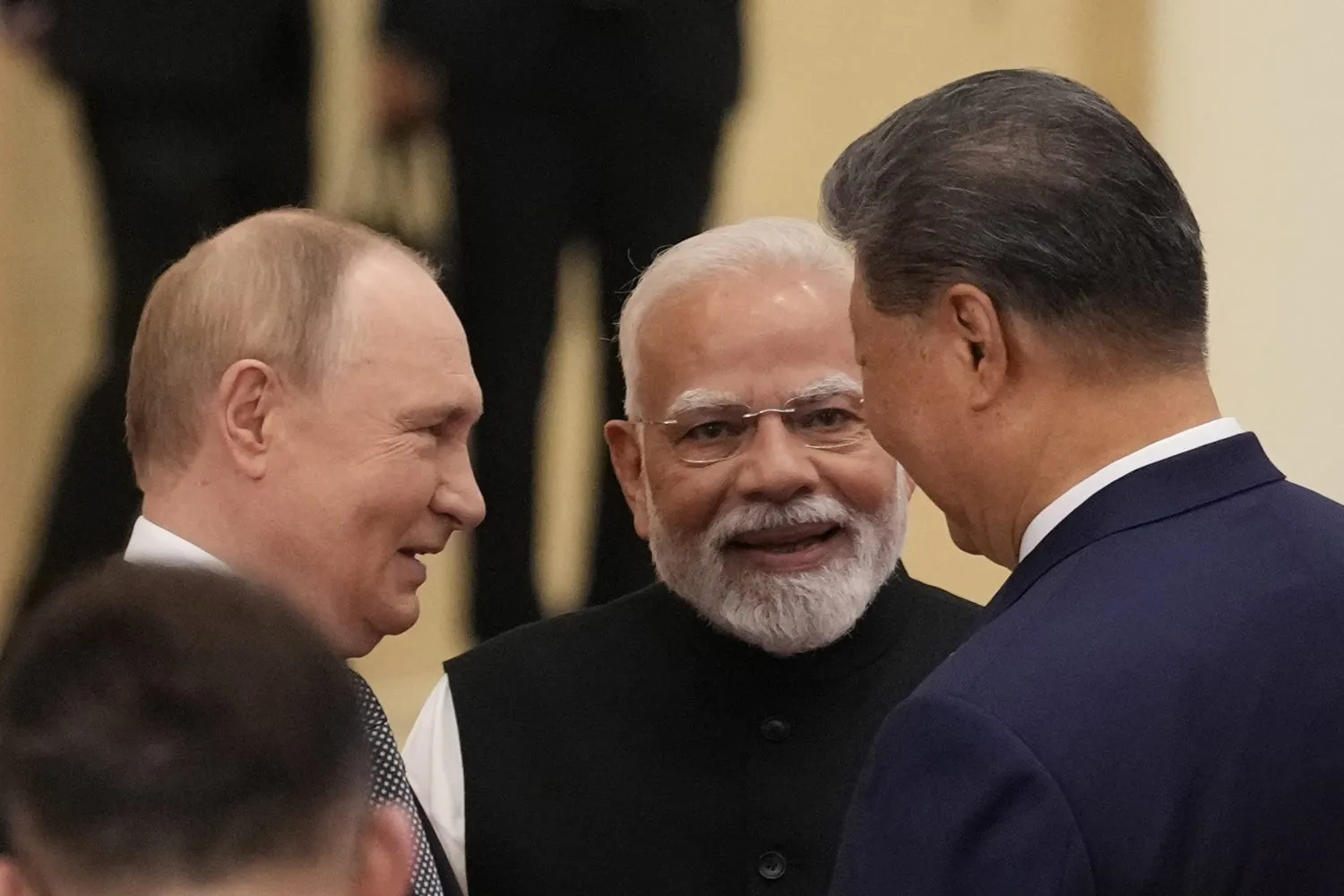
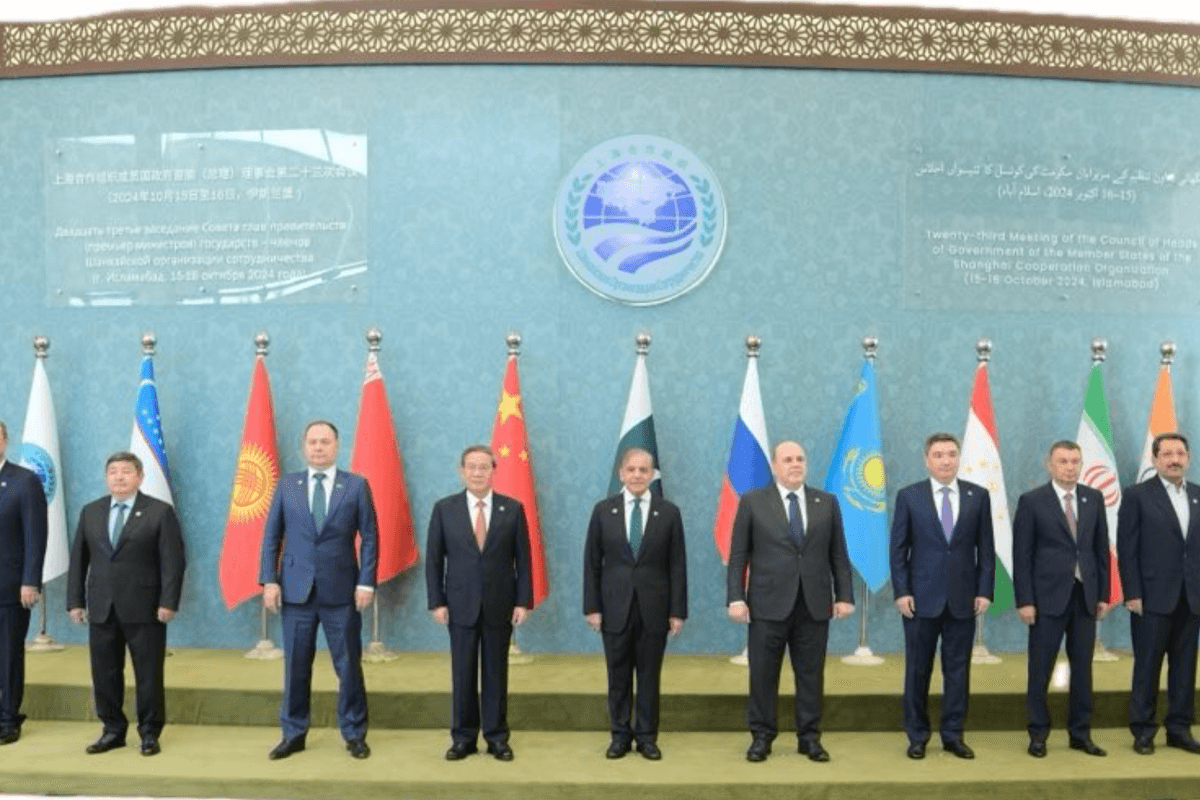
Leaders of the world's most populous nations began converging on the Kyrgyz capital of Bishkek this weekend for a summit of the Shanghai Cooperation Organisation (SCO) that its host and founding members are billing as a milestone moment for an increasingly assertive alternative to Western-led global institutions. Chinese President Xi Jinping departed Beijing on Sunday for Kyrgyzstan ahead of state visits to Egypt, while Russian President Vladimir Putin, Indian Prime Minister Narendra Modi, Pakistani Prime Minister Shehbaz Sharif and Iranian President Masoud Pezeshkian are all due in Bishkek for sessions on August 31 and September 1. The gathering marks the 25th anniversary of the bloc's founding and comes as its two dominant powers, China and Russia, continue to press their long-standing case that the world is moving toward a multipolar order less dependent on Washington and its allies.
Background
The Shanghai Cooperation Organisation traces its roots to the "Shanghai Five," a loose grouping of China, Russia, Kazakhstan, Kyrgyzstan and Tajikistan formed in 1996 to resolve Soviet-era border disputes and build confidence along their shared frontiers. It was formally reconstituted as the SCO in 2001 with the addition of Uzbekistan, and for its first decade and a half functioned mainly as a regional security forum focused on what member states have long called the "three evils" of terrorism, separatism and religious extremism in Central Asia.

The organization has since expanded well beyond that original mandate and membership. India and Pakistan both acceded as full members in 2017, bringing two nuclear-armed rivals into the same bloc; Iran joined in 2023 as it sought to counter Western isolation; and Belarus became the tenth full member more recently. Afghanistan and Mongolia hold observer status, and a wider circle of dialogue partners stretches from Turkey to several Gulf states, giving the SCO a footprint across Eurasia that its founders could not have envisioned in the 1990s. Its agenda has broadened correspondingly, now encompassing trade facilitation, energy cooperation, transport connectivity and, increasingly, an explicit political project of promoting what Chinese and Russian officials call a more "multipolar" and "equitable" international order — language widely understood as a challenge to a Western-centered system built around institutions such as NATO and the G7.
This year's summit carries added symbolic weight as the 25th anniversary of the bloc's 2001 founding, and the host, Kyrgyz President Sadyr Japarov, has framed it as an opportunity to showcase Bishkek's relevance on the world stage. The meeting arrives against an unusually fraught global backdrop: a Russia-Ukraine war now well into its fourth year, a separate and still-unresolved US-Iran conflict that has repeatedly convulsed Gulf shipping lanes and oil markets, and a wave of new U.S. tariffs that has strained trade relationships with China, India, Canada and the European Union alike. That combination gives several SCO members — Russia and Iran chief among them — a shared interest in demonstrating they are not diplomatically isolated, even as China seeks to project itself as a stabilizing alternative to Washington.
Key Developments
The formal summit sessions are scheduled for August 31 and September 1, but the diplomatic choreography began over the preceding days as leaders departed their capitals. Xi Jinping's trip combines the Bishkek summit with bilateral state visits to Kyrgyzstan and Egypt, at the invitation of Presidents Japarov and Abdel Fattah el-Sisi respectively, underscoring how China uses SCO gatherings as anchors for broader diplomatic tours. Modi likewise departed India for a multi-stop itinerary through Central Asia before arriving in Bishkek, while Pakistan's Sharif and Iran's Pezeshkian confirmed their attendance alongside the leaders of Kazakhstan, Tajikistan, Uzbekistan and Belarus.
The most closely watched single encounter is a planned Xi-Putin meeting expected to focus substantially on the Power of Siberia 2 pipeline, a long-delayed project to carry Russian natural gas to China via Mongolia. Officials on both sides have signaled the pipeline — which could eventually deliver as much as 50 billion cubic meters of gas annually over a 30-year term — remains a top priority as Moscow looks to redirect energy exports away from a European market largely closed off by sanctions, while Beijing weighs the economics and diplomatic value of deepening its energy dependence on Russia. The two leaders have discussed the project intermittently for years without finalizing pricing terms, and this summit is being watched for any sign of a breakthrough or renewed public commitment.
Beyond the pipeline talks, the summit's stated agenda covers security cooperation — including counterterrorism and cybercrime — along with trade, transport connectivity, energy and digital-economy initiatives. Leaders are expected to adopt a "Bishkek Declaration" and a package of accompanying documents intended to mark the organization's quarter-century milestone and set priorities for its next phase. In one of the summit's more striking optics, Modi and Sharif are due to share the same stage despite the persistently tense state of India-Pakistan relations, illustrating how the SCO functions as one of the few multilateral venues that keeps the two rivals in the same room.
Reactions
Western commentary has generally cast the summit as further evidence of a deepening Russia-China axis explicitly aimed at diluting U.S. and European influence, noting that Putin and Xi have used past SCO gatherings to deliver pointed criticism of what they describe as Western "bloc politics," sanctions regimes and unilateralism. Putin has previously used the platform to blame Western policy for provoking the war in Ukraine, and Xi has used it to denounce what Beijing calls acts of intimidation amid ongoing U.S.-China trade friction — rhetoric analysts expect both leaders to revisit in Bishkek given the current state of the Ukraine war and Washington's tariff offensive.
India's participation is read differently by most analysts, who describe New Delhi as using the SCO pragmatically rather than ideologically — a forum for engaging China, Russia and Central Asian states on trade and security without signing on to an overtly anti-Western political project. Modi's government maintains parallel and, at times, competing partnerships, including the Quad grouping with the United States, Japan and Australia, and observers say India's presence in Bishkek is best understood as hedging rather than alignment. For Central Asian host states, the summit is chiefly an opportunity to raise their diplomatic profile and press China and Russia for fresh infrastructure and investment commitments. Pakistan continues to use the bloc to court Chinese investment tied to the China-Pakistan Economic Corridor and to offset diplomatic isolation elsewhere, while Iran's Pezeshkian is using his attendance to signal that Tehran retains significant international partners despite its confrontation with Washington.
What's Next
The formal sessions in Bishkek on August 31 and September 1 will determine how much of the anniversary rhetoric translates into concrete commitments, particularly on the Power of Siberia 2 pipeline, where any announcement would have significant implications for global energy markets and for Europe's efforts to permanently wean itself off Russian gas. Analysts will also be watching the tone and specificity of the Bishkek Declaration for signs of how far the bloc is prepared to go in institutionalizing an explicitly anti-Western political identity, as opposed to remaining a looser vehicle for economic and security cooperation among members with often-divergent interests.
Longer term, the summit is likely to feed into an ongoing debate in Washington and European capitals about the durability of Western-led multilateralism at a moment when China, Russia, India, Iran and Pakistan can all find reasons — however different — to sit at the same table. Yet the SCO's history also counsels caution about reading too much into summit pageantry: the bloc has a well-documented pattern of issuing ambitious joint declarations that outpace its actual enforcement mechanisms, hampered in part by unresolved rivalries among its own members, most visibly between India and both Pakistan and China. Whether this 25th-anniversary gathering marks a genuine deepening of Eurasian coordination or another round of symbolism without follow-through will likely become clearer only in the months after the leaders return home.
Published By | News Editor