Economic & Social Transformation
Mozambique enters the second half of 2026 as a country of stark contrasts. On one hand, TotalEnergies has restarted construction on its $24.5 billion liquefied natural gas project in Cabo Delgado, an investment that ranks among the largest in African history and that officials hope will finally deliver the transformative growth long promised by the country's offshore gas reserves. On the other, the economy contracted by an estimated 0.5% in 2025, public debt has been assessed by the International Monetary Fund as unsustainable, and the aluminium smelter that has anchored the country's export base for two decades has gone dark. Mozambique's story this year is less a single narrative of transformation than a test of whether a fragile state can hold together long enough to reach the payoff its natural resources promise.
A Fragile Recovery After Political Turmoil
The backdrop to all of Mozambique's economic data in 2026 is the political crisis triggered by the October 9, 2024 general election. When the ruling Frelimo party's Daniel Chapo was declared the winner over opposition candidate Venâncio Mondlane amid allegations of vote-rigging, the country was plunged into months of protest and unrest. Human rights organizations, including Amnesty International, have documented reports of more than 300 unlawful killings during the post-election crackdown, with other estimates placing the death toll from October 2024 through March 2025 at approximately 400, alongside hundreds of injuries. The unrest disrupted trade corridors, delayed investment decisions, and forced the World Bank and IMF to repeatedly revise growth projections downward through 2025.
President Chapo has since sought to stabilize the country through negotiation rather than confrontation, and by late 2025 the political temperature had cooled enough for major investors, most importantly TotalEnergies, to re-engage. But the episode left visible scars on the economy: foreign exchange shortages, a hit to investor confidence, and a fiscal position that had little room to absorb the shock of lost tax revenue and emergency security spending.
The LNG Restart: A $24.5 Billion Bet on the Future
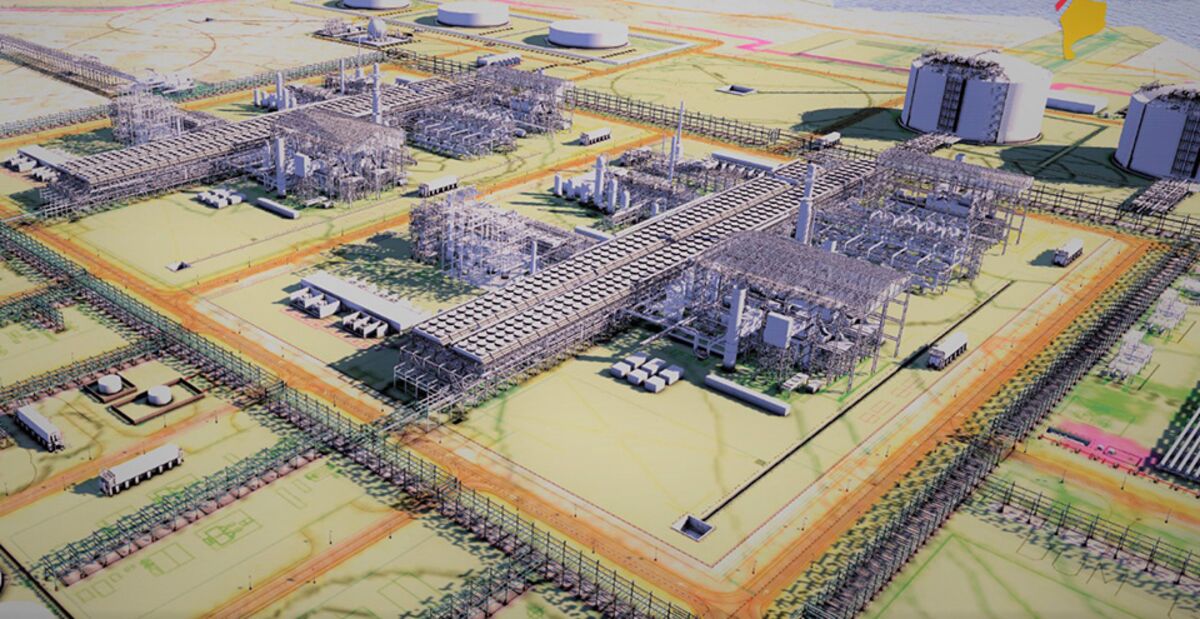
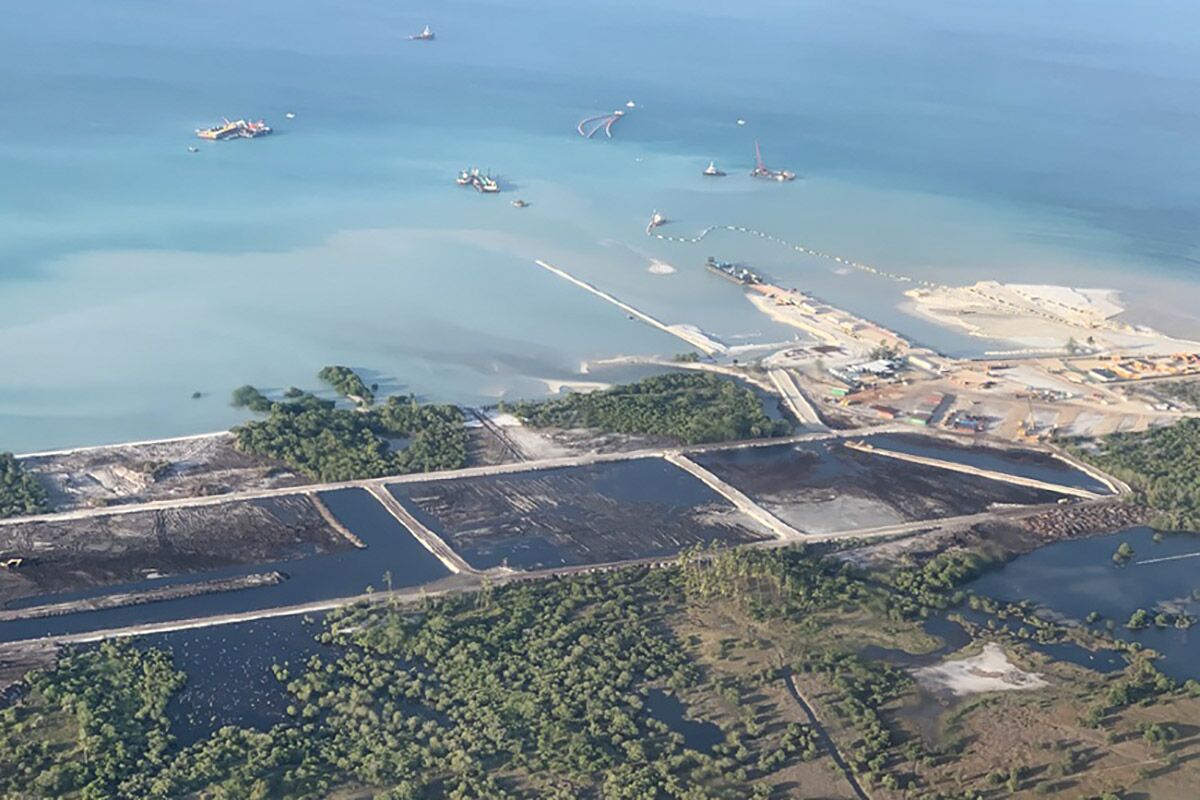
The single most consequential economic event of the year was TotalEnergies' decision to lift the force majeure it had declared on the Mozambique LNG project back in 2021, following a deadly militant attack on the nearby town of Palma. The force majeure was formally lifted on November 7, 2025, and on January 29, 2026, TotalEnergies chairman and CEO Patrick Pouyanné met with President Chapo in Maputo to announce the full restart of all onshore and offshore project activities at the Afungi site in Cabo Delgado.
The numbers involved are enormous for an economy of Mozambique's size. More than 4,000 workers are now mobilized at the site, of whom over 3,000 are Mozambican nationals. The project is expected to generate up to 7,000 direct jobs during the construction phase, and contracts awarded to Mozambican companies are projected to exceed $4 billion. Engineering and procurement work continued quietly during the four-year force majeure period, so the project is already about 40% complete, and TotalEnergies is targeting first LNG production in 2029. As part of the restart agreement, the government of Mozambique reinstated a four-and-a-half-year force majeure period for the concession and reaffirmed its security cooperation with Rwanda, whose troops have played a central role in pushing back the Islamic State-linked insurgency that has plagued Cabo Delgado province since 2017.
For a government desperate for a growth story, the LNG restart is being framed as the turning point. The World Bank and African Development Bank both cite the resumption of LNG construction as the primary driver behind their 2026-2028 growth forecasts, even though the direct fiscal payoff, in the form of royalties and profit-sharing once gas exports begin, remains three years away.
Fiscal Fault Lines: Debt, Deficits, and the IMF's Warnings
Beneath the LNG headline, Mozambique's public finances are in a precarious state. The IMF's 2025 Article IV Consultation, published in February 2026, assessed that under current policies, public debt is unsustainable and that the country's external position is substantially weaker than its underlying fundamentals would justify. Public debt stood at roughly 91% of GDP, with domestic debt alone climbing to around 29% of GDP in 2025, and the country has accumulated debt service arrears estimated at 1.3% of GDP as of the end of December 2025.
Forecasts for the 2026 fiscal deficit vary by institution but agree on the direction: the IMF projects a deficit widening to 5.2% of GDP, driven by modest revenue recovery colliding with higher wage and capital spending, while the African Development Bank projects an even wider 6.4% of GDP gap. The IMF has called for front-loaded fiscal consolidation, including extending the standard VAT rate to digital transactions and e-commerce, revising the excise tax code, introducing a simplified tax regime for small businesses, and updating personal and corporate income tax rules to capture capital gains. On the spending side, the government has acknowledged serious implementation challenges in reforming its public sector wage bill, even as it reiterated a commitment to rationalization under the 2026 budget.
Growth forecasts for 2026 diverge sharply across institutions, illustrating just how uncertain the outlook remains: the World Bank projects a modest 0.9% expansion, the African Development Bank forecasts 2.1%, and the IMF, taking a more optimistic view of the LNG-driven recovery, projects 3.5%, above the government's own 3.2% budget target.

The Mozal Shock: When Cheap Power Disappears
If the LNG restart is the good news of 2026, the mothballing of the Mozal aluminium smelter is the bad news. South32's smelter, which for two decades ran on some of the cheapest hydroelectric power in the world sourced from the Cahora Bassa dam, was placed into care and maintenance from mid-March 2026 after its owners and Hidroeléctrica de Cahora Bassa failed to agree on a new electricity supply contract, a deadlock worsened by drought conditions that reduced the dam's output. Mozal alone accounts for roughly 4% of national GDP, employed more than 2,500 people directly, and is estimated to have supported an additional 21,000 jobs through its wider economic footprint. The IMF has explicitly flagged the suspension as a material risk to the country's growth and export outlook, and as of mid-2026 no restart date has been set. The episode freed up approximately 950 megawatts of Cahora Bassa capacity but at the cost of one of the economy's few large-scale, steady sources of export revenue and formal employment.
Agriculture, Poverty, and the Human Development Gap
For most Mozambicans, the LNG project and the aluminium sector are distant abstractions; agriculture remains the reality, employing roughly three-quarters of the population, according to the IMF. Yet productivity remains low and access to inputs, credit, and irrigation remains limited, a combination the Fund identifies as central to the country's weak, job-poor growth pattern. Reform priorities identified in the 2025 Article IV Consultation center on economic diversification, agricultural modernization, and building growth that actually generates jobs rather than relying on capital-intensive extractive projects.
Poverty remains stubbornly high. Various estimates place the national poverty rate at roughly 62.9% as of 2022, up sharply from 48.4% in 2014-15, with cumulative estimates suggesting an additional 7 million Mozambicans were pushed into poverty over that period, and independent tallies putting the current poverty headcount closer to 71% when broader deprivation measures are used. That gap between a resource sector attracting tens of billions of dollars in foreign investment and a population still struggling with basic deprivation is the defining social tension of Mozambique's development story in 2026.
Outlook
Mozambique's near-term trajectory now hinges on three variables converging favorably: whether the security situation in Cabo Delgado remains stable enough to sustain LNG construction through to first gas in 2029, whether the government can implement fiscal consolidation without triggering renewed social unrest, and whether a resolution can be found for the Mozal power dispute before its loss becomes permanent. The IMF, World Bank, and African Development Bank all frame 2026 as a transition year rather than a breakout one, with the real test of Mozambique's transformation still several years out. In the meantime, the country's growth numbers, debt ratios, and poverty statistics will likely continue moving in different directions simultaneously, a pattern common to resource-rich, still-fragile states positioned between promise and precarity.
Published By | Business News Editor