BERLIN
For most of the last twelve years, the FIBA Women's Basketball World Cup has been less a tournament than a coronation with travel expenses. The United States shows up, the United States wins, everyone flies home. In 2022 the Americans closed out China 83-61 in the final and barely broke a sweat doing it. The bracket was a formality.
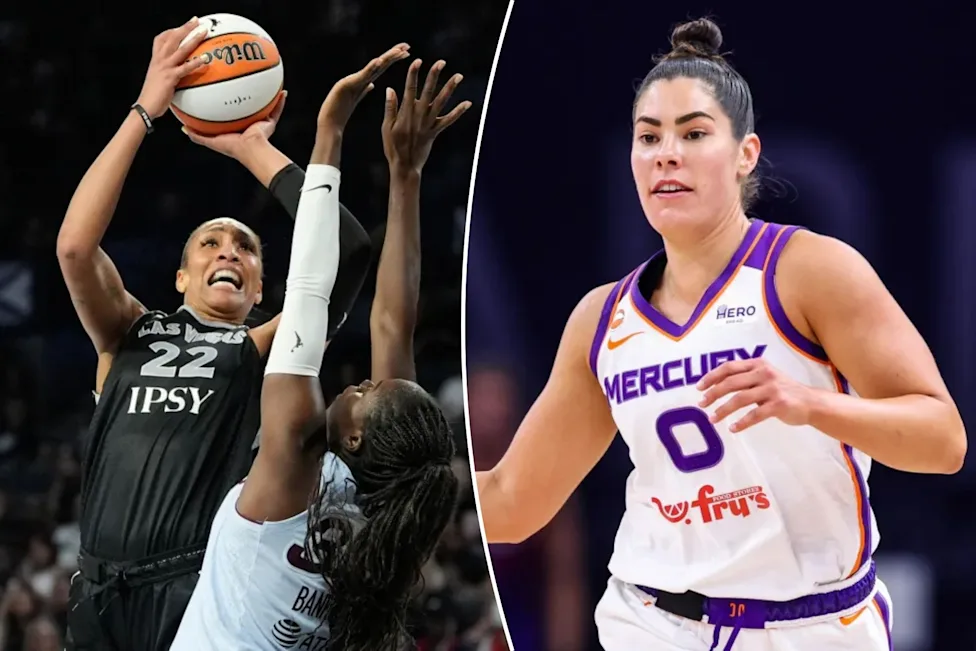
That comfortable arithmetic changed on Monday. USA Basketball confirmed that A'ja Wilson and Kelsey Plum — two of the most decorated players in the program — will not travel to Berlin for the 2026 World Cup, which tips off Friday, September 4, and runs through September 13. Both withdrawals were attributed to health reasons. In their place, the federation named Washington Mystics teammates Sonia Citron and Kiki Iriafen, a pair of 2026 All-Stars who have never played a minute in a senior global tournament.
In the space of a single announcement, the most predictable team in international basketball became the most interesting one.
What Actually Happened
The two absences are not the same story, and it matters.
Plum's is the simpler of the two. The 32-year-old guard has been dealing with a lower-leg injury that already ended her WNBA season with a Phoenix side eliminated from playoff contention. There was never a realistic path to Berlin for her; the only question was when the federation would say so out loud.
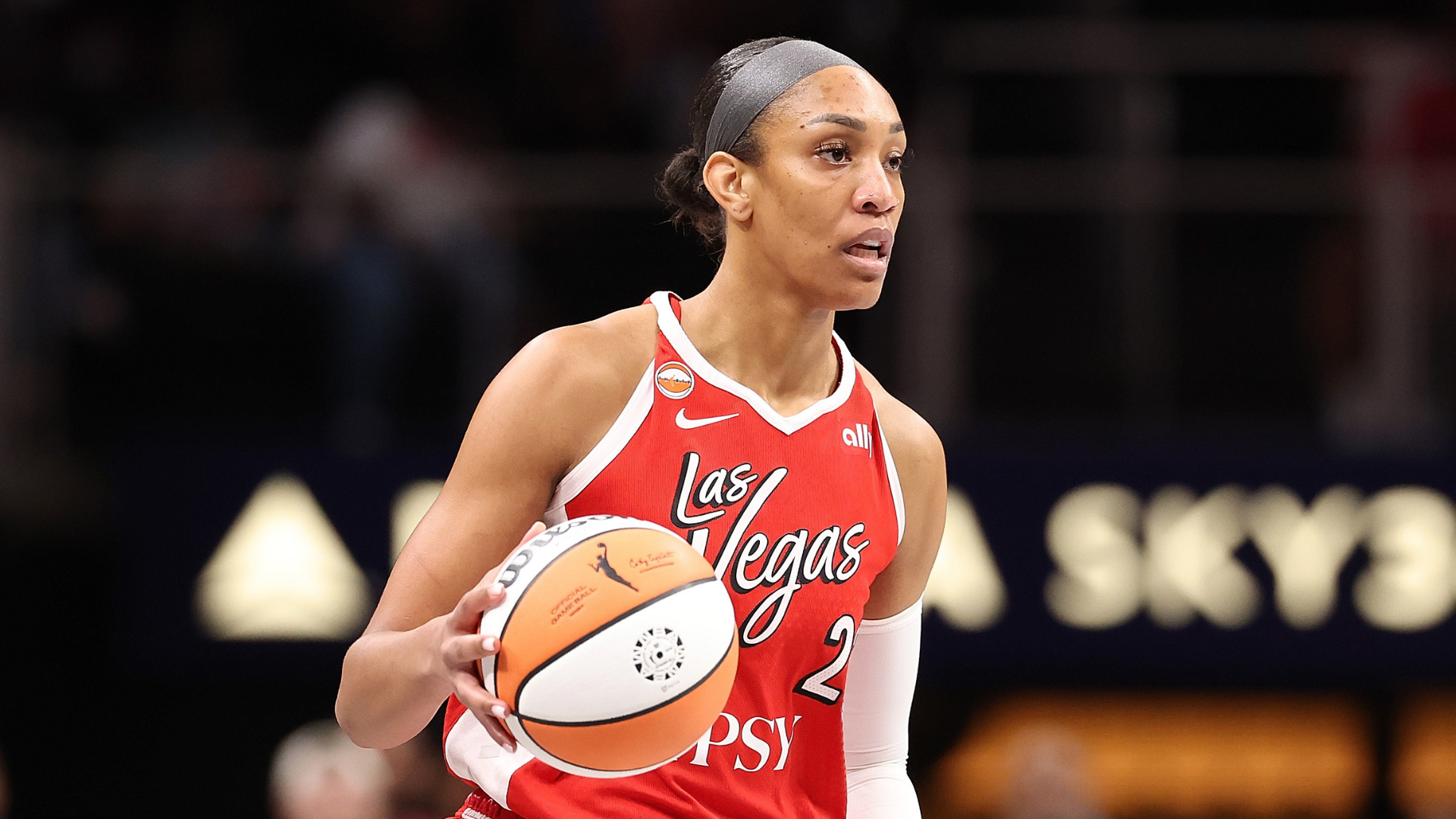
Wilson's is more complicated, and more consequential. The four-time WNBA MVP has not been sidelined by a single catastrophic injury this season. Reporting around the withdrawal has instead pointed to accumulated wear — a body that has not been fully right for some time, and a World Cup schedule that compresses an entire tournament into ten days across a single German fortnight. For a player who has carried enormous minutes for both her club and her country for the better part of a decade, the math of playing through it stopped working.
It is worth saying plainly: a player choosing rest over a gold medal she has already won is not a scandal. It is a sign that the women's game has finally reached the level of professionalization where careers are managed rather than simply spent. That the decision still lands like a thunderclap says more about how central Wilson has become than about the decision itself.

Who Is Left — and Who Is New
The roster head coach Kara Lawson takes to Berlin remains, by any sane measure, the best in the world. Breanna Stewart is still there. So are Chelsea Gray, Rhyne Howard and Jackie Young. So, in the storyline that will sell every ticket in the Berlin arena, are Caitlin Clark and Paige Bueckers — two players whose arrival has redrawn the commercial map of the sport and who now step into the roles that Wilson and Plum vacated.
But the interesting names are the new ones. Citron and Iriafen made their reputations in Washington this season, and their promotion is the clearest signal yet that USA Basketball is willing to accelerate a generational handover rather than manage it. Citron is a two-way wing with the kind of positional flexibility that international basketball rewards; Iriafen gives Lawson interior size at exactly the moment the team lost its best interior player.
Neither has played a senior world championship. Both will now be asked to do so in a tournament where the United States is chasing a record-equalling fifth consecutive title.
Why This Changes the Tournament
Strip Wilson out of a Team USA lineup and the first thing that disappears is the interior insurance policy. For years, the American formula in FIBA play has been simple: survive the perimeter chaos of the international game, then win the possession battle at the rim where nobody else has comparable size and mobility. Wilson was the whole second half of that sentence.
Without her, the U.S. becomes a guard-heavy, pace-and-space team in a competition that rewards physicality and half-court execution. FIBA rules — a shorter shot clock, a tighter court, a more permissive whistle on contact — have historically punished teams that live on the arc. The Americans will need to shoot well, and they will need Iriafen to grow up quickly.
For everyone else, this is an opening. Australia, Spain, France, China and host nation Germany have spent years building programs on the assumption that second place was the real prize. That assumption is now, for the first time in a long while, negotiable.
The Bigger Picture
There is a structural story hiding underneath the injury report. The women's basketball calendar has become genuinely punishing. A full WNBA season now runs deep into September. Overseas and offseason leagues fill the winter. National-team windows sit on top of both. Something eventually gives, and this summer it gave twice in the same week to two of the sport's marquee names.
The uncomfortable version of that story is that the growth everyone in women's basketball fought for — more games, more television, more money — has arrived without a corresponding redesign of the calendar that produces it. Berlin will crown a champion. It will not solve that.
What This Means for You
If you are a casual viewer who has skipped the World Cup because the outcome felt preordained, this is the year to tune in. Group play begins September 4 and the medal games land on September 13, which means the entire tournament fits neatly into a week and a half of viewing rather than the sprawling commitment of an Olympic cycle.
If you follow the WNBA, watch Citron and Iriafen specifically. Major tournaments have a way of accelerating careers; the players who look comfortable in Berlin in September tend to look different in May. And if you are a Team USA loyalist, adjust expectations from inevitability to competitiveness. That is not a downgrade. It is what a real tournament feels like.
The Bottom Line
The United States remains the favorite in Berlin, and it would be foolish to pretend otherwise. A roster with Stewart, Gray, Clark and Bueckers on it does not need pity. But the margin has narrowed from a canyon to something closer to a ditch, and for a tournament that has spent a decade searching for genuine drama, the loss of A'ja Wilson and Kelsey Plum may prove to be the most valuable thing that has happened to it.
Nine days from now, we will know whether the dynasty was built on two players or on something deeper. Either answer will be worth watching.
Published By | Sports Editor