Written By | Staff Writer
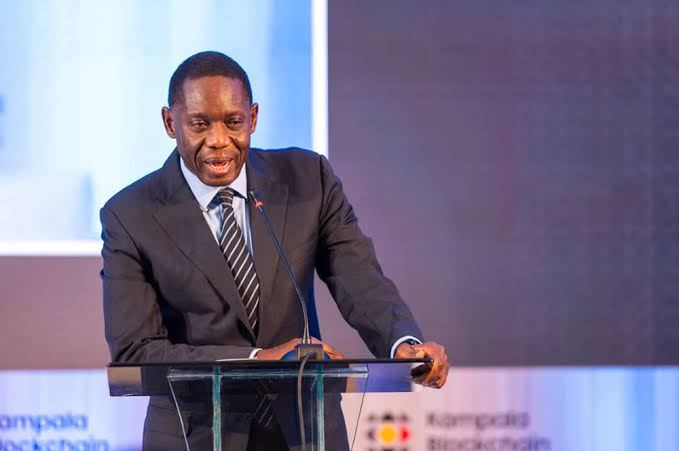
Governor Michael Atingi-Ego's policy statement pointed to external forces. The Middle East conflict escalated after August, weakening Uganda's external position and increasing exchange-rate volatility.
BUSINESS NEWS
A special meeting and the biggest hike in years
The Bank of Uganda (BoU) raised its benchmark Central Bank Rate (CBR) by 2.25 percentage points, from 9.75 per cent to 12 per cent, at a special meeting of its Monetary Policy Committee on 14 October 2026. According to Uganda Business News, it was the first rate change since October 2024, the largest increase since 2011 and leaves the rate at its highest level since early 2017. The move came ahead of the committee's scheduled 12 November meeting; BMI, a Fitch Group company, had forecast in September only a quarter-point rise, to 10 per cent, at that session.
In August the committee had held the rate at 9.75 per cent, saying it needed more clarity on the inflation outlook and describing exchange-rate pressures as having eased. The decision to convene an unscheduled meeting two months later shows how sharply conditions have turned.
Why the central bank moved
Governor Michael Atingi-Ego's policy statement pointed to external forces. The Middle East conflict escalated after August, weakening Uganda's external position and increasing exchange-rate volatility. Higher interest rates in advanced economies and global risk aversion made foreign investments more attractive than Ugandan assets, reducing inflows and adding to depreciation. The bank said the weaker shilling and higher oil prices had pushed up pump prices, and that 'persistent external pressures and the prospect of higher inflation call for further tightening.' The governor said the bank stands ready to take further action to preserve price and financial stability.
The shilling at record lows
The currency is the centre of the story. Bloomberg put the shilling at Shs4,143 to the dollar on 12 October, its weakest level since at least 1993, and central bank data cited by Uganda Business News showed an opening rate of Shs4,152.86 on 13 October. On the day of the hike it was quoted at Shs4,075.48 at midday after opening at Shs4,130.24, about 11.2 per cent weaker than at the end of 2025. In March it traded at around Shs3,604, and it crossed the Shs4,000 mark in the first week of October.
Foreign investors have been leaving. Bloomberg reported that offshore investors were trimming holdings of Ugandan bonds, and Citigroup estimated that about $200 million left Uganda's markets within two weeks, according to Pulse Uganda. The pressure is compounded by seasonal and structural demand for dollars: end-of-year stockpiling by traders and manufacturers, heavy demand from telecoms and energy importers, and weaker coffee export earnings.
Fuel prices and household costs
The Independent reported that petrol prices rose from about Shs4,000 per litre in September to roughly Shs7,000 by 13 October, while the dollar moved from an average of about Shs3,700 to around Shs4,000 over recent months. Brent crude settled above $100 per barrel in the first week of October. On 7 October, Defence Minister Kiryowa Kiwanuka told Parliament that Uganda has 'no product of our own,' urged citizens to avoid unnecessary travel and floated temporary austerity in fuel use, including MPs pooling vehicles. The reports do not indicate that any formal austerity measure has been adopted.
The effects spread beyond fuel. A weaker shilling makes medicines, machinery and spare parts costlier, and businesses reliant on imported inputs face squeezed margins that they may pass on to consumers.
Inflation and growth forecasts
Headline inflation rose to 4.6 per cent in September from 4.1 per cent in August, the highest since June 2023. Core inflation, which strips out food and energy, reached 3.7 per cent, up from 3 per cent in May, a sign the bank said that cost pressures are spreading. It remains below the bank's 5 per cent medium-term target, but forecasts have been revised sharply: core inflation is now expected to average 5.5 to 6 per cent over the next 12 months, up from 4 to 4.5 per cent projected in August, with headline inflation at 7 to 7.5 per cent.
The bank cut its growth forecast for the year to June 2027 to 6 to 6.5 per cent from 7 to 7.5 per cent, citing tighter financial conditions, depreciation and higher energy costs, while still expecting about 8 per cent growth in the medium term once external headwinds ease. The World Bank earlier in October trimmed its forecast for the same year to 7.4 per cent from 8.5 per cent, still above the central bank's range.
Other tightening measures and the external accounts
The hike follows other steps. The cash reserve requirement for commercial banks rose to 13.5 per cent of deposits from 11 per cent, effective 24 September, the second increase this year after May's rise from 9.5 per cent to 11 per cent. The rediscount rate is now 15 per cent and the bank rate 16 per cent.
The current account deficit widened by $1.4 billion to $4.6 billion (about Shs18.7 trillion) in the 12 months to August, driven by lower coffee and cocoa prices, weaker tourism receipts and higher freight costs. The services deficit alone widened to $3.3 billion from $2.2 billion. Remittances, which rose 31.6 per cent to $2.9 billion in the year to June, provided partial relief.
The reserves debate
One of the sharpest debates is over whether to use foreign exchange reserves. Gross reserves stood at about $6.7 billion on 6 October, up from $5.6 billion at the end of January, equal to 3.74 months of imports excluding oil-project imports. The central bank's statement did not mention intervention, and it has said it does not plan direct dollar sales. On 9 October, President Yoweri Museveni said he did not agree with selling reserves to support the shilling, and Pulse Uganda reported he argued a weaker currency benefits exporters. Opposing views exist: MPs have asked why reserves are not being used, and economists quoted in Daily Monitor headlines have criticised the emergency hike for potentially deepening credit constraints.
On 13 October, Amos Lugoloobi, the minister of state for planning who is holding the finance portfolio, told Parliament the government would 'assess the causes and likely duration of currency pressures before deciding on further interventions.' The government is resisting broad fuel subsidies and artificial currency support, arguing they carry heavy fiscal costs, and prefers to secure supply, trim avoidable costs and target vulnerable households.
What to watch next
Key indicators include whether the shilling stabilises after the hike, the speed at which commercial banks lift lending rates and what that does to private-sector credit, and October inflation data. The 12 November MPC meeting could bring further tightening, given the governor's signal. Brent prices and Middle East developments remain the largest external swing factor, and the long-awaited start of commercial oil production, which the government expects in 2027, is a hoped-for source of future dollar inflows. For households, the near-term picture is higher borrowing costs and prices at the pump and in shops.



