Written By |
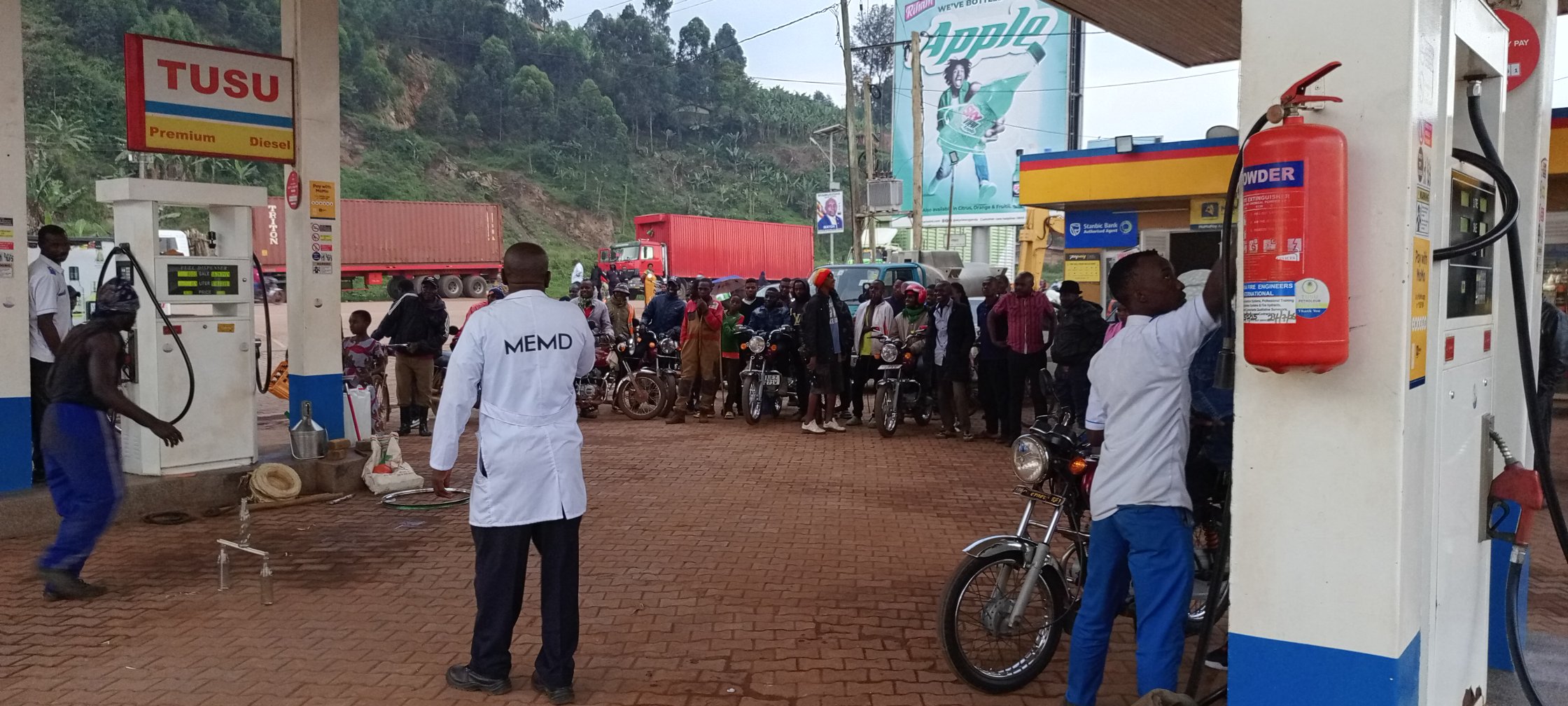
Routine quality checks with UNBS and Ministry of Energy
By Our Reporter
The Ministry of Energy and Mineral Development has called on fuel dealers across the country to prioritize consumer safety by ensuring the quality of petrol and diesel supplied to the public.
Spero Byokunda, Head of Petroleum Quality Assurance at the ministry, said cases of fuel adulteration—which stood at 30 percent in 2008/09 before the introduction of the Fuel Marking and Quality Monitoring Program—have since reduced to just 1 percent.
However, he noted that adulteration remains a persistent challenge in the sector.
“The urge to adulterate is still a major problem in this country because kerosene is much cheaper and highly subsidized by the government. If its price were closer to that of petrol and diesel, there would be no incentive to mix the two. But because of the big price difference, some unscrupulous dealers are tempted to mix kerosene with petrol for financial gain,” Byokunda explained. He added that beyond adulteration, the ministry has also been working to curb fuel smuggling.
Peter Kitimbo, Supervisor of the Fuel Marking and Quality Monitoring Program, said the introduction of mobile laboratories has greatly improved enforcement.
“When we began the monitoring program, non-compliant products were rampant—up to 30 percent of the fuel on the market. Today, we have managed to reduce that to less than one percent. With more equipment and mobile vehicles to inspect stations every month, we are ensuring better fuel quality for consumers,” Kitimbo said.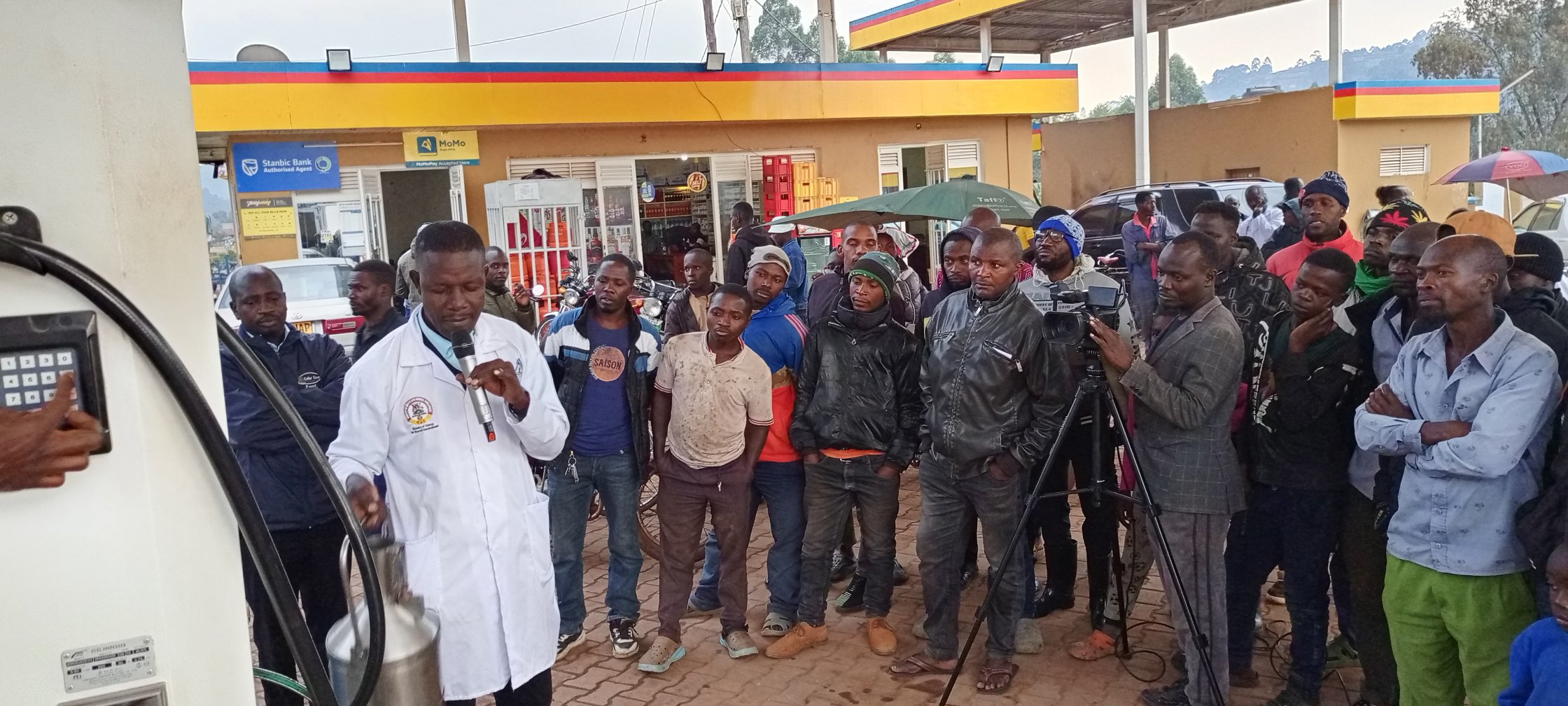
He noted that the ministry, working with the Uganda National Bureau of Standards (UNBS), has also helped level the playing field for fuel dealers by eliminating unfair competition caused by adulterated and smuggled products. “This program has not only protected consumers but also ensured government collects the right taxes. At the start, smuggling was common, especially around areas near Lake Victoria and Mukono, but we have significantly reduced those cases,” Kitimbo added.
Steven Barisigara, the Assistant Commissioner in charge of Standards, Licensing, and Quality Assurance, said the ministry is working towards 100 percent nationwide coverage for fuel quality monitoring but is constrained by limited funding.
Meanwhile, Simon Mwijuka Sezi, Chairperson of the Mbarara City Traders Association (MBACITA), raised concerns about perceptions of double standards in the market.
“There is a myth that companies like Shell and Total always sell genuine fuel, while other dealers are said to sell fake fuel. But is there really fuel that is good and fuel that is bad?” he asked.
The Fuel Marking and Quality Monitoring Program was introduced in 2008 by the Ministry of Energy in partnership with UNBS to address challenges of adulteration, smuggling, and substandard fuel in Uganda.
During a recent consumer awareness campaign in Southwestern Uganda, ministry officials reiterated their appeal to fuel dealers to abandon the practice of adulteration, warning that it compromises both consumer safety and confidence in the industry.
Torch Media Africa



