ADDIS ABABA
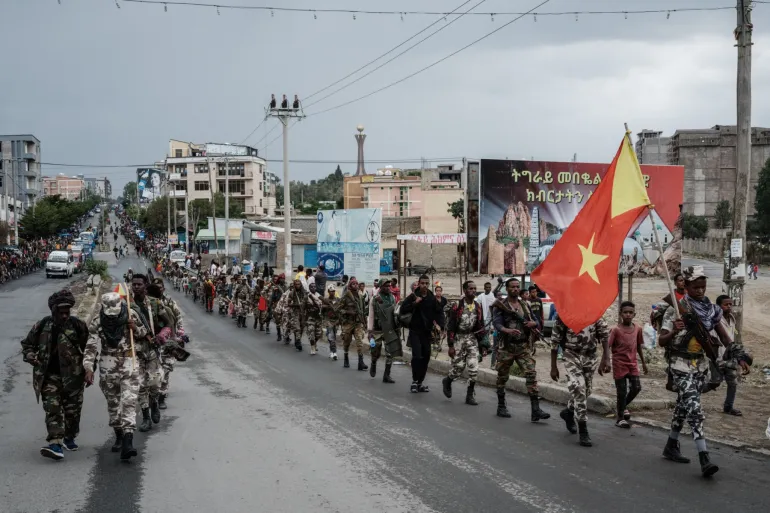
Four years after a peace agreement ended one of the deadliest wars of the 21st century, Ethiopia is again at war with itself. A week of heavy fighting between federal forces and Tigrayan armed groups has killed at least 52 civilians around the southern Tigray town of Alamata, according to a medic who spoke to the BBC, and has spread into the neighboring Afar and Amhara regions. The government's top general has accused Eritrea, Sudan and Egypt of backing the insurgents, a charge that Sudan and Eritrea reject, and that turns an internal rupture into a regional crisis.
Why it matters now
The 2022 Pretoria Agreement was the foundation on which Prime Minister Abiy Ahmed's government rebuilt its authority in the north. Its collapse puts at risk not only Tigray, but the stability of a country of more than 100 million people that anchors the Horn of Africa and hosts the African Union's headquarters. The fighting is also colliding with several other conflicts at once: the war in Sudan, tensions over Ethiopia's pursuit of sea access, and a patchwork of insurgencies in Amhara and Oromia that the TPLF has now moved to join.

A timeline of the escalation
Accounts of the past week differ in some details, and communications blackouts make independent verification difficult. The broad sequence, as reported by Al Jazeera, Euronews and the BBC, is as follows.
Heavy clashes between the Tigray People's Liberation Front (TPLF) and Ethiopia's federal government resumed on Wednesday, Sept. 23, according to Al Jazeera. Euronews reported that Tigrayan forces seized airports in the Tigrayan cities of Mekelle, Axum and Shire that day. Between Sept. 22 and 25, Doctors Without Borders (Médecins Sans Frontières, or MSF) said the number of wounded treated at hospitals in Korem and Alamata climbed from roughly 180 to more than 420 within 48 hours. A further 300 injured people had earlier arrived at Suhul Hospital, the medical charity reported.
Over the weekend of Sept. 26-27, TPLF fighters captured Erebti, a town in the Afar region, and advanced toward Afdera, roughly 100 kilometers (about 62 miles) away, Al Jazeera reported. Afar's governor told the network that Eritrean forces were participating in the fighting and controlled more than two-thirds of the region. Eritrea has not responded to that claim, Al Jazeera said. On Sunday, a drone struck the headquarters of Tigrai TV, according to the same report.
On Sept. 28, a pro-government group called the Tigray Peace Force announced it had captured Alamata, a strategic supply hub near Tigray's southern border with Amhara, about 120 kilometers (75 miles) south of the regional capital, Mekelle. Al Jazeera said Reuters had verified video of soldiers carrying Ethiopian flags through the town and that two diplomatic sources and opposition-linked sources confirmed its fall. Euronews dated the town's seizure by pro-government forces to Sept. 29. The Ethiopian military has been reported to be advancing toward Mekhoni and Maychew, and fighting has also been intense in North Wollo, in Amhara, where the army said it had killed about 270 Tigrayan fighters and wounded more than 200.
The human toll
The BBC, as relayed by The Star of Kenya, reported that at least 52 civilians were killed during three days of heavy fighting around Alamata and that MSF had recorded more than 700 wounded admitted to hospitals it supports in Tigray. Twelve people died in a single strike on a marketplace, the report said. A doctor at Alamata General Hospital described heavy explosives and artillery, "some of which landed in residential homes," with victims including "children as young as three days old, mothers and cattle herders."
Valerie Browning of the Afar Pastoralist Development Association told reporters that about 150,000 people had been displaced. Phone and internet services in Tigray have been disrupted since Friday, and banking services have been suspended, according to the reporting. Dozens of foreign tourists have also been caught up in the fighting: a British tourist in Lalibela, the UNESCO World Heritage site in Amhara, told the BBC, "We have heard fighting, gunfire and artillery cannons firing throughout the week." Of 53 tourists originally stranded there, 14 Israelis were flown out by military helicopter on Monday and five more left in an aid convoy, leaving 33 who had been stuck for a week. The airport closed to commercial flights on Wednesday.
The accusation against Eritrea, Sudan and Egypt
On Friday, Field Marshal Birhanu Jula, the army chief, alleged that Eritrea, Sudan and Egypt are supporting the forces opposing Addis Ababa. According to the Associated Press, he specifically accused Eritrea of "mobilizing financial support for the Tigray People's Liberation Front," and offered no further details about the roles of Sudan and Egypt. Al Jazeera quoted him saying Ethiopian forces were fighting groups "organised and allied to serve the interests of external forces." The reports said no evidence was provided.
The accused governments pushed back. The Sudanese military called the allegations "baseless" and made a counterclaim: that the paramilitary Rapid Support Forces, which are fighting Sudan's army, receive support from within Ethiopia, including training, supplies and drone activity, Al Jazeera reported. Eritrea's information minister, Yemane Meskel, countered that Ethiopia's pursuit of seaport access had destabilized the region, the AP reported. Egypt, long at odds with Ethiopia over the Nile dam, did not feature in the reporting as having issued a response.
An alliance of former enemies
The shape of the opposition is as important as the battlefield. Earlier in September, the TPLF formed the Ethiopian Peoples' Forces Alliance for Survival with six other armed groups, including the Oromo Liberation Army and the Amhara Fano National Movement, according to Al Jazeera. The reports said the alliance aims to overthrow Abiy's government. That the Tigrayan movement would ally with Amhara Fano fighters is notable, since forces from Amhara were deeply involved, alongside federal and Eritrean troops, in the 2020-22 war against Tigray. The convergence suggests that opposition to Abiy has, for some armed actors, outweighed older enmities.
The federal government is not without friends. On Sept. 30, Qatar's Foreign Ministry condemned what it called a military escalation that "threatened Ethiopia's unity and sovereignty and the stability of the wider Horn of Africa," and called for "an immediate end to the fighting, protection for civilians and respect for the Pretoria Peace Agreement," Euronews reported. The United Arab Emirates, through Minister of State Sheikh Shakhboot bin Nahyan Al Nahyan, expressed "full solidarity with the government and people of Ethiopia" and rejected attempts to change the country's constitutional order by force.

Background: a peace that never fully settled
The war that began in November 2020 between the federal government and Tigrayan forces ended with the November 2022 agreement signed in Pretoria, South Africa. Estimates of the dead vary widely. The AP's reporting cited about 500,000 civilian deaths; Al Jazeera noted that former Nigerian President Olusegun Obasanjo, who helped broker the deal, had put the toll at 600,000. Either figure places the war among the deadliest of the century so far.
The Pretoria deal silenced the guns but left the hardest questions open, including the status of disputed territories, the future of Tigray's armed forces and the return of the displaced. Al Jazeera's reporting describes the current tensions as centered on alleged violations of the agreement. Alamata itself sits in one of the contested zones along the Tigray-Amhara frontier, which helps explain why it has become a focal point.
Analysis: what is different this time
Three features distinguish this round from the first war. First, the geography is wider. Fighting in Afar and North Wollo threatens the highway and rail corridor that links Addis Ababa to the port of Djibouti, the country's economic lifeline, though the reporting reviewed for this story does not document an interruption of that route. Second, the opposition is a coalition rather than a single movement, which complicates any negotiation: a ceasefire agreed with the TPLF would not by itself bind the Oromo Liberation Army or Fano. Third, the external dimension is more explicit. Ethiopia's accusations against Eritrea, Sudan and Egypt, together with Sudan's counter-accusation, link Ethiopia's war to the one raging next door and to the long contest over the Nile and Red Sea access.
It is worth being careful about what is known. Control of Alamata is claimed by pro-government forces, and the dates differ between outlets. The army's claims of enemy casualties cannot be independently confirmed. The allegations of foreign backing have been made without public evidence, and each of the accused states has either denied them or turned them around. Communications blackouts mean the true civilian toll is likely higher than the figures now circulating, as the humanitarian reporting itself implies.
What to watch
Whether federal forces push on from Alamata toward Mekelle is the immediate military question; pro-government forces now claim Alamata, but the TPLF's reported seizure of three airports shows the insurgents retain strike capability. The second question is Afar: if the Afdera advance continues, the pressure on the Djibouti corridor will become a major economic and diplomatic issue. Third is diplomacy. Qatar's call to respect the Pretoria Agreement hints at a mediation role for Gulf states, and the African Union and South Africa, as guarantors of the 2022 deal, will face pressure to respond. Finally, watch the humanitarian picture. With an estimated 150,000 people displaced, banking and communications cut, and aid access uncertain, the conditions that made the earlier war so lethal for civilians are re-forming quickly
Published By | News Editor