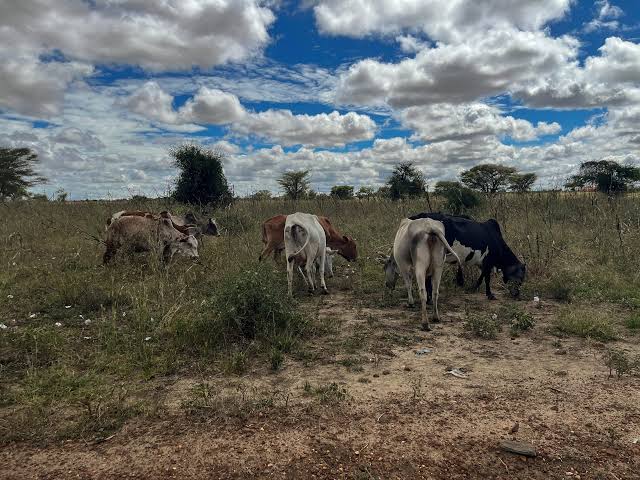
A commentary published on Tuesday in The Independent and the Daily Monitor made an argument that has been forming quietly in Ugandan policy circles for more than a year: the Balaalo have left northern Uganda, and the only durable way to keep them out is to fill the vacated grasslands with cattle that belong to northerners. Written by Obed K. Katureebe of the Uganda Media Centre, the piece carried a figure that deserves more attention than the polemic around it. According to Alex Kakooza, Permanent Secretary in the Office of the Prime Minister, roughly 80 percent of the Shs80 billion earmarked for the government's Cattle Restocking Programme has now been disbursed to beneficiaries across the Acholi, Lango and Teso sub-regions.
That is about Shs64 billion of public money moving into the hands of rural households in a region where, three decades ago, cattle were the entire savings system. It is one of the largest single asset transfers the north has seen since the end of the Lord's Resistance Army insurgency, and it is happening largely outside the national conversation, which has been preoccupied with fertiliser distribution, coffee earnings and the Kenyan maize rush.
How the programme is built
The design is straightforward on paper. The government allocated Shs80 billion in the 2025/26 financial year. Each qualifying household across 33 districts in the three sub-regions receives Shs5 million to buy five animals — three heifers and two bulls. At that rate the allocation covers 16,000 households. Beneficiaries are selected at parish level by Parish Development Committees, their details uploaded to the Parish Development Model Management Information System, and payment is made through Wendi, the mobile money platform operated by Pearl Bank Uganda, so that no cash passes through parish chiefs.
The disbursement curve has been steep. On 1 June 2026, Mr Kakooza told journalists in Kampala that only 559 households had received Shs2.8 billion, with a further 11,504 selected for payment — a pace that drew accusations in Parliament of 'drops in the ocean'. By early July, Prime Minister Robinah Nabbanja was defending the programme on the basis that Shs60.2 billion had reached about 12,000 households. The 80 percent figure cited this week suggests the machinery finally caught up. Government has also extended the programme from its originally planned five years to ten, so that every eligible household in war-affected communities eventually receives livestock, and ChimpReports has reported a further Shs100 billion earmarked for restocking in the next financial year.

Why cattle, and why now
Northern Uganda was a cattle economy before it was a war zone. Herds in Acholi, Lango and Teso supplied draft power for ox-ploughing, manure for soils that now receive between one and 2.4 kilogrammes of fertiliser per hectare, milk for children, bride price for marriages and a liquid asset that could be sold on the day school fees fell due. The insurgency and the cattle raids that accompanied it removed that asset base almost completely. Restocking is therefore framed as much as restitution as agriculture, which is why it sits in the Office of the Prime Minister rather than in the agriculture ministry.
The land-use argument is the newer one. Mr Katureebe's case is that the plains of Nwoya, and the savanna belt running through Acholi, Lango and West Nile, produce high-quality biomass with no irrigation and no fertiliser, including native hood grass that fattens calves cheaply. Some entrepreneurs have already stopped treating that grass as bush and begun cutting and selling it as hay, while West Nile has introduced commercial varieties such as Super Napier. Empty pasture of that quality, the argument runs, will always attract herders from elsewhere — which is exactly the pattern of the past decade.
The Balaalo, migrant pastoralists mostly from the cattle corridor, have been the subject of presidential directives in 2017, 2021 and 2023, and returned each time. Executive Order No. 2 of 2025, signed on 1 June last year, declared it 'technically impossible' to have conflict-free movement of unregulated cattle into those areas, and enforcement operations run by the UPDF with police support moved more than 3,000 head out of Acholi and West Nile. Occupying the grass with local herds is, in effect, an attempt to make the eviction self-enforcing.
Where the programme is leaking
The evidence so far is that money moves faster than governance. A Daily Monitor investigation in June found that in Lango, the programme had become a magnet for fraud. In Abela Parish, Aleka Sub-county in Oyam District, Jennti Adong discovered that the Wendi account linked to her registered mobile number had been opened in another person's name in February 2025, more than a year before she acquired the SIM card. Of 16 people nominated in that parish, discrepancies in names and phone numbers put payments at risk. Local leaders were implicated in altering beneficiary details. Mr Kakooza's response was procedural: no funds are handled by parish chiefs or committees, and beneficiaries should not sign or thumbprint any acknowledgement before money is actually credited.
Delivery has also been uneven for reasons that have nothing to do with fraud. Kakooza named Lamwo, Nwoya, Pader and Agago as districts that had not uploaded verified beneficiary lists to the management information system — four of the districts with the most grazing land, and therefore the ones where the land-occupation logic matters most. A parliamentary committee travelled to Gulu in August to scrutinise implementation.

The problem the design did not price
The deeper risk is arithmetical. Shs5 million was set to buy three heifers and two bulls in a market that no longer exists. Beef has been trading at Shs18,000 to Shs20,000 a kilogramme after a year of foot-and-mouth disease quarantines — Ntungamo's was lifted only in August after eight months, Kazo reopened its livestock markets in the same week — compounded by drought and organised cattle theft. Ntungamo's daily milk collection fell from 90,000 to 40,000 litres; Mbarara's from about 20,000 to between 5,000 and 8,000. Herd scarcity has pushed animal prices up sharply.
That has two consequences. Beneficiaries either buy fewer animals than the programme assumes, or they buy cheaper, older, or undocumented stock — which in practice means stock of uncertain disease status moving into a region with thin veterinary coverage. Uganda's National Livestock Identification and Traceability Act remains largely unimplemented, and the recent Public Accounts Committee hearings on Nakaseke, where cattle bought with Parish Development Model money have been disappearing in night raids, are a warning about what happens when a region is flooded with untraceable, high-value, portable assets.
Water and feed are the other unpriced input. The Agri-Connect irrigation roadmap presented in August includes 150 valley tanks in the cattle corridor and rehabilitation of 30 dams, but northern rainfall is seasonal and this season has misbehaved. Despite an outlook that promised above-normal rain between August and December, much of the country entered September drier and warmer than normal, with weekly advisories telling farmers not to plant until fields have taken a soaking rain.
What success would look like
If it works, restocking does something no crop programme can: it smooths income. Milk pays weekly, animals convert to cash on the day they are needed, manure rebuilds soils, and hay and silage become a saleable crop in their own right. It would also feed the value-addition infrastructure the state is building around it — the meat and beans processing plant at Kisozi, the regional aggregation centres planned by PACEID, and the halal beef export ambitions aired at last week's Halal Business Dialogue, all of which are constrained today by a shrinking, disease-restricted national herd.
The measures worth watching over the next quarter are narrow and specific. Whether the final fifth of the Shs80 billion is disbursed without a repeat of the Lango pattern. Whether Lamwo, Nwoya, Pader and Agago upload verified lists. Whether the Office of the Prime Minister publishes a verified count of animals actually standing in beneficiaries' kraals, rather than another disbursement total. And whether the promised Shs100 billion for next year is released against that count.
Money can be counted in a week. A herd takes three years, a functioning vaccination cold chain, and somebody willing to prosecute the man who changed a widow's phone number. The grass, at least, is already there.
Published By | Features Editor