BISSAU
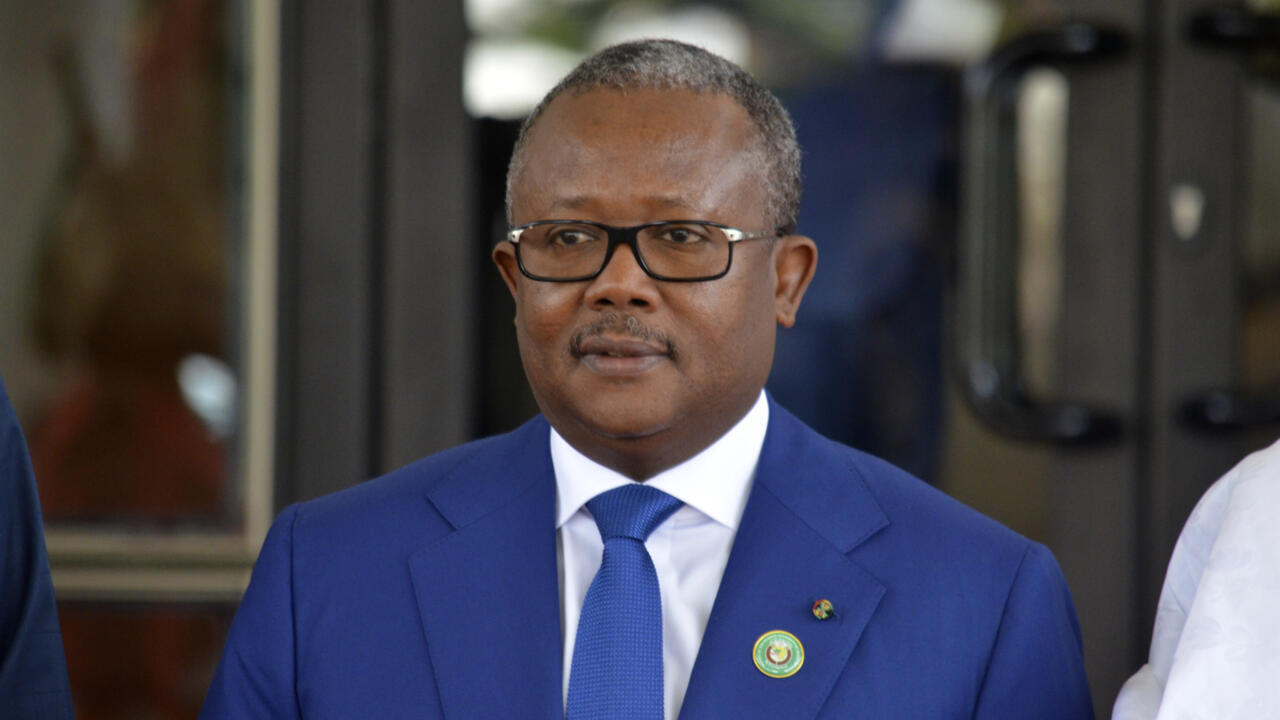
Guinea-Bissau's military high command announced on Thursday that conditions were not right for ousted President Umaro Sissoco Embaló to come home, blocking his declared plan to return from exile in Morocco and contest the presidential election scheduled for December 6. The decision, which came just days after Embaló said he would run, turns an already contested transition into a test of whether the generals who seized power last November intend to hand it back through a genuinely open vote.
What the junta said
The military high command said its decision rested "exclusively on grounds of national security, the preservation of public order, and the prevention of situations likely to compromise social stability," according to the EWN report on the announcement. Africanews quoted a close variant, saying the decision was "based on national security, public order and the need to preserve social stability." The statement also said restrictions on political demonstrations and public gatherings remain in force, as reported by Voice of Nigeria.
The announcement followed reports of unrest within the presidential guard earlier this week, according to Voice of Nigeria, which did not elaborate on the details. The Rio Times' Africa Intelligence Brief reported that the high command rejected a planned return on October 4. Activists had planned for Embaló to return on a Sunday, according to Arab News, which did not specify the date; October 4 is a Sunday.
The decision is awkward for the junta's own leader. Gen. Horta N'Tam, who heads the military government and serves as transitional president, had previously said that "every Guinean is free to return to their country if they have nothing to be ashamed of," according to the EWN report. The high command's invocation of security conditions replaces that statement of principle with a conditional one.
How Guinea-Bissau got here
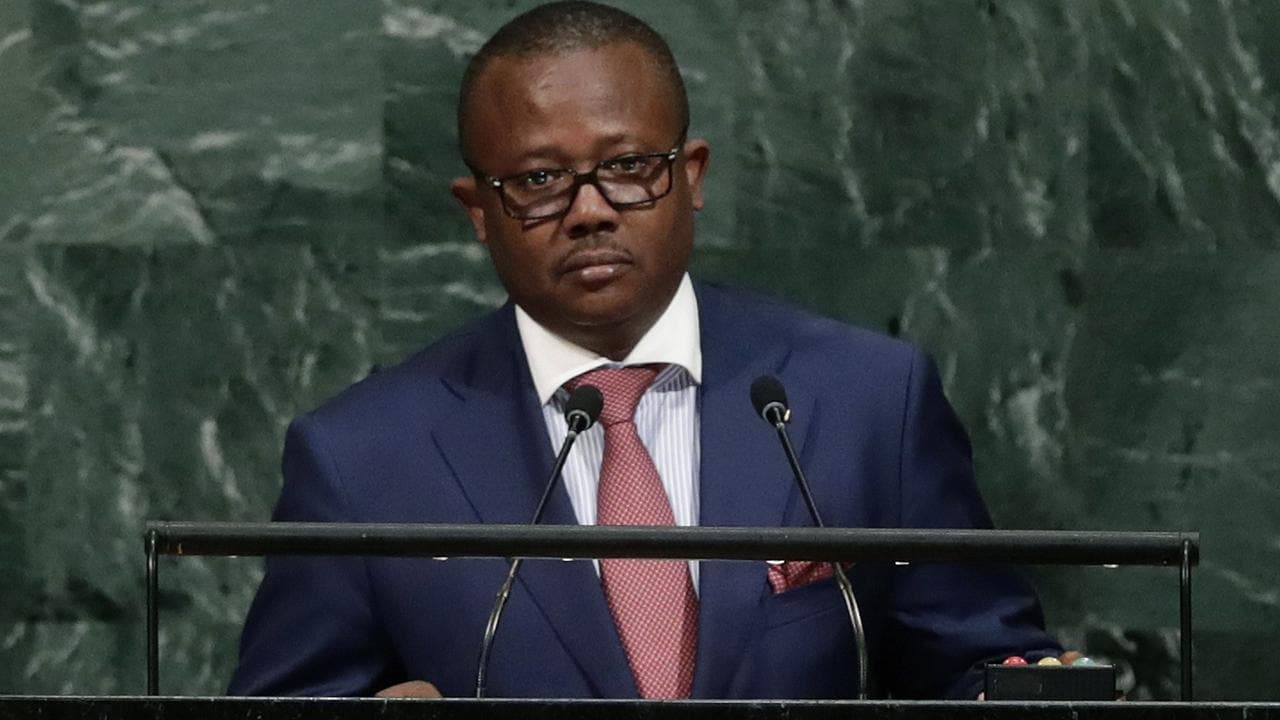
The roots of the dispute lie in the events of late 2025. Guinea-Bissau held a presidential election in November of that year. On November 26, 2025, one day before provisional results were due, the army seized power, overthrew Embaló and suspended the electoral process, EWN reported. The junta justified its action by claiming to have uncovered a plot to destabilize the country involving drug lords.
Observers have been skeptical. Arab News reported that some observers suspect Embaló himself orchestrated the takeover to halt an electoral process he appeared to be losing. That suspicion is reinforced by the identity of the man now running the country: N'Tam is described by both EWN and Arab News as a close associate of Embaló. In other words, the president who was deposed and the officer who deposed him are not obvious adversaries, which is part of what makes the present standoff difficult to read.
Guinea-Bissau's history provides little reassurance. Africanews, EWN and Voice of Nigeria all note that the country has experienced five coups and numerous attempted takeovers since gaining independence from Portugal in 1974.
A transition on a one-year clock
N'Tam established a transitional government to oversee a one-year transition period, according to Ecofin Agency. Under the transitional charter he is barred from standing in the election, EWN and Arab News reported, a restriction that the junta can point to as evidence of good faith.
The political calendar since then has been busy. Ecofin reported that voters approved a new constitution in a referendum on August 30, 2026, with 70 percent support and 62.6 percent turnout, figures it attributed to authorities. The stated purpose of the reforms is to reduce tensions between the presidency and the prime minister's office, a perennial source of instability in Bissau. The main opposition party, the African Party for the Independence of Guinea and Cape Verde (PAIGC), boycotted the vote, arguing that the conditions for a credible ballot did not exist. The turnout and approval figures are therefore the junta's numbers, and independent verification was not available in the sources reviewed for this story.
Embaló announced his candidacy on September 28, according to Ecofin. He did not specify a return date, and Arab News quoted him saying he "will be a candidate in the presidential election." Africanews reported that the military says the December 6 vote is meant to restore civilian rule.
The legal argument
The central question is whether the junta has any legal basis to keep Embaló out. Political analyst Malam Cisse told Arab News that nothing in law prevents his return, because he "was ousted from power by a coup d'etat" and never signed any document renouncing authority. That argument, if it holds, means Embaló remains legally free to enter and to stand, and the junta's reliance on a security rationale rather than a legal one is telling. A legal bar would require a rule; a security concern requires only a decision by those who control the army.
There is a counter-reading, which is that the junta may sincerely fear disorder. Reports of unrest in the presidential guard, however thin, suggest that the security forces are not monolithic. The return of a deposed president, whose supporters had organized to receive him, could plausibly aggravate tensions inside a military that has a history of internal rivalry. Distinguishing a real security calculation from a convenient pretext is not possible from the public record, and both readings deserve to be held open.

What it means for the election
The immediate question is whether Embaló's exclusion affects the electoral timetable. Africanews and Voice of Nigeria both noted that it is unclear. The junta maintains that the December 6 election will restore civilian rule, but the credibility of that promise now depends on several unresolved matters.
The first is who can compete. If the transitional authorities can block a former head of state from entering the country, they can in principle shape the field in other ways. Opposition boycotts, such as PAIGC's refusal to take part in the referendum, suggest that the main rival bloc already doubts the fairness of the process. A December vote with major figures absent or boycotting would deliver a government, but not necessarily a legitimate one.
The second is the interaction with the new constitution. The August referendum redrew the relationship between president and prime minister. Whoever wins in December will inherit those rules, which makes the contest more consequential than a simple return to the pre-coup order. A winner chosen under conditions the opposition rejects would take office with a contested mandate and a constitution the opposition did not endorse.
The third is the army. N'Tam is barred from running, so the transition raises the question of who the military expects to prevail and what it expects in return. Neither the sources reviewed nor the junta's public statements answer it. Analysts will watch whether the high command is prepared to accept an outcome it does not control.
Economic stakes
Politics in Bissau is not conducted in a vacuum. Ecofin's review of the economy during Embaló's presidency shows modest gains that the political crisis now threatens. GDP growth accelerated to 5.8 percent in 2025 from 4.1 percent in 2024, the fiscal deficit narrowed to 6.9 percent of gross domestic product, public debt declined to 76 percent of GDP, and inflation stood at 2 percent. The structural weaknesses are equally clear: the economy depends heavily on cashew exports, and tax revenue amounted to only 8.5 percent of GDP in 2025.
Those figures describe an economy with limited fiscal room. A prolonged political standoff, or a disputed election that invites sanctions or aid suspensions, would arrive at a time when the state has few buffers. This is analysis, not a forecast; Ecofin's numbers show the starting position, not the outcome.
What to watch
Whether Embaló attempts to travel regardless of the junta's ban is the most immediate unknown. Any attempt would test the high command's willingness to enforce its decision, and the response of the security forces, including the presidential guard, would be revealing.
The second is whether regional and international actors weigh in. The sources reviewed for this story did not report reactions from the Economic Community of West African States or other external bodies to the announcement, so any such statement would be a development worth following.
The third is the electoral calendar. Candidate registration, the conduct of the campaign and the status of the restrictions on demonstrations will show whether December 6 is a real contest. If the restrictions remain in force into the campaign period, the contest will be harder to describe as free.
Finally, the opposition's posture matters. PAIGC's earlier boycott leaves open whether it will participate in December, and its decision will shape how the outcome is received at home and abroad.
For a country that has lived through five coups in just over five decades, the question of who may stand in an election is rarely only legal. On Thursday, the military answered it by invoking security. Whether voters, and the region, accept that answer will define the next 65 days.
Published By | News Editor