Written By | Entertainment Desk
Police say they found no credible danger, but the country star’s team withdrew from a sold-out arena date anyway — a decision that exposes the hard calculus of live-music security.
TULSA, Okla.
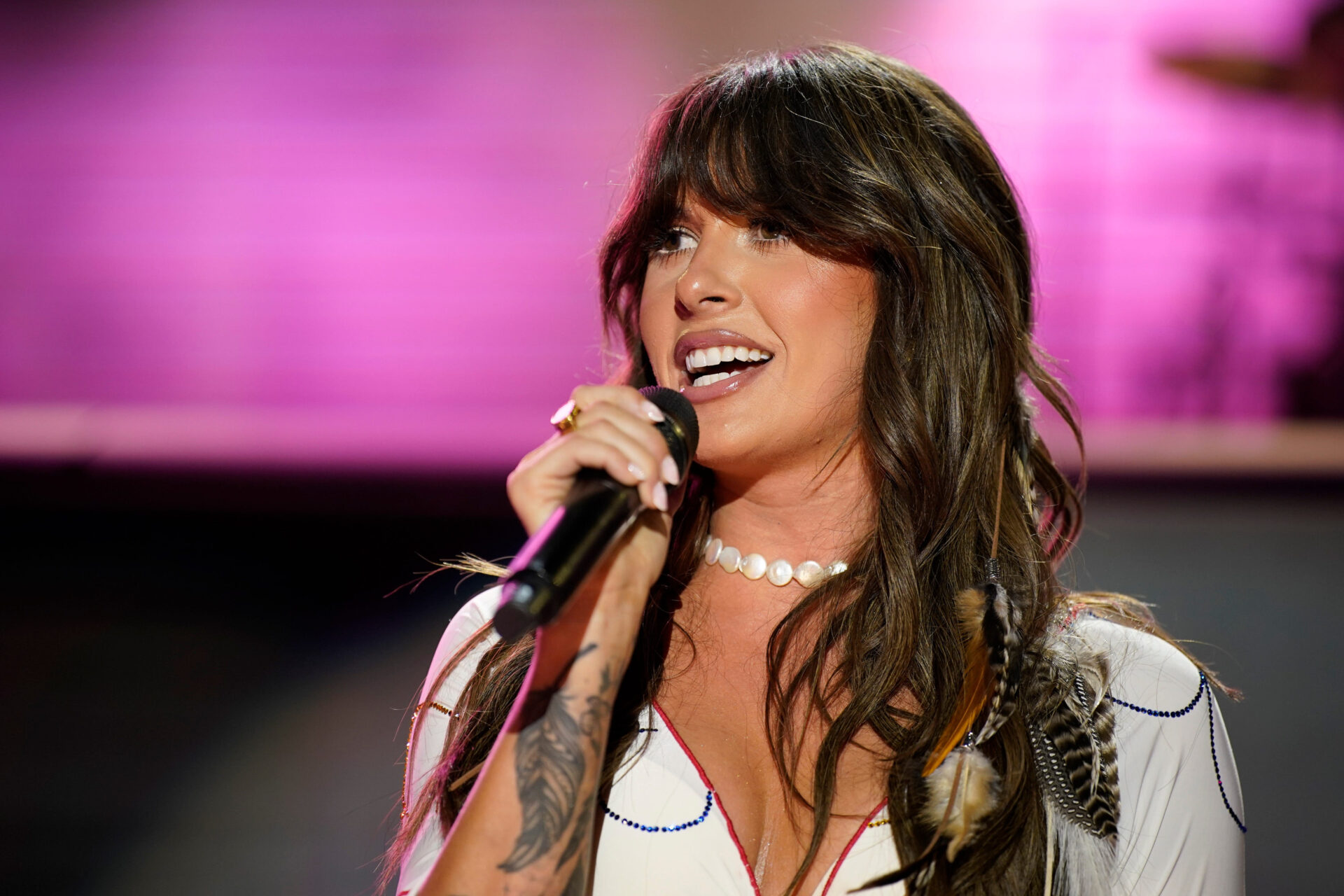
On a Friday night when thousands of fans expected to hear one of country music’s fastest-rising stars, the lights at the BOK Center in Tulsa stayed off. Ella Langley’s October 9 concert was canceled after a threatening phone call, in a case that has become a vivid illustration of how modern touring balances showmanship against safety.
What happened
The BOK Center cited “a serious security threat involving the safety of fans, venue personnel, and the artist,” without specifying the type of threat, and said safety was its top priority. The venue said it had determined the show could not proceed and apologized to ticket holders.
The Tulsa Police Department offered a more detailed picture. According to its statement, a call was made threatening the lives of people attending the event; the caller threatened “shots fired and bombs.” Police said their units, including K-9, bomb, patrol and venue security, had swept the building before the event and found nothing dangerous. After the call, officers searched the building and surrounding area again, including with a bomb-sniffing dog, and again found nothing. The department said it found “no credible threat.” Police also said that neither they nor the BOK Center canceled the show; Langley’s team decided to withdraw. The incident remains under investigation.
Langley’s response
Langley announced the cancellation on Instagram. She said the decision was made “under the advisement of local authorities, the venue, and my security team,” apologized to fans, and wrote that she “refuse[s] to put anyone in harm’s way.” The BOK Center said on its own Instagram account that refund details and further information would be shared as soon as possible. As of publication, no rescheduled date had been announced.
There is a discrepancy worth noting, and it is not an accusation against anyone. The venue and the artist describe the threat as serious; police describe it as not credible after two sweeps. Both can be true at once: a threat can be assessed as unlikely to be carried out and still be judged too risky to ignore when thousands of people are in a single room. The reports do not reveal who made the call or why, and until the investigation concludes, speculation would be unhelpful.
A tour at full tilt
The cancellation lands in the middle of a busy run. The date was part of The Dandelion Tour, which supports Langley’s second studio album, Dandelion. The arena tour began May 7 in Toledo, Ohio, and was later extended with 21 additional dates. For an artist whose career has accelerated rapidly, the tour represents both a commercial milestone and a logistical machine with hundreds of staff, trucks, and ticket holders moving in lockstep. A single night’s cancellation therefore carries real costs: lost revenue, wasted travel for fans, and the complex task of rebooking a large venue.
Why this matters beyond one night
Threat calls to public events are not new, and the industry has developed standard responses: coordinate with local police, sweep the venue, consult the artist’s private security, and decide as a group. What is notable here is who made the final call. Police emphasized that the decision to withdraw belonged to Langley’s team. That framing is a reminder that, for the artist, the question is not only “is the threat credible?” but “what if we are wrong?” — a very different standard of risk.
It also highlights the position of the audience. Fans plan evenings, book travel and buy tickets weeks or months ahead. When a show disappears hours before doors, the disappointment is real even if the reasoning is sound. The rapid public statements from both the venue and the artist, including an apology, are part of how the industry tries to maintain trust in these moments.
What this means for you
If you hold tickets to the Tulsa show, watch the BOK Center’s official channels for refund instructions, which the venue has promised but not yet detailed. Be cautious about unofficial resale links or anyone claiming to offer faster refunds. If you are attending an upcoming date on the tour or any other large concert, expect that security screening may be tight, arrive early, and keep an eye on official venue and artist accounts on the day of the show for any changes.
More broadly, the episode is a prompt to remember that live music depends on a shared sense of safety. Venues, police and artists are working under uncertainty; when they choose caution, the cost is borne by fans and promoters, but the alternative is a risk no one wants to test.
The fan experience
For concertgoers, the hardest part of an episode like this is the information gap. The venue, the artist and the police each issued statements, but none could explain the threat in detail without compromising an ongoing investigation. That leaves ticket holders with a clear outcome — no show — and an unclear picture of why. Transparency about what can be shared, and prompt communication about refunds, is the most practical way for organizers to preserve goodwill.
Country music in particular prides itself on a close bond between artist and audience, and Langley’s statement leaned into that relationship. Her apology and her insistence on protecting people over the show itself are likely to be read by many fans as a sign of priorities, even as they absorb the disappointment of a lost night. How the rest of the tour proceeds, including any rescheduling, will test that goodwill.
The wider industry will also be watching. Arena tours rely on thousands of small safeguards — bag policies, screening, local police liaison — that rarely make headlines until something goes wrong. When a single phone call can shut a sold-out building, it underlines how much invisible work goes into the evenings that do go ahead as planned.
Conclusion
The facts so far are limited: a threatening call, two sweeps that found nothing, a police assessment of no credible threat, and an artist who chose to cancel anyway. What comes next — a rescheduled date, refund details, and the results of the police investigation — will determine how this episode is remembered. For now, Langley’s own words frame it: when in doubt, she says, she will not put anyone in harm’s way.



