Written By |

Most people are loners because they don't have anything anyone wants from them.
(Picture imagined by Meta AI)
Recently, I had a chat with my friend Michael, Like many of us, Michael has had a rough life, especially financially. Despite life casting him aside, he remains the handsome guy he was in high school, a favorite among girls.
After graduation, things started well. His mother helped him set up a business, and he met the woman of his dreams, hoping to marry her. However, those beautiful dreams turned into nightmares. She took all his cash, including a loan he had just obtained to invest in the business. After their introduction ceremony, the business failed, the loan accumulated, and the woman ran away. Facing constant threats of arrest, Michael came to Mbarara. But this is not the story.
Illustration imagined with Meta AI
As the saying goes, a man's finances often determine the type of woman he marries. Many men end up marrying the women they can afford rather than the women they truly desire. This explains why some men leave the women who struggled with them once they achieve success. They initially married women their pockets could afford at the time, not necessarily the women they wanted.
When Michael moved to another city, he couldn't secure a good job. His mother focused on her younger children and couldn't support him because she felt disappointed by his choice of partner, a woman she hadn't approved of. So, Michael had to struggle on his own. Since then, he has been on the streets, trying hard to make ends meet, but to no avail.
But you know, horniness is a genetic component of every living organism. Whether you are broke or rich, you will get horny at some point and want to have sex. Nature mandates this because the first component of life is to preserve itself for as long as it can. That's why food and procreation are essential for all living organisms, including humans. Without food, you die. Without reproduction, life ends with you. Hunger and horniness are urges too strong to resist. But still, this is not the story.
About two years ago and a few months, Michael met a woman who was a waitress at a local bar (kafunda). Despite being handsome, he was broke. Every time we talk, we remind ourselves that since we are still broke, these are the types of women we can afford—those who have no problem sleeping in one-room rentals where you have to line up for the outside bathroom in the morning.
Picture Imagined with Meta AI
Michael and the waitress, Uwera - who even has no nyash, started dating, and she soon became pregnant. They lived together and had a child, but things became even harder. A distant cousin came to the rescue, offering to help Uwera go to Saudi Arabia for domestic work (Kadama things). The idea was welcomed, and successfully, she left. However, they had nowhere to leave their one-year-old child. Michael asked one of his sisters to help, and she agreed, even contributing to the travel expenses.
For the two years they dated, Uwera had never mentioned anything about her family. Michael didn’t even know which district she came from. He struggled to take care of her with whatever small earnings he had. A few months into her work abroad, Uwera started sending money back home to her sister-in-law, who was taking care of the child.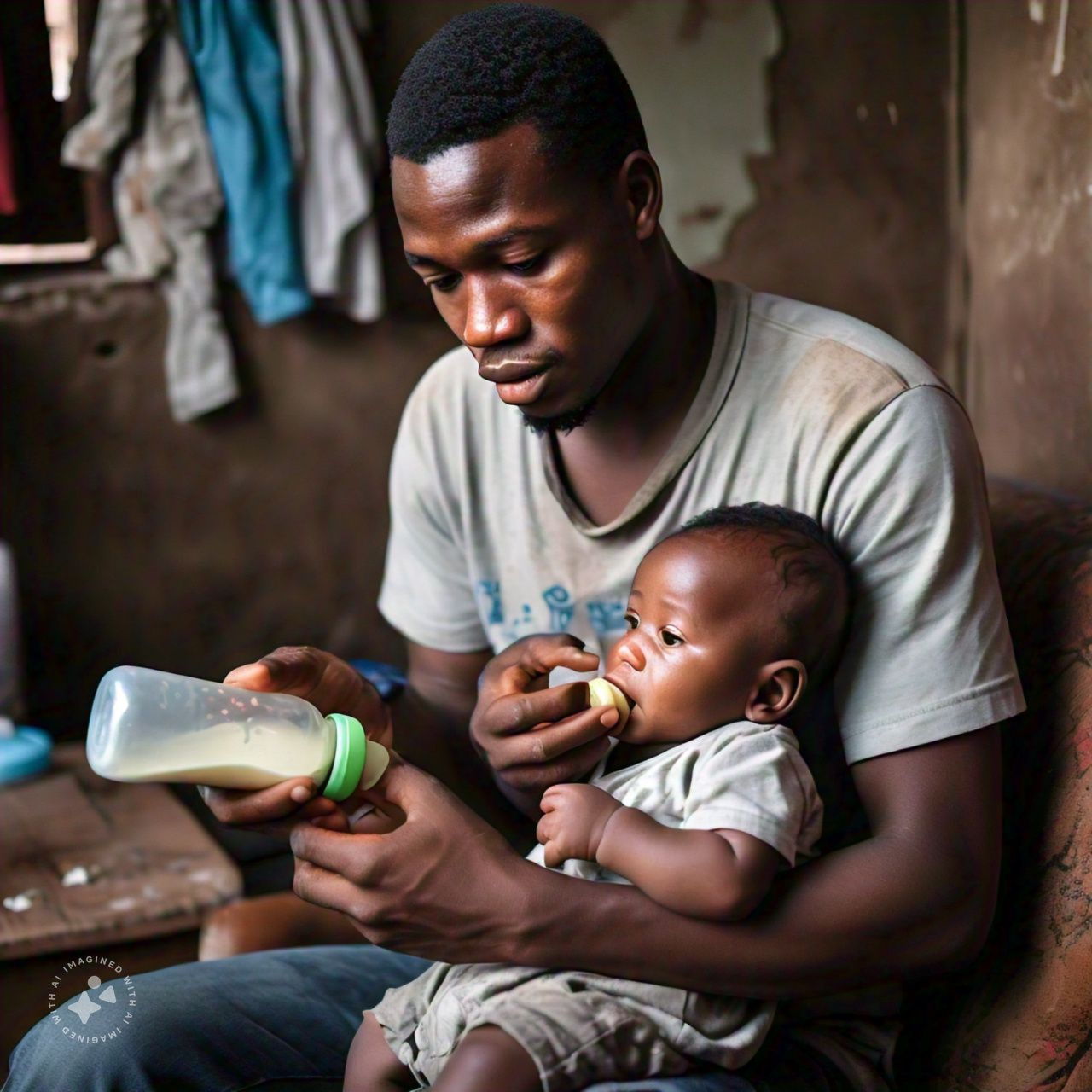
Illustration imagined with Meta AI
After three months, Uwera's relatives suddenly showed up. They demanded the child, claiming they can take care of the child better. Michael suspects that once Uwera started earning money, she contacted her family, who then expected her to support them. This is typical human nature: the moment you start earning, everyone expects you to give them money, regardless of whether they helped you or not.
Michael received phone calls from Uwera's relatives demanding that he hand over the child. They insisted they could take care of the child now. Despite Michael and his sister's struggles, Uwera's family only became involved once money was involved. Even Uwera told Michael to give the child to her mother. This left Michael feeling abandoned and used, as his wife's family only cared about the child once financial support became available.
The situation where people only seek you out when they can benefit from you, yet ignore you when you have nothing to offer, is a common and disheartening experience. This dynamic is often driven by self-interest and opportunism.
These days we are dealing with Transactional Relationships. Many relationships in our lives are transactional to some degree. In these relationships, people interact with you primarily based on what they can gain. This can be seen in professional settings, social circles, and even some personal relationships. When you are not in a position to provide any tangible benefit, these individuals may withdraw their attention and support. There is also too much of self-interest and opportunism. Most people naturally tend to act in their own best interests. When you have something they need or want—such as money, connections, influence, or skills—they are drawn to you because you can help them achieve their goals. However, when you lack these valuable assets, they no longer see you as useful and therefore don’t prioritize a relationship with you.
But mostly, we are struggling with perception of value. Success and material wealth often change how people perceive you. When you are successful or possess something desirable, people perceive you as valuable and want to associate with you. Conversely, when you lack these attributes, they might see you as less valuable or unimportant. This shift in perception affects how they treat you.
This phenomenon of conditional relationships is a reality many face. By recognizing it and focusing on building genuine connections, you can ensure that your relationships are based on mutual respect and care, rather than opportunistic motives.
By Dickens Tiharihondijo



